
In This Article
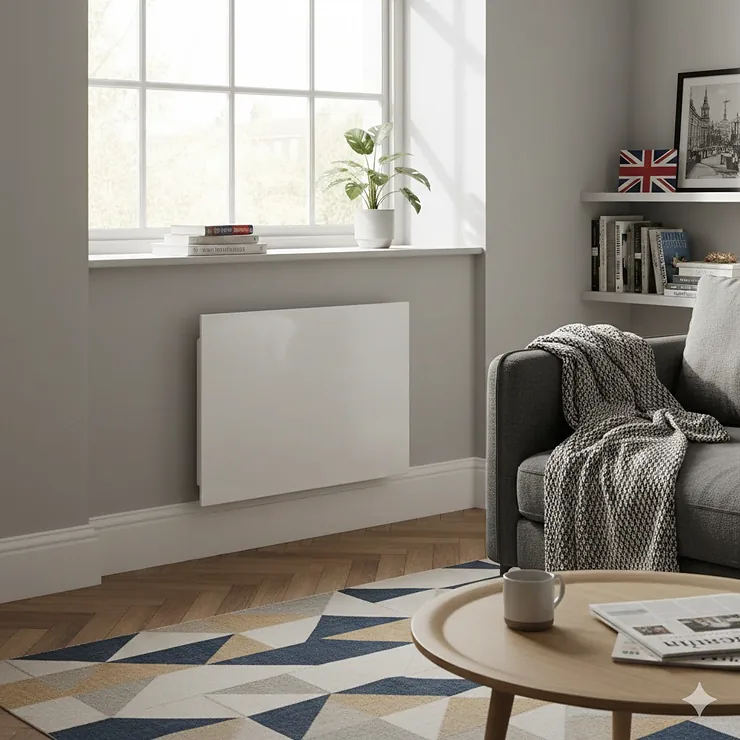
Picture this: it’s a chilly February morning in Birmingham, and you’ve just stepped into your home office. Instead of waiting ages for central heating to kick in throughout the entire house, you flick on a sleek panel heater mounted on the wall. Within minutes, your workspace is toasty warm – and you’ve only heated the room you’re actually using.

That’s the beauty of modern panel heaters, and they’re becoming increasingly popular across the UK. According to the Energy Saving Trust, nearly 22% of UK homes now rely on electricity as their main heating fuel, marking a significant shift towards more flexible, energy-efficient alternatives. With rising gas prices and growing environmental consciousness, more British households are turning to electric panel heaters as either primary or supplementary heating solutions.
But here’s the thing: not all panel heaters are created equal. Since January 2018, all electric heaters sold in the UK must comply with Lot 20 ERP regulations – European ecodesign directives that ensure minimum efficiency standards. These regulations have revolutionised the market, meaning today’s panel heaters are smarter, more efficient, and packed with energy-saving features that previous generations simply didn’t have.
Whether you’re a homeowner looking to reduce heating bills, a landlord needing compliant heating solutions, or simply someone fed up with expensive central heating, finding the best panel heater for your needs can make a substantial difference to both your comfort and your wallet. In this comprehensive guide, we’ll explore the top 7 panel heaters available on Amazon.co.uk in 2026, covering everything from budget-friendly options to premium smart models with WiFi connectivity and voice control.
Quick Comparison Table
| Product | Wattage | Price Range | WiFi | Lot 20 | Best For |
|---|---|---|---|---|---|
| Devola DVPW1000WH | 1000W | £76.95-£98.96 | ✅ Yes | ✅ Yes | Smart home enthusiasts |
| MYLEK Panel Heater | 1000W | £62-£75 | ❌ No | ✅ Yes | Budget-conscious buyers |
| Devola DVPW2000B | 2000W | £114.70-£134.95 | ✅ Yes | ✅ Yes | Large rooms |
| AMOS Smart Glass | 1000W | £89-£109 | ✅ Yes | ✅ Yes | Mid-range value |
| MYLEK WiFi 1000W | 1000W | £85-£95 | ✅ Yes | ✅ Yes | App control |
| Generic 1KW Panel | 1000W | £49.99-£64.99 | ❌ No | ✅ Yes | Ultimate budget |
| MYLEK Ceramic 1000W | 1000W | £89-£119 | ❌ No | ✅ Yes | Fast heating |
💬 Just one click – help others make better buying decisions too! 😊
Top 7 Best Panel Heater Options: Expert Analysis
1. Devola DVPW1000WH – Best Smart WiFi Panel Heater
The Devola DVPW1000WH represents the cutting edge of UK panel heater technology, and it’s easy to see why it’s earned over 2,400 customer reviews on Amazon.co.uk. This 1000W glass panel heater seamlessly blends contemporary design with intelligent heating control, making it our top pick for tech-savvy homeowners.
Key Specifications:
- 1000W power output (suitable for rooms up to 15m²)
- Tempered glass front panel with LED display
- WiFi connectivity via Tuya app
- Compatible with Amazon Alexa and Google Assistant
- IP24 rated for bathroom use (zones 2+)
- Dimensions: 470mm H x 510mm W x 75mm D
Price Range: £76.95-£98.96
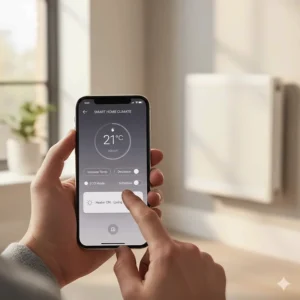
What sets the Devola apart is its comprehensive smart home integration. Through the Tuya app, you can control heating from anywhere, set up complex 24/7 schedules, and monitor energy usage in real-time. UK buyers particularly praise its open window detection feature, which automatically pauses heating when it detects a sudden temperature drop – a godsend for those of us who sometimes forget to close windows!
The precision thermostat is accurate to within half a degree, and the heater offers multiple modes including Eco Mode (operates at 50% capacity), Comfort Mode (full power), and Anti-Frost protection. The ultra-slim 75mm depth means it sits almost flush against walls, whilst the tempered glass finish looks remarkably modern – more like a design feature than a heater.
Pros:
- Excellent smart home integration with voice control
- Sleek glass design that complements modern interiors
- Accurate temperature control and open window detection
Cons:
- Initial setup requires 2.4GHz WiFi (before switching to 5GHz)
- Premium price point compared to basic models
British customers report that it heats a typical UK bedroom or small living room within 10-15 minutes, and the silent operation makes it ideal for bedrooms. The 1.5m power cable provides flexibility in placement, and it comes complete with wall brackets and free-standing feet.
2. MYLEK Electric Panel Heater 1000W – Best Budget-Friendly Option
For those watching their pennies without sacrificing quality, the MYLEK 1000W panel heater offers exceptional value. This UK-made heater has built a stellar reputation for reliability, and at under £75, it represents one of the most affordable Lot 20 compliant options available.
Key Specifications:
- 1000W heating power
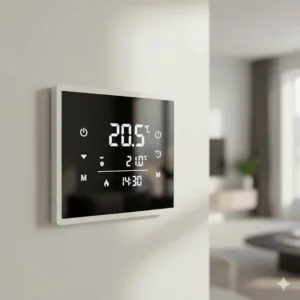
- Digital LED display with touch controls
- 24/7 programmable timer
- Digital thermostat (5-35°C range)
- IP24 bathroom safe
- Coverage: 8-15m²
Price Range: £62-£75
What makes this MYLEK model stand out in the budget category is that it doesn’t skimp on essential features. The digital thermostat is precise, the 24/7 timer allows you to create bespoke heating schedules for every day of the week, and it includes three heat modes: Comfort, Eco, and Frost Protection.
UK customers consistently mention how quickly it heats up – the entire panel gets hot rather than just the top section, which some cheaper competitors struggle with. The aluminium heating element provides fast heat-up and slow cool-down, maximising efficiency and reducing cycling frequency.
Pros:
- Excellent value for money under £75
- Made in the UK with 2-year warranty
- Simple, reliable operation without unnecessary complications
Cons:
- No WiFi or smart features
- Basic white design (though clean and unobtrusive)
One reviewer from Manchester noted: “This heater goes up to 35 degrees, and it’s completely sufficient to heat my conservatory. Unlike my previous Purus model, the whole panel heats evenly.” The straightforward installation using the included wall bracket template makes it a favourite among DIY enthusiasts, though it can also be used freestanding with the supplied feet.
3. Devola DVPW2000B – Best for Large Rooms
When you need serious heating power for larger spaces, the Devola DVPW2000B steps up with 2000W of output wrapped in a sophisticated black glass finish. This is essentially the bigger brother of our top pick, designed for rooms up to 22m² – perfect for UK living rooms, open-plan kitchens, or garden offices.
Key Specifications:
- 2000W dual power settings (1000W/2000W)
- WiFi enabled with smart app control
- Black tempered glass design
- Alexa and Google Assistant compatible
- Precision thermostat (±0.5°C accuracy)
- Suitable for rooms up to 22m²
Price Range: £114.70-£134.95
The dual power setting is particularly clever for UK homes. You can run it at 1000W during milder autumn days or crank it up to 2000W when British winter really bites. This flexibility not only provides comfort but also helps manage electricity costs – crucial given current UK energy prices of around 24.86p per kWh.
Customer feedback from across Britain highlights its effectiveness in challenging spaces. One buyer in Edinburgh uses it in a poorly insulated Victorian terrace room and reports that it maintains comfortable temperatures even during Scottish winters. The built-in adaptive start function is especially useful – it learns how long your room takes to heat up and starts automatically to reach your target temperature exactly when needed.
Pros:
- Powerful 2000W output for larger spaces
- Dual power settings for versatility
- Premium black glass aesthetic
Cons:
- Higher purchase cost (£115-£135)
- Heavier than 1000W models (approximately 7kg)
The splash-proof IP24 rating means it’s suitable for bathrooms when installed by a qualified electrician, and UK building regulations are fully met. Free next working day delivery is often available, which is handy when you need heating sorted quickly.
4. AMOS Electric Glass Panel Heater 1000W – Best Mid-Range Smart Option
The AMOS Smart Electric Glass Panel Heater offers a compelling middle ground between budget and premium options. This 1000W model provides smart connectivity at a more accessible price point than some competitors, making it ideal for homeowners dipping their toes into smart home heating.
Key Specifications:
- 1000W power output
- WiFi enabled (2.4GHz initial setup, 5GHz operation)
- Smart Life App compatible
- Digital LED display
- Voice control via Alexa
- Black glass finish
Price Range: £89-£109
What’s particularly impressive about the AMOS heater is its value proposition. You’re getting full smart home integration, including remote control via smartphone and voice commands through Alexa, at a significantly lower price than premium alternatives. The Smart Life app is intuitive and allows you to set complex schedules, adjust temperatures remotely, and even monitor energy consumption.
British customers appreciate the modern aesthetic – the black glass panel looks sleek in contemporary UK homes, and the digital display can be switched off during operation if you prefer a minimalist look. The heater includes both freestanding feet and wall-mounting hardware, providing installation flexibility.
Pros:
- Smart features at mid-range pricing
- Sleek black glass design
- Comprehensive app control with good user interface
Cons:
- Brand less established than Devola or MYLEK
- Some users report initial WiFi setup can be fiddly
One London-based reviewer mentioned: “For the price, this offers fantastic value. The app works brilliantly, and being able to turn the heating on from my commute home is genuinely useful during winter.” The free-standing option is particularly popular with renters who can’t (or don’t want to) drill into walls.
5. MYLEK WiFi Electric Panel Heater 1000W – Best App-Controlled Budget Option
MYLEK’s WiFi-enabled model bridges the gap between their budget range and premium smart heaters. The MYLEK WiFi 1000W proves you don’t need to spend a fortune to enjoy app-controlled heating, making it our favourite for cost-conscious buyers who still want smart features.
Key Specifications:
- 1000W heating power
- WiFi app control via smartphone/tablet
- Digital thermostat with room sensor
- 24/7 or countdown timer options
- Eco Mode for 50% power operation
- Coverage: 10-15m²
Price Range: £85-£95
This represents excellent value in the smart heater category. Through the free app, you can adjust temperatures, programme heating schedules, and switch modes from anywhere with an internet connection. The interface is straightforward – a significant plus given that some smart heater apps can be overly complicated.
The aluminium heating element provides rapid warm-up, and the precision thermostat and room temperature sensor work together to maintain your chosen temperature efficiently. In Eco Mode, the heater operates at half power, which is brilliant for maintaining background warmth without excessive energy consumption – perfect for UK spring and autumn when you need “just a bit” of heat.
Pros:
- Smart features under £100
- Reliable MYLEK build quality with UK support
- Energy-efficient with Eco Mode
Cons:
- Design is more functional than stylish
- App requires stable internet connection
UK landlords particularly favour this model for rental properties. It meets Lot 20 compliance requirements, provides tenants with easy temperature control, and the IP24 rating means it’s safe for bathroom installation by a qualified electrician. The 2-year warranty provides peace of mind, and MYLEK’s UK-based customer service is consistently praised.
6. Generic Electric Panel Heater 1000W – Best Ultra-Budget Choice
Sometimes you just need basic, reliable heating without bells and whistles. This 1000W generic panel heater (available from various sellers on Amazon.co.uk) delivers exactly that, often for under £50, making it the perfect choice for occasional use spaces like spare bedrooms, garden sheds, or workshops.
Key Specifications:
- 1000W heating power
- 24/7 timer with digital display
- Mechanical or digital thermostat (varies by model)
- Wall-mounted or free-standing
- Lot 20 ERP compliant
- Ideal for rooms 8-10m²
Price Range: £49.99-£64.99
Don’t let the budget price fool you – these heaters still meet UK Lot 20 regulations, ensuring they have essential energy-saving features like thermostats and timers. The rapid heat-up time (under 6 seconds to start producing heat) makes them practical for spaces you only heat occasionally.
British buyers often purchase these for specific scenarios: a home office used only during working hours, a conservatory that needs warming up when guests visit, or a spare bedroom that’s rarely occupied. The simplicity is actually an advantage – there’s nothing complicated to go wrong, and operation is intuitive even for less tech-savvy users.
Pros:
- Extremely affordable (often under £50)
- Simple operation with no learning curve
- Lot 20 compliant with essential features
Cons:
- Basic appearance and build quality
- No smart features or advanced controls
One practical reviewer from Wales noted: “Bought this for our caravan, and it’s perfect. Heats the space quickly, doesn’t cost much to run for the few weekends we use it, and if it gets damaged, it’s cheap enough to replace without tears.” The included mounting bracket and feet provide installation flexibility, and most models come with UK 3-pin plugs and 1.2m cables.
7. MYLEK Ceramic Panel Heater 1000W – Best for Rapid Heating
The MYLEK Ceramic Panel Heater employs ceramic heating technology for even faster warm-up times and more efficient heat distribution. This 1000W model is ideal for UK homes where you need a room heated quickly – think bathrooms before morning showers or home offices at the start of the workday.
Key Specifications:
- 1000W ceramic heating element
- LCD display with programmable timer
- Three heat modes (Eco, Comfort, Anti-Frost)
- Open window detection
- IP24 splash-proof rating
- Digital thermostat (5-35°C)
Price Range: £89-£119
Ceramic heating technology offers several advantages. The ceramic plates heat up extremely quickly and distribute warmth more evenly than traditional heating elements. They also retain heat slightly longer after switching off, providing residual warmth that extends the comfortable period without additional energy consumption.
British customers consistently mention the effectiveness of the open window detection feature – particularly useful in the UK where we’re always being told to ventilate rooms but often forget to turn off heating when we do. When the heater detects a sudden temperature drop (typically caused by an open window), it automatically shuts down to prevent energy waste.
Pros:
- Ceramic technology for rapid, even heating
- Comprehensive features including open window detection
- LCD display easy to read and programme
Cons:
- Some reports of reliability issues after 6-7 months
- Slightly higher running costs than basic models
The IP24 rating makes it suitable for UK bathrooms when installed by a qualified electrician – a popular application given how chilly British bathrooms can be. The sleek white design blends unobtrusively into most décor styles, and the slim profile (approximately 8cm depth with wall bracket) means it doesn’t protrude excessively from walls.
One satisfied customer from Scotland wrote: “This heats up my bathroom remarkably quickly. Within 5 minutes of switching it on, the room is noticeably warmer. The timer means I can set it to come on 10 minutes before my shower, which is perfect.”
Understanding Panel Heater Technology
Panel heaters work through a process called convection heating, which is fundamentally different from radiant heating (like infrared panels) or conduction heating (like oil-filled radiators). Understanding how this technology works helps you make informed decisions about where and how to use your panel heater most effectively.
How Convection Heating Works
The principle is elegantly simple yet remarkably effective. Cool air enters the panel heater from the bottom, passes over an electrically heated element (typically aluminium or ceramic), and rises as it warms. This creates a natural circulation pattern – warm air rises to the ceiling, gradually cools as it loses heat to the room, sinks back down, and re-enters the heater to be warmed again.
This convection cycle means panel heaters can heat rooms relatively quickly, particularly smaller UK rooms typical of British housing stock. According to heating specialists, panel heaters can bring a standard UK bedroom to a comfortable temperature within 10-15 minutes, making them ideal for spaces that need rapid heating.
However, there’s a trade-off. Convection heat doesn’t have the same “staying power” as radiant heat. Once you turn off a panel heater, the room begins cooling relatively quickly – usually within 15-30 minutes, you’ll notice the temperature dropping. This makes panel heaters better suited for spaces that need heating during specific periods rather than constant 24/7 warmth.
Modern Heating Elements
Today’s panel heaters use two main types of heating elements:
Aluminium Elements are the most common. They heat up quickly (typically within seconds) and provide responsive temperature control. The better quality models use specially designed aluminium cores that maximise surface area, improving heat transfer efficiency. British manufacturers like MYLEK often use X-shaped aluminium elements that warm up evenly across the entire panel.
Ceramic Elements are increasingly popular in premium models. Ceramic has excellent thermal properties – it heats up slightly slower than aluminium but retains heat longer and distributes it more evenly. This results in fewer temperature fluctuations and potentially lower energy consumption. Ceramic elements are also more durable and less prone to corrosion in humid environments like UK bathrooms.
Energy Efficiency Considerations
All electric heaters are technically 100% efficient at the point of use – they convert every watt of electricity into heat. However, this doesn’t tell the whole story. The real efficiency question is: how effectively does the heater maintain your desired temperature without wasting energy?
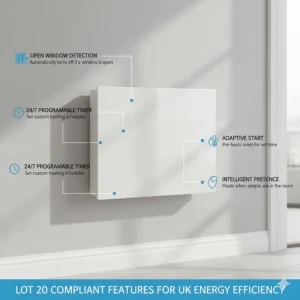
Modern Lot 20 compliant panel heaters address this through several features:
- Precision Thermostats: Accurate to ±0.1-0.5°C, preventing overshooting and excessive cycling
- Adaptive Start Functions: Learning how long your room takes to heat and starting accordingly
- Open Window Detection: Automatically pausing when detecting rapid temperature drops
- Presence Detection: Some advanced models can detect when a room is unoccupied
These features collectively can reduce energy consumption by 20-30% compared to older, non-compliant panel heaters, according to industry research.
Lot 20 ERP Compliance: What UK Buyers Need to Know
If you’ve been shopping for panel heaters in the UK, you’ve likely encountered “Lot 20 compliant” badges everywhere. But what does this actually mean, and why should you care? Let’s demystify these regulations that have fundamentally changed the UK electric heating market.
What Is Lot 20?
Lot 20 is part of the European Union’s Ecodesign Directive (2009/125/EC), specifically targeting local space heaters. Implemented on 1st January 2018, these regulations mandate minimum efficiency standards for all electric heaters manufactured for sale in the UK and EU.
Despite Brexit, Lot 20 remains UK law. The UK government transposed these regulations into domestic legislation, meaning they continue to apply regardless of our EU membership status. This is actually good news for British consumers – it means we’re protected from inefficient, outdated heating technology.
The Efficiency Scoring System
Lot 20 works on a points-based system. Every heater starts with a baseline score of 30%, and manufacturers earn additional points by incorporating energy-saving features:
Essential Features:
- Digital Thermostat: +2 points
- 24-Hour Timer: +2 points
- 24/7 Weekly Timer: +4 points
- Open Window Detection: +1 point
- Adaptive Start Control: +2 points
- Distance Control (remote/app): +2 points
For wall-mountable panel heaters (the most common type), the target score is 38% or higher. Portable-only heaters need 36%, whilst storage heaters have different requirements (38.5% base due to their heat retention properties).
Let’s look at a practical example. A panel heater with a digital thermostat (+2), 24/7 timer (+4), open window detection (+1), and remote control (+2) would score: 30% (base) + 9% (features) = 39% – comfortably meeting Lot 20 requirements.
Why This Matters for UK Homeowners
Lot 20 compliance isn’t just regulatory box-ticking; it has real implications for your wallet and comfort:
Lower Running Costs: Compliant heaters use 20-30% less electricity than older models, translating to genuine savings on bills. With UK electricity at approximately 24.86p per kWh (as of early 2026), these savings accumulate quickly.
Better Temperature Control: The mandatory thermostats and timers mean your heating responds to actual needs rather than running continuously. You’re not heating empty rooms or maintaining higher temperatures than necessary.
Environmental Benefits: Reduced energy consumption means lower carbon emissions. Whilst electricity isn’t currently carbon-neutral in the UK, it’s increasingly generated from renewable sources, and efficient usage accelerates our progress towards net-zero targets.
Implications for Landlords
If you’re a landlord, Lot 20 compliance is particularly crucial. Under UK regulations, any electric heaters installed in rental properties must meet these standards. This ties into broader Minimum Energy Efficiency Standards (MEES), which require rental properties to achieve at least an Energy Performance Certificate (EPC) rating of E.
Installing Lot 20 compliant heating is often one of the most cost-effective ways to improve a property’s EPC rating, potentially avoiding the £5,000 penalties for non-compliance. Many UK landlords have found that upgrading to modern panel heaters not only meets legal requirements but also makes properties more attractive to environmentally conscious tenants.
Key Features to Consider When Choosing a Panel Heater
Navigating the crowded panel heater market can feel overwhelming, especially with dozens of similar-looking models at vastly different price points. Here’s what actually matters when choosing the best panel heater for your UK home.
Power Output: Getting the Sizing Right
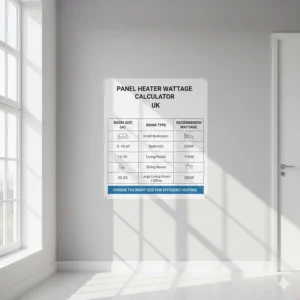
The most fundamental decision is wattage, and getting this right significantly impacts both comfort and running costs. The general rule of thumb in the UK is 100W per square metre of room space, though this varies based on several factors.
For a typical UK bedroom of 12m² (approximately 4m x 3m), a 1000W-1500W heater is appropriate. Living rooms of 20-25m² need 2000W-2500W. However, consider these modifying factors:
Insulation Quality: Older UK properties with solid walls and single glazing need more power – potentially 125-150W per square metre. Modern builds with cavity wall insulation and double glazing can manage with less.
Ceiling Height: Standard UK ceiling heights (2.4m) suit the basic calculation. Higher ceilings increase volume and therefore heating requirements. Victorian properties with 3m+ ceilings may need 25-30% more power.
Room Usage: Bedrooms need less power than living spaces. You typically heat bedrooms to 16-18°C for comfortable sleeping, whilst living rooms target 19-21°C. A slightly undersized heater in a bedroom is fine; undersizing in a living room leads to discomfort.
Geographic Location: Scotland and northern England experience harsher winters than southern England. If you’re heating a garden office in Edinburgh, err on the side of more power.
WiFi and Smart Features: Worth the Premium?
Smart panel heaters cost £30-50 more than basic models, so the question is: are they worth it?
The answer depends on your lifestyle and home setup. Smart features genuinely save energy if you have irregular schedules. Being able to turn heating off remotely when plans change, or on before arriving home, prevents both cold houses and wasted energy.
Voice control through Alexa or Google Assistant is undeniably convenient, particularly for mobility-impaired users or when your hands are full. However, for a heater in a single room that you access easily, a simple on-wall control may suffice.
UK energy monitoring features available in some apps can be revelatory. Seeing exact running costs in real-time helps you make informed decisions about usage patterns. Given UK electricity prices, this transparency is valuable.
Our Take: If heating a main living space or multiple rooms, smart features justify the cost. For a spare bedroom used occasionally, save your money and stick with basic models.
Thermostat Accuracy: The Unsung Hero
This might seem technical, but thermostat accuracy profoundly impacts both comfort and costs. Cheap panel heaters often have thermostats accurate to ±2-3°C. Premium models achieve ±0.1-0.5°C.
Why does this matter? A thermostat with ±2°C accuracy set to 20°C might maintain temperatures anywhere between 18-22°C. That’s the difference between comfortable and chilly, or comfortable and stuffy. More importantly, wider temperature swings mean the heater cycles on and off more frequently, wearing components and potentially using more energy.
Precision thermostats maintain steady temperatures with minimal cycling. They’re particularly valuable in UK bedrooms where temperature stability affects sleep quality, and in bathrooms where 2-3°C variations can feel significant.
Safety Features for UK Homes
British homes have specific characteristics that make certain safety features particularly important:
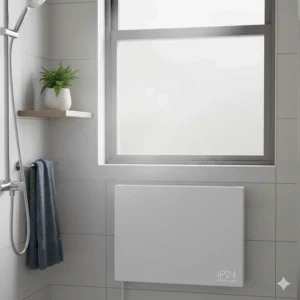
IP Ratings for Bathroom Use: If installing in a bathroom, ensure IP24 rating minimum (protected against water splashes and objects over 12mm). Under UK building regulations, bathroom heaters must be installed by qualified electricians and positioned correctly (typically zone 2 or 3, away from showers and baths).
Overheat Protection: Essential for UK homes where heaters might be pushed close to curtains or furniture. This cuts power if internal temperatures exceed safe limits.
Child Locks: Particularly valuable in family homes or rental properties. These prevent young children from changing settings or switching heaters to maximum accidentally.
Thermal Cut-out: Different from overheat protection, this prevents fire risk if the heater’s ventilation is blocked. Given typical UK room sizes and furniture density, this is a worthwhile feature.
Installation Flexibility: Wall-Mount vs Free-Standing
Most UK panel heaters offer both options, but consider your specific needs:
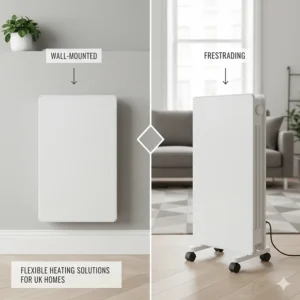
Wall-Mounting maximises floor space and looks neater, but requires drilling into walls. Perfect for permanent installations in owned properties. Typical UK plasterboard walls handle these easily, but solid walls or rental restrictions may complicate installation.
Free-Standing (using supplied feet) provides flexibility for renters or those who want to move heating between rooms. Particularly useful in UK homes where different rooms need heating at different times (bedroom evening, living room afternoon, etc.).
Our Recommendation: Purchase a model with both options. This future-proofs your investment and provides maximum flexibility. All the heaters in our top 7 offer dual mounting.
Installation and Safety Guidelines
Wall-Mounting Best Practices
Proper installation maximises safety and efficiency. UK building regulations don’t specifically govern panel heater installation in most rooms (bathrooms are the exception), but following best practices prevents problems.
Clearance Requirements: Maintain minimum 30cm (300mm) clearance on all sides. This prevents overheating and ensures proper air circulation. Don’t install directly beneath curtains, behind doors, or in furniture alcoves where airflow is restricted.
Height Considerations: Install with the bottom edge 15-30cm above floor level. This positioning allows proper air intake whilst keeping heating elements away from floor-level hazards (children, pets, spillages).
Wall Type Matters: UK homes have three main wall types:
- Plasterboard (stud walls): Locate studs using a detector and fix mounting brackets directly to studs, not just plasterboard
- Brick/Block: Use appropriate wall plugs rated for the heater’s weight (typically 5-7kg)
- Cavity Walls: Heavy-duty fixings that expand behind the cavity are essential
Electrical Considerations: Most panel heaters use standard UK 13A sockets. Ensure the socket is in good condition and not already overloaded with other appliances. Never use extension leads with heaters – they should plug directly into wall sockets.
Bathroom Installation: UK Regulations
Bathrooms require special attention due to moisture and UK building regulations. Panel heaters installed in bathrooms must:
- Have minimum IP24 rating (splash-proof)
- Be installed by a Part P registered electrician
- Be positioned in zones 2 or 3 (generally 60cm+ from showers/baths)
- Not be controlled by pull-cord switches within zones 0 or 1
The investment in professional installation is worthwhile – improper bathroom heater installation can void warranties, cause electrical faults, and potentially create safety hazards.
Running Cost Calculations
Understanding actual costs helps you heat your home economically. Here’s the maths for UK homes:
Basic Formula: (Wattage ÷ 1000) × Hours Used × Cost per kWh = Daily Cost
With UK electricity at approximately 24.86p per kWh (early 2026 rates), a 1000W panel heater running continuously for 24 hours costs:
(1000 ÷ 1000) × 24 × £0.2486 = £5.97 per day
However, panel heaters don’t run continuously. With a good thermostat, typical usage is 40-60% of the time once the room reaches temperature. So realistic daily costs are £2.39-£3.58 for 24-hour heating of one room.
Smart Usage Strategies:
- Heat rooms only when occupied (saves 30-50%)
- Lower overnight temperatures by 2-3°C (saves 8-10%)
- Use Eco modes for background warmth (saves 50% on partial heating)
- Combine with good insulation and draught-proofing
UK homeowners who implement these strategies report monthly savings of £25-50 compared to heating entire homes with gas central heating when only using one or two rooms regularly.
Panel Heater vs Traditional Radiators: UK Perspective
Understanding the differences between panel heaters and traditional central heating radiators helps you determine which is best for your situation.
Initial Costs
Central Heating Radiators: Installing a new central heating system in a UK home costs £2,500-£6,000+ depending on property size. Adding a single radiator to an existing system costs £300-£600 (including labour, pipework, and radiator).
Panel Heaters: A quality panel heater costs £50-£150, and if you’re confident with DIY, installation is free. Even hiring an electrician adds only £50-£100 to the cost. Total investment: £100-£250 per room.
For UK homeowners heating one or two rooms, panel heaters represent massive savings upfront. For whole-house heating, the picture becomes more complex.
Running Costs in the UK
This is where the analysis gets interesting. As of early 2026:
- UK electricity: ~24.86p per kWh
- UK gas: ~6.34p per kWh
At face value, gas is nearly 4 times cheaper. However, this ignores several factors:
Gas Central Heating Losses: Gas boilers are typically 85-95% efficient, and heat is lost through pipes running through unheated spaces. Effective efficiency drops to 70-80% for many UK systems.
Zonal Heating Advantage: Panel heaters allow room-by-room control. UK homes often have 8-12 radiators but regularly use only 3-4 rooms. Heating the whole house to warm occupied spaces wastes significant energy.
Boiler Standing Losses: Gas boilers consume energy even when not heating (pilot lights, occasional cycling). This adds £50-100 annually to costs.
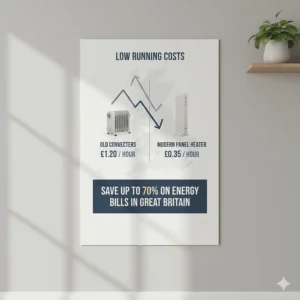
Real-World UK Analysis: Heating a single room to 20°C for 8 hours daily:
- Panel heater (1500W): £0.2486 × 1.5kW × 5 hours (40% duty cycle) = £1.86/day = £56/month
- Gas central heating (heating whole house): Estimated £120-150/month
For UK households regularly using only a few rooms, panel heaters can genuinely save money despite higher electricity unit costs.
Installation Flexibility
Panel heaters shine here, particularly for UK homes:
Listed Buildings: Many UK properties are listed, restricting modifications. Installing gas central heating in a Grade II listed cottage involves planning permission and building regulations. Panel heaters simply plug in.
Rental Properties: Landlords can upgrade heating with panel heaters without major works. Tenants can even purchase their own heaters (taking them when they move), which isn’t possible with radiators.
Extensions and Conversions: UK homes frequently gain conservatories, loft conversions, or garden offices. Extending gas central heating to these spaces costs £1,000-£3,000. Panel heaters provide immediate solutions for £100-200.
Off-Grid Properties: Rural UK homes without gas mains connections face expensive LPG or oil heating. Panel heaters offer clean, affordable electric alternatives.
Energy Efficiency Tips for UK Homes
Maximising panel heater efficiency goes beyond the heater itself. These strategies help UK homeowners stay warm whilst minimising costs.
Insulation: The Foundation
The most cost-effective energy saving isn’t a better heater – it’s preventing heat loss. UK homes lose heat through:
Walls: 35% of heat loss in uninsulated homes. Cavity wall insulation costs £500-1,500 for a typical UK property but saves £150-300 annually. Payback period: 2-5 years.
Roof: 25% of heat loss. Loft insulation costs £400-800 and saves £200-350 annually. Payback: 2-3 years. Many UK local authorities offer grants or subsidised insulation programmes.
Windows: 20% of heat loss. Single glazing vs double glazing makes an enormous difference in UK climates. Secondary glazing is a cost-effective compromise for listed buildings where double glazing isn’t permitted.
Draughts: 15% of heat loss. Draught-proofing doors, windows, and letterboxes costs £100-200 for a whole UK home and saves £50-80 annually. This is the lowest-cost, highest-impact improvement.
Even with panel heaters, these improvements reduce running time and costs significantly.
Smart Scheduling Strategies
UK lifestyles follow predictable patterns that smart scheduling can exploit:
Typical Weekday Pattern:
- 6:30-8:00am: Heat bathroom and kitchen
- 9:00am-5:00pm: Heat only home office (if working from home)
- 5:30-10:00pm: Heat living room and kitchen
- 10:00pm-7:00am: Heat only bedroom to 16-18°C
This pattern heats rooms only when occupied, typically saving 40-60% compared to heating all rooms all day.
Weekend Adjustments: Lie-in days need later morning heating. Creating separate weekend schedules optimises both comfort and efficiency.
Holiday Settings: UK homes typically have 2-3 weeks empty annually for holidays. Switching panel heaters to anti-frost mode (5-7°C) maintains pipes whilst using minimal energy – approximately £0.50 per day instead of £2-3.
Combining with Renewable Energy
Panel heaters pair exceptionally well with solar panels – increasingly popular in UK homes. During sunny UK days (yes, they do exist!), solar generation can power panel heaters essentially for free.
This synergy is particularly effective for:
Home Offices: Daytime use coincides with peak solar generation
Water Heating: Using excess solar to heat water cylinders via immersion heaters
Off-Peak Storage: Some UK homeowners install battery storage, using cheap overnight electricity to charge batteries, then powering daytime heating
With UK government incentives like the Smart Export Guarantee (SEG) paying for excess generation, the economics of solar + electric heating are increasingly favourable.
Draught Prevention Without Suffocation
UK homes need ventilation to prevent damp and mould (perennial British housing problems), but draughts waste energy. The trick is controlled ventilation:
Trickle Vents: Modern UK windows include trickle vents that provide controlled air changes without creating draughts. Keep these open even when heating.
Mechanical Ventilation: Bathroom and kitchen extractor fans are essential in UK homes. Use them but don’t leave windows open for ventilation – fans are more efficient.
Humidity Control: UK winters are damp. Panel heaters help reduce condensation by maintaining temperatures above dew points, but combine them with proper ventilation. Excessively sealed rooms can develop mould problems.
Comparison Tables
Top 7 Panel Heaters: Complete Specifications
| Feature | Devola DVPW1000WH | MYLEK 1000W | Devola 2000B | AMOS Smart | MYLEK WiFi | Generic 1000W | MYLEK Ceramic |
|---|---|---|---|---|---|---|---|
| Power | 1000W | 1000W | 2000W | 1000W | 1000W | 1000W | 1000W |
| WiFi | Yes | No | Yes | Yes | Yes | No | No |
| Price | £76.95-£98.96 | £62-£75 | £114.70-£134.95 | £89-£109 | £85-£95 | £49.99-£64.99 | £89-£119 |
| Voice Control | Alexa, Google | No | Alexa, Google | Alexa | No | No | No |
| Open Window Detection | Yes | No | Yes | No | No | No | Yes |
| Display Type | LED Touch | Digital LED | LED Touch | Digital LED | Digital | Basic | LCD |
| Thermostat Accuracy | ±0.5°C | ±0.5-1°C | ±0.5°C | ±1°C | ±1°C | ±2-3°C | ±1°C |
| IP Rating | IP24 | IP24 | IP24 | IP24 | IP24 | IP24 | IP24 |
| Warranty | 1 year | 2 years | 1 year | 1 year | 2 years | 1 year | Amazon 2 yr |
| Room Coverage | Up to 15m² | 8-15m² | Up to 22m² | 10-15m² | 10-15m² | 8-10m² | 8-12m² |
| Weight | 6-7kg | 4-5kg | 7-8kg | 5-6kg | 4kg | 3.5kg | 5kg |
Panel Heaters vs Traditional Heating
| Feature | Panel Heaters | Gas Central Heating | Electric Radiators | Oil-Filled Radiators |
|---|---|---|---|---|
| Installation Cost | £50-£150 | £2,500-£6,000 | £199-£700 | £60-£150 |
| Running Cost (per kWh) | 24.86p | 6.34p (gas) | 24.86p | 24.86p |
| Heat-Up Time | 5-15 minutes | 20-60 minutes | 10-20 minutes | 30-60 minutes |
| Heat Retention | Low | Medium | High | Very High |
| Portability | High | None | Low | High |
| Maintenance | None | Annual service £70-100 | Minimal | None |
| Zonal Control | Excellent | Poor-Medium | Excellent | Excellent |
| Best For | Single rooms, flexible heating | Whole house heating | Primary room heating | Supplementary heating |
| Noise Level | Silent | Low hum | Silent | Silent |
| Smart Features | Often included | Requires separate system | Often included | Rarely included |
Energy Efficiency Features Comparison
| Feature | Energy Saving | Lot 20 Points | UK Average Annual Saving |
|---|---|---|---|
| Digital Thermostat | 10-15% | +2 | £40-60 |
| 24/7 Weekly Timer | 20-30% | +4 | £80-120 |
| Open Window Detection | 5-10% | +1 | £20-40 |
| Adaptive Start | 8-12% | +2 | £30-50 |
| App Control/Distance | 10-18% | +2 | £40-70 |
| Eco Mode | 15-25% | Included in base | £60-100 |
| Presence Detection | 12-20% | +1 | £50-80 |
Savings based on heating one room 8 hours daily at 2026 UK electricity rates
Price vs Features Value Analysis
| Price Range | Typical Features | Best For | Value Rating |
|---|---|---|---|
| £40-£60 | Basic thermostat, 24hr timer, Lot 20 compliant | Occasional use, spare rooms, budget buyers | ⭐⭐⭐ Good |
| £60-£90 | Digital thermostat, 24/7 timer, better build | Regular use, main rooms, landlords | ⭐⭐⭐⭐ Very Good |
| £90-£120 | WiFi, app control, voice control, premium features | Smart home users, frequent use | ⭐⭐⭐⭐⭐ Excellent |
| £120-£150 | Premium materials, advanced features, higher wattage | Large rooms, primary heating | ⭐⭐⭐⭐ Good |
| £150+ | Designer finishes, commercial grade, advanced tech | Design-conscious buyers, commercial use | ⭐⭐⭐ Acceptable |
✨ Don’t Miss These Exclusive Deals!
🔍 Take your home heating to the next level with these carefully selected products. Click on any highlighted item to check current pricing and availability on Amazon.co.uk. These tools will help you create authentic comfort your family will love!
Frequently Asked Questions
❓ How much does it cost to run a 1000W panel heater in the UK?
❓ Are panel heaters more efficient than oil-filled radiators?
❓ Can I leave a panel heater on overnight in the UK?
❓ Do panel heaters work in poorly insulated UK homes?
❓ What IP rating do I need for a bathroom panel heater in the UK?
Conclusion: Choosing Your Perfect Panel Heater
Finding the best panel heater for your UK home ultimately comes down to matching features with your specific needs and budget. Let’s recap the key points that should guide your decision.
For most British homeowners, the Devola DVPW1000WH represents the sweet spot of modern panel heater technology. Its smart features aren’t mere gimmicks – they genuinely reduce energy consumption whilst improving convenience. The ability to control heating remotely, combined with open window detection and precise temperature control, makes it our top overall choice for 2026.
However, if budget is your primary concern, the MYLEK 1000W panel heater delivers exceptional value under £75. You’re getting Lot 20 compliance, reliable UK-made quality, and all essential features without paying for smart connectivity you might not use. It’s perfect for spare bedrooms, home offices, or rental properties where simplicity and cost-effectiveness matter most.
For larger spaces or those seeking premium features, the Devola DVPW2000B scales up to 2000W whilst maintaining the smart functionality that makes modern panel heaters so practical. British homes with spacious living rooms or open-plan areas benefit from this additional power, and the dual wattage settings provide flexibility for different seasons.
Remember that choosing a panel heater is just one element of efficient home heating. Combine your heater with proper insulation, draught-proofing, and smart scheduling to maximise comfort whilst minimising costs. The Lot 20 regulations have genuinely improved heater efficiency, but the biggest savings come from using them intelligently.
The UK heating landscape is evolving rapidly, driven by rising energy costs, environmental concerns, and improving technology. Panel heaters have carved out an important niche – they’re not necessarily replacements for whole-house central heating, but for the increasing number of British households using rooms selectively, they offer targeted warmth at manageable costs.
Whether you’re a homeowner seeking to supplement gas central heating, a landlord meeting EPC requirements, or a renter wanting control over your heating bills, there’s a panel heater in our top 7 that fits your situation. The technology has matured, prices have become competitive, and the energy-saving features actually work.
Your comfort through British winters shouldn’t require heating rooms you’re not using or paying for technology you don’t need. Armed with the information in this guide, you can make an informed decision that keeps you warm, saves money, and suits your lifestyle. Stay cosy out there!
Recommended for You
- Best Infrared Heater 2026: 7 Brilliant UK Options Reviewed
- 7 Best Ceramic Heaters UK 2026
- 7 Best Oil Filled Radiators UK 2026: Expert Reviews & Energy Costs
Disclaimer: This article contains affiliate links. If you purchase products through these links, we may earn a small commission at no additional cost to you. Prices shown are approximate and may vary. All products featured are available on Amazon.co.uk at the time of writing. We recommend checking current prices and availability before purchasing. Product specifications and features are based on manufacturer information and customer reviews as of February 2026.
✨ Found this helpful? Share it with your mates! 💬🤗
