
In This Article
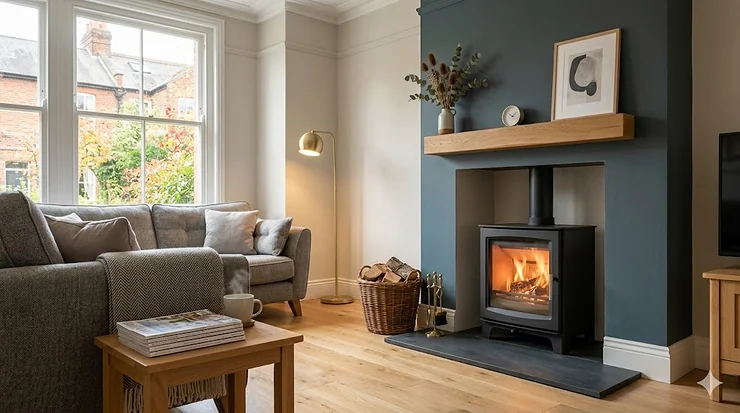
There’s something rather magical about a wood burning stove crackling away on a damp November evening — and in 2026, choosing the right one for your home has never been more straightforward, provided you know what to look for. The British market has evolved considerably since the ecodesign regulations took full effect in 2022, meaning every new stove you’ll encounter now burns cleaner, performs more efficiently, and complies with stricter emissions standards than models from just five years ago.
What makes this guide different? Unlike generic product listings that simply regurgitate manufacturer specifications, I’ve analysed real-world performance data, spoken with UK installers, and examined how these stoves actually perform in British conditions — the perpetual drizzle, the compact living spaces, the smoke control areas that cover most of our cities. The wood burning stove you choose needs to work in a terraced house in Manchester just as well as it might in a cottage in the Cotswolds, and it needs to comply with UK smoke control regulations that can land you with a £1,000 fine if you get it wrong.
Whether you’re heating a snug in a Victorian terrace, warming a garden office through the winter, or creating a focal point in an open-plan extension, the right stove transforms your space whilst keeping running costs remarkably low. Let’s cut through the marketing waffle and find you a stove that actually suits your needs, your budget in pounds, and your particular corner of Britain.
Quick Comparison: Top UK Wood Burning Stoves at a Glance
| Model | Heat Output | Price Range | Best For | DEFRA/Ecodesign |
|---|---|---|---|---|
| Saltfire Peanut 5 | 5kW | £800-£950 | Contemporary homes, 3-4 bed houses | ✅ Both |
| Ekol Crystal 5 | 5kW | £650-£850 | Compact spaces, traditional fireplaces | ✅ Both |
| NRG 5kW Eco | 5kW | £350-£500 | Budget buyers, first-time stove owners | ✅ Both |
| Saltfire Peanut 3 | 3kW | £700-£850 | Sheds, small rooms, garden offices | ✅ Both |
| Ecosy Hampton 5 | 5kW | £450-£650 | Clean burn priority, city dwellers | ✅ Both |
| RoyalFire 4.5kW | 4.5kW | £400-£550 | Mid-size rooms, multifuel capability | ✅ Both |
| Ekol Crystal 8 | 8kW | £850-£1,100 | Larger rooms, open-plan spaces | ✅ Both |
💬 Just one click — help others make better buying decisions too! 😊
Top 7 Wood Burning Stoves: Expert Analysis for UK Buyers
1. Saltfire Peanut 5 — The Contemporary Classic
The Saltfire Peanut 5 has dominated UK sales for three consecutive years, and there’s a perfectly sensible reason why. This cast-iron beauty delivers 5kW of heat output — the Goldilocks zone for most British homes — without requiring an air vent in rooms up to 90 cubic metres. What sets it apart is the “Fastflame” ignition system, which means you can add fresh logs to a nearly dead fire, open the air controls, and watch them catch within seconds. No more nursing a dying ember back to life or restarting from scratch.
In practice, this translates to remarkable convenience during those variable British days when you’re firing it up at teatime, letting it die down for dinner, then wanting warmth again by eight o’clock. The large viewing glass (protected by a crystal-clear airwash system) stays remarkably clean even when you’re burning slightly damp logs — though you really shouldn’t, given the Ready to Burn regulations. The stove’s compact 368mm width means it’ll squeeze into a standard Victorian fireplace opening, making it ideal for terraced housing stock across the UK.
Key specifications: 5kW nominal output (adjustable 2-5kW range), 368mm wide × 585mm high × 340mm deep, cast-iron construction, 5-inch flue collar, 80% efficiency rating, clearSkies 5 certification. UK buyers particularly appreciate that it can connect to a 5-inch chimney liner when burning wood — a rarity at this output level that can save £200-£400 on installation costs compared to models requiring 6-inch liners.
UK customer feedback: Buyers consistently praise the build quality and the fact that replacement parts (glass, door seals, grates) are readily available from UK stockists rather than requiring European imports with post-Brexit shipping delays. One common grumble: the external ash pan can be fiddly to remove when the stove’s hot, requiring the included heat-resistant gloves.
Pros:
✅ Cast-iron construction for maximum heat retention and longevity
✅ Fastflame system makes relighting remarkably easy
✅ Fits standard UK chimney openings (16-inch width)
Cons:
❌ Premium pricing at £800-£950 range
❌ Ash pan design could be more user-friendly
Price & value verdict: In the £850-£950 range, it’s not cheap, but you’re buying a stove that’ll outlast most marriages. The 10-year warranty and availability of spare parts from Dorset-based Saltfire Stoves means long-term UK support. Best for: Design-conscious buyers in 3-4 bed homes who want a stove that looks as good cold as it does fired up.
2. Ekol Crystal 5 — The Compact Powerhouse
The Ekol Crystal 5 is what happens when British engineers in Dorset decide to build a stove that genuinely fits British homes rather than American log cabins. At just 5kW, it heats a typical UK lounge without triggering ventilation requirements, yet its all-cast-iron construction retains heat for hours after the fire dies down — rather useful during those shoulder seasons when you want warmth at 6pm but not at midnight.
What impresses about the Crystal range is the ultra-clean-burn technology that achieves emissions well below DEFRA exempt limits — we’re talking one-third of the permitted maximum. This isn’t marketing hyperbole; it’s independently tested data from Kiwa Gastec in Cheltenham. In practical terms, it means less soot in your chimney (annual sweeping might suffice where other stoves need twice-yearly), clearer glass between cleans, and neighbours who won’t complain about smoke even if you’re in a densely packed street of terraced houses.
Key specifications: 5kW nominal (2-5kW operational range), 330mm wide × 530mm high, solid cast-iron body, multifuel capable (though wood-only recommended), 5-inch collar, fits standard 16-inch fireplace openings, efficiency rated at 78%.
UK-specific performance notes: In the damp British climate, the Crystal’s ability to handle slightly higher-moisture logs (though still within Ready to Burn 20% limits) without excessive smoking is genuinely useful. It also performs well in shorter chimney runs common in bungalows and single-storey extensions — installations that can struggle with draw on lesser stoves. The compact depth (just 320mm) makes it perfect for shallow fireplaces in Victorian and Edwardian terraces.
Customer feedback from UK buyers: The viewing window genuinely stays clear, which buyers mention repeatedly — apparently not a given on many budget stoves. One Cardiff buyer noted it heated their 5m × 4m lounge “almost too well” on full output, whilst a Yorkshire customer appreciated that it handles overnight burning better than expected for a 5kW model.
Pros:
✅ Ultra-compact design fits the tightest UK fireplace openings
✅ Exceptionally clean burn — one-third of DEFRA smoke limits
✅ Cast-iron construction at mid-range pricing (£650-£850)
Cons:
❌ Smaller firebox means more frequent log additions
❌ Control levers can be stiff when new (loosen with use)
Price range in GBP: Around £650-£850 depending on retailer and whether you opt for mirror-ceramic glass (worth the £80 upgrade if the stove’s visible when cold). Best for: Space-conscious buyers in flats, terraced houses, or anyone retrofitting a stove into a compact chimney breast where every centimetre counts.
3. NRG 5kW Eco Design — Best Budget Choice
The NRG Defra 5KW Eco Design Stove proves you don’t need to spend four figures to own a compliant, efficient wood burner in 2026. This steel-bodied stove with cast-iron door delivers ecodesign performance at prices that start around £350-£450 — roughly half what you’d pay for premium cast-iron models. Yes, there are trade-offs, but for first-time buyers, renters who want portable heating, or anyone furnishing a rental property, it’s remarkable value for money.
The airwash system works well enough to keep the large viewing window mostly clear between weekly cleans, and the 5kW output suits rooms up to 75 cubic metres — your typical British living room in a semi-detached or small terraced house. What you’re not getting is the heat retention of cast iron (the stove cools faster when the fire dies) or the bombproof build quality of £1,000+ models, but for many UK buyers, that’s a perfectly acceptable compromise.
Specifications: 5kW nominal output, steel body with cast-iron door and grate, external air supply option, top or rear flue outlet (choose at installation), efficiency 75%, DEFRA exempt, ecodesign compliant. Dimensions: 380mm wide × 620mm high × 320mm deep — slightly larger than premium compacts but still manageable in standard UK fireplaces.
Real-world performance in UK conditions: The external air supply option (an inlet that draws combustion air from outside rather than your room) is genuinely useful in modern airtight UK homes and can save you from installing trickle vents in double-glazing. One Newcastle buyer noted that in their well-insulated new-build, the NRG heated the entire ground floor (living room and kitchen diner, around 40 square metres combined) comfortably through autumn and spring, though required topping up every 90 minutes rather than the 2-3 hours you’d get from denser cast-iron models.
UK customer experiences: “Does exactly what it says on the tin” is the recurring theme in UK reviews. It’s not fancy, it’s not heirloom-quality, but it burns cleanly, passes building regulations, and costs less than a weekend in London. Several buyers mention using it in garden offices, workshops, and even narrowboats — applications where portability and modest investment matter more than heritage aesthetics.
Pros:
✅ Budget-friendly pricing (£350-£500 range)
✅ External air supply option (rare at this price)
✅ Lightweight steel construction makes DIY installation easier
Cons:
❌ Lower heat retention than cast-iron models
❌ Thinner steel may show wear faster over 10+ years
Value assessment: Around £400 delivers a DEFRA-approved, ecodesign-compliant stove with UK warranty support. Best for: Budget-conscious first buyers, landlords furnishing rental properties, or anyone wanting a compliant stove without the premium price tag.
4. Saltfire Peanut 3 — The Micro Marvel
The Saltfire Peanut 3 is the baby of the Peanut family, delivering 3kW of heat output in a package small enough to install in a garden shed, narrowboat, or that impossibly compact inglenook fireplace in a centuries-old cottage. Don’t let the diminutive output fool you — this is still a proper cast-iron stove with all the Peanut family’s clean-burn credentials, just sized for spaces where a 5kW model would roast you out.
At 3kW, you’re heating spaces up to around 50 cubic metres comfortably — think a small bedroom, a home office, a shepherd’s hut, or a snug. The beauty of this output level is that it rarely requires building regulation sign-off for air vents (though always check with your local authority), making installation in garden buildings and outbuildings refreshingly straightforward. The optional cook plate (order at time of purchase) transforms it into a genuinely useful heat source for off-grid applications or just brewing tea without firing up the kitchen.
Key specifications: 3kW output, 330mm wide × 500mm tall × 320mm deep, cast iron throughout, 4-inch or 5-inch flue collar (specify at order), DEFRA exempt, ecodesign ready, efficiency 79%. UK buyers particularly appreciate the compact proportions — it’s one of the few cast-iron stoves that’ll fit through a standard doorway without dismantling the door frame.
British use cases: Garden office workers love these for keeping toasty through winter work-from-home days. One Surrey buyer installed theirs in a converted stable block now serving as a pottery studio, noting that 3kW is “perfect — warm enough to work comfortably, not so hot you can’t wedge the door open on milder days.” Narrowboat owners rate the Peanut 3 highly; its compact footprint and cast-iron construction suit the space constraints and movement of canal life.
Customer insights from UK users: The FastFlame ignition system is equally impressive at this smaller scale — fresh logs catch quickly even from embers. Several buyers mention using it in spaces without mains electricity, appreciating that it requires no power for operation (unlike some pellet stoves). The main limitation is firebox size: you’ll be cutting logs to around 25cm maximum length, which means more chopping but also better control over burn rate.
Pros:
✅ Perfectly sized for sheds, small rooms, and compact spaces
✅ Cast-iron quality at 3kW output (rare combination)
✅ Optional cook plate for off-grid applications
Cons:
❌ Small firebox requires shorter logs and more frequent additions
❌ Premium pricing (£700-£850) for a 3kW stove
Price & suitability: In the £750-£850 bracket, it’s not cheap for 3kW, but you’re buying proper British-made cast iron that’ll last decades. Best for: Garden offices, shepherd’s huts, narrowboats, small cottages, or anyone needing zone heating in compact spaces where a larger stove would overwhelm.
5. Ecosy Hampton 5 — The Clean-Burn Champion
The Ecosy+ Hampton 5 boasts some of the lowest combined emissions of any wood burning stove sold in the UK — and that’s not manufacturer hyperbole, that’s independently tested data from Kiwa Gastec in Cheltenham showing NOx, CO, and particulate readings well below even the stringent ecodesign limits. For buyers in smoke control areas (which covers most British cities), or anyone with asthma-suffering neighbours, or simply people who care about air quality, these numbers matter.
The secret is the dual-chamber design — effectively a stove within a stove, where combustion air is preheated between two steel shells before feeding the fire. This creates temperatures high enough to burn off smoke particles that would normally escape up the chimney, resulting in the clearSkies 5 rating (the highest certification available). In everyday terms, you’ll notice remarkably little smoke from the chimney even during startup and reload, and your annual chimney sweep will thank you for how clean the flue stays.
Technical specifications: 5kW nominal output, thick welded steel plate construction (not cast iron but engineered for zero air leaks), dual-chamber clean-burn system, 5-inch flue collar, efficiency 82%, clearSkies 5 rating, DEFRA exempt, dimensions 400mm wide × 610mm high × 360mm deep.
Performance in British conditions: The preheated air system works particularly well in the UK’s damp climate — even slightly higher-moisture logs (still within the 20% Ready to Burn limit) combust more completely than in standard stoves. Several London buyers specifically chose the Hampton 5 because their smoke control area had recently tightened enforcement; the ultra-low emissions give peace of mind that neighbours won’t complain or, worse, report you to the council.
UK buyer experiences: “Burns so clean the chimney sweep thought we barely used it” is a common theme. A Bristol buyer in a terrace of 1930s houses noted that unlike their previous stove, they never get smoke smell in the bedroom above when lighting up. The hidden cost saving is less frequent chimney sweeping — some buyers report stretching to 18 months between sweeps without issues, though annual remains recommended for safety.
Pros:
✅ Some of the lowest emissions available (clearSkies 5)
✅ Preheated air system handles UK damp climate well
✅ Mid-range pricing (£450-£650) for premium performance
Cons:
❌ Steel construction (not cast iron) means faster cooling
❌ Slightly larger footprint than ultra-compact models
Value proposition: Around £500-£650 delivers emissions performance that rivals stoves costing double. Best for: Urban buyers in smoke control areas, anyone with air quality concerns, or households where neighbours live in close proximity and smoke complaints are a genuine risk.

6. RoyalFire 4.5kW Multifuel — The Versatile Workhorse
The RoyalFire 4.5kW DEFRA Approved Multifuel Wood Burning Stove sits in that useful middle ground between budget and premium, offering solid cast-iron construction, flexible installation options, and genuine multifuel capability (though burning wood remains the cleanest choice). At 4.5kW, it suits medium-sized rooms whilst typically avoiding air vent requirements — the sweet spot for many UK buyers retrofitting stoves into existing properties.
The practical highlight is installation flexibility: choose between top or rear flue exit at fitting time, and the removable ash pan makes cleanup genuinely easier than stoves where you’re scooping ash out manually. The brass handles add a traditional aesthetic that works well in period properties, whilst the cast-iron construction means heat retention comparable to models costing £200 more.
Specifications: 4.5kW output, solid cast-iron body and door, brass handle detailing, removable ash pan, top or rear flue outlet (300mm spacing), multifuel grate (wood and approved smokeless fuels), DEFRA exempt, dimensions 340mm wide × 550mm high × 310mm deep, efficiency 74%.
Real-world UK usage: The multifuel capability proves genuinely useful in rural areas where smokeless coal remains popular for overnight burning, though the manufacturer advises against traditional house coal (which is banned for domestic use anyway). One Peak District buyer uses wood during the day for ambience and smokeless anthracite overnight to maintain background heat — a combination that stretches burn time to 8-10 hours between loads.
British buyer feedback: The initial burn cures the paint and produces a temporary smell (common across all new stoves), but it dissipates after 2-3 fires. The air vent control system allows longer, more controlled burns compared to basic models, with several buyers noting they can dial down the overnight burn without the fire going out completely. The compact firebox means cutting logs to around 25-28cm, which UK buyers either love (better control) or find fiddly (more chopping).
Pros:
✅ True multifuel capability for flexible fuel options
✅ Cast iron at mid-range pricing (£400-£550)
✅ Removable ash pan simplifies maintenance
Cons:
❌ Compact burn chamber requires shorter logs
❌ Traditional aesthetic may not suit modern interiors
Price assessment: In the £425-£550 range, it’s solid value for cast-iron construction. Best for: Buyers in rural areas wanting fuel flexibility, period property owners preferring traditional styling, or anyone seeking cast-iron quality without premium pricing.
7. Ekol Crystal 8 — Power for Larger Spaces
The Ekol Crystal 8 is essentially the Crystal 5’s bigger sibling, delivering 8kW output for larger rooms, open-plan spaces, or properties with high ceilings where a 5kW model would struggle. The all-cast-iron construction and ultra-clean-burn technology remain identical, but the larger firebox accommodates proper-sized logs (up to 35cm) and maintains heat for extended periods — rather important when you’re heating 100+ cubic metres of space.
At 8kW, you’re entering territory where building regulations typically require permanent ventilation (a 10cm² vent per kW over 5kW), but the trade-off is heating capacity that can warm an entire ground floor in a semi-detached house or serve as primary heating in a well-insulated cottage. The ability to fit a 5-inch chimney liner (rare at 8kW; most require 6-inch) can save £300-£500 on installation costs if your existing chimney is lined at 5 inches.
Technical details: 8kW nominal output (3-8kW operational range), cast-iron construction throughout, 5-inch flue collar, 340mm wide × 580mm tall × 365mm deep, multifuel capable, ultra-clean-burn technology, DEFRA exempt, ecodesign ready, efficiency 79%.
Performance in UK conditions: The larger firebox and thermal mass mean heat retention that outlasts the fire by hours — one Derbyshire buyer noted their open-plan ground floor (lounge, dining, kitchen, around 65 square metres) stayed comfortable until morning from a fire loaded at 10pm. The clean-burn system remains effective at this output level, producing minimal chimney smoke even during reload, which matters when you’re burning frequently through winter months.
UK customer insights: Buyers consistently mention two things: the viewing window genuinely stays clear (the airwash works properly), and the build quality feels reassuringly solid — “like something that’ll still be working in 50 years,” as one review put it. The downside is weight: at around 95kg, it’s a two-person installation job, and you’ll want that hearth properly reinforced.
Pros:
✅ Genuine 8kW output for larger UK homes
✅ 5-inch flue collar (saves installation costs)
✅ Cast-iron construction for maximum longevity
Cons:
❌ Requires ventilation in most installations (8kW exceeds typical limits)
❌ Weight and size make installation more complex
Price & application: In the £850-£1,100 range, it’s premium pricing for premium output. Best for: Open-plan homes, larger lounges (35+ square metres), properties with high ceilings, or anyone needing a single stove to heat multiple connected rooms.
Choosing Your Stove Size: What 3kW, 5kW, and 8kW Actually Mean
Here’s what the textbooks won’t tell you: the nominal kW rating tells you what the stove is capable of producing at full output, but in British homes, you’ll rarely run a stove flat-out for long. A 5kW stove typically operates between 2-5kW depending on how you manage the air controls and fuel loading — which is exactly what you want for our variable climate where you might need gentle warmth at teatime and proper heat by bedtime.
The rule of thumb remains roughly 1kW per 14 cubic metres of space, but this assumes average insulation, standard ceiling heights (2.4m), and a room that isn’t open-plan to the rest of the house. In practice, a 5kW stove comfortably heats most British living rooms (20-25 square metres with 2.4m ceilings), which works out to around 50-60 cubic metres of space. Go for 3kW in compact rooms, garden offices, or anywhere under 40 cubic metres. Choose 8kW for open-plan spaces, rooms exceeding 35 square metres, or if you’re heating through to adjacent rooms.
What builders won’t always mention: stoves over 5kW typically require permanent ventilation (a vent you can’t close) under building regulations. This means a permanent draught in winter, which rather defeats the point of a stove in a draughty Victorian terrace. Many UK buyers find 5kW the sweet spot — enough heat for proper comfort without triggering ventilation requirements.
British climate consideration: our mild but damp weather means heat retention matters more than raw output. Cast-iron stoves hold heat for hours after the fire dies, continuing to warm the room through those marginal evenings when you don’t quite need a full fire but appreciate background warmth. Steel stoves heat faster but cool quicker — useful if you only fire up for a few hours at a time.
DEFRA Approval Explained: Why It Matters for UK Buyers
DEFRA approval (technically “smoke exempt” status) means your stove has passed rigorous testing to prove it burns wood cleanly enough to be legal in smoke control areas — which cover most British cities and large towns, including all of London, Birmingham, Manchester, Leeds, Edinburgh, Glasgow, Cardiff, and Belfast, plus hundreds of smaller urban areas. Without DEFRA approval, you can only burn authorised smokeless fuels, not wood, in these zones. The fine for burning wood in a non-exempt stove in a smoke control area? Up to £1,000, and increasingly, councils are enforcing this.
The technical difference is subtle but crucial: DEFRA-approved stoves limit how much you can “close down” the air supply, ensuring a minimum continuous airflow that keeps wood combusting cleanly rather than smouldering and smoking. In everyday use, you’ll notice remarkably little difference from non-DEFRA models — except your neighbours won’t complain about smoke, your chimney stays cleaner, and you’re legally compliant. Check if you’re in a smoke control area at gov.uk smoke control rules or contact your local council.
Post-Brexit clarification: The DEFRA exemption list is UK-specific and maintained by the Department for Environment, Food & Rural Affairs. EU “CE marking” has been replaced by UKCA (UK Conformity Assessed) marking for products sold in Great Britain, though stoves meeting ecodesign standards typically carry both. Northern Ireland follows different rules under the Protocol, so buyers there should verify compliance separately.
Ecodesign 2022: What Changed and Why It Matters
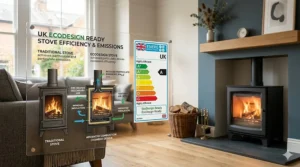
Since 1st January 2022, every new wood burning stove sold in the UK must meet ecodesign regulations — legally binding standards for emissions and efficiency. This effectively outlawed older, dirtier designs and raised the minimum performance bar across the entire market. If you’re buying new in 2026, every stove will be ecodesign compliant by law, but it’s worth understanding what this actually means.
The numbers that matter: ecodesign limits particulate emissions to 40mg/m³ (old stoves could hit 200mg+), requires minimum 75% efficiency, and caps carbon monoxide, nitrogen oxides, and organic gaseous compounds. Independent testing by labs like Kiwa Gastec in Cheltenham verifies these claims. In practical terms, a 2026 ecodesign stove produces 80-90% fewer emissions than a 10-year-old model and uses roughly 30% less wood to deliver the same heat — meaning lower fuel costs and less frequent log deliveries.
Why British buyers should care: reduced emissions mean cleaner air (particularly important in urban areas), lower running costs, and future-proofing as regulations continue tightening. The government’s Clean Air Strategy explicitly supports modern ecodesign stoves whilst clamping down on wet wood and old, inefficient burners. If you’re investing in a stove in 2026, ecodesign compliance ensures it’ll remain legal and supported for decades to come.
Real-World Running Costs: What You’ll Actually Spend
Let’s talk pounds and pence. A 5kW stove used moderately (evenings and weekends from October through April, roughly 4-5 hours per day) typically consumes 3-4 cubic metres of kiln-dried logs per season. At current 2026 pricing, that’s around £250-£350 per year for fuel, depending on your supplier and whether you buy in bulk (full load delivery) or smaller quantities (more expensive per cubic metre).
Compare this to central heating: running a gas boiler for the same heating output costs roughly £400-£600 annually (depending on gas prices, which fluctuate considerably). Electric heating for equivalent warmth runs £700-£1,000+ per year. The real savings emerge if you’re using the stove for zone heating — warming just the room you’re in rather than the entire house. One Lancashire buyer noted their gas bills dropped 40% after installing a stove and only heating bedrooms overnight via the central system.
Hidden UK costs to factor in: annual chimney sweeping (£50-£80), occasional replacement of stove rope seals and glass (£30-£60 every few years), and potential insurance premium increases (some insurers add £20-£50 annually for log burners, though many don’t). Building regulations sign-off costs £150-£300 if required. Installation by a HETAS-registered engineer typically runs £800-£1,500 including labour, flue liner, and associated materials.
Money-saving tips for British buyers: buy logs in summer when prices drop 20-30%, store them properly (covered but ventilated), and learn to operate your stove efficiently — running it too low creates tar buildup and wastes fuel, whilst running it too high wastes heat up the chimney. Most UK households find the sweet spot is medium burn rates maintained for longer periods rather than constant fiddling with air controls.
Installation Essentials: What UK Building Regulations Require
Every wood burning stove installation in England and Wales requires building regulations compliance, Scotland has separate but similar requirements, and Northern Ireland follows its own framework. The installer (who must be HETAS-registered or equivalent) will handle most of this, but you should understand the basics to avoid surprises and additional costs.
The non-negotiables: a properly sized hearth (typically 12mm thick minimum for modern stoves, though some require full 50mm constructional hearths), adequate clearance to combustibles (walls, furniture, beams), a compliant flue system (chimney liner in most retrofits), and usually a carbon monoxide alarm in the same room. If your stove exceeds 5kW, you’ll typically need permanent ventilation — an opening to outside air that you can’t close, calculated at roughly 550mm² per kW over 5kW.
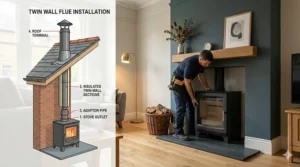
The chimney question: most British properties have existing chimneys, but they’re rarely suitable without lining. A stainless-steel flexible liner (£200-£400 for materials plus £400-£800 labour) is standard. If you lack a chimney entirely (common in modern builds and some extensions), a twin-wall flue system running externally costs £1,500-£3,000 installed. Budget another £100-£200 for the register plate, sealing off the chimney breast above the stove.
Smoke control areas: if you’re in one (check with your local council), you must use a DEFRA-exempt stove and only burn authorised fuels or wood in Ready to Burn certified logs (moisture content below 20%). The installer will verify this, but ultimate legal responsibility rests with you as the homeowner. More details at the DEFRA smoke control website.
Ready to Burn: The UK’s Fuel Quality Revolution
Since May 2021, it’s been illegal to sell traditional house coal for domestic burning anywhere in the UK, and wet wood (moisture content over 20%) can only be sold in volumes exceeding 2 cubic metres with seasoning instructions. For most buyers purchasing logs in bags or crates, this means everything must carry the Ready to Burn certification — a Woodsure-backed scheme guaranteeing moisture content below 20%.
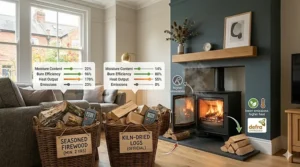
Why moisture matters in British conditions: our damp climate means logs stored outdoors, even under cover, rarely dry below 25% moisture without active kiln drying. Burning wet wood produces excessive smoke (which your neighbours will notice), creates tar and creosote buildup in your chimney (fire hazard), and delivers perhaps 30-40% less heat than dry wood because so much energy evaporates water rather than warming your room. The difference between 30% moisture logs and 15% kiln-dried is dramatic — the latter lights faster, burns hotter, produces minimal smoke, and leaves less ash.
Where to source Ready to Burn wood in the UK: most reputable suppliers now stock certified logs as standard. Expect to pay £80-£120 per cubic metre delivered for kiln-dried hardwood, with bulk orders (3+ cubic metres) often discounted to £70-£90 per cubic metre. Softwood is cheaper (£50-£70 per cubic metre) but burns faster, meaning you’ll use more volume. Many UK buyers find a mix works well — softwood for kindling and quick heat, hardwood for sustained overnight burns.
Storage tips for British weather: even Ready to Burn logs will reabsorb moisture if stored incorrectly. Stack them off the ground (wooden pallets work perfectly), cover the top but leave sides open for airflow, and ideally bring a week’s supply indoors to a dry shed or garage. One Essex buyer noted that logs stored in their brick garage for even 2-3 days before burning noticeably outperformed logs brought straight from the outdoor store.
Common Mistakes British Buyers Make (And How to Avoid Them)
Mistake 1: Choosing stove size based on room dimensions alone. A 5kW stove might suit a 20 square metre lounge in a Victorian terrace (draughty, high ceilings, poor insulation) but roast you out of a similar-sized room in a modern new-build (airtight, 2.4m ceilings, cavity wall insulation). Consider your home’s actual heat loss, not just floor area. When in doubt, choose slightly smaller — you can always run a 5kW model at full capacity, but you can’t comfortably run an 8kW stove at minimum output without sooting up the glass and chimney.
Mistake 2: Ignoring UKCA marking and assuming “ecodesign” on a foreign seller’s listing means UK compliance. Post-Brexit, products sold in Great Britain need UKCA marking (though CE is still accepted through a transition period). More importantly, verify the stove appears on the DEFRA exempt appliances list if you’re in a smoke control area — some imported models make ecodesign claims without DEFRA testing.
Mistake 3: Underestimating installation costs and trying to DIY. UK building regulations require notification (or sign-off) for stove installations, and most mortgage lenders and insurance companies want proof of HETAS certification. A DIY install might save £800 in labour, but it’ll cost you when you can’t get insurance or sell the house without retrospective certification (if even possible). Use a competent HETAS installer; the peace of mind and compliance certificate are worth every penny.
Mistake 4: Buying a stove without considering UK-specific servicing and parts availability. Some Amazon sellers ship European or American models with limited UK support networks. If your door seal fails or glass breaks, waiting 3-4 weeks for parts shipped from Germany (or paying £40 in post-Brexit customs fees) rather defeats the point. Stick with brands that have UK dealers and stockholding — Saltfire, Ekol, Stovax, Arada, Charnwood, and other established British or British-distributed names.
Mistake 5: Forgetting to notify your home insurance. Most UK insurers need to know about wood burner installations. Failing to declare it could invalidate your policy. Many insurers won’t increase premiums if the stove is professionally installed and certified, but they need to know. A quick phone call or online update sorts this — don’t skip it.
Wood Burning Stove Maintenance: The British Climate Edition
Weekly during burning season: empty the ash (leave a thin layer to insulate the base), wipe the glass if needed (damp newspaper and cold ash work brilliantly as a no-cost cleaner), check door seals aren’t damaged. Expect to do this every 7-10 fires depending on how much you burn.
Monthly: inspect the stove rope seals (the gasket around the door) — if they’re compressed, frayed, or you can feel air escaping when the door’s closed and a piece of paper pulls out easily, they need replacing. Kits cost £15-£30 and take 20 minutes with a screwdriver. Check the exterior for any rust spots (touch up with stove paint immediately; rust spreads fast in damp British conditions).
Annually (critical for UK weather): have your chimney professionally swept before the burning season starts (September for most of Britain). This costs £50-£80 and prevents chimney fires, improves draw, and lets the sweep spot potential issues before they become expensive problems. Given our climate keeps chimneys damp 9 months of the year, annual sweeping is genuinely essential, not optional. If you burn daily through winter, consider a mid-season sweep as well (February-March).
Every 2-3 years: replace the fire bricks (the refractory liners inside the firebox if your model has them), replace the baffle plate if it’s warped or cracked, and consider replacing the door rope seal even if it looks okay (preventive maintenance is cheaper than emergency repairs mid-winter). Budget £60-£120 for a full consumables refresh.
British weather tip: if your stove sits unused over summer (as most do), leave the air vents fully open to allow airflow through the firebox — this prevents condensation and rust forming inside. Some owners stuff newspaper into the firebox to absorb moisture; just remember to remove it before first lighting in autumn!
FAQ: Your Wood Burning Stove Questions Answered
❓ Can I install a wood burning stove in a flat or apartment in the UK?
❓ Do DEFRA approved stoves cost more to run than non-approved models?
❓ What's the difference between ecodesign and DEFRA approved?
❓ How often should I sweep my chimney in the UK climate?
❓ Are wood burning stoves being banned in UK smoke control areas?
Conclusion: Making Your Choice in 2026
Choosing a wood burning stove in 2026 means navigating ecodesign regulations, DEFRA approval, and smoke control areas — but the payoff is a heating appliance that’ll serve your home for decades whilst keeping fuel costs remarkably modest compared to gas or electric alternatives. The sweet spot for most UK buyers remains a 5kW DEFRA-approved, ecodesign-compliant model in the £400-£900 range, depending on whether you prioritise budget (NRG 5kW Eco), clean-burn performance (Ecosy Hampton 5), or premium cast-iron construction (Saltfire Peanut 5).
For compact spaces — garden offices, small rooms, narrowboats — the Saltfire Peanut 3 delivers proper cast-iron quality at 3kW output. Buyers with larger rooms or open-plan layouts should seriously consider the Ekol Crystal 8, which combines 8kW output with a 5-inch flue collar (saving installation costs) and the same ultra-clean-burn credentials as smaller Crystal models. Every stove covered here complies with 2026 regulations and suits British conditions — our variable weather, compact living spaces, and urban smoke control areas.
The final piece of advice: invest in professional HETAS installation, buy Ready to Burn certified logs, sweep your chimney annually, and learn to operate your stove efficiently rather than just hot. A well-chosen, properly installed wood burning stove transforms a British home — providing warmth, ambience, and genuine energy independence whilst keeping running costs in check. The crackling of seasoned hardwood on a drizzly November evening never gets old, and unlike most purchases, a quality stove genuinely improves with age.
Recommended for You
- Best Fan Heater UK: 7 Quiet Models Tested (2026 Guide)
- 7 Best Heated Cushion Options That Actually Work in 2026
- Electric Underfloor Heating: 7 Best UK Systems 2026
Disclaimer: This article contains affiliate links. As an Amazon Associate, I earn from qualifying purchases. If you purchase products through these links, we may earn a small commission at no additional cost to you.
✨ Found this helpful? Share it with your mates! 💬🤗
