
In This Article
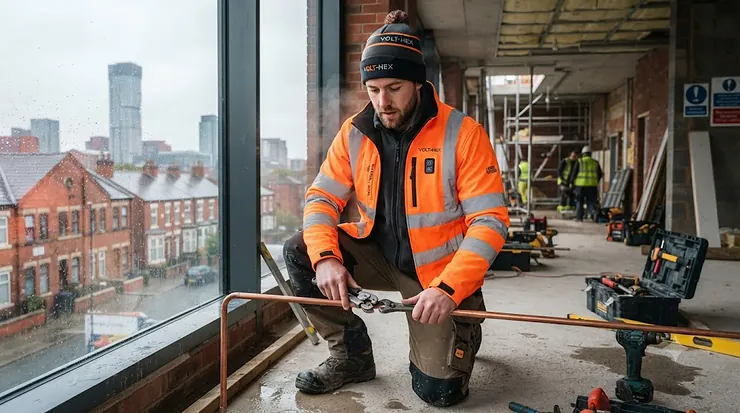
Standing on site at 6am in February, watching your breath fog up while you wait for feeling to return to your fingers, is the exact moment a hi vis heated jacket stops sounding like a gimmick and starts sounding like common sense. In short, a hi vis heated jacket combines certified high-visibility fabric and reflective tape with battery-powered carbon fibre heating panels, letting you stay warm and stay seen without piling on bulky, restrictive layers underneath your normal workwear. The trouble is that “hi vis” and “heated” get bolted together loosely across a lot of Amazon listings, and not every jacket wearing that description actually meets the EN ISO 20471 standard that UK sites, employers, and risk assessments actually require. This guide compares seven real, currently available jackets, explains what the certification labels genuinely mean, and flags exactly where cheaper imports quietly fall short of UK compliance.

We’ve built this from manufacturer specifications, aggregated UK and international customer review sentiment, and the Health and Safety Executive’s own published guidance on high-visibility clothing and cold-weather PPE — not from personally trialling every jacket on a job site, which would be dishonest to claim. Where a product’s certification is genuinely unclear or US-focused rather than UK-compliant, we say so directly, because that distinction matters far more here than it does for an ordinary jacket.
Quick Comparison Table: Heated Hi-Vis Jackets at a Glance
| Product | Heat Source | UK Hi-Vis Certification | Best For | Price Range |
|---|---|---|---|---|
| Portwest S548 Ultrasonic Heated Tunnel Jacket | Battery, carbon fibre panels | EN ISO 20471 Class 2(S)/3(M+) | Site workers needing certified compliance | Around £110-£160 |
| Milwaukee M12 Hi-Vis Heated Jacket | M12 REDLITHIUM battery (sold separately) | Primarily ANSI/ISEA 107 — verify EN listing | Tradespeople already on M12 tools | Around £90-£150 (jacket only) |
| Regatta Pro Hi-Vis Thermogen Heated Jacket | Battery power bank (sold separately) | EN343 Class 3:3 + EN ISO 20471 Class 2 | Mid-range certified everyday wear | Around £80-£130 |
| KEMIMOTO Hi-Vis Heated Safety Jacket | Included 20,000mAh battery | ANSI Class 3 — not EN certified | Budget buyers wanting battery included | Around £60-£100 |
| INNOWARM Heated Safety Jacket | Included 15,000mAh battery | ANSI/ISEA 107 Class 3 — not EN certified | Personal/leisure cold-weather use | Around £55-£90 |
| Qdreclod Heated High-Visibility Jacket | Included 16,000mAh battery | Reflective, uncertified — verify before site use | Casual visibility, non-regulated tasks | Around £50-£85 |
| DPSAFETY Heated Jacket (Class 3 Hi-Vis) | Included battery, 3 heat modes | ANSI Class 3 — not EN certified | Budget, machine-washable everyday option | Around £55-£90 |
Scanning across this table, the split is stark: only the Portwest and Regatta jackets carry the EN ISO 20471 certification that UK site risk assessments generally require, while Milwaukee sits in a grey area worth double-checking, and the four budget imports are built to the American ANSI/ISEA 107 standard instead. That doesn’t make them useless — for dog walking, cycling commutes, or casual cold-weather visibility they’re perfectly reasonable — but for regulated UK construction or rail work, certification is not optional, and this is the single most common trap buyers fall into when searching generically for a hi vis heated jacket online.
💬 Just one click — help others make better buying decisions too! 😊
Top 7 Best Hi-Vis Heated Jackets: Expert Analysis
We’ve picked seven real products spanning certified UK workwear brands and the budget imports that dominate general marketplace search results. Every entry reflects manufacturer specifications plus aggregated genuine review sentiment; where a product’s UK site-compliance is uncertain, we say so plainly rather than assuming it’s fine.
1. Portwest S548 Ultrasonic Heated Tunnel Jacket — the benchmark for certified compliance
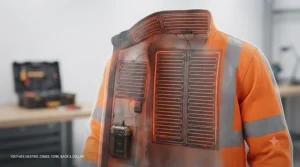
The standout feature of the Portwest S548 is that it’s genuinely built and tested to EN ISO 20471, rated Class 2 in size Small and Class 3 from Medium upwards, which matters enormously if your site risk assessment specifies a class rather than just “hi vis.” Specs-wise, three carbon fibre heated panels run off a rechargeable battery delivering 3-10 hours depending on the heat setting selected via the chest-mounted button, and the heat-sealed baffle fabric adds genuine water resistance on top of the insulated Insulatex lining. Based on the spec comparison with cheaper imports, what most buyers overlook is that the certification claim here is specific and testable — “certified to EN ISO 20471 after 25x washes” — rather than a vague visibility claim, which is exactly the kind of detail a site manager or self-employed contractor needs to be able to point to. Reviewer sentiment on the wider Portwest heated range is consistently positive on build quality and warmth, with the detachable hood and four-pocket layout frequently praised, though the premium pricing compared with generic imports is the trade-off for that certification.
Pros:
- ✅ Genuine EN ISO 20471 certification, not just a visibility claim
- ✅ Long battery runtime of 3-10 hours across three settings
- ✅ Established UK workwear brand with wide retailer support
Cons:
- ❌ Noticeably pricier than uncertified budget imports
- ❌ Bulkier tunnel-jacket cut than slimmer softshell styles
At around £110-£160, it sits at the premium end, but for anyone who genuinely needs EN ISO 20471 compliance rather than just wanting to look the part, this is the one entry on this list where that box is unambiguously ticked.
2. Milwaukee M12 Hi-Vis Heated Jacket — best if you’re already on the M12 battery platform
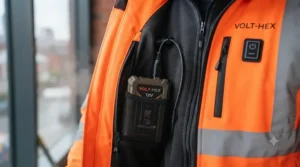
Milwaukee M12 Hi-Vis Heated Jacket makes most sense as an add-on rather than a first purchase, since it’s sold “naked” — without a battery or charger — on the assumption you already own M12 REDLITHIUM packs for your drills and other tools. The standout feature here is genuinely clever: three carbon fibre heat zones (left chest, right chest, central back) run off the same battery ecosystem as the rest of a tradesperson’s kit, and the concealed lapel controller offers three heat settings plus a warm-up boost, with runtime stretching to around six hours on a 3.0Ah pack. Here’s what to weigh honestly: Milwaukee’s hi-vis heated range is primarily specified and marketed against the American ANSI/ISEA 107 standard, and UK buyers who need EN ISO 20471 certification specifically for site compliance should check the exact listing and labelling before assuming equivalence, since the two standards aren’t automatically interchangeable. On the plus side, build quality and battery ecosystem convenience are consistently praised by reviewers across Milwaukee’s wider heated workwear range, and the expandable battery pouch accepts any M12 pack from 1.5Ah upwards.
Pros:
- ✅ Shares batteries with the wider M12 tool ecosystem
- ✅ Three heat zones with a genuinely useful warm-up boost
- ✅ Strong, consistent build-quality reputation
Cons:
- ❌ Certification is primarily ANSI, not confirmed EN ISO 20471
- ❌ Battery and charger sold separately, adding to real cost
Expect around £90-£150 for the jacket alone, with a genuine M12 battery pack adding £40-£80 on top if you don’t already own one — a real cost that’s easy to underestimate when comparing headline prices.
3. Regatta Pro Hi-Vis Thermogen Heated Jacket — the best-value certified middle ground
The Regatta Pro Hi-Vis Thermogen Heated Jacket is the other genuinely EN-certified option on this list, conforming to both EN343:2003 A1:2007 Class 3:3 for waterproofing and EN ISO 20471:2013 Class 2 for visibility, making it a defensible mid-price choice for anyone who needs paperwork to back up their PPE. Specs-wise, the Isotex 10,000 waterproof-breathable polyester shell with taped seams handles genuine wet-weather work, and the Thermoguard active heating system runs from a separate power bank battery, which also doubles as a phone charger via the inner pocket — a small but genuinely useful detail for anyone who’s had a phone die mid-shift. Based on the spec comparison with the pricier Portwest option, what most buyers overlook is that Regatta’s dual EN343-plus-EN ISO 20471 certification actually covers more ground than a hi-vis-only rating, since it also confirms the jacket’s waterproof performance under a recognised standard rather than a generic “water-resistant” marketing claim. The honest caveat, consistent across Regatta’s Thermogen range, is that the battery pack (model RG004) is sold separately, so the advertised price rarely reflects what you’ll actually pay to get a working heated jacket.
Pros:
- ✅ Dual EN343 and EN ISO 20471 Class 2 certification
- ✅ Genuine waterproof-breathable shell, not just water-resistant
- ✅ Doubles as a phone charger via the battery pack
Cons:
- ❌ Battery pack sold separately, adding to the real cost
- ❌ Class 2 only — insufficient for some Class 3 site requirements
Priced around £80-£130 for the jacket, with the RG004 battery typically adding another £30-£50, this remains one of the better value certified options once you budget for the full working setup rather than the jacket alone.
4. KEMIMOTO Hi-Vis Heated Safety Jacket — battery included, but check the standard
KEMIMOTO has built a genuine following in the wider heated-clothing space, and its Hi-Vis Heated Safety Jacket follows the same formula as its popular heated vests: a 20,000mAh battery included in the box, four carbon fibre heating zones, and a claimed heat range up to around 149°F (65°C) across three settings. The standout feature compared with the certified options above is straightforward — you get a working, chargeable jacket out of the box without a separate battery purchase, which genuinely lowers the real-world entry cost. What most buyers overlook, though, is that KEMIMOTO’s hi-vis heated jacket is specified against ANSI/ISEA standards rather than EN ISO 20471, so while the segmented reflective tape genuinely improves visibility, it hasn’t been tested and certified against the standard UK risk assessments typically reference. Aggregated reviewer sentiment on KEMIMOTO’s wider heated garment range is genuinely positive on warmth-for-price and battery compatibility with standard 5V/2A power banks, with the main recurring criticism being that sizing tends to run a little small compared with UK expectations.
Pros:
- ✅ Battery genuinely included, unlike several rivals
- ✅ Four heating zones with three adjustable settings
- ✅ Compatible with standard USB power banks as a backup
Cons:
- ❌ Not EN ISO 20471 certified for UK site compliance
- ❌ Sizing reportedly runs smaller than UK expectations
At around £60-£100 with the battery included, it’s genuinely competitive on price against the certified options once you account for their separate battery costs, provided you don’t need it for regulated site work.
5. INNOWARM Heated Safety Jacket — the budget pick for personal cold-weather use
INNOWARM’s Heated Safety Jacket leans into five large heating zones powered by a substantial 15,000mAh, 53Wh rechargeable battery, offering up to eight hours of warmth across three adjustable settings — a genuinely competitive spec sheet on paper. The standout feature is the sheer heating coverage: five zones is more than most rivals on this list offer, spreading warmth across the chest, back, and other core areas rather than concentrating it in one or two panels. Here’s what to weigh: the reflective tape is described as remaining bright after 50-plus washes and meeting ANSI/ISEA 107-2020 Class 3 in its home market, but there’s no EN ISO 20471 claim attached, so this sits firmly in the “genuinely warm and visible, but not a UK-compliant PPE garment” category rather than something to hand a site-based employee for a formal risk assessment. Reviewer sentiment across this style of jacket tends to praise the reinforced Oxford fabric and waterproof, windproof, machine-washable build, with the heating performance itself rated as strong for the price once buyers understand it’s a leisure and personal-use product rather than certified workwear.
Pros:
- ✅ Five heating zones for broader coverage than most rivals
- ✅ Strong 15,000mAh battery for up to 8 hours of heat
- ✅ Durable, machine-washable Oxford fabric construction
Cons:
- ❌ No EN ISO 20471 certification for UK site use
- ❌ Marketed primarily against US ANSI standards, not UK ones
Typically priced around £55-£90 with the battery included, it’s a genuinely warm option for dog walking, fishing, motorcycling, or casual outdoor work — just not a substitute for certified site PPE.
6. Qdreclod Heated High-Visibility Reflective Jacket — budget visibility, uncertified
The Qdreclod Heated High-Visibility Reflective Jacket takes a slightly different visibility approach, using a 360-degree H-pattern reflective strip arrangement across the arms, chest, waist, and back rather than relying purely on fluorescent background fabric, powered by a 16,000mAh, 7.4V battery that doubles as a phone charging bank. The standout feature in practice is that two-way zipper design, which genuinely helps with ventilation during breaks or seated work in vehicle cabs — a small detail that’s easy to dismiss until you’re the one overheating in a stationary machine. Based on the spec comparison with the more established brands on this list, what most buyers overlook is that “high-visibility reflective” in a product title is not the same claim as certified hi-vis PPE; Qdreclod’s listing doesn’t carry a clear EN ISO 20471 or even a stated ANSI class, so this is best treated as a warm, genuinely reflective jacket for personal visibility rather than a documented safety garment. Reviewer sentiment on this style of jacket generally centres on genuine warmth and the usefulness of the removable hood and adjustable cuffs, with less commentary specifically addressing visibility performance in professional contexts.
Pros:
- ✅ 360-degree H-pattern reflective coverage
- ✅ Battery doubles as a phone power bank
- ✅ Two-way zipper genuinely aids ventilation and seated work
Cons:
- ❌ No clear stated hi-vis certification of any kind
- ❌ Not verifiable as compliant PPE for regulated UK sites
At around £50-£85, it’s one of the more affordable options here, best suited to casual visibility needs like early-morning dog walks or non-regulated outdoor work rather than any task where documented PPE compliance matters.
7. DPSAFETY Heated Jacket (Class 3 Hi-Vis) — reliable budget everyday wear
DPSAFETY’s Heated Jacket rounds out the budget tier with five carbon fibre heating zones split across the front and back, independently controllable, and rated for roughly eight hours of use with three heat settings ranging from a gentle 104°F up to a punchy 157°F. The standout feature here is the independent front-and-back control, which lets you dial in more heat across your back on a genuinely cold, windy day while keeping the front lighter — a nuance most single-zone budget jackets simply don’t offer. What most buyers overlook about “Class 3” claims on jackets like this is that, absent an explicit EN ISO 20471 reference, the classification almost always refers to the American ANSI/ISEA 107-2020 Type R Class 3 system rather than the UK’s EN standard, and the two use different testing methodologies even though the underlying idea — maximum visibility for high-risk environments — is similar. Reviewer sentiment consistently highlights the jacket’s genuine machine-washability (with the battery removed) and reliable heat output for the price, with the reflective 3M-style tape well regarded for nighttime conspicuity even outside a formal certification context.
Pros:
- ✅ Independently controllable front and back heat zones
- ✅ Genuinely machine-washable once battery is removed
- ✅ Reliable heat output across three settings for the price
Cons:
- ❌ “Class 3” claim is ANSI-based, not EN ISO 20471
- ❌ Battery capacity modest compared with some rivals
Priced around £55-£90, it’s a solid everyday cold-weather jacket for personal or light commercial use, provided the buyer understands the visibility classification isn’t the UK standard their site risk assessment may specify.
Full Spec & Certification Comparison
| Product | Battery Included? | Heat Zones | Runtime | UK EN ISO 20471? |
|---|---|---|---|---|
| Portwest S548 | Yes | 3 | 3-10 hrs | Yes, Class 2(S)/3(M+) |
| Milwaukee M12 Hi-Vis | No (M12 battery separate) | 3 | Up to ~6 hrs | Verify listing — primarily ANSI |
| Regatta Pro Thermogen | No (RG004 separate) | Multiple panels | Not fully specified | Yes, Class 2 |
| KEMIMOTO Hi-Vis Heated | Yes, 20,000mAh | 4 | Several hours, 3 settings | No — ANSI only |
| INNOWARM Heated Safety | Yes, 15,000mAh | 5 | Up to 8 hrs | No — ANSI only |
| Qdreclod Heated Hi-Vis | Yes, 16,000mAh | Not specified | Extended, phone-charging | Not stated |
| DPSAFETY Heated Jacket | Yes | 5 | Up to 8 hrs | No — ANSI-style Class 3 |
The clearest takeaway from this table is that “battery included” and “EN ISO 20471 certified” are almost mutually exclusive across this market — the two genuinely UK-certified jackets both require you to buy a separate battery pack, while every jacket that ships with a battery in the box lacks confirmed EN ISO 20471 certification. That’s not a coincidence so much as a reflection of which market each product was originally designed for, and it’s the single most important thing to reconcile against your actual use case before adding anything to your basket.
Practical Usage Guide: Getting the Most from Your Heated Hi-Vis Jacket
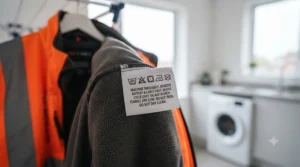
Charge the battery fully before first use and get into the habit of topping it up the night before an early shift, since cold ambient temperatures reduce lithium battery performance and you’ll get noticeably less runtime on a partially charged pack in winter conditions than the same pack would deliver indoors in summer. Start on the lowest heat setting rather than jumping straight to maximum; carbon fibre panels heat quickly, and running on a lower setting for longer genuinely extends both comfort and battery life compared with blasting high heat until the battery dies. Always remove the battery pack before washing, and check the specific care label, since even “machine washable” heated jackets typically mean the shell and heating elements only, not the electronics — get this wrong and you risk damaging the one component that makes the jacket worth buying in the first place. If you’re using the jacket for genuine site compliance, keep the manufacturer’s certification documentation or product listing screenshot on file, since a site manager or HSE inspector may reasonably ask what standard a garment is certified to, and “the label looked hi-vis” isn’t a satisfactory answer under the Personal Protective Equipment at Work Regulations. Finally, inspect the reflective tape periodically for cracking, peeling, or dulling — degraded retroreflective material fails quietly, and a jacket that looked compliant six months ago may no longer perform to its rated class.
Real-World Scenarios: Matching the Jacket to the Job
Picture a self-employed groundworker who spends full winter days outdoors on domestic renovation sites where a formal Class 2 or Class 3 risk assessment genuinely applies — for them, the Portwest S548 or Regatta Pro Thermogen are the honest recommendation, since only these two carry the EN ISO 20471 certification that would stand up to scrutiny if a principal contractor or HSE inspector asked questions. Now picture an electrician who already owns a full set of Milwaukee M12 tools and batteries and wants a heated jacket primarily for van-to-site walks and occasional outdoor first-fix work rather than continuous exposed-site duty — the Milwaukee M12 Hi-Vis Heated Jacket genuinely makes sense here, both for battery convenience and because their actual exposure profile may not require the strictest formal certification, though it’s still worth checking their specific site’s PPE policy. Finally, picture someone who mostly wants warmth and visibility for early dog walks, allotment work, or fishing through the winter, with no employer or site compliance requirement at all — any of the budget imports, KEMIMOTO, INNOWARM, Qdreclod, or DPSAFETY, genuinely deliver real warmth and real visibility for a fraction of the certified price, and buying the cheaper option here isn’t a compromise, it’s simply matching the product to a use case that never needed EN ISO 20471 in the first place.
How to Choose a Heated Hi-Vis Jacket
- Establish whether you need formal certification first. If a site, employer, or risk assessment specifies EN ISO 20471, this single fact eliminates most of the budget market immediately.
- Check the exact class required, not just “hi-vis.” Class 2 and Class 3 have different minimum reflective and fluorescent area requirements, covered in detail further down this guide.
- Decide if battery-included or battery-separate suits you better. Included batteries lower upfront cost; separate batteries often mean longer runtime and, for tool-ecosystem jackets, shared charging with existing kit.
- Match heat zones to your actual cold spots. More zones isn’t automatically better — a jacket that heats your back and chest well may suit you better than one spreading heat thinly across five smaller areas.
- Confirm washing instructions before you buy. Battery removal requirements and machine-wash limits vary significantly, and getting this wrong shortens a jacket’s usable life fast.
- Read runtime claims sceptically. Manufacturer-stated hours are almost always measured on the lowest heat setting; expect meaningfully less on high in genuinely cold conditions.
- Budget for the whole system, not just the jacket price. Several genuinely good options here look artificially cheap until you add a separately sold battery pack to the total.
Battery Heated vs Electric Heated Hi-Vis Jackets: What’s the Difference?
In practice, “battery heated hi vis jacket” and “electric heated hi vis jacket” describe the same underlying technology in this product category — carbon fibre or conductive-thread heating elements powered by a rechargeable lithium battery pack, rather than a jacket plugged into mains electricity, which would obviously be impractical for outdoor work. Where genuine differences show up is in battery architecture: some jackets, like the Milwaukee M12 and Regatta Pro Thermogen, use a removable, swappable battery pack that’s sold and charged separately, while others, including KEMIMOTO and INNOWARM, ship with a dedicated battery built into the purchase and typically charge via USB.
| Factor | Removable Pack System (e.g. Milwaukee, Regatta) | Included Bundled Battery (e.g. KEMIMOTO, INNOWARM) |
|---|---|---|
| Upfront cost | Jacket price often excludes battery | Higher jacket price, but ready to use |
| Battery swapping | Easy — carry spares for a full shift | Usually single battery, recharge between uses |
| Ecosystem compatibility | Shares power tool batteries in some cases | Standalone, no cross-compatibility |
| Typical runtime flexibility | Swap for a fresh pack mid-shift | Fixed until next charge |
| Best for | Tradespeople with existing battery kit | Anyone wanting a complete, ready-to-go product |
What most buyers overlook when comparing these two approaches is total cost of ownership rather than headline price: a removable-pack jacket that looks cheaper on the box can end up costing more once a genuine battery is added, while a bundled-battery jacket that looks pricier is often actually complete out of the box. Neither system is objectively better — it depends entirely on whether you’re building on an existing battery ecosystem or starting from scratch.
✨ Don’t Miss These Exclusive Deals!
🔍 Whichever heating system suits your work, compare current prices and battery requirements before you commit. Click through on any highlighted product above to check today’s availability and stay warm this winter!
EN ISO 20471 Heated Jacket: Why Certification Matters More Than You Think
EN ISO 20471 is the specific European and UK standard governing high-visibility clothing, setting requirements for the minimum area of fluorescent background material and retroreflective tape a garment must carry to be genuinely classed as compliant PPE. The Health and Safety Executive’s own guidance on high-visibility clothing explains that garments meeting the recognised standard are CE marked and carry a pictogram showing both the conspicuity class and retroreflection performance, and that choice of hi-vis clothing must always be suitable for the specific risk and working environment. This matters directly for a heated jacket because adding a battery and heating panels doesn’t automatically preserve or guarantee the underlying visibility certification — a manufacturer has to specifically test the finished heated garment, not just the base fabric, which is exactly why so many “hi vis heated jacket” listings on general marketplaces quietly drop any EN ISO 20471 claim once heating elements are added.
The practical risk of getting this wrong isn’t abstract. Under the Personal Protective Equipment at Work Regulations, employers have a legal duty to provide PPE that’s genuinely suitable for the identified risk, and self-employed workers sourcing their own kit carry a similar practical responsibility to themselves. A jacket that “looks” hi-vis but hasn’t been certified may simply not perform to the required standard after washing, weathering, or extended wear — retroreflective tape can degrade in ways that aren’t visually obvious, which is precisely the failure mode certification testing is designed to catch. If your work genuinely requires certified hi-vis, treat “EN ISO 20471” as a non-negotiable line item, not a nice-to-have.
Class 2 vs Class 3 Hi-Vis Heated Jackets: Which Do You Need?
The class number in EN ISO 20471 reflects the minimum area of fluorescent and reflective material a garment carries, with Class 3 requiring significantly more coverage than Class 2 and generally including full sleeves for maximum visibility from every angle. As a rough guide, Class 2 typically suits medium-risk environments like general construction sites, warehousing, and utilities work, while Class 3 is generally expected for higher-risk situations such as roadside work near fast-moving traffic, night work, or rail environments where the consequences of not being seen are more severe.
| Factor | Class 2 | Class 3 |
|---|---|---|
| Minimum visibility coverage | Moderate | Highest available |
| Typical use case | General construction, warehousing | Roadside, night work, rail |
| Sleeve coverage | Often optional depending on design | Generally full sleeve coverage required |
| Example from this list | Portwest S548 (size S), Regatta Pro Thermogen | Portwest S548 (size M and above) |
Interestingly, the Portwest S548 actually shifts class by size, rated Class 2 in Small and Class 3 from Medium upwards — a genuinely useful reminder that class ratings on some garments aren’t fixed across the whole size range, so it’s worth checking the specific size you intend to buy rather than assuming the class quoted on the product title applies uniformly. If you’re unsure which class your work requires, HSE’s construction PPE guidance is clear that the correct choice depends on a proper risk assessment of your specific working environment rather than a blanket rule, so when in doubt, the safer and more defensible choice is the higher class.

Common Mistakes When Buying a Heated Hi-Vis Jacket
The single most common mistake is assuming any jacket with “hi vis” in the title is automatically compliant PPE, when in reality a large share of the budget import market is built to the American ANSI/ISEA 107 standard rather than the UK’s EN ISO 20471. A second frequent error is comparing headline prices without checking whether the battery is included, which can make a genuinely certified jacket look far more expensive than a budget import until you add the missing battery cost to a fair comparison. Third, many buyers underestimate real-world runtime, assuming the manufacturer’s maximum-hours claim applies at the heat setting they’ll actually use, when in practice that figure is almost always measured on the lowest setting rather than the one most people reach for on a genuinely cold morning. A fourth mistake is skipping the washing instructions entirely and machine-washing a jacket with the battery still connected, which can damage the electronics and void any warranty. Finally, some buyers purchase a Class 2 jacket for genuinely Class 3 work, or vice versa, without checking their actual site risk assessment — a mismatch that’s easy to avoid simply by asking a site manager or checking documentation before ordering.
Hi-Vis Heated Jacket for Construction: What Site Managers Should Know
For construction specifically, the Health and Safety Executive is explicit that high-visibility clothing should be worn wherever vehicles or plant are operating on site, including by drivers once they’ve left their vehicle, and that the correct standard to specify is EN ISO 20471 alongside CE marking under the Personal Protective Equipment Regulations. When it comes to heated variants specifically, site managers should treat the heating element as a genuine bonus feature rather than a reason to relax certification requirements — a heated jacket still needs to meet the same visibility standard as an unheated one for the same role. Battery safety is also worth a specific mention on site: lithium battery packs should be charged and stored according to manufacturer instructions, kept away from other flammable materials in site cabins, and inspected periodically for damage, since a damaged lithium pack is a genuine fire risk in a way that ordinary PPE simply isn’t. For sites where budget allows equipping a whole team, the Portwest S548 or Regatta Pro Thermogen are the more defensible bulk-purchase choices precisely because their certification status doesn’t need to be individually verified and justified for every worker.
Reflective Heated Workwear: Features That Actually Matter (And Those That Don’t)
For genuinely useful reflective heated workwear, the features that matter are confirmed certification (or an honest absence of one, if that’s acceptable for your use case), realistic battery runtime at the heat setting you’ll actually use, and heating zone placement that covers your genuine cold spots — usually the chest, back, and sometimes the collar or cuffs. Features that matter considerably less than their marketing suggests include the exact wattage or mAh figure in isolation (a bigger battery number means little if it’s paired with inefficient heating elements), branded “smart” phone-app controls on premium jackets, and cosmetic styling differences between otherwise near-identical tunnel-jacket silhouettes. Multiple independently controllable heat zones, as seen on the DPSAFETY and INNOWARM jackets, sit in a genuinely useful middle ground — not essential for casual use, but a real comfort upgrade for anyone standing still in exposed conditions for long stretches, where uneven cold can be more uncomfortable than a lower overall temperature evenly applied.
Buyer’s Decision Framework: Which Heated Hi-Vis Jacket Fits Your Work?
If your work is genuinely regulated and a risk assessment specifies EN ISO 20471, choose the Portwest S548 or Regatta Pro Thermogen and budget for the full certified system, battery included. If you’re a tradesperson already invested in the Milwaukee M12 battery ecosystem and your exposure to strict site PPE checks is limited, the Milwaukee M12 Hi-Vis Heated Jacket offers genuine convenience worth the ANSI-versus-EN caveat. If you want maximum warmth for the lowest realistic price and have no compliance requirement at all, the INNOWARM or DPSAFETY options deliver genuinely strong heating specs without paying a certification premium you don’t need. If phone-charging convenience and 360-degree reflective coverage matter more to you than a stated class, the Qdreclod jacket is a reasonable budget pick for casual visibility. And if you’re simply unsure which category you fall into, the safest default is to check with your employer or principal contractor before buying anything uncertified, since replacing a wrongly purchased jacket costs far more than getting the question answered up front.
Long-Term Cost, Battery Care & Maintenance
Lithium battery packs degrade gradually with charge cycles regardless of brand, and most manufacturers rate their packs for several hundred full charges before noticeable capacity loss — a genuinely long working life if the battery is stored correctly, ideally partially charged rather than fully depleted, in a cool, dry place when not in use. Replacement batteries for removable-pack systems like the Milwaukee M12 or Regatta RG004 typically cost £30-£80 depending on capacity, which is worth factoring into the total cost of ownership rather than treating the jacket price as the whole story. For bundled-battery jackets, a failed or degraded battery generally means either sourcing a compatible third-party replacement or, in some cases, treating the whole jacket as reaching end of usable heated life, since the heating element and battery are often designed as a matched pair. Beyond batteries, the outer shell fabric and reflective tape both degrade with UV exposure, washing, and general wear over time, so periodically checking that fluorescent panels haven’t dulled and reflective tape hasn’t cracked is a genuinely worthwhile five-minute habit, particularly for anyone relying on the jacket for certified site visibility rather than casual use.
FAQ: Your Hi-Vis Heated Jacket Questions Answered
❓ Is a heated hi vis jacket safe to wear on a construction site?
❓ How long does the battery last in a heated hi vis jacket?
❓ What's the difference between Class 2 and Class 3 hi-vis heated jackets?
❓ Do heated hi vis jackets come with the battery included?
❓ Can I machine wash a heated hi vis jacket?
Conclusion
The honest verdict on a hi vis heated jacket is that the technology genuinely works — carbon fibre heating panels and a decent battery pack make a real, noticeable difference on a cold shift — but the certification question is where most buyers go wrong. If your work is regulated and EN ISO 20471 compliance genuinely matters, the Portwest S548 and Regatta Pro Thermogen are the two options on this list that unambiguously deliver it, and the extra cost of a certified jacket plus its battery is money well spent against the alternative of failing a site PPE check. If you’re buying for personal use, dog walks, fishing, or non-regulated outdoor work, the budget imports here offer genuinely impressive warmth and visibility for a fraction of the price, and there’s no need to pay a certification premium you don’t actually need. Whichever category you fall into, the one universal piece of advice worth taking away is to read the certification claim carefully rather than trusting the word “hi-vis” in a product title to mean what you assume it means.
✨ Don’t Miss These Exclusive Deals!
🔍 Ready to stay warm and visible this winter? Click through on any highlighted product above to check current pricing and availability, and choose the jacket that actually matches what your work requires!
Recommended for You
- Powerful Fan Heater for Site Office: 7 Proven Picks for 2026
- 7 Best Fan Heater for Construction Site 2026: Beat the Cold
- Propane Forced Air Heater: 7 Best Site Heaters for Winter 2026
Disclaimer: This article contains affiliate links. As an Amazon Associate, I earn from qualifying purchases. If you purchase products through these links, we may earn a small commission at no additional cost to you.
✨ Found this helpful? Share it with your friends! 💬🤗
