
In This Article
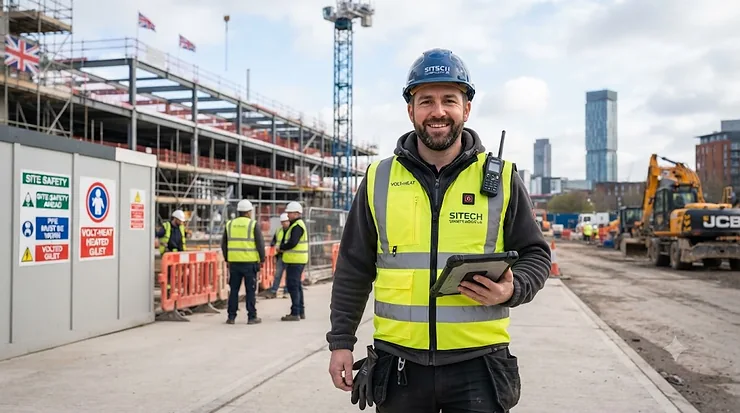
A hi vis heated gilet promises a very specific thing: core warmth from a battery, without sacrificing the sleeveless freedom of movement a trade bodywarmer needs, and ideally without losing the visibility that a site risk assessment demands. It’s worth being upfront about something before we go further: a single garment that is simultaneously EN ISO 20471-rated hi-vis, genuinely battery-heated, and cut as a proper sleeveless gilet is a narrower niche than the marketing suggests. Most of the major heated-workwear brands (Milwaukee, Makita, DEWALT) build their heated vests in black, reasoning that most sites already mandate a separate hi-vis outer layer over any mid-layer. That’s a genuine, sensible engineering trade-off, not a gap in this guide, so we’ve been straightforward below about which products deliver integrated hi-vis heating and which achieve the same result by pairing a heated bodywarmer with a hi-vis shell.
So what is a hi vis heated gilet in practice? At its core it’s a sleeveless bodywarmer with battery-powered carbon-fibre heating elements sewn into the chest, back and sometimes the collar, controlled through two or three heat settings via a small onboard switch. Some are powered by cordless power tool batteries (Milwaukee M12, Makita 18V LXT, DEWALT 20V), which suits anyone already carrying that battery platform on site, while others run from a dedicated USB power bank aimed more at general outdoor workers, dog walkers and anyone standing around in the cold. Battery heating is a genuinely different proposition from a standard hi-vis thermal gilet, which relies purely on padding and lining. Where a padded gilet only slows heat loss, a heated model actively replaces it, which matters considerably on a static job like traffic control, groundworks supervision or warehouse goods-in.
This guide covers seven real, currently available heated bodywarmers, spanning budget USB-powered options through to premium tool-battery systems, with an honest look at which genuinely suit high-vis site work and which need a hi-vis layer added on top. High-visibility clothing is classed as personal protective equipment under UK law, and the Health and Safety Executive is clear that employers must assess the risk and provide suitable PPE, including hi-vis, free of charge where a risk of being unseen remains. That’s exactly why getting the heating-and-visibility pairing right matters more than picking whichever heated vest looks warmest online.
Quick Comparison Table
| Heated Gilet | Battery Type | Heat Settings | Price Range | Best For |
|---|---|---|---|---|
| Gokozy Heated Vest with Power Bank | 10,000mAh USB power bank | 3 levels | £35-£55 | Budget buyers, occasional cold shifts |
| ORORO Heated Gilet with Power Bank | USB power bank (10,000mAh) | 3 levels, dual-zone | £70-£100 | Layering under a separate hi-vis shell |
| Portwest S549 Ultrasonic Heated Tunnel Gilet | Rechargeable internal battery | Adjustable + timer | £70-£90 | Waterproof/windproof outdoor site work |
| Makita DCV202Z 18V LXT Heated Bodywarmer | Makita 18V/14.4V LXT tool battery | 3 levels, 4 zones | £85-£160 | Existing Makita 18V tool users |
| Milwaukee M12 Heated Puffer Vest | Milwaukee M12 tool battery | 3 levels, 3 zones | £115-£170 | Existing Milwaukee M12 tool users |
| Forcefield Graphene-Infused Heated Vest | Rechargeable internal battery | 3 levels, 5 zones | £80-£120 | Lightweight all-day wear under outerwear |
| DEWALT DCHV095 + DRW21-3 Hi-Vis System | DEWALT 20V tool battery | 3 levels | £150-£230 (system) | Genuine integrated hi-vis heated system |
Scanning the table, the clearest pattern is that battery platform decides more than most buyers expect. If you already carry Makita or Milwaukee cordless tools, the Makita DCV202Z or Milwaukee M12 Heated Puffer Vest immediately becomes cheaper in practice, since you’re not paying for a battery and charger you’ll never reuse elsewhere. Buyers without an existing tool battery platform are generally better served by the standalone power bank models like the Gokozy Heated Vest or ORORO Heated Gilet, both of which charge from any USB source. For anyone who genuinely needs one product doing both jobs at once, the DEWALT DCHV095 + DRW21-3 Hi-Vis System is the only true integrated hi-vis heated setup on this list, at a correspondingly higher combined price.
💬 Just one click — help others make better buying decisions too!😊
Top 7 Hi Vis Heated Gilets: Expert Analysis
1. Gokozy Heated Vest with Power Bank — best budget battery heated bodywarmer
The Gokozy Heated Vest with Power Bank is a straightforward USB-powered heated bodywarmer built around a 10,000mAh power bank, four heating zones and three adjustable temperature settings. At the lower end of this list’s price range, it’s aimed squarely at buyers who want to try battery heating without committing to a cordless tool battery ecosystem they may never otherwise use.
What most buyers overlook about a power bank design like this is that the same battery doubles as backup phone charging on site, a genuinely useful side benefit that tool-battery models simply can’t offer. Based on the spec comparison with premium tool-battery vests, the trade-off is charge time and total runtime: a 10,000mAh bank charges via standard USB-C in a few hours but generally delivers fewer total hours of heat on the highest setting than a dedicated 18V or M12 tool battery. Aggregated review sentiment across similarly specified budget heated vests consistently flags reliable low-and-medium heat performance, with the high setting draining the bank considerably faster, a pattern common to nearly every USB power bank heated garment at this price.
This isn’t a hi-vis garment out of the box, so anyone needing site compliance should layer a separate hi-vis bodywarmer or tabard over the top, but as an affordable way to test whether heated workwear suits your routine, it’s a sensible starting point.
Pros:
- ✅ Lowest price point of any genuinely heated bodywarmer here
- ✅ Power bank doubles as an emergency phone charger on site
- ✅ Charges via standard USB, no proprietary tool charger needed
Cons:
- ❌ Not hi-vis rated; needs a separate compliant outer layer
- ❌ High heat setting drains the bank noticeably faster than rivals
At £35-£55, the Gokozy Heated Vest with Power Bank is the easiest entry point for anyone curious about battery heating before spending more.
2. ORORO Heated Gilet with Power Bank — best lightweight layering option
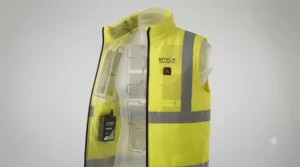
The ORORO Heated Gilet with Power Bank uses carbon-fibre heating panels across a lightweight softshell body, with dual-zone control and reported battery life stretching to around 10 hours on the lowest setting, dropping to roughly 3-3.5 hours on the highest. It’s built to be worn as a mid-layer under a jacket or hi-vis shell, rather than as a standalone outer garment for harsh weather.
Here’s what the spec sheet won’t tell you, but reviewers note repeatedly: the battery pack sits genuinely unnoticed in an internal pocket, which matters a great deal when you’re wearing it under other layers for a full shift rather than as the visible outer piece. Aggregated review sentiment from consumer testing consistently praises how discreet and lightweight the whole system feels compared with bulkier tool-battery vests, and the dual-zone control lets wearers dial back chest heat while keeping the back panel on full, a genuinely practical touch for anyone alternating between sitting and moving. The main criticism raised repeatedly is the price relative to its non-heated fleece construction, and the fact it isn’t wind or water resistant, so it performs best as an indoor-to-outdoor layering piece rather than a garment facing driving rain on its own.
Given its slim profile, this is the model to reach for if the priority is wearing something heated invisibly under a compliant hi-vis bodywarmer, rather than a garment doing the hi-vis job itself.
Pros:
- ✅ Genuinely discreet battery placement for all-day mid-layer wear
- ✅ Dual-zone control allows independent chest and back heat levels
- ✅ Around 10 hours of runtime available on the lowest setting
Cons:
- ❌ Not wind or water resistant, so needs a shell over the top
- ❌ Premium price for what is a fairly simple fleece construction
In the £70-£100 range, the ORORO Heated Gilet with Power Bank earns its place as the layering piece to wear underneath your actual hi-vis garment.
3. Portwest S549 Ultrasonic Heated Tunnel Gilet — best waterproof/windproof heated gilet
Built using ultrasonic welded seams rather than traditional stitching, the Portwest S549 Ultrasonic Heated Tunnel Gilet produces a genuinely waterproof and windproof exterior, a meaningful upgrade over the fleece and softshell heated vests that dominate this category. The rechargeable internal battery powers adjustable heating levels alongside a timer function, letting wearers set a specific heating duration rather than manually toggling the vest on and off through a shift.
Based on the spec comparison with softshell alternatives, the sealed ultrasonic construction is the standout feature: standard stitched seams on a heated garment create small puncture points where water can work its way in over a wet shift, while ultrasonic welding avoids that almost entirely. That makes this the strongest option on this list for anyone working genuinely exposed outdoor roles, groundworks, roofing support, or agricultural site work, where a fleece-based heated vest would quickly become damp and lose effectiveness. Portwest’s workwear range is built to established trade specifications, and the S549’s lightweight construction keeps the weight down despite the more robust exterior.
The timer function is a small but genuinely useful detail that other heated gilets in this list lack outright, letting wearers pre-set a heating window rather than manage settings manually with cold hands.
Pros:
- ✅ Ultrasonic welded seams give genuine waterproof, windproof protection
- ✅ Timer function allows pre-set heating duration without manual toggling
- ✅ Lightweight despite the more robust, sealed construction
Cons:
- ❌ Available in limited standard workwear colourways, not hi-vis
- ❌ Sits at a higher price point than comparable softshell vests
At roughly £70-£90, the Portwest S549 Ultrasonic Heated Tunnel Gilet is the strongest choice for anyone facing genuinely wet or exposed conditions on site.
4. Makita DCV202Z 18V LXT Heated Bodywarmer — best for existing Makita tool users
The Makita DCV202Z 18V LXT Heated Bodywarmer runs from Makita’s existing 18V (or 14.4V) LXT battery platform, with four heating zones covering the chest, back and neck, and three heat settings controlled by a simple on/off switch with an LED indicator. Runtime scales dramatically with battery size: Makita’s own figures show up to 35 hours on low, 20 hours on medium, or 10 hours on high when paired with a 6.0Ah battery, though a smaller 3.0Ah pack will roughly halve those figures.
What most buyers overlook about this model is how much cheaper it becomes for anyone who already owns Makita 18V tools, since the battery and charger are simply shared across the whole toolkit rather than bought as a dedicated accessory. Reviewers of the DCV202Z consistently highlight exactly this point, describing the vest as effective through sub-zero conditions worn under overalls, while also noting that a full-size 5.0Ah or 6.0Ah battery adds noticeable bulk and weight to the back panel compared with the smaller batteries designed for lighter tools. The battery compartment detaches for hand-washing, and the polyester-and-fleece construction has held up well through repeated seasonal use according to aggregated trade reviews.
Like the Milwaukee equivalent, this ships in black rather than hi-vis colourways, so site-compliant crews will need to wear it under or alongside a separate hi-vis bodywarmer or tabard.
Pros:
- ✅ Shares battery and charger with existing Makita 18V LXT tools
- ✅ Exceptional runtime on low setting with a larger capacity battery
- ✅ Detachable battery compartment allows hand-washing the vest
Cons:
- ❌ Not hi-vis rated; needs a compliant outer layer on regulated sites
- ❌ Larger batteries add noticeable bulk to the rear battery pocket
Priced around £85-£160 depending on battery size included, the Makita DCV202Z delivers strong value specifically for buyers already inside the Makita ecosystem.
5. Milwaukee M12 Heated Puffer Vest — best all-round tool-battery heated gilet
The Milwaukee M12 Heated Puffer Vest (HPVBL2/HPVBL3) uses sewn-in carbon fibre heating elements across the chest, back and shoulders, powered by Milwaukee’s compact M12 battery range, with reported runtimes stretching from around 3 hours on high up to 11 hours on the low setting using a 3.0Ah pack. The newer HPVBL3 version adds Milwaukee’s Hexon heat technology, which the brand states improves heat-up speed and coverage over the previous generation.
Here’s what the spec sheet won’t tell you, but reviewers note repeatedly: the M12 battery is genuinely compact compared with larger 18V-class packs, so this vest sits noticeably flatter and lighter against the body than some rivals running larger tool batteries. Ripstop polyester construction resists abrasion and tearing, a detail that matters for anyone moving through tight site spaces or working around scaffolding and rough surfaces regularly. Aggregated review sentiment consistently praises the concealed battery pocket and the simple one-touch heat controller, with several reviewers specifically highlighting how the warm, soft lining performs in genuinely cold outdoor conditions. The newer HPVBL3 also supports Bluetooth control through Milwaukee’s companion app when paired with the optional flat power source, though that accessory is sold separately.
As with the Makita option, this is a black garment rather than a hi-vis one, so crews on regulated sites will need to pair it with a compliant hi-vis layer to remain compliant.
Pros:
- ✅ Compact M12 battery keeps the vest notably flat and lightweight
- ✅ Ripstop polyester resists abrasion better than standard fleece vests
- ✅ Concealed battery pocket and simple one-touch controls
Cons:
- ❌ Not hi-vis rated; needs a compliant outer layer on regulated sites
- ❌ Bluetooth app control requires an additional accessory purchase
At £115-£170, the Milwaukee M12 Heated Puffer Vest is the strongest all-rounder for anyone already committed to the M12 battery platform.
6. Forcefield Graphene-Infused Heated Vest — best lightweight technology option
The Forcefield Graphene-Infused Heated Vest pairs carbon-fibre heating across five zones with a graphene-infused inner lining, a nanotechnology material Forcefield states helps regulate and distribute heat more evenly than standard fleece linings. It’s designed to be worn under a regular jacket without adding noticeable bulk, powered by an included rechargeable battery offering around six hours of continuous heat.
Based on the spec comparison with standard carbon-fibre heated vests, the graphene lining is the standout feature here: rather than simply generating heat at the panel locations, the conductive lining is intended to spread that warmth more evenly across the torso, reducing the noticeable hot-spot feeling some single-zone heated vests produce. Five heating zones is more than most vests on this list offer, giving genuinely more even coverage across the chest, back and sides rather than concentrating heat in just two or three panels. The trade-off for that even coverage is a six-hour runtime that sits toward the lower end of this list, so full-shift wear on the highest setting will likely need a mid-shift top-up or a spare battery.
Like the majority of dedicated heated vests here, this is a technical garment rather than a hi-vis one, so it’s best suited to wearing invisibly underneath a compliant outer layer.
Pros:
- ✅ Five heating zones give noticeably more even torso coverage
- ✅ Graphene lining helps distribute heat rather than creating hot-spots
- ✅ Genuinely lightweight enough to wear under a regular jacket
Cons:
- ❌ Around six-hour runtime is shorter than several rivals on this list
- ❌ Not hi-vis rated; needs a compliant outer layer for site work
At an estimated £80-£120, the Forcefield Graphene-Infused Heated Vest suits buyers prioritising even, all-day comfort over maximum runtime.
7. DEWALT DCHV095 + DRW21-3 Hi-Vis System — best genuine hi-vis heated system
Rather than building hi-vis colouring directly into a puffer vest, DEWALT’s approach pairs its DCHV095 Heated Puffer Vest with the brand’s DRW21-3 hi-vis rain jacket, zipping together to form what DEWALT describes as a genuine hi-vis, heated system. The heated vest itself runs from a DEWALT 20V battery, offers three adjustable heat settings, and features a wind-resistant quilted polyester shell with multiple waterproof zippered pockets.
What most buyers overlook about this two-piece approach is that it actually solves the compliance problem more honestly than a single hi-vis-coloured heated vest would: the DRW21-3 shell carries the reflective tape and high-visibility colouring required for site compliance, while the DCHV095 handles heating and insulation underneath, and the two can be worn separately when only one function is needed. That flexibility means the heated vest doubles as casual outdoor wear away from site, something a garment permanently printed in hi-vis colouring can’t offer. Reviewers of the DCHV095 consistently note the quilted construction feels genuinely warm even before the heating elements are switched on, with the three heat settings giving a wide practical range between a gentle top-up and serious cold-weather output.
The combined cost of both pieces sits at the top of this list, reflecting that you’re effectively buying two garments, a heated mid-layer and a compliant hi-vis shell, rather than one.
Pros:
- ✅ Genuinely hi-vis compliant when both pieces are zipped together
- ✅ Heated vest works as standalone casual wear away from site
- ✅ Wind-resistant quilted shell adds warmth before heating is switched on
Cons:
- ❌ Highest combined price of any option on this list
- ❌ Buying two separate garments means more to store and maintain
At £150-£230 for the combined system, the DEWALT DCHV095 + DRW21-3 Hi-Vis System is the most genuinely integrated hi-vis heated solution here, at a price that reflects buying two garments in one.
Practical Usage Guide: Layering Heated Workwear Correctly
Getting the most from any hi vis heated gilet comes down to layering it properly, not just switching it on. Heating elements work best with a thin base layer directly against the skin, since heat conducts more efficiently through a snug layer than through loose fabric, and a slightly close fit also stops the heated panels shifting out of position during movement. Over the top, the heated gilet itself should sit close enough that a compliant hi-vis bodywarmer or jacket can still close properly; a bulky heated vest that stops a hi-vis outer layer doing up defeats the purpose of wearing either.
In the first thirty days, the most common mistake is running the highest heat setting constantly, which drains any battery, tool-based or power bank, far faster than expected and leaves wearers without heat for the second half of a shift. Starting on the lowest setting and only stepping up when genuinely cold extends runtime considerably, and most tool-battery vests recover a meaningful charge during a lunch break if a spare battery or charger is kept on site. Washing instructions matter more than they might seem: nearly every heated gilet on this list requires the battery or battery holder removed before washing, and several specify hand-washing only, so checking the care label before the first wash avoids damaging the heating elements. Finally, always confirm your heated gilet or its outer layer meets your site’s specific hi-vis class requirement before relying on it for compliance, since Class 2 and Class 3 hi-vis standards cover different areas of reflective material and background colour.
Battery Hi Vis Gilet Construction: What’s Actually Inside
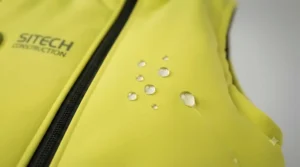
The construction behind a battery hi vis gilet construction determines almost everything about how it performs, not just the heat settings printed on the box. Carbon fibre heating panels are the dominant technology across every product on this list, chosen because the material heats evenly and flexes with movement far better than older wire-based heating elements did. These panels sit at fixed points, typically the upper back, chest, and sometimes the collar or lower back, which is why heat zone count and placement varies so much between models and matters more than raw wattage claims.
Battery choice affects construction as much as performance. Tool-battery vests like the Makita DCV202Z and Milwaukee M12 Heated Puffer Vest need a reinforced, slightly rigid battery pocket to hold a comparatively heavy pack securely, which is why these vests tend to sit slightly stiffer around the lower back than power-bank models. USB power bank vests like the Gokozy Heated Vest and ORORO Heated Gilet, by contrast, use a soft internal pocket sized for a slimmer, lighter pack, contributing to their noticeably more flexible feel. Waterproofing construction differs too: the Portwest S549‘s ultrasonic welded seams avoid stitch holes entirely, while most fleece and softshell heated vests rely on a water-resistant coating that performs well in light rain but isn’t designed for sustained wet-weather wear.
Whichever battery type a gilet uses, charging habits matter for safety as well as performance. Electrical Safety First advises always using the charger supplied with a lithium-ion battery, checking regularly for dents or signs of overheating, and never leaving a battery on charge unattended for long periods, guidance that applies just as much to a heated gilet’s power bank as it does to an e-bike or power tool battery.
Real-World Scenarios: Matching the Right Heated Gilet to Your Trade
The scaffolder working exposed heights through winter. Wind exposure and genuine rain resistance matter more than battery runtime here, making the Portwest S549 Ultrasonic Heated Tunnel Gilet the strongest match, worn under a compliant hi-vis harness-compatible outer layer.
The Makita-equipped groundworker. Already carrying 18V batteries and a charger in the van, this worker gets the heated bodywarmer essentially at accessory pricing by choosing the Makita DCV202Z, sharing power with drills and saws already in daily use.
The traffic marshal standing static for long shifts. Static roles lose heat fastest, so consistent, longer runtime on a lower setting matters more than peak output, making the Milwaukee M12 Heated Puffer Vest‘s reported 11-hour low setting genuinely useful across a full shift.
The site supervisor who wants one garment doing both jobs. For anyone who wants genuine integrated hi-vis compliance without layering two separate garments awkwardly, the DEWALT DCHV095 + DRW21-3 Hi-Vis System solves that directly, even at a higher combined cost.
How to Choose a Hi Vis Heated Gilet
Working through the decision in order avoids paying for features you won’t use:
- Check your existing tool battery platform first. If you already own Makita 18V or Milwaukee M12 tools, a matching heated vest is genuinely cheaper than any standalone option.
- Decide how you’ll achieve hi-vis compliance. Most heated vests are black; plan to layer a compliant hi-vis bodywarmer over the top unless buying a dedicated system like the DEWALT pairing.
- Match runtime to your actual shift length. Static roles need longer low-setting runtime; active roles that generate their own body heat can manage with shorter high-setting bursts.
- Consider weather exposure honestly. Genuinely wet, exposed roles need waterproof or ultrasonic-sealed construction, not just a water-resistant coating.
- Count the heating zones you actually need. More zones mean more even warmth but typically shorter runtime per charge; decide which trade-off suits your role.
- Factor in washing and maintenance. Battery-removable, machine-washable designs suit daily wear far better than hand-wash-only garments.
- Confirm your site’s specific hi-vis class requirement. Class 2 and Class 3 standards demand different levels of reflective material, so check before assuming any garment is compliant. HSE guidance also notes that cold-weather clothing worn on site should either have suitable hi-vis qualities itself or be capable of being worn underneath a compliant hi-vis garment without restricting it.
Heated High Vis Bodywarmer vs Standard Padded Hi-Vis Gilet
The instinct to assume “warmer padding” solves the same problem as “battery heating” is understandable, but the two work quite differently. A standard padded hi-vis gilet, the kind stocked in bulk by most workwear suppliers, relies entirely on trapped air and insulation thickness to slow heat loss from the body. That works reasonably well while moving, since movement itself generates body heat that the padding then retains, but it does very little for anyone standing still in genuinely cold conditions.
A heated high vis bodywarmer setup actively adds heat rather than just retaining it, which is the meaningful difference for static roles like traffic control, security, or supervisory positions where body heat generation is minimal. The trade-off is battery management: a padded gilet never runs out of insulation, while a heated system needs charging, spare batteries, and a bit more day-to-day care. Cost differs considerably too, with a genuinely good padded hi-vis bodywarmer available from around £25-£40, against £70 upwards for anything genuinely battery-heated.
| Factor | Padded Hi-Vis Gilet | Heated Hi-Vis Bodywarmer |
|---|---|---|
| Heat source | Insulation only, retains body heat | Active carbon-fibre heating panels |
| Best suited to | Active, moving roles | Static or low-movement roles |
| Typical price | £25-£40 | £70-£230 |
| Maintenance | Minimal, machine washable | Battery charging, careful washing |
| Cold-weather limit | Struggles below freezing when static | Maintains warmth regardless of activity |
The table makes the distinction fairly clear: padding suits movement, heating suits stillness, and plenty of trades genuinely benefit from having both a compliant padded hi-vis layer and a heated mid-layer underneath for the coldest static shifts.
Common Mistakes When Buying a Heated Hi Vis Vest
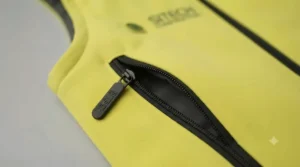
The most common mistake is assuming any heated vest advertised alongside hi-vis workwear is itself hi-vis rated, when in reality the majority of dedicated heated bodywarmers on the market ship in black or navy and need a separate compliant outer layer. A close second is buying based on maximum heat settings without checking realistic runtime; a vest that reaches an impressive peak temperature but only holds it for ninety minutes won’t help through an eight-hour shift.
Buyers also frequently underestimate how much battery weight matters when worn all day, particularly with larger tool batteries like a 5.0Ah or 6.0Ah pack, which can create real lower-back discomfort over a full shift compared with a compact power bank or M12-class battery. Another recurring error is ignoring washing instructions until the vest needs cleaning, at which point discovering the battery holder isn’t removable, or the garment is hand-wash only, becomes a genuinely frustrating surprise. Finally, plenty of buyers skip checking their site’s specific hi-vis class requirement entirely, assuming any bright-coloured or reflective-trimmed garment will pass inspection when Class 2 and Class 3 standards actually specify different minimum areas of background and reflective material. HSE construction guidance confirms that during cold weather it’s important to keep warm on site, especially at height, where cold can distract and lead to loss of concentration, which is exactly the risk a properly layered heated and hi-vis combination is designed to manage.
Features That Actually Matter (And Those That Don’t) for Layering Heated Workwear
Genuine tool-battery compatibility matters enormously for anyone already invested in a cordless platform, since it turns an otherwise pricey accessory into a comparatively cheap add-on. A removable, washable battery compartment matters just as much, since heated workwear gets dirty fast on most sites and needs regular washing to stay comfortable and hygienic. Multiple, clearly labelled heat settings genuinely help too, letting wearers manage battery life across a full shift rather than being stuck with one all-or-nothing heat level.
On the other hand, marketed “heat-up speed” claims measured in seconds add little real-world value, since the difference between a 30-second and 90-second warm-up rarely matters once a vest is worn for hours. Elaborate app connectivity and Bluetooth control, while a nice touch, add cost and complexity that most trade users simply won’t use day to day, particularly with cold or gloved hands making a phone app fiddly to operate on site. Branded battery indicator lights beyond a simple percentage or bar display are similarly more marketing flourish than genuine practical benefit for most wearers.
Sleeveless Heated Jacket vs Heated Jacket With Sleeves for Site Work
Choosing between a sleeveless heated jacket, effectively a heated gilet, and a full heated jacket with sleeves comes down almost entirely to the type of work being done. A sleeveless design keeps the arms completely free, which matters enormously for trades involving reaching, climbing, or fine manual work where restrictive sleeves genuinely slow the job down or create a safety hazard around moving machinery. It’s also lighter, cheaper to buy, and easier to layer under a separate hi-vis or waterproof shell without adding excessive bulk to the arms.
A sleeved heated jacket, by contrast, covers more surface area and therefore retains more warmth overall, which suits roles involving long periods of standing still in exposed conditions where arm warmth matters as much as core warmth. The DEWALT and Milwaukee ranges both offer heated jackets alongside their gilet equivalents specifically for this reason, recognising that groundworkers reaching into trenches have very different needs from a site supervisor standing at a gate checking deliveries. For most trades genuinely active with their hands and arms throughout the day, the gilet format remains the more practical choice, reserving a full sleeved jacket for roles where static cold exposure is the bigger risk.
Long-Term Cost & Maintenance
The upfront price across this list ranges from around £35 to £230, but the real cost comparison depends heavily on whether you already own a compatible tool battery. For a Makita or Milwaukee tool owner, the DCV202Z or M12 Heated Puffer Vest effectively costs just the price of the vest itself, since batteries and chargers are shared with existing tools. For anyone starting from nothing, a power-bank model like the ORORO Heated Gilet avoids that extra battery cost entirely, making it genuinely competitive on total spend despite a higher sticker price than the cheapest tool-battery vest body.
Maintenance costs differ meaningfully too. Carbon-fibre heating elements generally hold up well over several seasons if the battery is removed before every wash, but repeatedly machine-washing a vest with the battery still connected is one of the fastest ways to damage the heating circuit permanently. Replacement batteries for tool-battery vests typically cost £30-£60 depending on capacity, while a full replacement USB power bank for a standalone vest is usually cheaper, often under £25. Over several winters of regular use, a well-maintained heated gilet from any brand on this list should comfortably outlast two or three seasons of a cheaper, non-heated padded alternative that needs replacing as insulation compresses and wears thin.
FAQ
❓ What is the best hi vis heated gilet for construction work?
❓ Do heated gilets work with any hi-vis jacket?
❓ How long does the battery last in a heated hi vis bodywarmer?
❓ Can I wash a heated gilet in a washing machine?
❓ Is a heated gilet warmer than a padded hi-vis bodywarmer?
Conclusion
Choosing a hi vis heated gilet comes down to being honest about two separate needs: genuine battery-powered warmth, and genuine hi-vis compliance, since most products on the market solve one brilliantly rather than both at once. The Gokozy Heated Vest and ORORO Heated Gilet cover buyers wanting an affordable or lightweight power-bank layering piece respectively, while the Portwest S549 answers anyone facing genuinely wet, exposed site conditions. Tool owners get real value from the Makita DCV202Z or Milwaukee M12 Heated Puffer Vest, both sharing batteries with existing kit, and the Forcefield Graphene-Infused Heated Vest rewards anyone prioritising even coverage over maximum runtime. For the rare buyer who genuinely needs one integrated hi-vis heated solution, the DEWALT DCHV095 + DRW21-3 Hi-Vis System is the most honest answer this list has to offer.
Whichever route fits your trade and your existing kit, the fundamentals hold across all seven: layer a heated gilet close to the skin under a compliant hi-vis outer layer rather than expecting one garment to do everything, manage battery settings deliberately rather than defaulting to maximum heat, and always confirm your specific site’s hi-vis class requirement before relying on any garment for compliance.
✨ Don’t Miss These Exclusive Deals!
🔍 Take your winter site kit to the next level with these carefully selected heated bodywarmers. Click through to check current pricing and availability, and get your crew properly warm and compliant before the cold snap hits!
Recommended for You
- Powerful Fan Heater for Site Office: 7 Proven Picks for 2026
- 7 Best Fan Heater for Construction Site 2026: Beat the Cold
- Propane Forced Air Heater: 7 Best Site Heaters for Winter 2026
Disclaimer: This article contains affiliate links. As an Amazon Associate, I earn from qualifying purchases. If you purchase products through these links, we may earn a small commission at no additional cost to you.
✨ Found this helpful? Share it with your friends! 💬🤗
