
In This Article
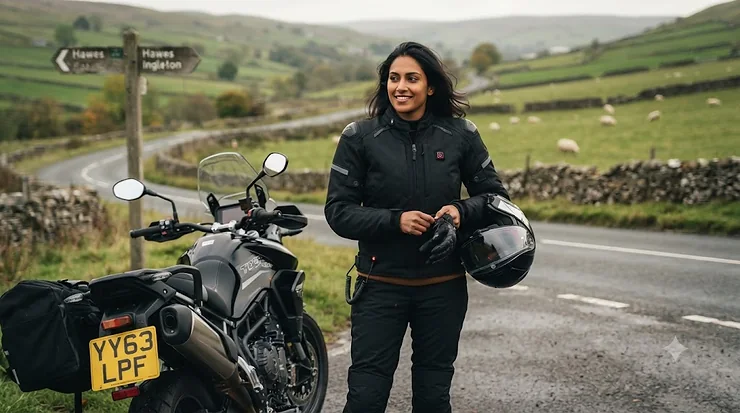
Anyone who’s ridden into a British winter morning knows the exact moment the cold wins: fingers going numb at a red light, shoulders locking up somewhere past the ring road, and that nagging thought that the car would honestly have been the smarter choice. A heated motorcycle jacket is, in short, a riding jacket or jacket liner with built-in electric heating elements — usually across the chest, back, collar and sleeves — powered either by your bike’s 12V electrical system or a rechargeable battery pack, designed to keep your core warm regardless of what the thermometer says.
It sounds like a simple bit of kit, but the category is genuinely varied, and picking the wrong type for how you actually ride is where most buyers go wrong. A hardwired 12V liner suits someone commuting daily on the same bike, while a battery-powered jacket suits someone who walks as much as they ride, or who swaps between machines. This guide compares seven real heated jackets sold in the UK, covering hardwired 12V systems, cordless battery power, and dedicated touring shells, plus the practical knowledge — safety, sizing, running costs — that turns cold-weather riding from something you endure into something you barely notice. According to independent testing by BikeSocial, heated kit becomes genuinely worthwhile once temperatures drop below around 5°C, which covers a solid chunk of the UK riding calendar.
Quick Comparison Table
Here’s how the seven jackets stack up on power system, price, and who they suit best.
| Jacket | Power System | Price Range | Best For |
|---|---|---|---|
| Keis J505RP Premium Extreme | Dual: 12V bike or Keis battery pack | Around £240 | Coldest UK winters, dual-power flexibility |
| Gerbing 12V EX Pro | 12V hardwired, built-in heated liner | Around £400-£500 range | Full ADV touring shell with heat built in |
| Gerbing 12V Heated Jacket Liner | 12V hardwired | Around £190 | Budget-conscious 12V liner buyers |
| Keis J501RP Premium | Dual: 12V bike or battery pack | Around £200 | Everyday commuters wanting flexibility |
| Venture Heat 12V Jacket Liner | 12V hardwired | £120-£160 range | Simple, no-frills continuous heat |
| Blaze Wear Heated Jacket/Vest | 5V USB rechargeable battery | £80-£120 range | Off-bike use, no wiring required |
| Milwaukee Leather 12V Heated Jacket | Dual: 12V bike or 7.4V battery | £280-£320 range | Cruiser and leather-jacket riders |
The pattern here mirrors what most experienced winter riders already know: dual-power garments like the Keis J505RP and Milwaukee Leather 12V Heated Jacket cost more but adapt to more situations, hardwired 12V liners like the Gerbing 12V Heated Jacket Liner deliver the best heat-per-pound on a single bike, and battery-only options like the Blaze Wear Heated Jacket trade outright power for genuine off-bike usability. None of these is objectively “best” — the right choice depends on whether you ride one bike or several, and whether you need warmth to survive the walk from the car park too.
💬 Just one click — help others make better buying decisions too!😊
Top 7 Heated Motorcycle Jackets: Expert Analysis
1. Keis J505RP Premium Extreme Heated Jacket — dual-power heat for the coldest UK rides
The standout feature is flexibility: the Keis J505RP Premium Extreme runs from either your bike’s wiring harness or a dedicated Keis portable battery pack, so it works exactly as well parked at services as it does at motorway speed. It’s Keis’ coldest-weather garment, offering 25% more heating capacity than the standard J501, using Micro Carbon Fibre and Far Infrared panels across the sleeves, chest, back and collar.
Based on the spec comparison, what most buyers overlook is that this extra heating capacity matters more on a stationary or slow-moving bike than at speed, since wind chill does a lot of the “heating” for you once you’re above 40mph — it’s the traffic-jam commute or the town-centre delivery round where the Extreme’s higher output earns its keep. Reviewers on retailer sites consistently flag the fast heat-up time and even heat distribution as standout strengths, though several note the fit runs slightly small, so sizing up is generally recommended.
Pros:
- ✅ Dual-power design works on-bike or via portable battery pack
- ✅ 25% more heating capacity than Keis’ standard jacket
- ✅ Lifetime warranty on the heating elements
Cons:
- ❌ Runs small — most buyers are advised to size up
- ❌ Cannot be powered from a BMW DIN socket due to its 6.5A draw
At around £240, the Keis J505RP Premium Extreme sits toward the premium end of jacket liners, but the dual-power flexibility and UK-designed construction make a strong case for riders who want one garment to cover both commuting and longer winter tours.
2. Gerbing 12V EX Pro Heated Jacket — a full waterproof shell with a built-in heated liner
Rather than a liner you wear under your existing jacket, the Gerbing 12V EX Pro is the outer shell itself: a durable, windproof, waterproof three-season riding jacket with a removable 12V heated liner built in, complete with Knox CE-rated armour, YKK zippers and 3M reflective detailing.
What the spec sheet doesn’t fully convey is how this changes the packing calculation for a genuine adventure tour — instead of carrying a heated liner plus a separate weatherproof outer, you’re carrying one garment that does both jobs, which matters when panniers are already full of camping kit. On paper, that consolidation is the whole point: Gerbing markets it explicitly as four-season kit for daily commuters and long-distance travellers alike, and the included liner detaches for summer use, so the investment isn’t wasted once the weather turns.
Pros:
- ✅ Waterproof outer shell and heated liner combined in one jacket
- ✅ Knox CE-rated armour included as standard
- ✅ Liner detaches, so the shell works year-round
Cons:
- ❌ Premium price reflects both the shell and the heating tech
- ❌ Bulkier than a standalone liner if you already own a good jacket
Typically imported into the UK at around £400-£500, the Gerbing 12V EX Pro suits riders who want a single, do-it-all touring jacket rather than layering a liner under an existing shell.
3. Gerbing 12V Heated Jacket Liner — seven heat zones on a proven 12V design
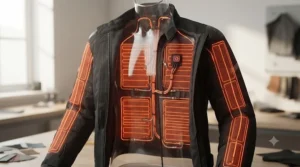
This is the liner that’s been quietly keeping UK commuters warm for years. The Gerbing 12V Heated Jacket Liner uses the brand’s patented Microwire heating elements across seven zones — the collar, chest (two), sleeves (two) and back (two) — built on a durable, wind-resistant nylon chassis designed to be worn under your existing protective jacket.
Here’s what to weigh: independent testing by BikeSocial found the jacket heats up almost instantly and stays comfortable across a 140-mile round-trip winter commute, though the same test flagged an early wiring fault in the sleeve that Gerbing resolved under warranty within days — worth knowing given the internal wiring carries a lifetime warranty regardless. Based on the spec comparison, its close, snug fit is intentional: it needs to sit tight against the body to trap and transfer heat efficiently, so buyers used to a looser base layer should expect a noticeably closer cut.
Pros:
- ✅ Seven heat zones cover collar, chest, sleeves and back
- ✅ Lifetime warranty on the Microwire heating elements
- ✅ Doubles as a “home base” hub for Gerbing heated gloves and trousers
Cons:
- ❌ No temperature controller included as standard — sold separately
- ❌ Snug fit means limited room for thick base layers underneath
At £189.99, the Gerbing 12V Heated Jacket Liner remains one of the best-value entry points into serious 12V heated kit, provided you budget for the optional controller too.
4. Keis J501RP Premium Heated Jacket — everyday dual-power warmth with a wearable design
The Keis J501RP Premium takes the same dual-power philosophy as its Extreme sibling but in a lighter, more everyday package, offering three heat settings and a soft-shell finish comfortable enough to wear as a casual jacket once you’ve parked up. It includes zip-up side pockets, a chest pocket, and a dedicated pocket for stowing the wiring loom when it’s not connected to the bike.
What most buyers overlook is how rarely riders actually need the top setting — one long-distance review of the jacket through a UK-to-Bulgaria winter trip in temperatures as low as -12°C reported the top setting was only needed once, with low or medium sufficient for the vast majority of the ride. Based on the spec comparison, that headroom is reassuring rather than wasteful: you’re buying capacity for the worst day of the year, not the average one.
Pros:
- ✅ Dual-power flexibility between bike wiring and battery pack
- ✅ Doubles as a smart-looking casual jacket off the bike
- ✅ Three heat settings cover most UK winter conditions comfortably
Cons:
- ❌ No dedicated battery storage pocket built into the design
- ❌ Static build-up reported when paired with the wrong base layer
Priced at £199.99, the Keis J501RP Premium is a sensible mid-range pick for riders who want dual-power flexibility without stepping up to the Extreme’s higher price and output.
5. Venture Heat 12V Jacket Liner — simple, continuous 12V heat without the extras
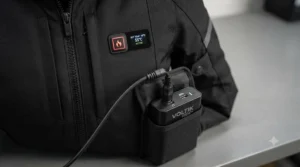
Not every rider needs app connectivity or a portable battery option — sometimes a straightforward hardwired liner is exactly right. The Venture Heat 12V Jacket Liner wires directly into your bike’s battery through a harness and fuse kit, delivering continuous heat for as long as the engine runs, with no battery level to monitor mid-ride.
On the spec comparison, this simplicity is the entire value proposition: because the gear draws power only while the engine runs, it doesn’t drain your battery when parked, and the fuse kit protects your bike’s electrical system from the roughly 3-7 amp draw typical of this category. What most buyers overlook is that continuous 12V heat, unlike a battery pack, never runs low exactly when you need it most — on a long, cold motorway stretch — which is precisely the scenario where battery-powered gear tends to disappoint.
Pros:
- ✅ Continuous heat for the full duration of any ride
- ✅ No battery to charge, monitor or replace
- ✅ Fused harness protects the motorcycle’s electrical system
Cons:
- ❌ Entirely bike-dependent — no off-bike use at all
- ❌ Fewer heat zones than premium liners in this category
In the £120-£160 range, the Venture Heat 12V Jacket Liner is a solid budget entry point for riders committed to one bike who just want dependable warmth without extra features to manage.
6. Blaze Wear Heated Jacket/Vest — cordless USB battery power for off-bike flexibility
The Blaze Wear Heated Jacket/Vest takes the opposite approach entirely: rather than wiring into a motorcycle, it runs on a 5V USB power bank, using flexible carbon fibre heating pads across four zones for a genuinely thin, low-bulk profile that layers comfortably under most motorcycle jackets.
Based on the spec comparison, the appeal here is portability rather than raw output — because it’s USB-powered, the same power bank can charge a phone or run other Blaze Wear heated accessories like boot socks or a head warmer, which suits multi-modal commuters who might walk, cycle, or ride depending on the day. What most buyers overlook is that a UK-designed cordless system like this sidesteps one of the biggest headaches of 12V kit entirely: there’s no wiring to fit, no fuse to blow, and nothing tying the jacket to a specific bike.
Pros:
- ✅ No motorcycle wiring or installation required
- ✅ Ultra-thin profile layers easily under existing riding gear
- ✅ USB battery doubles as a charger for phones and other devices
Cons:
- ❌ Lower peak output than hardwired 12V systems
- ❌ Runtime is capped by the power bank’s capacity, not the ride length
Typically priced in the £80-£120 range depending on the exact model, the Blaze Wear Heated Jacket/Vest suits riders who value flexibility and off-bike usability over maximum heat output.
7. Milwaukee Leather Men’s 12V Heated Motorcycle Jacket — dual-power heat in a leather cruiser cut
For riders who want the classic leather look without giving up heated performance, the Milwaukee Leather 12V Heated Motorcycle Jacket bundles a 12V battery harness for direct bike power alongside an included portable battery pack, with heating panels placed through the chest, arms and back beneath a vented scooter-style leather cut.
What the spec sheet won’t tell you outright is how the dual-power setup changes the experience compared with a battery-only leather jacket: owners running the jacket off the bike’s 12V system at motorway speeds in near-freezing temperatures report a noticeably stronger, more consistent heat output than the portable battery alone provides, which lines up with the general rule that hardwired systems outperform battery packs on sustained output. Reviewers note the external glove-plug placement on the sleeves is more convenient than digging through a liner’s inner pocket, and the leather quality has drawn consistent praise relative to the price.
Pros:
- ✅ Genuine leather cruiser styling with heating built in
- ✅ Includes both a 12V harness and a portable battery pack
- ✅ Externally placed glove plugs are easier to access than liner-based designs
Cons:
- ❌ Leather adds weight compared with textile liners
- ❌ Battery-only mode is noticeably weaker than the bike-wired mode
Typically converting to around £280-£320 in the UK, the Milwaukee Leather 12V Heated Motorcycle Jacket is the standout pick for cruiser riders who don’t want to sacrifice style for warmth.
Practical Usage Guide: Setting Up and Wearing a Heated Jacket
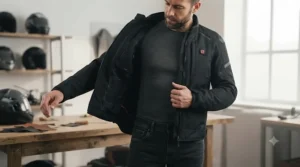
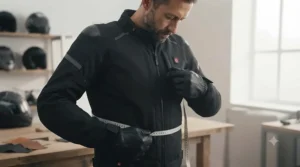
Getting a heated jacket working properly starts before the first cold ride. If you’re fitting a 12V system like the Gerbing 12V Heated Jacket Liner or Venture Heat 12V Jacket Liner, always run it through a fused harness connected directly to the battery rather than tapping an accessory socket, since most 12V heated garments draw somewhere in the 3-7 amp range — well within what a modern bike’s charging system handles, but only if wired correctly.
Layering matters more than most riders expect: wear a proper non-static base layer underneath, since a heated liner worn against the wrong synthetic fabric can build up a genuinely uncomfortable static charge, as several Keis J501RP owners have discovered. Start every ride on the lowest heat setting and only increase it once you’re moving — jackets like the Keis J505RP Premium Extreme heat up in seconds, and starting on maximum while stationary can feel uncomfortably intense before you’ve even pulled away. Finally, for dual-power garments, get into the habit of charging the portable battery the night before a cold commute rather than the morning of, and periodically check wiring connections and plug pins for corrosion, particularly after wet rides.
Real-World Scenarios: Which Heated Jacket Suits Your Riding
Picture a daily commuter riding the same 15-mile route into a UK city five days a week, always on the same bike. For that rider, a straightforward hardwired liner like the Gerbing 12V Heated Jacket Liner or Venture Heat 12V Jacket Liner makes the most sense — there’s no battery to manage, and the fixed wiring becomes a permanent, invisible part of the daily routine.
Now consider a rider who splits their time between two motorcycles and occasionally walks or takes public transport in cold weather. Rewiring two bikes for a single jacket is impractical, so a dual-power option like the Keis J505RP Premium Extreme or Milwaukee Leather 12V Heated Jacket — or a fully cordless option like the Blaze Wear Heated Jacket/Vest — offers far more day-to-day flexibility. Finally, picture a long-distance adventure tourer planning a multi-week winter trip across several countries, camping along the way. Here, consolidating gear matters more than anything else, which is exactly why the Gerbing 12V EX Pro‘s combined waterproof shell and heated liner earns its premium price — one less garment to pack, dry out, and maintain on the road.
Problem → Solution: Fixing Common Cold-Weather Riding Issues
Problem: Fingers and hands going numb before the core even feels cold. Solution: pair your heated jacket with compatible heated gloves plugged into the same system — most 12V liners, including the Gerbing 12V Heated Jacket Liner, are designed as a “home base” hub for exactly this kind of expansion.
Problem: Battery drains before the ride is even over. Solution: choose a hardwired 12V system like the Venture Heat 12V Jacket Liner for continuous heat instead of relying on a portable battery pack for long rides, reserving battery power for shorter or off-bike use.
Problem: The jacket feels uncomfortably hot at speed, then too cold once stopped in traffic. Solution: look for a jacket with multiple heat settings, such as the Keis J501RP Premium‘s three-stage control, and adjust down once wind chill starts doing some of the work for you.
Problem: Wiring feels like a daunting DIY job. Solution: consider a cordless battery-powered option like the Blaze Wear Heated Jacket/Vest, which sidesteps bike wiring altogether, or have a dealer fit the harness professionally.
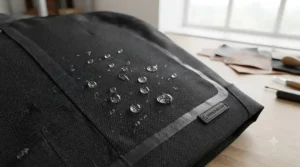
Problem: Uncertainty over whether heated kit is actually safe to wear in the rain. Solution: check the garment’s water-resistance rating before buying — most reputable heated jackets, including those from Gerbing and Keis, use windproof, water-resistant outer fabrics and insulated wiring specifically to guard against short circuits in wet conditions, though extreme downpours still call for a waterproof outer layer on top.
✨ Don’t Miss These Exclusive Deals!
🔍 Compare Prices Before You BuyTake your cold-weather riding kit to the next level with these carefully selected heated jackets. Click on any highlighted model to check current pricing and availability on Amazon UK. A little warmth now could save you from a miserable January commute!
How to Choose the Best Heated Motorcycle Jacket
Picking the right heated jacket comes down to matching the power system and features to how you actually ride. Work through these steps in order:
- Decide between 12V hardwired and battery power first. Hardwired systems, like the Gerbing 12V Heated Jacket Liner, give continuous heat with no battery to manage but tie you to one bike; battery power offers flexibility at the cost of runtime.
- Check how many heat zones you actually need. More zones — chest, back, collar, sleeves — generally mean more even warmth, but also a higher price, so match zone count to your typical riding conditions.
- Confirm whether a temperature controller is included. Some liners, including certain Gerbing models, sell the controller separately, which adds to the true cost of the system.
- Consider expandability. If you’ll want heated gloves or trousers later, choose a jacket designed to act as a hub for additional garments, rather than a standalone piece.
- Get the fit right, particularly for close-fitting liners. Heated liners generally need to sit snugly against the body to transfer heat efficiently, so check sizing guidance carefully before ordering.
- Match power draw to your bike’s electrical system. Most 12V garments draw a manageable 3-7 amps, but always fit through a proper fused harness rather than an unfused accessory socket.
- Factor in warranty coverage on the heating elements. Several major brands, including Keis and Gerbing, offer lifetime warranties on their heating elements specifically, which is worth checking given this is the part most likely to wear out.
Common Mistakes When Buying a Heated Motorcycle Jacket
The most common mistake is buying a hardwired 12V liner without checking whether a fused harness and temperature controller are included, only to discover both are separate purchases that push the total well above the advertised jacket price. A close second is assuming any base layer will do — wearing the wrong synthetic fabric underneath a heated liner can build static and reduce comfort significantly, as several owner reviews of the Keis J501RP Premium confirm.
Buyers also frequently underestimate how snug a heated liner needs to fit, ordering their usual jacket size and ending up with loose material that fails to transfer heat efficiently against the skin. Another recurring error is choosing battery-powered gear for a long motorway commute, then being caught out when the battery runs low exactly when the temperature drops further along the route — a scenario where hardwired 12V power is simply the better tool. Finally, many riders forget to budget for accessories like glove and trouser connectors from day one, even though nearly every serious heated jacket in this guide is designed to expand into a full system over time.
12V Heated Jackets vs Battery-Powered Heated Jackets: Which Wins?
Twelve-volt heated jackets and battery-powered heated jackets solve the same core problem — staying warm on a cold ride — through fundamentally different systems, and the honest answer is that the “winner” depends entirely on how you use your bike. A 12V system, like the Gerbing 12V Heated Jacket Liner or Venture Heat 12V Jacket Liner, wires directly into your motorcycle’s electrical system and draws power continuously while the engine runs, meaning heat never runs out mid-ride, but the jacket is effectively useless off the bike and tied to whichever machine it’s wired into. A battery-powered jacket, such as the Blaze Wear Heated Jacket/Vest, trades that continuous power for genuine portability — it works walking to the shops, waiting at a bus stop, or riding a completely different bike, but runtime is capped by however much charge the battery holds.
| Feature | 12V Hardwired | Battery-Powered |
|---|---|---|
| Runtime | Unlimited while riding | Typically several hours per charge |
| Portability | Tied to one bike | Works anywhere |
| Installation | Requires wiring/harness | None needed |
| Peak heat output | Generally higher | Generally lower |
| Best for | Daily commuters, single-bike owners | Multi-bike or off-bike use |
Reading the table, riders who commute daily on the same machine through a genuinely cold UK winter are usually better served by 12V power, while anyone who splits time between bikes, walks part of their journey, or simply doesn’t want to fit wiring should lean toward a battery system — or a dual-power hybrid like the Keis J505RP Premium Extreme or Milwaukee Leather 12V Heated Jacket, which sidesteps the choice entirely by offering both.
Heated Motorcycle Jackets for Touring: What Long-Distance Riders Need
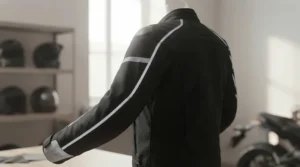
A heated motorcycle jacket for touring has different priorities from one built purely for the daily commute. Range and reliability matter far more than they do on a short urban ride, since a fault or a flat battery hundreds of miles from home is a genuinely different problem to solve than on a five-mile hop to the office. On the spec comparison, this is exactly why the Gerbing 12V EX Pro‘s combined waterproof shell and heated liner design makes sense for touring specifically — it consolidates two garments into one, reducing what you need to pack, dry out overnight, and maintain across a multi-day trip.
What most buyers overlook when shopping for touring-specific heated gear is battery backup: dual-power garments like the Keis J505RP Premium Extreme let you run off the bike’s 12V system while riding and switch to a portable battery pack during fuel or food stops, so you’re never left cold during a break. Reviewers who’ve ridden heated jackets across genuine multi-country winter tours — including UK-to-Eastern-Europe routes in temperatures as low as -12°C — consistently emphasise that a warm core matters more than warm extremities for maintaining concentration and decision-making on long days in the saddle, which is worth bearing in mind when deciding where to spend the budget first.
Building Your ADV Touring Gear Kit Around a Heated Jacket
Good ADV touring gear treats a heated jacket as one component in a wider system rather than a standalone purchase, and getting the sequencing right saves both money and packing space. Start with the heated layer itself — typically a liner such as the Gerbing 12V Heated Jacket Liner or an integrated shell like the Gerbing 12V EX Pro — then build outward with a genuinely waterproof outer layer if your heated garment doesn’t already include one, since sustained rain exposure is a bigger threat to comfort on tour than cold alone.
Based on the spec comparison, the “home base” concept used by brands like Gerbing and Keis is particularly relevant for ADV touring: a single controller and harness can typically run a jacket, gloves and trousers together, which means the incremental cost of extending your heated system is far lower than buying each piece as a separate standalone product. What most buyers overlook is battery redundancy — on a genuine multi-week tour, a dual-power garment that can fall back to a portable battery pack during a wiring fault or electrical fault on the bike offers a genuine safety margin that a 12V-only system simply can’t match.
Safety and Regulations: Using Heated Gear Safely
Heated motorcycle jackets are broadly very safe when fitted and used correctly, relying on low-voltage systems — typically 5V, 7.4V or 12V — well below the threshold considered dangerous, combined with insulated wiring and overheat protection built into reputable garments. That said, cold itself carries real safety risks worth taking seriously: prolonged exposure can progress toward hypothermia, and the NHS notes that early warning signs include shivering, tiredness and confusion, with symptoms worsening if exposure continues untreated — a reminder that heated gear isn’t just about comfort, it’s a genuine safety tool for riders covering long distances in cold conditions.
On the practical side, always fit 12V systems through a properly fused harness rather than an unprotected accessory socket, to prevent a wiring fault putting unnecessary load on your bike’s electrical system. Advice from IAM RoadSmart via Motorcycle News highlights that uncomfortable kit becomes a genuine distraction on the road, and that riders should stop to adjust vents, layers or heating settings rather than fiddling while moving — sound advice that applies directly to managing a heated jacket’s controls safely mid-ride.
Long-Term Cost and Maintenance of Heated Jackets
A heated jacket’s upfront price is only part of the total cost of ownership. Hardwired 12V systems like the Venture Heat 12V Jacket Liner carry no ongoing running cost beyond the electricity your bike’s alternator already generates, but battery-powered options such as the Blaze Wear Heated Jacket/Vest will eventually need a replacement battery pack after enough charge cycles, typically after a few winters of regular use.
Maintenance is generally straightforward: most heated garments are machine washable once the battery or controller is removed, though it’s worth checking manufacturer instructions given wiring runs throughout the fabric. Lifetime warranties on heating elements, offered by brands including Keis and Gerbing, meaningfully reduce long-term risk, since the heating panels themselves are the component most likely to fail with age rather than the outer fabric. Weighed against the cost of a single miserable, distracted winter commute — or worse, the medical cost of genuine cold-related illness — even the premium end of this category, like the Gerbing 12V EX Pro, represents reasonable value across several years of use.
Frequently Asked Questions
❓ What is the best heated motorcycle jacket for UK winters?
❓ Are 12V heated jackets better than battery-powered ones?
❓ Is a heated motorcycle jacket safe to wear in the rain?
❓ How much does a good heated motorcycle jacket cost in the UK?
❓ Can a heated jacket drain my motorcycle's battery?
Conclusion
Cold-weather riding in the UK doesn’t have to mean choosing between comfort and staying on two wheels through winter. Whether it’s the dual-power flexibility of the Keis J505RP Premium Extreme, the all-in-one touring practicality of the Gerbing 12V EX Pro, the proven value of the Gerbing 12V Heated Jacket Liner, or the cordless convenience of the Blaze Wear Heated Jacket/Vest, there’s a genuine match here for nearly every riding pattern, from the daily commuter to the long-distance ADV tourer.
The real decision isn’t which brand is “best” in the abstract — it’s whether your riding calls for continuous 12V power, off-bike battery flexibility, or a dual-power system that covers both. Match that choice to your actual routine, budget for a fused harness and controller where they’re not included, and pair the jacket with proper layering and a non-static base layer underneath. Get that right, and whichever of these seven you choose, you’ll be one of the riders still smiling on the cold mornings, not one counting down the miles until you can warm up.
Recommended for You
- Heated Flame Resistant Jacket UK 2026: 7 Honest Picks
- Heated Safety Jacket: 7 Best CE Rated Picks for 2026
- Trade Heated Gilet 2026: 7 Best Picks UK Tradesmen Trust
Disclaimer: This article contains affiliate links. As an Amazon Associate, I earn from qualifying purchases. If you purchase products through these links, we may earn a small commission at no additional cost to you.
✨ Found this helpful? Share it with your friends! 💬🤗
