

In This Article
Stand on a scaffold at half seven on a January morning and you’ll understand why the heated safety jacket has quietly become one of the most-searched pieces of workwear in Britain. A heated safety jacket is a work coat with built-in carbon-fibre or fibreglass heating panels, powered by a rechargeable battery, designed to keep tradespeople warm without sacrificing the visibility, durability or protective features a job site demands. That’s the short version. The longer version is a bit messier, because “heated” and “safety” don’t always come bundled together the way the marketing suggests.
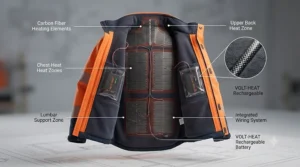
Here’s the thing most buying guides skip over: plenty of heated jackets are brilliant at the heating bit and completely silent on the safety bit. They’ll happily list a 7.4V battery and three heat settings, then say nothing about EN ISO ratings, hi-vis class, or whether the garment has actually been assessed against occupational safety standards at all. That gap matters if you’re buying for a construction crew, a utilities team, or anyone whose employer has a genuine PPE obligation under UK law.
This guide pulls apart seven real, currently available jackets — from proper CE-certified PPE workwear through to consumer-grade cordless-tool jackets that are warm but not formally rated — and explains, honestly, which is which. We’ll compare specs against real-world performance, dig into what CE and EN ISO certification actually means for a garment like this, and walk through practical scenarios so you can match the jacket to the job rather than the other way round.
Quick Comparison Table
| Jacket | Heat Zones | Battery Runtime | Certification | Best For |
|---|---|---|---|---|
| Portwest S548 Ultrasonic Heated Hi-Vis Jacket | Carbon fibre panels | Up to 10 hrs | CE, EN ISO 20471 | PPE compliant roadside/rail work |
| Portwest S547 Ultrasonic Heated Tunnel Jacket | Carbon fibre panels | Up to 10 hrs | CE marked | Budget CE workwear |
| Milwaukee M12 Heated ToughShell Jacket | 3 zones | Up to 10.5 hrs (low) | CE battery, no garment PPE rating | Heavy-duty trade use |
| Makita DCJ206 18V LXT Heated Hi-Vis Jacket | 5 zones | Up to 37.5 hrs (low) | ANSI 107 Class 3 (US) | Tool-ecosystem hi-vis |
| Bosch Professional GHJ 12+18V Heated Jacket | 3 zones | Up to 7 hrs | CE battery, no garment PPE rating | Mixed-trade all-rounder |
| DEWALT DCHJ060 Heated Soft Shell Jacket Kit | 4-5 zones | Up to 7.5 hrs | CE battery, no garment PPE rating | Existing DEWALT battery owners |
| ORORO Men’s 5 Heat-Zone Dual Control Jacket | 5 zones | Up to 20 hrs (arms only) | UL/CE certified battery | Budget everyday warmth |
Looking at the spread above, the two Portwest entries stand alone as garments actually certified against occupational safety standards — everything else on this list is a genuinely warm, well-built jacket from a trusted tool brand, but the “safety” in most listings refers to the battery pack’s electrical certification, not the garment itself. That distinction is worth sitting with before you scroll further, because it changes which jacket is “right” depending on whether you need documented PPE compliance or simply want to stop shivering on a cold job.
💬 Just one click — help others make better buying decisions too!😊
Top 7 Heated Safety Jackets: Expert Analysis
1. Portwest S548 Ultrasonic Heated Hi-Vis Jacket — the only true PPE-certified pick here
Let’s start with the jacket that actually earns the word “safety” in its category name. The standout here isn’t the heating — it’s that this garment is CE certified and built to comply with the EN ISO 20471 hi-vis standard, with an orange colourway also approved for rail industry use.
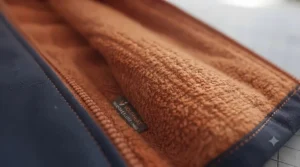
Underneath the certification, the spec sheet reads like a proper piece of workwear: a water-repellent, PFAS-free textile finish, carbon fibre heated panels charged over a micro-USB cable, and an insulated lining that traps body heat even with the power switched off. In practice, that lining-first approach means the jacket still functions as a decent winter coat if your battery dies mid-shift — something the pure electronics-first jackets further down this list can’t claim.
Based on the spec comparison, this is the one to reach for if your risk assessment specifically requires documented hi-vis PPE — roadworkers, rail staff, airport ground crew, and utilities engineers working near traffic. Reviewers on trade supplier sites consistently flag the battery life as solid for a full shift but note the jacket runs slightly boxy for layering underneath. If you don’t need the hi-vis element, its stablemate below gets you the same certification base for less.
Pros:
- ✅ Genuinely CE certified and EN ISO 20471 compliant
- ✅ Insulated lining works even without battery power
- ✅ PFAS-free, water-resistant Texpel finish
Cons:
- ❌ Fluorescent colourway limits styling for non-hi-vis work
- ❌ Runs boxier than tool-brand softshell alternatives
Prices for the Portwest S548 Ultrasonic Heated Hi-Vis Jacket sit in the £100-£130 range depending on retailer, and for anyone with a formal PPE obligation, that premium buys documentation you simply can’t get elsewhere on this list.
2. Portwest S547 Ultrasonic Heated Tunnel Jacket — best CE-marked pick without the hi-vis premium
Same manufacturer, same heating architecture, considerably less fuss. The Portwest S547 Ultrasonic Heated Tunnel Jacket drops the fluorescent shell and RIS-3279-TOM rail approval but keeps the core carbon fibre panel technology and CE marking that makes Portwest’s Ultrasonic range stand apart from the tool-brand competitors here.
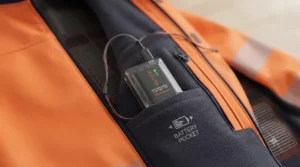
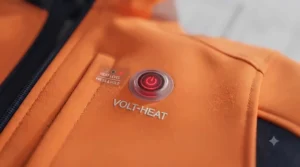
Specs worth noting: three heat settings via a chest-mounted button, a claimed 3-10 hours of heat from the rechargeable battery pack, and heat-sealed baffle seams that push water resistance beyond what a simple DWR coating manages. What that means day to day is you get a genuinely padded, genuinely insulated jacket that happens to have heating zones layered in, rather than a thin softshell relying entirely on the electronics to keep you warm.
What most buyers overlook about this model is that the “3-10 hour” range isn’t padding-out marketing — it’s an honest reflection of how dramatically runtime drops on the highest setting versus the lowest, which is worth planning around if you’re doing a full 8-hour shift outdoors. Trade supplier listings describe it as a dependable mid-layer for warehouse, tunnel and yard work rather than a standalone winter coat for extreme cold.
Pros:
- ✅ CE marked with heat-sealed, water-resistant seams
- ✅ Fully padded and insulated even without heat on
- ✅ Machine washable heating panels
Cons:
- ❌ No documented hi-vis or flame-resistance rating
- ❌ Battery not always bundled — check the listing carefully
Expect to pay somewhere around £65-£85 for the Portwest S547 Ultrasonic Heated Tunnel Jacket, making it one of the more accessible CE-marked options in this whole roundup.
3. Milwaukee M12 Heated ToughShell Jacket — best heat output for tradespeople already on M12
Milwaukee’s cordless ecosystem is on an enormous number of UK vans already, and the Milwaukee M12 Heated ToughShell Jacket leans into that by running off the same M12 REDLITHIUM batteries as the drills and impact drivers in the toolbox. The standout feature is the carbon fibre heating elements across the chest, back and hand pockets, controlled by a one-touch LED panel with three settings.
The ToughShell stretch polyester outer is built specifically for abrasive job-site environments and is claimed to significantly outlast the softshell fabric on Milwaukee’s earlier heated jackets, while a Quick-Heat function brings the panels up to temperature noticeably faster than previous generations. On paper this means less standing around waiting for the jacket to catch up with the temperature, which genuinely matters on a job where you’re in and out of a cold van all day.
Reviewers consistently note that the jacket performs impressively as wind and rain protection even before the heat is switched on, though a recurring theme is that the battery pocket adds noticeable bulk under the arm, and sleeve heating is conspicuously absent — a gap several buyers specifically wished Milwaukee would address. It’s worth flagging plainly: this is a well-built, well-reviewed trade jacket, but it isn’t sold or marketed as an EN ISO-certified PPE garment, so it belongs in your kit as insulated workwear rather than as documented compliance evidence.
Pros:
- ✅ Compatible with the wide M12 battery ecosystem
- ✅ Abrasion-resistant shell rated for heavy job-site use
- ✅ Fast heat-up compared with earlier Milwaukee models
Cons:
- ❌ No sleeve heating zones
- ❌ Battery pocket adds bulk under the arm
The Milwaukee M12 Heated ToughShell Jacket typically lands in the £100-£150 range body-only, climbing higher as part of a battery-and-charger kit.
4. Makita DCJ206 18V LXT Heated Hi-Vis Jacket — best for tool-ecosystem visibility work
If your site already runs Makita 18V, the Makita DCJ206 18V LXT Heated Hi-Vis Jacket is the obvious crossover pick, and it’s genuinely one of the better-specified jackets here. It meets the American ANSI 107 Class 3 visibility requirement with fluorescent fabric and reflective tape, and features five core heat zones covering the left chest, right chest, back and both hand pockets.
Battery life is the headline figure that gets quoted everywhere: up to roughly 37 hours of runtime on the low setting with a full-size 6.0Ah battery. Here’s what the spec sheet won’t tell you outright — that figure is on the lowest of three heat settings, and real-world users report closer to 5-8 hours on the highest setting that actually feels warm on a genuinely cold morning, which is a pattern common to nearly every jacket in this roundup, not unique to Makita.
One honest caveat worth stating plainly: ANSI 107 is the American visibility standard, not the UK’s EN ISO 20471. For UK sites requiring EN ISO 20471 documentation specifically, this Makita jacket’s visibility credentials, while genuinely bright and reflective, aren’t the standard your risk assessment likely references — worth checking with your safety officer before assuming compliance. Reviewers do praise the fit and the polyester shell’s wind resistance highly.
Pros:
- ✅ Five heat zones with genuinely long low-setting runtime
- ✅ Bright fluorescent shell with reflective tape
- ✅ Compatible with the broad Makita 18V LXT range
Cons:
- ❌ ANSI 107 rating, not the UK’s EN ISO 20471 standard
- ❌ Bulky battery adapter reported by several users
Pricing for the Makita DCJ206 18V LXT Heated Hi-Vis Jacket generally sits in the £90-£130 range for the jacket body alone, before you factor in an 18V battery if you don’t already own one.
5. Bosch Professional GHJ 12+18V Heated Jacket — best all-rounder for mixed-trade sites
Bosch’s contribution is a genuinely flexible piece of kit: the Bosch Professional GHJ 12+18V Heated Jacket runs on either the compact 12V or the larger 18V Bosch Professional battery range via an adapter, which is handy if your van carries both. It offers three heat zones with three heat levels aimed at even heat distribution, plus an integrated USB port for charging a phone.
What most buyers overlook about this jacket is the “one-garment” philosophy behind it — Bosch pitches it as a single-layer solution intended to keep the wearer’s core warm even during largely stationary work, rather than something you’re meant to layer heavily underneath. That’s a genuinely different design brief to the Milwaukee and Makita entries, which lean more towards active-movement trade jackets. On paper, that makes the Bosch a better fit for anyone doing static tasks — surveying, security, site supervision — where you’re standing still in the cold rather than constantly moving.
Reflectors on the sleeves, front and back add a modest visibility boost, though this isn’t a certified hi-vis garment in the EN ISO 20471 sense — it’s a safety-conscious design touch rather than a compliance credential. Reviewers, including several verified UK buyers, rate the build quality highly but flag sizing as running generously large, so ordering a size down is a recurring recommendation.
Pros:
- ✅ Works with both 12V and 18V Bosch battery ranges
- ✅ Genuine single-layer design for static outdoor work
- ✅ Reflective detailing for basic low-light visibility
Cons:
- ❌ Sizing reported as running noticeably large
- ❌ Not EN ISO 20471 certified despite reflective trim
The Bosch Professional GHJ 12+18V Heated Jacket tends to sit in the £100-£140 range depending on whether a battery is bundled in.
6. DEWALT DCHJ060 Heated Soft Shell Jacket Kit — best for existing DEWALT battery owners
For anyone already running a DEWALT 20V MAX or 12V MAX kit, the DEWALT DCHJ060 Heated Soft Shell Jacket Kit slots straight into the existing battery pool. It features four heating zones across the left and right chest, mid-back and collar, run through an LED controller with three temperature settings and a pre-heat function, plus a water-resistant polyester outer shell with a routed USB port for charging a phone from the battery pocket.
The pre-heat function deserves a specific mention because it’s genuinely useful and rarely explained properly: pressing and holding briefly kicks the jacket to maximum output for the first few minutes before settling to your chosen level, which noticeably shortens that miserable “still cold five minutes in” phase most heated jackets suffer from. Here’s what to weigh against that convenience — the DEWALT range’s runtime, at up to roughly 7.5 hours with a compact battery, sits towards the shorter end of this comparison, so pairing it with a larger-capacity battery is worth the extra spend if you’re doing full shifts outdoors.
Reviewers frequently mention the kit’s practicality — battery, charger and USB adapter all bundled in one purchase — as the standout value point over buying a bare jacket and sourcing power separately.
Pros:
- ✅ Bundled kit includes battery, charger and USB adapter
- ✅ Genuinely effective pre-heat function
- ✅ Compatible with the wide DEWALT 20V/12V range
Cons:
- ❌ Shorter runtime than several rivals on a compact battery
- ❌ No documented EN ISO PPE certification
The DEWALT DCHJ060 Heated Soft Shell Jacket Kit typically sells in the £110-£150 bracket as a full kit, with body-only listings running noticeably cheaper.
7. ORORO Men’s 5 Heat-Zone Dual Control Heated Jacket — best budget pick outside the tool-brand ecosystem
Not every buyer wants to be tied to a specific power-tool battery system, and that’s where the ORORO Men’s 5 Heat-Zone Dual Control Heated Jacket earns its place. It’s a consumer-focused jacket rather than trade workwear, but it punches well above its price point on heating coverage: five carbon fibre heating elements spread across the upper back, left and right chest, and both arms, controlled by two separate LED buttons that let you run the core body and the arms independently.
Runtime claims are genuinely strong here — up to around 20 hours with only the arm zones running, or roughly 7.5 hours with all five zones active on higher settings — and the battery itself carries UL and CE electrical certification, which covers charging safety even though the garment isn’t rated as occupational PPE. The fabric and heating elements are built to withstand more than 50 machine wash cycles, a detail that matters more than it sounds for anyone wearing this daily rather than occasionally.
Based on the spec comparison, this is the sensible choice for self-employed tradespeople, delivery drivers, or dog walkers who want genuine warmth without paying the certification premium the Portwest jackets carry — provided you don’t have a formal employer PPE requirement to satisfy. Reviewers consistently praise the value for money, though the shell fabric is noticeably thinner and less abrasion-resistant than the tool-brand alternatives above.
Pros:
- ✅ Independently controllable arm and core heat zones
- ✅ Strong runtime on lower settings
- ✅ UL/CE certified battery and machine washable panels
Cons:
- ❌ Thinner shell fabric than trade-brand rivals
- ❌ No occupational PPE or hi-vis certification
The ORORO Men’s 5 Heat-Zone Dual Control Heated Jacket generally sits in the £70-£100 range, making it the most accessible entry point in this whole guide.
Practical Usage Guide: Setting Up and Maintaining Your Heated Jacket
Getting the most out of any heated jacket starts before you even switch it on. Charge the battery fully before first use, and note that most manufacturers recommend a full charge-discharge cycle or two before the battery settles into its stated runtime — early charges sometimes underperform slightly. Fit the battery pack snugly into its designated pocket; a loose connection is the single most common cause of a heated jacket that “won’t turn on” out of the box.
In the first 30 days, the most common mistake is running the jacket on its highest setting constantly, which drains the battery fast and, on cheaper units, can shorten the heating element’s lifespan over time. Start on medium, layer a thin base layer underneath rather than a thick jumper (the heat needs to reach your skin, not get absorbed by three inches of wool), and reserve the top setting for genuinely bitter mornings.
Maintenance is refreshingly simple across every model here: remove the battery before washing, always. Most jackets in this guide are rated for machine washing on a gentle cycle with the heating panels still installed, but check the specific care label — a small number require the panels removed first. Air dry rather than tumble dry to protect the carbon fibre elements’ longevity. Store the jacket with the battery removed if it won’t be worn for more than a couple of weeks, since a fully depleted lithium battery left in situ over a long lay-off can degrade faster than one stored partially charged separately. It’s also worth reading the HSE’s guidance on outdoor working in cold conditions if you’re responsible for a team’s welfare through winter, since a heated jacket is one control measure among several, not a substitute for rest breaks and warm facilities.

Real-World Scenarios: Who Actually Needs Which Jacket
Picture Dave, a self-employed plumber who’s outdoors for twenty minutes here and there between vans and boiler cupboards. He doesn’t need certified PPE — his exposure to cold is intermittent, not sustained — so the ORORO Men’s 5 Heat-Zone Dual Control Heated Jacket covers him for a fraction of the cost of the trade-brand options, and its independent arm heating suits someone constantly getting in and out of a vehicle.
Now picture Priya, a utilities engineer working roadside on a live carriageway through winter. Her employer’s risk assessment specifically requires EN ISO 20471 hi-vis PPE, full stop — no amount of Milwaukee or Makita brand loyalty changes that requirement. For her, the Portwest S548 Ultrasonic Heated Hi-Vis Jacket isn’t a nice-to-have, it’s the only jacket on this list that actually satisfies her employer’s documented compliance obligation.
And then there’s Marcus, running a small joinery outfit with a van full of DEWALT 20V tools and batteries already. For him, the calculation is pure practicality: buying the DEWALT DCHJ060 Heated Soft Shell Jacket Kit means one more battery in a system he already owns, chargers he already has, and zero new infrastructure — even though, like Priya’s roadside job, his workshop environment doesn’t strictly require certified PPE at all.
CE Rated Heated Work Jacket: What the Marking Actually Means
The phrase “CE rated heated work jacket” gets used loosely across product listings, and it’s worth being precise about what CE marking actually certifies. For most jackets in this comparison, the CE mark applies to the lithium-ion battery pack and its charging circuit — confirming it meets electrical and fire safety requirements — rather than the finished garment as a whole. That’s a meaningful distinction: it tells you the battery won’t overheat or short dangerously, but it says nothing about the jacket’s tear resistance, seam strength, or visibility performance.
A genuinely CE rated PPE garment, by contrast, has been assessed as a complete product against a specific EN ISO standard, with a manufacturer’s Declaration of Conformity available on request. Of the seven jackets covered here, only the two Portwest entries fall into that second, stricter category. Since 1 January 2025, UK employers buying new PPE are expected to source items bearing the UKCA mark rather than CE, a shift explained in detail in the HSE’s updated PPE at Work Regulations guidance, though CE-marked stock already in circulation before that date can generally continue in use.
Safety Compliant Heated Workwear vs Standard Heated Jackets
The practical difference between safety compliant heated workwear and a standard heated jacket isn’t always visible on the hanger — both can look identical, feel identical, and heat identically. It shows up in the paperwork and the fabric testing behind the scenes. Safety compliant workwear has been through independent assessment against a named EN ISO standard, carries a Declaration of Conformity, and typically costs 20-40% more as a result of that testing overhead.
Standard heated jackets, including most of the tool-brand entries in this guide, are excellent consumer and trade products but sidestep that assessment process entirely. They’re not lying about being safe — the batteries genuinely are CE certified, the stitching genuinely is durable — they simply haven’t been submitted for the specific occupational testing that turns a warm coat into documented PPE. For casual, self-employed, or low-risk environments, that distinction may not matter to you at all. For anyone working under an employer’s formal risk assessment, it’s the whole ballgame.
PPE Compliant Heated Jacket for Different Trades
Different trades carry genuinely different requirements, and treating “PPE compliant heated jacket” as a single, one-size-fits-all category does a disservice to buyers. Roadworkers and rail staff need EN ISO 20471 hi-vis as a baseline, non-negotiable requirement — the Portwest S548 is really the only jacket here built for that brief. Welders and those working near open flame need EN ISO 11612 flame-resistant rated garments instead, a category none of the seven jackets in this guide fall into, since heated jackets and flame-resistant workwear are typically separate product lines entirely — worth flagging honestly rather than stretching a recommendation that doesn’t fit.
Construction and general trades without a formal hi-vis mandate have far more flexibility, which is where the tool-brand jackets genuinely shine on comfort, battery ecosystem compatibility and heat output. Warehouse and static-role workers, meanwhile, often prioritise runtime and single-layer warmth over rugged shell fabric, making something like the Bosch Professional GHJ 12+18V Heated Jacket a sensible fit given its design brief around stationary use.
EN ISO Certified Heated Workwear Standards Explained
A handful of EN ISO numbers come up repeatedly in heated workwear listings, and knowing what each one actually covers saves a lot of confusion. EN ISO 20471 governs high-visibility clothing, setting minimum requirements for how much fluorescent background material and retroreflective tape a garment needs across different visibility classes. EN ISO 11612 covers protection against heat and flame — relevant for welders and those near open ignition sources, though notably absent from every heated jacket in this comparison. EN 1149-5 addresses electrostatic properties, relevant in environments where static discharge is a genuine hazard.
None of these standards specifically address the battery-powered heating element itself; that falls under separate electrical safety and battery certification frameworks, which is precisely why a jacket can carry a CE-marked battery without the finished garment carrying any EN ISO rating at all. Understanding that these are genuine European health and safety standards governing protective workwear — rather than marketing shorthand — is the key to reading past a confident product listing to what’s actually been tested.
Long-Term Cost & Maintenance
Total cost of ownership for a heated jacket extends well beyond the sticker price. Replacement batteries for tool-brand systems typically run £30-£60 depending on capacity, and most heavy users get through one replacement battery every 18-24 months of regular winter use as capacity naturally degrades. Jackets bought “bare” (body only) look cheaper upfront but only make sense if you’re already invested in that brand’s battery ecosystem — otherwise, factor in an extra £40-£80 for a compatible battery and charger.
Cost-per-wear tells a more useful story than sticker price alone. A £120 jacket worn through four winters at, say, 100 wearing days a season works out to roughly 30p per wear before running costs — genuinely competitive against replacing a standard insulated coat every couple of seasons. The certified Portwest options cost more upfront, but for a business buying PPE across a team, the compliance value (avoiding potential enforcement action for non-conforming kit) is arguably the bigger long-term saving.
Common Mistakes When Buying a Heated Safety Jacket
The single biggest mistake is assuming “heated” and “safety” in a product title automatically means EN ISO certified PPE — as this guide has hopefully made clear, that’s true for exactly two of the seven jackets covered here and false for the rest. A second common error is buying a jacket bare without pricing the battery separately, leading to an unpleasant surprise at checkout once you realise the advertised low price didn’t include power.
Sizing is a recurring theme across nearly every brand’s review section, with several running noticeably large — ordering your usual size without checking the manufacturer’s specific size guide is asking for a jacket that swamps you and lets heat escape round the cuffs. Finally, buyers regularly overlook wash-cycle ratings, assuming any heated garment can go straight into a hot wash; check the specific care label, since heating elements and battery pockets have real limits.
Features That Actually Matter (And Those That Don’t)
Genuinely matters: battery ecosystem compatibility if you’re a trade buyer, real (not marketing) runtime on your typical heat setting, and EN ISO certification if you have a formal PPE obligation. Wash-cycle durability matters enormously for daily wearers and is criminally under-discussed in most listings.
Matters less than the marketing suggests: the number of heat “settings” beyond three (most people use low, medium or high and rarely touch anything finer), and USB phone-charging ports, which are a pleasant bonus rather than a genuine buying factor. Colour options, similarly, are largely aesthetic outside of hi-vis requirements — don’t pay a premium for a shade that doesn’t change the jacket’s actual performance.

FAQ
❓ Are heated jackets classed as PPE?
❓ How long does a heated jacket battery last per charge?
❓ Can you wash a heated safety jacket?
❓ Do heated jackets work in the rain?
❓ Is CE marking the same as UKCA marking for workwear?
Conclusion
If there’s one thing worth carrying away from this comparison, it’s that “heated safety jacket” isn’t one product category — it’s two, wearing the same coat. On one side sit genuinely certified PPE garments like the Portwest S548 Ultrasonic Heated Hi-Vis Jacket and Portwest S547 Ultrasonic Heated Tunnel Jacket, built and tested against EN ISO standards for people whose employer’s risk assessment demands documented compliance. On the other sit excellent, warm, well-engineered trade and consumer jackets — the Milwaukee M12 Heated ToughShell Jacket, Makita DCJ206 18V LXT Heated Hi-Vis Jacket, Bosch Professional GHJ 12+18V Heated Jacket, DEWALT DCHJ060 Heated Soft Shell Jacket Kit, and ORORO Men’s 5 Heat-Zone Dual Control Heated Jacket — that will absolutely keep you warmer through a British winter without ever claiming to be occupational PPE.
Neither category is “better” in the abstract. The right jacket depends entirely on whether you’re buying for documented compliance or simply for warmth, and hopefully this guide has made that distinction easier to spot than it is on a typical product page. Whichever you land on, check current pricing and availability before you buy, since stock and prices shift regularly across retailers.
Recommended for You
- Best heated jacket for plumbers electricians: 7 Picks for 2026
- Heated Jacket for Tradesmen: 7 Best Picks to Survive Winter 2026
- Heated Workwear for Builders 2026: 7 Best Picks Tested
Disclaimer: This article contains affiliate links. As an Amazon Associate, I earn from qualifying purchases. If you purchase products through these links, we may earn a small commission at no additional cost to you.
✨ Found this helpful? Share it with your friends! 💬🤗
