
In This Article
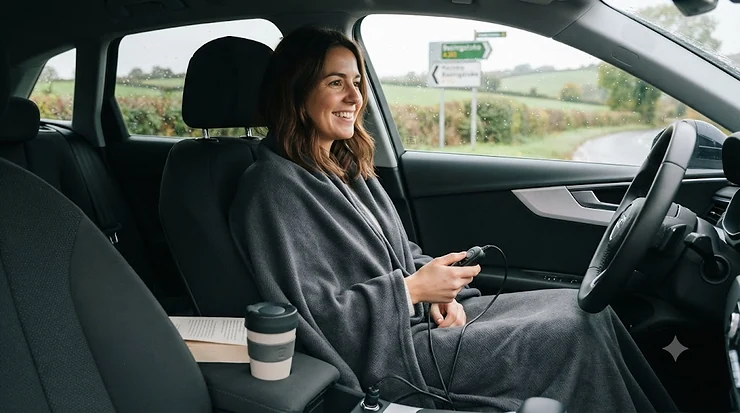
A 12V heated travel blanket is a fleece throw with a thin heating element sewn inside, powered from your car’s 12V accessory socket, the old cigarette-lighter port. Most draw roughly 45–60 watts, warming up in minutes while the cabin heater is still thinking about it.
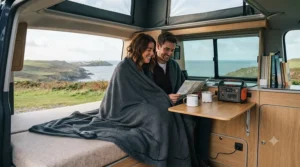
Picture the scene. It’s 7am in February, the windscreen is finally clear, and the heater is blowing air that feels colder than the pavement. Your passenger in the back is wearing a coat indoors and looking betrayed. This is where a blanket that runs off the car earns its boot space.
Search “buy 12V heated travel blanket” and you’ll find dozens of near-identical fleece rectangles with different logos. The differences that matter are quieter. Cable length decides who can actually use it. Auto shut-off decides whether you’ll flatten your battery. Washability decides whether it survives a muddy dog or a toddler’s juice carton.
A note on method before we start. Everything below comes from published manufacturer specifications, retailer listings and the review data I could actually find. I haven’t tested these blankets myself and I won’t pretend otherwise. Where I couldn’t verify something, I say so. Many of these products are designed for the US market but sold to UK buyers through Amazon, so check the current listing, seller and price before you commit. For travel comfort on a cold road trip, the right blanket is one that suits your car, your passengers and your habits.
Quick Comparison: 7 Heated Blankets at a Glance
| Product | Heat settings | Timer | Washable | Best For | Indicative price* |
|---|---|---|---|---|---|
| BougeRV 12V Heated Blanket | 5 levels | 1–3h wired, up to 10h via app | Removable washable cover (upgraded model) | Camping and power-station users | £45–£70 |
| Westinghouse Heated Car Blanket | 3 levels | 4h auto-off | “Upgrade” model only | Family cars | £30–£50 |
| Sealy 12-Volt Heated Car Blanket | 3 levels | 4h auto-off | Yes, per listing | Everyday commuters | £30–£50 |
| Stalwart Heated Car Blanket | Varies by listing (some 2 levels) | Not stated on listings found | Spot clean only | Rear-seat reach | £20–£35 |
| Sino Salected 12V/24V Heated Car Blanket | 3 levels | 30/45/60 min | Yes | Vans and lorries (12V/24V) | £30–£45 |
| RoadPro RPHB-110DB | Single, no switch | None | No | Budget and emergency use | £20–£35 |
| Camco 42804 | Single | None stated | Not stated | Boot emergency kit | £15–£30 |
*Indicative ranges at the time of research. Prices vary by seller and season, so check the current price.
The table shows a clear split. The Westinghouse, Sealy and Sino Salected models come with timers, and that matters more than any fleece detail. The RoadPro and Camco blankets have no timer, so your memory becomes the safety feature. If you want maximum control, the BougeRV is in a league of its own. If you want a cheap boot-stashed backup, the Camco is the obvious candidate.
💬 Just one click — help others make better buying decisions too!😊
Top 7 12V Heated Travel Blankets: Expert Analysis
1. BougeRV 12V Heated Blanket — five heat levels and an app timer
Control is the headline here. Most rivals give you one or two settings, but the BougeRV 12V Heated Blanket offers five across roughly 85–105°F (about 29–41°C). Its wired controller handles 1–3 hour timing, and the phone app extends that to 4–10 hours from within about 10 metres.
At up to 48W (around 4A at 12V), it sits well inside a standard 10A socket’s limit. The listing mentions a temperature-sensing probe and over-voltage protection above 16V. That’s sensible, because car voltage climbs to roughly 13.5–15V with the engine running. It’s also a bigger, camping-style throw (about 127 × 180cm per the brand’s site) rather than a lap rug. The package includes a short controller lead plus a separate 1.5m adapter cable, so measure your rear-seat reach before you assume it’ll span the back row.
Based on the spec comparison, it suits campers, van-lifers and anyone pairing a blanket with a power station. The brand itself suggests its 266Wh and 277Wh units. On the UK listing, at least one buyer complained that running beyond three hours meant using the app, and that pairing was fiddly. Treat the app as a bonus, not a dependency. I couldn’t verify a full review breakdown, so read the current ratings yourself.
Pros:
- ✅ Five heat levels for fine-tuning warmth
- ✅ Timer stretches to 10 hours via app
- ✅ Two-year tech support and storage bag included
Cons:
- ❌ Longer timing depends on the phone app
- ❌ Short cables may not reach a back row
Indicative range £45–£70. It’s premium territory, and it’s good value only if you’ll use the extra control or camp with it.
2. Westinghouse Heated Car Blanket — 4-hour auto-off and a long cord
The sensible middle of the market is where the Westinghouse Heated Car Blanket lives. It has three heat levels, a 4-hour auto shut-off, and a 59 × 43 inch (about 150 × 109cm) body made from double-layer 180gsm polar fleece.
The cord is 85 inches (about 216cm). That’s the figure to trust: it means rear-seat passengers in a typical hatchback or saloon can plug in without tugging the cable taut on every bend. Three levels let you run low for a mild autumn morning and save high for a frosty one. The 4-hour shut-off is a genuine safety net if you forget it after a supermarket dash.
There’s a catch in the small print. The manufacturer’s listing states the ordinary version is hand-wash only, and only the “upgrade model” is machine washable. Check which variant you’re buying. The name on the box tells you less than the spec sheet does.
I couldn’t verify aggregated review sentiment for the UK listing, so I won’t invent any. Buyers should read current reviews for heat consistency and controller durability.
Pros:
- ✅ Three levels cover most British weather
- ✅ 216cm cord reaches rear seats
- ✅ Thick 180gsm fleece retains warmth
Cons:
- ❌ Standard version is hand-wash only
- ❌ Four-hour timer is longer than you’d want
Indicative range £30–£50. Good value if you choose the washable variant.
3. Sealy 12-Volt Heated Car Blanket — the familiar-spec commuter option
Sameness is the story here. On paper, the Sealy 12-Volt Heated Car Blanket matches the Westinghouse: three heat levels, a 4-hour auto-off, machine-washable fabric and a 59 × 43 inch body.
That makes the choice a question of price, availability and colour rather than features. Three levels matter because a blanket that’s too hot on a motorway is as annoying as one that’s too cold. Machine washability matters because a car blanket collects wet coats, biscuit crumbs and dog hair faster than any sofa throw.
What the spec sheet won’t tell you is controller quality and heat evenness. Those come from reviews, and I couldn’t find a trustworthy aggregate for UK buyers. If you’re weighing this against the Westinghouse, compare current listing details for cord length, fabric weight and the seller’s returns policy. Under the Consumer Rights Act, a faulty product should be returnable, but buying from a seller with a clear returns process makes life easier.
Who’s it for? Commuters and school-run parents who want a standard, no-nonsense blanket.
Pros:
- ✅ Three heat levels and 4-hour auto-off
- ✅ Machine washable per listing
- ✅ Standard 59 × 43 inch family-car size
Cons:
- ❌ Little to separate it from rivals
- ❌ Independent UK review data hard to verify
Indicative range £30–£50. Value depends on the price gap versus the Westinghouse.
4. Stalwart Heated Car Blanket — longest cord for rear-seat reach
Cable reach is the standout. The Stalwart Heated Car Blanket has a 96 inch (about 244cm) cord, which is the difference between “warm in the back” and “why is my passenger holding a taut cable?”.
It measures 59 × 43 inches and is soft polyester fleece. The listing says it’s meant to reach passengers in the back seat. That matters in vans, MPVs and any car where the socket is near the front. The catch is care: the retailer listing says spot clean only, not machine washable. Fine for occasional use, less so for a family car.
On a US retailer listing it averages 4.0 stars from 239 ratings, and reviewers praised how quickly it heats. One described letting a passenger stay warm without turning the van heating up. Some listings show two heat levels, others differ, so verify the exact variant. I found no auto shut-off stated on the listings I saw, so build the habit of unplugging it.
It’s a good fit for larger vehicles, rear passengers and anyone who has struggled with short cables before.
Pros:
- ✅ 244cm cord reaches back seats
- ✅ Reviewers praise quick heat-up
- ✅ Soft fleece in classic sizing
Cons:
- ❌ Spot clean only, no machine wash
- ❌ Timer not stated on listings
Indicative range £20–£35. A solid budget choice if you’ll be diligent about unplugging.
5. Sino Salected 12V/24V Heated Car Blanket — dual voltage with timers
Versatility is its selling point. The Sino Salected 12V/24V Heated Car Blanket works on both 12V and 24V systems, which matters for lorries, coaches and some larger vans.
It measures 60 × 44 inches (about 152 × 112cm) and offers three levels covering roughly 86–122°F (30–50°C). You get 30, 45 and 60 minute timers with LED indicators, a draw of around 50W, a machine-washable body and a carry bag with handles. Some variants are marketed as a 4-in-1 that converts into a pillow or backrest. The listing cites UL964, a US standard, which is useful context but not the same as a UK mark.
One point deserves attention. The listing’s safety notes say not to use it while driving and not to leave it unattended. That’s stricter than many rivals, so read the instructions. The short timers suit short hops, but on a long drive you’d be re-setting them every hour.
Who should consider it? Van drivers and lorry users, plus anyone who wants a timer without the 4-hour default. I couldn’t verify a review summary for UK buyers.
Pros:
- ✅ Works on 12V and 24V systems
- ✅ Three timers from 30 to 60 minutes
- ✅ Machine-washable with carry bag
Cons:
- ❌ Max 60-minute timer needs re-setting
- ❌ Listing warns against use while driving
Indicative range £30–£45. Excellent if you drive a 24V vehicle, fair otherwise.

6. RoadPro RPHB-110DB — basic, warm and cheap
Simplicity is the thing to know. The RoadPro RPHB-110DB is a plain 100% polar fleece blanket, around 58 × 42.5 inches (about 147 × 108cm), with an 8ft (about 244cm) cord, an LED indicator on the plug and a zippered storage bag. The listed temperature range is about 70–104°F (21–40°C).
Power figures are muddled. One listing cites 4.6A and 55W, while another old listing quotes 6.7A and 80.4W. A reviewer on Amazon.com said RoadPro confirmed the 4.6A/55W figure for this model. Either way, it’s within a 10A socket’s limit, but the discrepancy is a reason to check the label on the item you receive. It isn’t machine washable, and the same reviewer noted the internal wiring can fail if it’s soaked.
Reviewers described the fleece as soft and warm without noticeable hot spots. There’s no switch or timer that I could find, so this is a “plug in, unplug out” blanket.
Who’s it for? Budget buyers and boot-emergency kits, not daily passenger use.
Pros:
- ✅ Soft polar fleece without reported hot spots
- ✅ 244cm cord with LED plug indicator
- ✅ Comes with a zippered storage bag
Cons:
- ❌ No timer and no heat control
- ❌ Not machine washable, wiring vulnerable to soaking
Indicative range £20–£35. Fair value as a backup, weak as a daily blanket.
7. Camco 42804 — the boot-stashed emergency backup
Emergency use is the honest pitch. The Camco 42804 is a 100% polar fleece blanket, 59 × 43 inches, with a 7ft (about 213cm) cord and a stated low amperage draw. It’s marketed as a vehicle emergency-kit item.
The maker doesn’t publish the wattage on the listings I found, and one shopper on a deals site guessed around 5A. Treat that as a community estimate, not a specification. What matters is that it should sit within a 10A socket’s limit. It has no timer or heat settings mentioned, so the same rule applies: unplug it yourself. A dealer listing mentions a one-year warranty.
Review data is reassuring, not spectacular. A November 2025 Slickdeals snapshot of the US Amazon listing showed 4.1 stars from about 1,147 ratings. That’s a decent sample, but it’s US data, not UK buyers.
For a cheap blanket kept in the boot for breakdowns, it’s hard to argue with. As a daily commuter’s blanket, the missing timer counts against it.
Pros:
- ✅ Solid US ratings from a large sample
- ✅ 213cm cord reaches most rear seats
- ✅ Simple, low-cost emergency-kit blanket
Cons:
- ❌ No timer or heat settings stated
- ❌ Wattage not published on listings
Indicative range £15–£30. Best treated as a backup, not a first choice.
Here’s how the seven stack up on the practical specs:
| Product | Size (approx.) | Cord | Power | Best For |
|---|---|---|---|---|
| BougeRV 12V Heated Blanket | 127 × 180cm | 0.5m controller + 1.5m adapter | Up to 48W | Camping and power-station use |
| Westinghouse Heated Car Blanket | 150 × 109cm | 216cm | Not stated | Family hatchbacks |
| Sealy 12-Volt Heated Car Blanket | 150 × 109cm | Check listing | Not stated | Everyday commuters |
| Stalwart Heated Car Blanket | 150 × 109cm | 244cm | Not stated | MPVs and vans |
| Sino Salected 12V/24V Heated Car Blanket | 152 × 112cm | Check listing | About 50W | Lorries and vans |
| RoadPro RPHB-110DB | 147 × 108cm | 244cm | 55W (disputed) | Emergency backup |
| Camco 42804 | 150 × 109cm | 213cm | Not stated | Boot emergency kit |
The most useful column is cord length. The Stalwart and RoadPro at 244cm are the best bets for rear seats, while the BougeRV needs careful checking because of its modular cables. Power figures are patchy across listings, which is a reason to prefer products that publish them clearly, like the BougeRV and Sino Salected. If you only need a blanket for the front passenger, cord length becomes almost irrelevant and price, washability and timers take over.
How to Set Up, Use and Care for Your Blanket: A 30-Day Guide
Buying is the easy bit. The first month decides whether the blanket becomes a habit or a drawer resident.
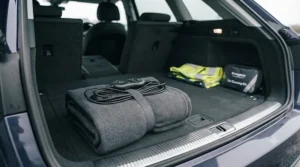
Week one: test at home. Before your first journey, park on the drive, plug it in and check the plug fits snugly, the cord reaches and the heat comes on. Feel the whole blanket for uneven spots. Set a phone reminder for 30 minutes to check the timer works if the product has one.
Week two: fit it into your routine. Spread it flat over your passenger’s lap rather than bunched up. Essex Fire and Rescue Service advises against using an electric blanket while it’s folded or creased, and the same logic applies here. If your blanket has a timer, choose the shortest setting that covers the journey.
Week three: build the unplug habit. Blankets without a timer rely on you. Try a simple rule: the blanket comes out when the key comes out. Keep the cord clear of pedals and the handbrake.
Week four: wash or wipe. Check the care label. Machine-washable models still need the controller removed. Spot-clean-only models such as the Stalwart and RoadPro need a damp cloth, then air-drying before use. Never plug in a damp blanket.
Common first-month mistakes: using a socket splitter with several devices, leaving it plugged in overnight, and stuffing it into a damp boot bag. Roll it loosely for storage rather than folding it tightly.
Real-World Scenarios: Which Blanket for Which Journey
Three profiles show how the choice changes with your budget, environment and frequency of use.
The school-run parent. Two children, a 20-minute drive, five days a week from October to March, and a hatchback with a rear socket. You need a cord that reaches, a timer that shuts off after drop-off, and fabric that survives juice. The Westinghouse (washable variant) or Sealy fit best, with a 4-hour timer as a safety net. If the kids are in the third row of an MPV, the Stalwart‘s 244cm cord solves the reach problem, and you’d pair it with a habit of wiping it down.
The weekend camper. You drive to a campsite, park up and want warmth in the evening, powered by a portable battery. The BougeRV is designed for exactly this: multiple heat levels stretch a small battery, and the long timer covers an evening. Budget £45–£70 and add a power station if you don’t have one.
The van or lorry driver. A 24V system rules out most 12V-only blankets. The Sino Salected handles both voltages. Its 30/45/60 minute timers suit short breaks and loading stops, and the listing’s warning against use while driving means it’s best for rest breaks rather than motorway miles.
✨ Ready to Pick Your Blanket?
🔍 Take your travel comfort to the next level with these carefully selected blankets. Click on any highlighted product name to check current pricing and availability. A little planning now means warmer, safer journeys all winter!
Portable Power: Running a 12V Blanket Without the Engine
Sitting in a parked car with a blanket plugged into the accessory socket is fine for a few minutes. It’s a poor plan for hours. Portable power solves that, and a small battery pack changes what these blankets can do.
Problem 1: the engine is off and you don’t want a flat battery. A 50W blanket draws about 4.2A at 12V. Over one hour that’s roughly 4.2Ah, and over three hours about 12.5Ah, which is a meaningful slice of a typical family-car battery. Parkers warns that 12V heated accessories left on with the engine off can drain a battery over time. Solution: for long stationary use, run the blanket from a separate power station instead.
Problem 2: which battery size? As a rough rule, divide the battery’s watt-hours by the blanket’s wattage. A 266Wh unit with a 48W blanket gives about 5.5 hours in theory. Allow for conversion losses and thermostat cycling, so plan on 4–5 hours as a cautious estimate. The BougeRV brand pairs its blanket with 266Wh and 277Wh units, which fits that maths.
Problem 3: a 12V output that’s too weak. Check the power station has a 12V DC output rated for at least 5A. A blanket that draws 4–5A will trip a weak port.
Problem 4: cable clutter. A power station in the boot and a blanket in the rear seat means a long run. The Stalwart, RoadPro and Camco all have cords of 2.1–2.4m, which helps.
How to Choose Before You Buy 12V Heated Travel Blanket Options
- Check your socket first. Many modern cars still have a 12V accessory outlet, but some have replaced it with USB ports. Confirm before you buy anything.
- Know your socket’s limit. A common rating is 10A, about 120W. That’s plenty for one blanket at roughly 50W, but two blankets plus a phone charger can get tight.
- Prioritise auto shut-off. A timer matters more than fleece thickness because it protects your battery when you forget. The Westinghouse, Sealy and Sino Salected all have one.
- Match cord length to the seat. For the front seat, 180–200cm is fine. For rear seats, aim for 210cm or more. For third-row seating, look at the 244cm options.
- Choose heat levels for your climate. Three settings cover most British weather. Five, like the BougeRV, is a luxury.
- Look at washability. If children, dogs or wet coats are involved, avoid spot-clean-only models.
- Read the warnings. Some listings caution against use while driving. Follow the maker’s instructions.
Heated Blanket for Long Car Journeys: What to Expect
A heated blanket for long car journeys is a different proposition from a five-minute school run. On a 200-mile drive, three questions dominate: does it stay comfortable, does it stay safe, and does it keep you alert?
Comfort. On paper, a 3-level blanket lets you start on high, drop to low once the cabin warms and avoid the too-hot-then-too-cold cycle. A fixed single-setting blanket such as the RoadPro or Camco can’t do that. You end up unplugging and replugging.
Safety. The Westinghouse and Sealy four-hour timers cover a typical journey between stops, while the Sino Salected‘s 60-minute limit means you’d reset it repeatedly. Keep the blanket flat and clear of pedals, and check the cord occasionally for damage.
Alertness. This is the part people forget. Rule 91 of the Highway Code says driving while tired greatly increases collision risk, and recommends a break of at least 15 minutes every two hours. A warm, cosy driver is a drowsier driver. My reasoning: use the blanket mainly for passengers, keep the driver’s cabin temperature moderate, and follow the break rules. That’s analysis, not medical advice.
Power. With the engine running, the alternator supplies the current. With it off, you’re on battery, so keep stops short or bring portable power.
Road Trip Essentials: Where a Heated Blanket Fits
A blanket is one item on a longer list. If you’re building your road trip essentials kit, this is where the 12V blanket sits.
The comfort tier: a heated blanket, a small pillow, spare warm layers, a flask and sunglasses for low winter sun.
The breakdown tier: a torch, a phone charger, a high-vis vest and, in winter, a warm blanket. The Camco 42804 is marketed as a vehicle emergency-kit item, and the RoadPro works the same way. Keep it dry in a bag.
The power tier: a 12V socket splitter is tempting but can overload the circuit. A better option is a second socket or a portable power station.
The safety tier: plan for breaks, share driving on long trips and don’t set off if you’re tired. For real winter travel, a blanket helps passengers, but it doesn’t replace layers and a charged phone.
Think of the blanket as the difference between a journey you endure and one you enjoy, not as a substitute for the boring essentials.
Travel Comfort: 12V Blanket vs Other Options
A blanket isn’t the only route to travel comfort. Heated seat covers, 12V heaters and layers all compete for the same job.
| Option | Warm-up | Power draw | Best For | Weak spot |
|---|---|---|---|---|
| 12V heated blanket (e.g. BougeRV, Westinghouse) | Minutes | About 45–60W | Passengers, rear seats | Cord reach, folding risk |
| Heated seat cover | Minutes | Around 25–45W (Streetwize, per Parkers) | Driver back and seat | Front seats only |
| 12V car heater | Fast air | Varies by model | Quick windscreen warmth | Noise, limited output |
| Extra layers | Instant | None | Everyone | Bulk, less effective when stationary |
A seat cover warms the driver’s body directly without covering the legs, which matters for pedal safety. A blanket covers more of the body and works for every seat, but it’s less suited to the driver. My view: seat cover for the driver, blanket for the passengers. Compare that with the alternative of turning up the heating and you’ll see the point: a blanket warms the person, not the whole cabin.
Common Mistakes When You Buy 12V Heated Travel Blanket Models
Mistake 1: ignoring cord length. A blanket that can’t reach the back seat is just an expensive rug. Measure from the socket to the seat.
Mistake 2: skipping the timer. No auto shut-off means you’re the safety system. That’s fine if you’re disciplined, less so if you’re rushing to nursery drop-off.
Mistake 3: assuming “machine washable” applies to every variant. The Westinghouse listing distinguishes between standard and upgrade models. Read the exact product title.
Mistake 4: trusting wattage claims blindly. The RoadPro listing shows how figures can conflict. Check the label when it arrives.
Mistake 5: buying on price alone. A blanket that costs £15 but stops working after one winter is not cheaper than a £35 blanket that lasts three. Cost per use is the real measure.
Long-Term Cost and Value: What You’re Really Paying
Cost-per-use reasoning beats sticker-price comparison. Suppose you use a blanket on 50 journeys a winter. A £30 blanket that survives two winters works out at about 30p a journey. If it fails after one winter, it’s 60p. A £60 blanket that lasts four winters is about 30p a journey too.
| Tier | Products | Indicative price | Value logic |
|---|---|---|---|
| Budget | Camco 42804, RoadPro RPHB-110DB, Stalwart Heated Car Blanket | £15–£35 | Cheap backups; no timers on most |
| Mid-range | Westinghouse Heated Car Blanket, Sealy 12-Volt Heated Car Blanket, Sino Salected 12V/24V Heated Car Blanket | £30–£50 | Timers, washability, everyday value |
| Premium | BougeRV 12V Heated Blanket | £45–£70 | Fine control, long timer, camping |
The mid-range is where most drivers will get the best mix of safety features and running costs. Budget models make sense as boot backups, and premium only pays off if you use the extra features. Running costs are trivial: at about 50W, a blanket adds little to a journey compared with the cabin heater, though exact fuel impact varies by car, so I won’t put a number on it.
Safety, Regulations and Compliance in the UK
What the rules say. As I understand it, 12V DC equipment sits below the voltage range covered by the UK’s Electrical Equipment (Safety) Regulations, so a UKCA mark isn’t necessarily required. General product safety law still expects consumer products to be safe. If you need certainty, check with Trading Standards or gov.uk rather than relying on me.
What the listings say. Some cite UL964, a US standard. That’s useful as a signal of testing, but it’s not a UK certification.
Sensible habits. Essex Fire and Rescue Service advises never using an electric blanket if it’s folded, creased, wet or damp, and checking cords and connectors for damage or overheating. It also recommends storing it loosely rolled once cooled. Those principles apply to car blankets too.
Your consumer rights. Under the Consumer Rights Act 2015, goods should be of satisfactory quality and fit for purpose, and you generally have a 30-day short-term right to reject faulty items. Keep your order details.
In-car specifics. Keep cords clear of pedals and the gear lever, don’t use a damaged plug, and avoid overloading a socket. Two blankets at about 50W each would nearly fill a 120W circuit, so use separate sockets if possible.
FAQ
❓ Where can I buy 12V heated travel blanket options in the UK?
❓ Can I use a 12V heated travel blanket with the engine off?
❓ Will a 12V heated blanket work in an electric car?
❓ Can I use two heated blankets at once?
❓ Are heated travel blankets suitable for a 24V lorry or van?
Conclusion: Which Blanket Should You Buy?
Choosing is easier when you match the blanket to the job. Most UK drivers will be happiest with the Westinghouse Heated Car Blanket or Sealy 12-Volt Heated Car Blanket because they combine three heat levels with a 4-hour auto-off. If you’re heading for the campsite or want fine control, the BougeRV 12V Heated Blanket is the most flexible. If you drive a van or lorry with a 24V system, the Sino Salected 12V/24V Heated Car Blanket is the one that’s actually designed for you.
For rear-seat reach, the Stalwart Heated Car Blanket and RoadPro RPHB-110DB give you 244cm of cord. For a boot emergency kit, the Camco 42804 is a sensible, cheap backup. The RoadPro and Camco have no timers, so plan to unplug them yourself.
Whatever you choose, remember the boring bits. Check the socket, read the care label, keep the blanket flat and clear of pedals, and follow Highway Code advice on breaks. A blanket makes a cold journey nicer, but it doesn’t make a tired driver safer.
If you plan to buy 12V heated travel blanket models this winter, check current prices and availability on Amazon.co.uk before you decide.
✨ Ready to Warm Up Your Winter Drives?
🔍 Take your road trips to the next level with a blanket that suits your car. Click any highlighted product name to check current pricing and availability. Warmer, calmer journeys start with one good choice! 🚗🔥
Recommended for You
- 12V Heated Car Blanket: 7 Best Picks For UK Winters (2026)
- Heated Seat Covers UK: 7 Best 12V Picks For Winter 2026
- Heated Seat Covers For Cars: 7 Best Picks For UK Winters (2026)
Disclaimer: This article contains affiliate links. As an Amazon Associate, I earn from qualifying purchases. If you purchase products through these links, we may earn a small commission at no additional cost to you.
✨ Found this helpful? Share it with your friends! 💬🤗
