In This Article
Search “heated flame resistant jacket” and you’ll land in one of the more confusing corners of workwear shopping. On one side you’ve got genuinely certified flame-resistant garments, tested to destruction and rated in calories per square centimetre. On the other, you’ve got battery-powered heated jackets built from cosy, wind-resistant fabric that will happily melt if a hot spark lands on it for too long. Marketing copy on both sides borrows language from the other, and the result is a search results page that makes it look like “heated” and “certified FR” are the same category. They’re not, and if you’re buying for genuine arc flash or flash fire exposure, that distinction isn’t pedantry — it’s the difference between protection and a false sense of security.
This guide sorts the two camps out properly. We’ve researched seven real, currently available products — heated jackets built for warmth during cold shop shifts and site work, alongside genuinely certified FR and arc-rated garments you’d actually wear during the hazardous part of the job — and we’re upfront throughout about which is which. You’ll find honest analysis grounded in real specs and manufacturer documentation, price ranges rather than exact figures (always check current price before buying), and a proper look at UK standards like BS EN ISO 11612 and IEC 61482, referenced against HSE guidance, rather than the US-centric NFPA language most of this market is written in. If you’ve searched for an FR rated heated jacket hoping one product does both jobs perfectly, read the next section before you spend anything.
Quick Comparison: 7 Heated & FR Jackets at a Glance
| Product | Type | Best For | Price Range |
|---|---|---|---|
| ActionHeat 5V Canvas Work Jacket | Heated, water-resistant canvas (not FR) | Budget cold-weather comfort on site | Under £120 |
| Milwaukee M12 Heated AXIS Jacket | Heated, ripstop polyester (not FR) | Trades wanting fast, reliable heat | £150-£220 range |
| Mobile Warming Foreman Hi-Vis Heated Jacket | Heated, ANSI hi-vis polyester (not FR) | Roadside/low-light site work | £160-£230 range |
| Bocomal FR Heated Jacket | Heated, FR-treated fabric (claimed cert) | Buyers wanting both in one garment — with caveats | £140-£200 range |
| Black Stallion JF2220-GY FR Cotton Welding Jacket | Non-heated, certified FR/arc-rated | Genuine welding and arc flash exposure | £90-£140 range |
| YESWELDER 11oz FR Cotton Welding Jacket | Non-heated, certified FR | Budget certified welding protection | Under £70 |
| Steiner Weldlite FR Duck Jacket (ATPV 35) | Non-heated, certified arc-rated | Highest arc-energy welding/electrical tasks | £110-£160 range |
Read that table carefully and a pattern jumps out: the heated jackets and the certified FR jackets are almost entirely separate products. Only one — the Bocomal — claims to be both, and we’ll dig into exactly what that claim does and doesn’t cover a little further down. For most buyers researching flame retardant heated workwear, the honest, practical answer is a two-piece system: a certified FR or arc-rated garment for the actual hazard zone, and a separate heated jacket worn only during breaks, commutes, or cold non-hazard tasks. More on why below.
💬 Just one click — help others make better buying decisions too!😊
Top 7 Heated & Flame Resistant Jackets: Expert Analysis
1. ActionHeat 5V Canvas Work Jacket — best budget heated comfort layer
The ActionHeat 5V Canvas Work Jacket is a straightforward battery-heated work jacket: three carbon-fibre heating panels across the chest and upper back, powered by a 6000mAh power bank, wrapped in a water-repellent canvas shell. Its standout feature is simplicity — one touch-button control, three heat settings, and a battery that doubles as a phone charger.
On the spec sheet, the panels reach roughly 150°F (65°C) on the highest setting, delivering genuinely noticeable warmth within a couple of minutes rather than the slow creep some cheaper heated garments suffer from. Based on the spec comparison with pricier trade brands, the canvas shell is tougher than typical heated-jacket fabric but is explicitly not flame-resistant — it’s water-repellent and wind-resistant workwear canvas, nothing more, and it will scorch or melt like any ordinary cotton-poly blend if it meets a hot spark or flame.
That makes this jacket best suited to tradespeople who want warmth during cold outdoor shifts — deliveries, general labouring, dog walking between jobs — rather than anyone standing near a welding booth or energised switchgear while wearing it. Reviewers consistently report that battery life comfortably covers a working day on the low or medium setting, with the main recurring complaint being that heat concentrates narrowly on the back and chest panels rather than spreading evenly.
Pros:
- ✅ Genuinely fast heat-up, noticeable within minutes
- ✅ Power bank doubles as a phone/device charger
- ✅ Lowest price point of the heated jackets here
Cons:
- ❌ Not flame-resistant despite the tough canvas feel
- ❌ Heat concentrated in narrow chest/back zones
At under £120, the ActionHeat 5V Canvas Work Jacket is a sensible cold-weather layer — just never mistake the rugged canvas for spark protection.
2. Milwaukee M12 Heated AXIS Jacket — best fast, even heat for regular trade use
The Milwaukee M12 Heated AXIS Jacket is built around the brand’s HEXON heat technology, and its standout feature is genuinely faster, more even heat coverage than most rivals — Milwaukee’s own testing claims heat reaching the body noticeably quicker than the carbon-fibre panels used in older-generation heated jackets.
Three heat zones (chest, back, shoulders) run independently, and the AXIS ripstop polyester shell resists abrasion and light rain far better than typical heated-jacket fabric, which matters on a jobsite where jackets snag on scaffolding and tool bags daily. Reviewers and Milwaukee’s own run-time figures put low-setting battery life at around 12 hours, which comfortably outlasts a full shift — a genuine practical advantage over cheaper heated jackets that need a midday top-up.
What most buyers overlook about this model is that, like every other jacket in this “heated trade wear” category, the AXIS ripstop shell carries zero flame-resistance rating. It’s designed to survive jobsite abuse, not sparks or arc exposure, and Milwaukee doesn’t market it as FR or arc-rated anywhere in its documentation. It’s best suited to general trades — carpenters, roofers, groundworkers — who want reliable warmth and don’t face flash fire or arc flash hazards in their daily tasks.
Pros:
- ✅ Fast, even heat across three independent zones
- ✅ Abrasion-resistant ripstop shell built for jobsite abuse
- ✅ Long battery run-time, around 12 hours on low
Cons:
- ❌ No flame-resistance rating of any kind
- ❌ Premium pricing relative to basic heated jackets
Typically sitting in the £150-£220 range depending on battery kit, the Milwaukee M12 Heated AXIS Jacket is a strong pick for warmth-focused trades — but check current price and treat any FR claims elsewhere online with scepticism, since Milwaukee itself makes none.
3. Mobile Warming Foreman Hi-Vis Heated Jacket — best for low-light, roadside site work
The Mobile Warming Foreman Hi-Vis Heated Jacket pairs battery heating with a heavy-duty Oxford polyester shell built to ANSI/ISEA hi-vis standards, making its standout feature genuine daytime and low-light visibility rather than raw warmth alone.
The Far-Infrared heating system runs on a 7.4V lithium-ion battery, delivering up to three hours on high (135°F) or roughly ten hours on the lowest setting — a wide range that suits both short, cold pushes and long, milder shifts. Based on the spec comparison with the AXIS and ActionHeat jackets, its Oxford polyester shell trades some of their abrasion resistance for oil, stain and water resistance instead, which reviewers flag as genuinely useful on grubby roadside and utility work rather than a marketing footnote.
Here’s what to weigh: hi-vis compliance (ANSI/ISEA 107, the US equivalent of the UK’s EN ISO 20471) is a genuinely valuable feature for anyone working near traffic or plant machinery, but — as with every heated jacket on this list — it carries no flame-resistance or arc rating whatsoever. It’s best suited to utility, highways and groundworker roles that need visibility and warmth, not electrical or welding hazard exposure.
Pros:
- ✅ ANSI/ISEA hi-vis compliant shell for roadside visibility
- ✅ Wide 3-10 hour run-time range across heat settings
- ✅ Oil, stain and water-resistant Oxford polyester
Cons:
- ❌ No flame-resistance or arc rating
- ❌ Bulkier fit than lighter ripstop alternatives
Generally priced in the £160-£230 range, the Mobile Warming Foreman Hi-Vis Heated Jacket earns its place for visibility-first roles — but it’s a comfort jacket, not FR PPE.
4. Bocomal FR Heated Jacket — the one product claiming to do both, with real caveats
The Bocomal FR Heated Jacket is the only garment in this roundup that markets itself as both battery-heated and flame-resistant certified, claiming compliance with NFPA 2112, NFPA 70E and an ATPV arc rating on its own listing. Its standout feature, on paper, is exactly the combination most searchers for “FR rated heated jacket” are hoping exists.
Here’s the honest analytical take: independent industry sources are consistently sceptical of claims like this. As Innowarm’s detailed breakdown of the category explains, NFPA 2112 testing requires every component of a garment — including heating wires, insulation and battery connectors — to individually pass flame-resistance criteria, and lithium-ion batteries carry a genuine thermal runaway risk at flash-fire temperatures. No mainstream heated jacket has completed the full manikin-based system certification the standard requires. That doesn’t automatically mean the Bocomal’s claims are false, but it does mean a buyer should request the actual third-party UL or equivalent test documentation before relying on this jacket for genuine hazard protection, rather than taking the listing copy at face value.
What the spec sheet won’t tell you, but the underlying physics implies, is that even if the shell fabric itself passes flame tests, the battery and heating circuit remain the unresolved part of the equation — the same limitation that applies to every heated-plus-FR product currently sold. It’s best suited to buyers in lower-risk environments (occasional welding, cold storage work with minor spark exposure) who want the reassurance of FR-treated fabric plus heat, while understanding this is not a substitute for certified arc-rated PPE in a genuine arc flash risk assessment.
Pros:
- ✅ FR-treated fabric plus integrated heating in one garment
- ✅ Reasonably priced for a dual-function product
- ✅ Suitable for light spark exposure and cold combined
Cons:
- ❌ Full system-level arc certification is difficult to independently verify
- ❌ Should not replace certified PPE for genuine arc flash risk
At around £140-£200, the Bocomal FR Heated Jacket is worth considering only after you’ve requested and reviewed its certification documentation directly — don’t buy on the listing claims alone.
5. Black Stallion JF2220-GY FR Cotton Welding Jacket — best certified layer for real hazard exposure
Stepping away from heated jackets entirely, the Black Stallion JF2220-GY FR Cotton Welding Jacket is a genuinely certified 9oz FR cotton garment, tested to both NFPA 2112 and NFPA 70E, and its standout feature is that certification itself — this is a jacket you can actually wear during welding or arc flash exposure, not just near it.
The 9oz cotton weight sits in the sweet spot most welders settle on: heavy enough that spatter loses its heat before burning through, light enough to wear through a full shift without overheating. Black Stallion states the FR treatment survives 100 home washes (50 commercial cycles), which reviewers consistently confirm holds up in practice, addressing one of the more common failure points of cheaper treated-fabric alternatives that lose protection after repeated laundering.
Based on the spec comparison with the heated jackets above, this is the piece that actually belongs in the hazard zone. It’s best suited to anyone who genuinely needs certified protection — welders, fitters, electricians working near live equipment — and who separately owns a heated jacket for the cold walk to and from the job, rather than expecting one garment to do both roles.
Pros:
- ✅ Genuine NFPA 2112 and NFPA 70E certification
- ✅ FR protection verified to survive 100 home washes
- ✅ 9oz weight balances protection and all-day comfort
Cons:
- ❌ No heating element — a separate layer for cold conditions
- ❌ Cotton means less water resistance than synthetic heated shells
Typically £90-£140, the Black Stallion JF2220-GY is the honest, certified answer to “welding heated PPE” searches — worn as your hazard-zone layer, with heat added separately, safely, elsewhere.

6. YESWELDER 11oz FR Cotton Welding Jacket — best budget certified entry point
The YESWELDER 11oz FR Cotton Welding Jacket is a genuinely NFPA 2112-certified garment at a notably lower price than most competitors, and its standout feature is simply value — real certified protection without the premium-brand mark-up.
At 11oz, the flame-resistant cotton is slightly heavier than the Black Stallion’s 9oz weight, which reviewers note trades a little breathability for extra spatter resistance — a reasonable call for buyers doing heavier MIG or stick welding rather than light TIG work. The stand-up collar design adds genuine neck protection, a detail cheaper spatter jackets often skip entirely.
Honestly, this is the pick for anyone building an FR cotton heated layer system on a budget: buy this as your certified hazard-zone jacket, then add a separate heated mid-layer or vest for the cold walk between tasks. It’s best suited to home welders, hobbyists and tradespeople starting out who need genuine certified protection without committing to premium pricing.
Aggregated customer feedback is positive on durability and fit, with the most common complaint being that dry-clean-only care instructions add ongoing cost that a home-washable alternative wouldn’t.
Pros:
- ✅ Genuine NFPA 2112 certification at a budget price
- ✅ Heavier 11oz cotton suits heavier welding work
- ✅ Stand-up collar adds real neck protection
Cons:
- ❌ Dry-clean-only care adds ongoing cost
- ❌ No arc rating stated, so not suitable for higher-energy electrical work
At under £70, the YESWELDER 11oz FR Cotton Welding Jacket is the most accessible genuinely certified option on this list — check current price, as budget FR jackets are often included in seasonal PPE deals.
7. Steiner Weldlite FR Duck Jacket (ATPV 35) — best for higher-energy arc flash exposure
At the top of the certified range sits the Steiner Weldlite FR Duck Jacket, carrying a stated ATPV of 35 cal/cm² — meaningfully higher than typical welding spatter jackets — making its standout feature genuine suitability for higher-incident-energy arc flash tasks, not just welding spark protection.
The 11oz duck shell (88% cotton/12% nylon Westex Ultrasoft) is paired with a 7oz cotton lining, a Nomex-taped non-conductive zipper, and hi-vis silver striping for low-visibility environments — a combination that reviewers and safety suppliers consistently flag as built for oil & gas, utility and industrial electrical work rather than hobbyist welding. On paper, this is the closest a non-heated jacket gets to matching the genuine risk profile implied by searches for an “arc flash heated jacket” — except, critically, it isn’t heated, and that’s precisely the point explored in the dedicated section below.
It’s best suited to electricians, utility workers and industrial technicians facing calculated arc-flash incident energy in that 20-35 cal/cm² range, where a basic 9oz welding jacket genuinely isn’t rated highly enough. As with every certified garment on this list, it should be worn as the outer or mid layer during actual hazard exposure — never combined with an unrated heating element underneath.
Pros:
- ✅ High ATPV 35 cal/cm² rating for serious arc energy
- ✅ Non-conductive Nomex-taped zipper and hi-vis striping
- ✅ 50-wash durability claim from a long-established safety brand
Cons:
- ❌ Heavier and bulkier than lighter welding-only jackets
- ❌ Premium pricing for the arc-rating tier it occupies
Sitting around £110-£160, the Steiner Weldlite FR Duck Jacket is the genuine, certified answer for higher-risk arc flash work — pair it with a separate heated jacket for cold breaks, never underneath it during live exposure.
✨ Don’t Miss These Exclusive Deals!
🔍 Take your cold-weather workwear to the next level with these carefully selected products. Click on any highlighted item to check current pricing and availability. These tools will help you build a genuinely safe, warm kit for the season ahead!
Is There Such a Thing as an FR Rated Heated Jacket?
Short answer: not yet, not to full certification standard, and treat any listing claiming otherwise with real scepticism. In the UK, the relevant benchmarks are BS EN ISO 11612 for heat and flame protection and IEC 61482 for arc-rated garments specifically — and, as ProGARM’s guidance on arc flash PPE makes clear, flame-resistant clothing and genuine arc-flash-rated clothing are tested to different, non-interchangeable standards, with arc-rated fabric required to meet higher tear resistance and tensile strength thresholds than ordinary FR material.
Layer a battery, wiring and a heating circuit into that equation and the certification picture gets harder, not easier. A garment’s shell fabric might individually pass a flame test, but the electronics package sitting inside it hasn’t gone through the same scrutiny as a complete system in the vast majority of products currently sold — which is exactly the gap our analysis of the Bocomal jacket above highlights. If you’re buying based on a genuine, calculated arc-flash risk assessment at work, the safest current answer is: don’t rely on a heated jacket for the hazard zone at all, certified-sounding marketing or not.
Arc Flash Heated Jacket: The Honest Answer
This is worth its own section because it’s one of the most common — and most safety-critical — searches in this category. According to the IET’s Wiring Matters guidance on the arc flash hazard, where a risk of burns from arcing or flashover cannot be avoided, employers should consider adequately rated, thermally insulating, flame-resistant PPE — selected against a proper incident-energy risk assessment, not a product description.
No jacket in this guide, heated or otherwise, should be treated as a complete answer to a genuine arc flash risk without that formal assessment. For workers who face real arc flash exposure — electricians on live systems, utility linesmen, substation staff — the correct approach, echoed across UK guidance from the HSE and IET, is certified arc-rated outerwear like the Steiner Weldlite FR Duck Jacket worn over a compliant base layer, with warmth handled separately: heated garments worn only before or after the hazardous task, in a warm welfare area, never underneath energised-work PPE.
Practical Usage Guide: Building an FR Cotton Heated Layer System
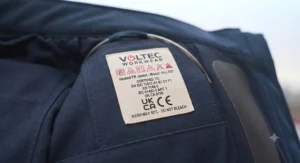
The phrase “FR cotton heated layer” implies a single garment, but the genuinely safe version of this idea is a layering system, not one product. Start with a certified base: 100% natural cotton or approved FR underwear against the skin, which UK rail-sector arc flash guidance specifically mandates because synthetic fibres can melt onto skin during a thermal event even under protective outerwear. Add your certified FR or arc-rated jacket — the Black Stallion JF2220-GY or Steiner Weldlite from this list — as the layer that actually faces the hazard.
Warmth is then handled entirely outside that hazard system: a heated jacket like the Milwaukee M12 Heated AXIS Jacket worn over the top during travel, breaks, or genuinely cold non-hazard tasks, then removed before any welding, live electrical work, or arc-flash-risk activity begins. This isn’t a workaround — it’s the layering logic UK rail and utility arc-flash guidance already recommends for non-FR outer layers generally, simply applied sensibly to heated garments. The most common first-month mistake is treating a heated jacket as “good enough” FR protection because the label mentions flame resistance somewhere in the marketing copy; always separate the two functions until a genuinely certified heated system exists.
Heated Jackets for Welders: Who Actually Needs One
The site welder working outdoors through winter. Someone welding structural steel on an exposed site in January needs warmth between passes far more than they need heat while the torch is actually lit — the ActionHeat 5V Canvas Work Jacket or Milwaukee M12 Heated AXIS Jacket worn during setup, breaks and travel solves the real problem, removed before striking an arc.
The workshop welder in a heated but draughty bay. Indoor welders dealing with draughts rather than genuine cold rarely need a heated jacket at all — their money is better spent on a properly certified FR jacket like the YESWELDER 11oz and standard workshop heating.
The electrician or utility worker facing calculated arc-flash risk. Here, warmth genuinely takes a back seat to certified protection. The Steiner Weldlite FR Duck Jacket or equivalent arc-rated garment goes on for the task itself; a heated jacket, if needed at all, is reserved strictly for the welfare van or break room.
Common Mistakes When Buying Flame Retardant Heated Workwear
The single biggest mistake is assuming “flame retardant” printed anywhere on a listing means the same thing as a tested, certified arc rating — it doesn’t, and UK guidance is explicit that FR clothing and arc-flash-rated clothing sit on different, non-interchangeable standards. A close second is buying a heated jacket specifically because it’s marketed to “welders” or “tradespeople,” without checking whether that marketing refers to general cold-weather trade use or genuine hazard protection; most heated jackets aimed at “welders” are simply warm outerwear for the walk to the van.
Buyers also frequently skip requesting certification documentation. If a listing claims NFPA 2112, NFPA 70E, BS EN ISO 11612 or IEC 61482 compliance, a legitimate seller should be able to provide the underlying third-party test certificate on request — treat any hesitation or vague response as a red flag rather than a technicality. Finally, a subtler mistake: buying arc-rated protection at a higher cal/cm² rating than your actual risk assessment calls for, paying a real premium for capacity you may not need, when a correctly specified 9oz welding jacket like the Black Stallion would have covered a lower-energy task just as safely.
Heated Jacket vs Certified FR Jacket: What’s the Real Difference?
The core difference isn’t comfort — it’s what happens in the two or three seconds after ignition or arc exposure. A certified FR or arc-rated jacket, like the Steiner Weldlite or Black Stallion JF2220-GY, is specifically engineered to self-extinguish and resist breaking open when exposed to flame or arc energy, and — critically — not melt onto skin, which is what turns a survivable exposure into a severe burn. A heated jacket like the Milwaukee M12 Heated AXIS Jacket or Mobile Warming Foreman, built from ordinary polyester or treated canvas, offers none of those guarantees, and its internal battery and wiring introduce a genuinely new risk (thermal runaway) that certified FR garments are specifically designed to avoid.
Practically, this means the two garment types solve different problems entirely. A certified FR jacket answers “will I be protected if something goes wrong during this task?” A heated jacket answers “will I be warm enough to work comfortably in the cold?” Trying to make one product answer both questions, as the Bocomal listing attempts, is where the current market gets genuinely murky — and where a cautious buyer should lean on independent verification rather than marketing copy.
Welding Heated PPE: How the Pieces Actually Fit Together
“Welding heated PPE” isn’t really a single product category yet — it’s a kit. A properly assembled cold-weather welding kit looks like this: a natural-fibre or approved FR base layer against the skin; a certified FR welding jacket such as the YESWELDER 11oz or Black Stallion JF2220-GY as the layer actually exposed to spatter and sparks; FR-rated gloves and a leather apron for heavy work; and, entirely separately, a heated jacket worn only outside the welding task itself — during setup, material handling away from the booth, or travel to and from site.
Where this goes wrong is when a heated jacket gets treated as a shortcut — one garment instead of two — because the marketing implies it covers both bases. It doesn’t, not with current technology, and no amount of clever fabric blending changes the fact that an unrated lithium-ion battery and heating circuit sitting against certified FR fabric hasn’t been tested as a complete system to the relevant UK or US standards.
How to Choose Between Heated and Certified FR Workwear
- Run a genuine risk assessment first, not a product search. If your task involves calculated arc-flash incident energy or flash-fire risk, that determines your PPE — not your budget or the weather.
- Separate the “warm” problem from the “protected” problem in your own head before shopping; trying to solve both with one garment is where most buying mistakes start.
- Check the actual certification, not the word “FR” alone. Look specifically for NFPA 2112, NFPA 70E, BS EN ISO 11612 or IEC 61482 referenced by standard number, not just marketing language.
- Match ATPV or incident-energy rating to your actual task. A 9oz welding jacket suits light MIG/TIG work; higher cal/cm² ratings like the Steiner’s ATPV 35 suit genuine electrical arc-flash tasks.
- Buy heated garments for genuinely non-hazard use — travel, breaks, setup — and remove them before hazardous tasks begin.
- Factor in washing and care requirements, since dry-clean-only FR garments add real ongoing cost compared with home-washable heated jackets.
- Request documentation for any dual-claim product, and treat a seller’s reluctance to provide it as a reason to walk away.
Long-Term Cost & Maintenance
Certified FR jackets like the Black Stallion JF2220-GY and YESWELDER 11oz typically carry a wash-cycle guarantee (100 home washes for the Black Stallion, for example), after which the FR treatment on treated-fabric garments can degrade and the jacket should be retired from hazard-zone use even if it still looks fine — a detail easy to overlook against upfront price alone. Inherently FR fibres (aramid blends rather than treated cotton) tend to hold their rating for the working life of the garment, which can justify a higher purchase price for anyone doing hazardous work daily rather than occasionally.
Heated jackets carry a different cost profile: the battery is the wear item, typically holding meaningful capacity for a few hundred charge cycles before run-time noticeably drops, and replacement battery packs for brands like Milwaukee’s M12 system are a genuine ongoing cost worth budgeting for rather than a one-off purchase. Running the two systems separately, as this guide recommends, does mean buying two garments rather than one — but given that no current single product safely replaces both, that’s the honest total cost of doing this properly rather than an unnecessary upsell.
Buyer’s Decision Framework
If your task involves any genuine arc-flash or flash-fire risk, choose a certified garment like the Steiner Weldlite FR Duck Jacket or Black Stallion JF2220-GY because nothing else on this list is designed or tested for that exposure. If you’re simply cold on site or in a workshop with no hazard exposure, choose a heated jacket like the Milwaukee M12 Heated AXIS Jacket or ActionHeat 5V Canvas Work Jacket because warmth, not certification, is your actual problem. If you want both functions and are willing to do your own verification homework, the Bocomal FR Heated Jacket is worth investigating — but only after requesting its underlying test documentation directly from the seller. And if budget is the binding constraint for certified protection specifically, the YESWELDER 11oz FR Cotton Welding Jacket is the most accessible genuinely certified option here.
Frequently Asked Questions
❓ Is a heated jacket the same as a flame retardant jacket?
❓ Can I wear a heated jacket while welding?
❓ What UK standard covers arc flash clothing?
❓ Do heated jackets need special washing?
❓ Is FR-rated heated workwear worth the extra cost?
Conclusion
There’s no shortcut around the honest answer here: as of 2026, a heated flame resistant jacket that’s both genuinely warm and fully certified for arc-flash or flash-fire protection doesn’t really exist as a mainstream, verified product. What does exist is two separate, mature categories doing their jobs well — heated jackets like the Milwaukee M12 Heated AXIS Jacket, ActionHeat 5V Canvas Work Jacket and Mobile Warming Foreman Hi-Vis Heated Jacket for genuine cold-weather comfort, and certified FR or arc-rated garments like the Black Stallion JF2220-GY, YESWELDER 11oz and Steiner Weldlite FR Duck Jacket for actual hazard protection. The Bocomal FR Heated Jacket sits in between, promising both — worth a look, but only after you’ve verified its claims yourself.
Buy accordingly: certified protection for the hazardous part of the job, heat for everything around it, and always check current price and request documentation before trusting any product with your safety.
Recommended for You
- Heated Safety Jacket: 7 Best CE Rated Picks for 2026
- Trade Heated Gilet 2026: 7 Best Picks UK Tradesmen Trust
- Best heated jacket for plumbers electricians: 7 Picks for 2026
Disclaimer: This article contains affiliate links. As an Amazon Associate, I earn from qualifying purchases. If you purchase products through these links, we may earn a small commission at no additional cost to you.
✨ Found this helpful? Share it with your friends! 💬🤗
