
In This Article
A heated motorcycle jacket is a full-coverage garment with heating panels across the chest, back, collar and sleeves, usually wired to the bike’s 12V system or run from a portable battery. A heated vest strips that down to a sleeveless mid-layer, heating the chest and back only, prioritising freedom of movement and lower power draw over total-body warmth. Both exist to solve the same problem: your riding jacket’s thermal lining can only do so much once the mercury drops below about 5°C.
Here’s the debate riders actually have in the pub car park after a freezing commute: is a heated vest genuinely “enough,” or are you just kidding yourself while your arms stay cold? The honest answer, based on the spec comparisons and test data below, is that it depends entirely on your riding style, your bike’s electrics, and whether you suffer from poor circulation. Independent UK testers at BikeSocial have covered this exact question extensively, noting after years of real-world testing across gloves, vests, jackets, trousers, socks, grips and seats that a heated vest or jacket becomes a genuinely worthwhile investment once temperatures drop below roughly 5°C, particularly on longer trips.
This guide compares seven real, currently available heated jackets and vests from Keis, Gerbing, Oxford, Alpinestars and Mosko Moto, spanning budget wired-to-bike vests through to premium adventure-touring hybrids. We’ll also dig properly into jacket-versus-vest, heated gear versus electric grips, battery packs versus hardwiring, and how to build a full heated apparel system — because the “best” piece of kit depends far more on how you ride than any single spec sheet reveals.
Quick Comparison Table
| Garment | Type | Power | Coverage | Best For |
|---|---|---|---|---|
| Keis V501 Premium Heated Vest | Vest | Dual (bike/battery) | Chest, back | Layering under existing jacket |
| Oxford Advanced Expedition Gilet | Vest | Wired to bike | Chest, back, mapped insulation | Budget-conscious adventure riders |
| Alpinestars Tech Heated Vest | Vest | Bike + partial battery pack | Chest, shoulders, back | App-controlled convenience |
| Keis J505 Extreme Heated Jacket | Jacket | Dual (bike/battery) | Chest, back, sleeves, collar | Coldest UK winter commutes |
| Gerbing MicroWire Pro Heated Jacket | Jacket | Bike + portable battery | Chest, back, sleeves | All-round jacket buyers |
| Mosko Moto Ectotherm 12V Heated Jacket | Jacket (puffer hybrid) | Bike + power bank | Chest, sleeves, underarm | Adventure touring, off-bike camp use |
| Gerbing 7V Heated Vest | Vest | Battery only | Chest, back | Off-bike and everyday cold |
Scanning across this table, the split isn’t really jacket versus vest at all — it’s how much of the power-and-coverage trade-off you’re willing to accept. The Keis J505 Extreme Heated Jacket and Gerbing MicroWire Pro Heated Jacket sit at the full-coverage end, while the Gerbing 7V Heated Vest sits at the opposite, battery-only extreme built for off-bike flexibility over raw heat output.
💬 Just one click — help others make better buying decisions too! 😊
Top 7 Heated Motorcycle Jackets & Vests: Expert Analysis
1. Keis V501 Premium Heated Vest — fastest-heating vest in this list
The standout feature is speed: testers found it extremely impressive for its fast heating time and its ability to keep the wearer warm even on the medium setting. That’s the difference between shivering at the first set of traffic lights and being comfortable before you’ve left your street.
Built from four layers — breathable outer shell, wind-blocking membrane, carbon-fibre heating membrane and comfort lining — the vest draws around 1.5 amps at 18 watts, a genuinely modest load your bike’s charging system won’t notice. Based on the spec comparison with bulkier full-sleeve jackets, that low draw is exactly why this vest suits commuters layering it under an existing riding jacket rather than replacing it outright.
Real aggregated review sentiment is strongly positive: verified buyers describe it as excellent quality with low battery consumption, and long-distance touring reviewers report it kept them warm even when temperatures dropped close to freezing on multi-day trips. What most buyers overlook is the sizing quirk — reviewers consistently note you should size down for a snug, heat-trapping fit rather than ordering your usual jacket size.
Pros:
- ✅ Near-instant heat-up on medium and low settings
- ✅ Low current draw won’t strain a healthy bike battery
- ✅ Connects to Keis gloves, trousers and insoles for a full system
Cons:
- ❌ Battery pack and controller sold separately, adding to total cost
- ❌ Runs small — expect to size down from your usual fit
Typically priced around £150-180 for the vest alone, the Keis V501 Premium Heated Vest is the sensible entry point for anyone easing into heated gear without committing to a full jacket.
2. Oxford Advanced Expedition Gilet — best budget adventure-touring vest
The standout advantage is Oxford’s mapped insulation approach: insulation is mapped to the body, ensuring protection where it’s most needed, while lightweight stretch panels provide an adaptive fit — a smarter design than simply blanketing the whole vest in even padding.
As part of Oxford’s wider Advanced layering system, this gilet is designed to work alongside matching base and outer layers rather than as a standalone purchase, which is worth knowing before you buy — the standalone price looks attractive, but the full system costs considerably more. Based on the spec comparison against pricier rivals, what you’re paying for here is Oxford’s decades of UK-tested weatherproofing rather than cutting-edge heating tech.
Aggregated buyer sentiment is genuinely warm (pun intended): one verified reviewer called it warm and comfortable, easy to use under a jacket without arm bulkiness, and great at keeping the core warm, while praising the reassurance of Oxford’s quality seal at a reasonable price point.
Pros:
- ✅ Body-mapped insulation avoids one-size-fits-all bulk
- ✅ No-bulk sleeveless design layers cleanly under existing jackets
- ✅ Backed by Oxford’s established UK testing and support
Cons:
- ❌ Full layering-system benefits require buying matching pieces
- ❌ Less heating tech sophistication than dedicated heated-only brands
At around £110-140, the Oxford Advanced Expedition Gilet suits budget-conscious adventure riders who want proven UK weatherproofing over the very latest heating gadgetry.
3. Alpinestars Tech Heated Vest — best for app control and light off-bike use
The standout feature is control flexibility: this vest can be adjusted via an illuminated button with three pre-set settings, or through the Alpinestars smartphone app, plugging into either your bike’s battery or a supplied 12V lithium battery.
With four heating panels covering the chest, lower back and back of neck, plus an asymmetric zip to reduce bulk when worn under layers, this is a notably well thought-through fit for wearing under a fitted jacket. Based on the spec comparison, the neck panel is a genuine differentiator most rivals skip entirely, and it’s a small addition that makes a disproportionate difference to perceived warmth on exposed motorway stretches.
Honest caveat worth flagging: the optional portable power-pack accessory on comparable Alpinestars-style heated gilets historically heats only the lower back panel rather than the full garment — useful for standing around at an event, but not a substitute for full on-bike heat. Reviewers testing similar heated gilets in this category scored them highly overall but noted that a standard built-in temperature-regulation control would have scored even higher.
Pros:
- ✅ App and button control with three genuine heat presets
- ✅ Neck panel is a rare, worthwhile inclusion
- ✅ Asymmetric zip keeps bulk down under a fitted jacket
Cons:
- ❌ Portable battery pack typically only powers the back panel, not the full vest
- ❌ Premium pricing compared with simpler dual-power vests
Sitting around £140-170, the Alpinestars Tech Heated Vest rewards riders who value smart control over raw simplicity.
4. Keis J505 Extreme Heated Jacket — warmest jacket in this list
The standout feature is raw heating capacity: Keis markets this as offering 25% more heating capacity than standard models, using Micro Carbon Fibre and Far Infrared panels across the sleeves, chest, back and collar for even heat without hot spots.
Drawing 6.5 amps at a typical 78 watts, this is a genuinely serious power draw — Keis themselves note it’s best powered from the vehicle battery rather than a portable pack, since the current draw makes battery-only use impractical. Based on the spec comparison with the lighter V501 vest, that near 5x current draw explains exactly why full-sleeve heated jackets trade portability for total-body coverage.
Real-world testers who’ve worn Keis jackets across multi-country winter trips report the core stays warm even in sub-zero conditions, only needing the highest setting in the most extreme cold — one long-distance reviewer specifically only needed maximum heat once, at -12°C in Slovakia, otherwise running comfortably on low or medium throughout a winter ride from the UK to Bulgaria.
Pros:
- ✅ Genuinely even heat across sleeves, back, chest and collar
- ✅ Lifetime warranty on all heating elements
- ✅ Acts as a hub for connecting heated gloves and trousers
Cons:
- ❌ High current draw makes portable battery use largely impractical
- ❌ Runs small — elasticated side panels mean sizing down is advisable
Priced around £230-260, the Keis J505 Extreme Heated Jacket is the pick for riders who commute through genuine UK winters and want full-body coverage rather than core-only warmth.
5. Gerbing MicroWire Pro Heated Jacket — best all-round upgrade pick
The standout feature is Gerbing’s patented MicroWire heating element, an upgrade over their original 12V jacket that costs around £199, positioned as the upgrade to Gerbing’s standard 12V heated jacket, with a “Basic” version available slightly cheaper.
Gerbing’s dual-power approach lets this jacket run from the bike or a portable battery, and the brand backs its patented Microwire heating elements with a lifetime warranty, a reassurance worth factoring into any premium-versus-budget decision. Based on the spec comparison against the Keis J505, both brands are closely matched on paper — the deciding factor for most buyers comes down to fit preference and which brand’s local UK stockist offers better after-sales support.
What most buyers overlook is that the jacket can technically run without its temperature controller — but doing so leaves it stuck on full blast, which gets too hot too quickly unless conditions are seriously cold, so budgeting for the controller as an essential rather than optional extra is the sensible move.
Pros:
- ✅ Patented MicroWire elements with lifetime warranty
- ✅ Dual bike/portable battery operation for flexibility
- ✅ Well-matched, proven rival to Keis at a similar price point
Cons:
- ❌ Controller is effectively mandatory, adding to the real cost
- ❌ Without it, the jacket only runs at full, uncontrolled heat
At roughly £189-199 depending on version, the Gerbing MicroWire Pro Heated Jacket is a safe, well-tested choice for buyers comparing the two biggest names in heated motorcycle gear.

6. Mosko Moto Ectotherm Insulated 12V Heated Jacket — best for adventure touring and camp use
The standout feature is dual identity: this is a genuinely wearable, stylish puffer jacket first and a heated liner second, using 100g body-mapped PrimaLoft Gold insulation with Cross Core Aerogel technology, combined with a 6-panel carbon-fibre 3.5amp/42-watt heating system powered by the bike’s 12V system.
Unlike the Keis or Gerbing jackets on this list, the Ectotherm is designed to work brilliantly with the heat switched off entirely — reviewers found the PrimaLoft insulation alone provides roughly 52% more warmth than its lightweight, low-bulk profile would suggest, making it genuinely useful off the bike around a campsite. Based on the spec comparison with wired-only jackets, this makes the Ectotherm the strongest pick for adventure riders who need one garment that performs both on and off the bike, rather than a liner that’s dead weight once you’ve parked up.
Honest aggregated sentiment is very strong here: long-term owners who’ve previously used Gerbing and Venture Heat gear specifically noted the Ectotherm continues to impress after two years of use in remote locations, though testers are candid that running it off a portable lithium battery works but drains quickly and doesn’t reach quite the same warmth as bike power.
Pros:
- ✅ Genuinely excellent stand-alone puffer even with heat off
- ✅ PrimaLoft Gold insulation performs well beyond its weight
- ✅ Proven reliability from long-term adventure-touring owners
Cons:
- ❌ 42-watt draw can strain smaller bikes’ electrical systems
- ❌ Portable battery use is possible but noticeably compromised
Priced around €395 (roughly £330-350), the Mosko Moto Ectotherm Insulated 12V Heated Jacket suits adventure riders who want one jacket for the bike, the campsite and everywhere in between.
7. Gerbing 7V Heated Vest — best pure battery-pack option
The standout feature is total independence from the bike: this is Gerbing’s battery-powered, cordless 7V range, built for everyday wear on and off the bike with no wires required, making it the most flexible option on this list for anyone who wants heated warmth without touching their bike’s electrics at all.
Gerbing notes that most 7V gear runs for several hours on a single charge, though exact runtime depends on the specific garment and heat setting selected — worth checking the current listing for precise figures before buying. Based on the spec comparison with the wired 12V vests above, the trade-off here is finite runtime and a recharge cycle in exchange for genuine portability: wear it dog-walking, at a football match, or waiting at a service station, not just while riding.
Aggregated sentiment across the 7V category is generally positive around convenience, though reviewers of comparable cordless heated vests do note battery packs are the most failure-prone component — a fair point echoed across the entire heated-apparel market, not unique to Gerbing.
Pros:
- ✅ No bike wiring needed — genuinely wear it anywhere
- ✅ Machine washable once the battery is removed
- ✅ Backed by Gerbing’s lifetime element warranty
Cons:
- ❌ Finite battery runtime versus unlimited bike-wired power
- ❌ Battery packs are the most common wear item needing replacement
Typically priced in a similar bracket to Gerbing’s wired vests, the Gerbing 7V Heated Vest is the pick for riders who want heated warmth that isn’t tied to the bike at all.
Practical Usage Guide: Setting Up and Wiring Your Heated Gear
Winter riding preparation goes well beyond just the jacket you’re wearing — Honda UK’s winter motorcycling safety guidance is a useful reminder that tyre tread, battery health and lighting checks matter just as much as staying warm once you’re moving. Getting a new heated jacket or vest wired in correctly the first time avoids most early disappointment. If you’re hardwiring to the bike, run the supplied fused harness directly to the battery terminals rather than tapping an accessory socket, since heated garments draw meaningfully more current than phone chargers or heated grips. Route the connector to a position under the seat or near the tank where it’s easy to reach with gloves on, and always disconnect before removing the jacket — walking off with it still plugged in is the single most common early mistake new owners make.
For portable battery models, charge fully before first use and store the battery separately from the garment in colder months, since lithium packs lose capacity faster in cold storage. A common first-month error is running the highest heat setting constantly rather than starting low and adjusting — most garments reach a comfortable temperature well before maximum, and constant high settings simply drain batteries and stress heating elements unnecessarily.
Maintenance is straightforward: always disconnect the battery or wiring harness before washing, follow the specific care label rather than assuming all heated garments wash the same way, and store cables coiled loosely rather than tightly wound to avoid stressing the connector pins over a season of use.
✨ Ready to Beat the Winter Chill? Explore Today’s Top Picks!
🔍 Take your winter riding to the next level with these carefully tested heated jackets and vests. Click through to check current pricing and availability, and stop dreading every cold-weather commute!
Real-World Scenarios: Matching Heated Gear to How You Actually Ride
Picture a daily commuter doing 20 minutes each way on a modern bike with a healthy charging system. Low power draw and quick heat-up matter more than adventure-grade toughness here — the Keis V501 Premium Heated Vest or Oxford Advanced Expedition Gilet fit neatly under an existing jacket without needing to buy new outerwear.
Now picture a long-distance tourer covering 300 miles a day across changing weather in early spring or late autumn. Full coverage and consistent output over many hours matter far more — the Keis J505 Extreme Heated Jacket or Gerbing MicroWire Pro Heated Jacket earn their higher price by keeping the whole torso and arms warm through hours of exposure, not just a quick core boost.
Finally, picture an overlander on a multi-week adventure trip, riding all day and camping at night. Versatility off the bike is the deciding factor — the Mosko Moto Ectotherm Insulated 12V Heated Jacket wins this scenario decisively, functioning as a genuinely warm stand-alone puffer once you’ve parked up for the night, something none of the thin heated-only liners on this list can match.
Problem → Solution: Common Heated Gear Complaints Fixed
Problem: My heated vest feels warm at the chest but I still feel cold overall. This is usually a coverage mismatch rather than a fault — vests intentionally skip the arms, so pair with heated gloves or accept that a jacket may suit your riding better.
Problem: The jacket runs my bike battery down. Check current draw against your bike’s spare charging capacity; higher-draw jackets like the Keis J505 Extreme Heated Jacket are genuinely unsuitable for portable battery use and need a healthy bike electrical system.
Problem: The battery pack doesn’t last as long as advertised. Cold temperatures reduce lithium battery capacity significantly — expect noticeably shorter runtimes in near-freezing conditions than the manufacturer’s stated figures, which are typically measured at room temperature.
Problem: Connectors keep coming loose while riding. Check the connector type; coax connectors, as used on the Mosko Moto Ectotherm, are designed to disengage more easily than SAE for safety, which can look like a fault but is actually intentional.
Problem: My hands are still numb despite wearing a heated vest. This is expected — a heated vest warms the core, not the extremities. Reviewers and testers alike agree this is precisely why heated gloves and vests are typically used together rather than as alternatives to each other.
Heated Motorcycle Jacket vs Heated Vest: The Real Difference
The core distinction goes well beyond sleeves versus no sleeves. A heated vest, worn as a mid-layer between your motorcycle jacket and base layers, augments your other heated kit and offers more freedom of movement — ideal for long commutes and adventure touring where extra mobility matters. A heated jacket, by contrast, replaces that mid-layer entirely with a full-sleeve garment carrying more heating panels and a correspondingly higher power draw.
| Factor | Heated Vest | Heated Jacket |
|---|---|---|
| Coverage | Chest and back only | Chest, back, sleeves, collar |
| Power draw | Lower (1-2A typical) | Higher (up to 6-7A) |
| Mobility | Maximum freedom of movement | Slightly more restrictive fit |
| Portable battery viable? | Usually yes | Often impractical on high-draw models |
| Best for | Layering under an existing jacket | Full-body cold-weather replacement |
The written comparison matters as much as the table: if your arms rarely feel cold and your existing jacket already has a decent thermal liner, a vest like the Keis V501 Premium Heated Vest solves the actual problem — a cold core — without unnecessary cost or complexity. But if you’re riding in genuinely sub-zero UK winters, or your current jacket offers minimal insulation, the fuller coverage of the Keis J505 Extreme Heated Jacket or Gerbing MicroWire Pro Heated Jacket closes the gap a vest simply can’t.
Heated Motorcycle Jacket vs Electric Grips: Why Core Heat Wins
It’s tempting to assume heated grips alone solve the cold-hands problem, but the physics doesn’t hold up. As one detailed comparison puts it, heated grips have a tiny surface area and have to push heat through your gloves, which have a large surface area constantly battling wind chill — meaning grips are fighting a losing thermal battle that a heated jacket or vest simply doesn’t have.
There’s also a physiological angle worth understanding: peer-reviewed research into cold exposure confirms that an initial strong vasoconstriction response to cold rapidly decreases hand and foot temperature, impairing tactile sensitivity and manual dexterity — in other words, your body actively redirects blood away from your hands to protect your core first. Keeping that core warm with a heated vest or jacket works with this physiology rather than against it, whereas grips alone only treat the symptom at your fingertips while your body is still busy restricting blood flow there regardless.
The sensible answer, rather than choosing one over the other, is layering both: heated grips handle the last few degrees of fingertip chill, while a heated vest or jacket keeps your core — and by extension, your circulation — properly warm.
Battery Pack vs Wired-to-Bike: Choosing Your Power Source
| Factor | Battery Pack | Wired to Bike |
|---|---|---|
| Runtime | Finite (hours per charge) | Unlimited while riding |
| Off-bike use | Yes, fully portable | No, requires bike power |
| Setup effort | Minimal — just charge and go | Requires wiring harness installation |
| Best for | Vests, low-draw garments, off-bike use | Full jackets, high-draw garments |
Reading this table alongside the products above, the practical rule is straightforward: a heated motorcycle jacket with a battery pack works fine for lower-draw vests like the Keis V501 Premium Heated Vest, but genuinely high-draw jackets — such as the Keis J505 Extreme Heated Jacket, drawing 6.5 amps — are explicitly discouraged from portable battery use by their own manufacturers, since the battery simply can’t sustain that output for long. The Gerbing 7V Heated Vest sits at the opposite extreme, purpose-built around battery-only operation with no wired option at all, making it the right pick specifically for riders who want to use heated gear away from the bike as much as on it.
Core Body Warming Explained: Why Your Torso Matters More Than Your Hands
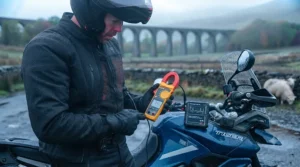
The reasoning behind “core body warming” isn’t marketing spin — it reflects genuine thermoregulation biology. When your core temperature drops, your body prioritises survival by restricting blood flow to the extremities first, which is exactly why cold hands and feet often set in before you consciously feel your torso getting cold. Keeping your chest and back warm via a heated vest or jacket signals to your body that core temperature is protected, which in turn helps maintain better blood flow to your hands and feet rather than fighting a losing battle at the extremities alone.
This is precisely why riders managing conditions like Raynaud’s phenomenon, a common circulation condition covered in more detail later in this guide, often report that heated vests make a bigger practical difference to overall comfort than heated gloves alone. What most buyers overlook is that core warming is a genuinely more efficient strategy per watt of power drawn — a modest 18-watt vest heating a large torso area often delivers more felt warmth improvement than an equivalent wattage split across smaller glove or grip heating elements.
Layering vs Full Coverage: Vest, Jacket, or Both?
The layering-versus-full-coverage question really comes down to how much control you want over your temperature system. A vest worn under your existing riding jacket lets you swap base layers, riding jackets and conditions independently — useful if you ride the same bike through genuinely varied UK seasons and don’t want a dedicated winter-only jacket taking up wardrobe space. A full heated jacket, by contrast, becomes your winter mid-layer outright, simplifying the decision each morning at the cost of flexibility.
Some riders go further and combine both: a heated vest under a heated jacket sounds excessive, but on the very coldest days — genuinely sub-zero, motorway-speed riding — doubling up core coverage while relying on the jacket’s sleeves for arm warmth is a legitimate, if power-hungry, strategy some long-distance tourers use. For most UK riders, though, picking one primary heated garment matched to your worst realistic riding conditions, rather than your absolute worst-case scenario, is the more sensible and affordable route.
Building a Heated Apparel System: Gloves, Trousers and Beyond
Nearly every jacket and vest on this list is designed as a hub for a wider heated apparel system rather than a standalone purchase. Both Keis and Gerbing garments include dedicated connection points allowing heated gloves, trousers, and insoles to plug directly into the same power source as your jacket or vest, avoiding a tangle of separate wiring runs to the bike battery.
Building a system sensibly means starting with the garment covering your biggest comfort gap — usually the core — before adding gloves, since a compatible connector for gloves avoids unnecessary additional wiring straight to the bike. From there, heated insoles or socks are worth adding if you regularly ride in genuinely freezing conditions, since feet lose heat fast inside sealed motorcycle boots with limited airflow. The honest advice from experienced heated-gear users is to build gradually rather than buying a full system at once — most riders find core warmth alone solves 70-80% of their winter discomfort, making gloves and trousers genuinely optional add-ons rather than day-one essentials.
Common Mistakes When Buying Heated Motorcycle Gear
The most frequent mistake is buying a heated jacket without checking your bike’s spare electrical capacity — a high-draw jacket on a small-capacity stator can leave you with a flat battery mid-ride. Equally common is assuming a portable battery pack works for every garment; as covered above, higher-draw jackets are often explicitly unsuitable for battery-only operation.
Buyers also frequently underestimate ongoing accessory costs — controllers, battery packs and connector cables are regularly sold separately from the base garment, and skipping them can leave you stuck on an uncontrolled maximum heat setting. Finally, sizing mistakes are rife in this category: nearly every brand on this list recommends sizing down from your normal jacket size for a snug, heat-retaining fit, and skipping that advice is one of the most common sources of buyer disappointment.
Long-Term Cost & Maintenance
Total cost of ownership for heated motorcycle gear extends beyond the initial garment price. Controllers, battery packs, wiring harnesses and connector cables are commonly sold as separate accessories, and a genuinely complete setup can add £50-100 on top of the jacket or vest itself. Battery packs are the component most likely to need eventual replacement, typically after a few seasons of charge cycles, while the heating elements themselves are usually covered by lifetime warranties from major brands like Keis and Gerbing.
Based on the spec comparison across this list, premium options like the Mosko Moto Ectotherm Insulated 12V Heated Jacket justify a chunk of their higher price through genuine dual-purpose usability — a garment that works brilliantly as insulation alone extends its useful life well beyond just the riding season, unlike a thin heated-only liner that’s largely dead weight once unplugged.
Safety Guide: Wiring, Raynaud’s and Sensible Precautions
Beyond simply staying warm, heated motorcycle gear carries a few genuine safety considerations worth understanding. Electrically, the systems involved are low voltage — typically 12V, meaning there’s no realistic electrocution risk even if a jacket gets wet — but always ensure connectors and wiring are rated for outdoor use and inspected periodically for wear, since a damaged cable close to skin is the primary genuine risk in this category rather than voltage itself.
For riders managing circulation conditions, it’s worth understanding the underlying physiology: cold exposure research confirms that reduced blood flow to the hands and feet impairs both tactile sensitivity and manual dexterity, which has obvious implications for safe throttle and lever control in genuinely cold conditions. If you experience symptoms like fingers turning white or numb in the cold beyond what feels like ordinary chill, the NHS’s guidance on Raynaud’s phenomenon is worth reading, since heated gear can meaningfully help manage symptoms but isn’t a substitute for medical advice if symptoms are severe or worsening.
Staying warm is only one part of winter riding safety, and it’s worth remembering that comfort and control go hand in hand — the government’s own THINK! motorcycling road safety campaign highlights just how disproportionately vulnerable riders are on UK roads, which is exactly why maintaining full hand and body function through proper heated gear isn’t just about comfort, it’s a genuine contributor to safer riding.

Frequently Asked Questions
❓ Is a heated vest as warm as a heated jacket?
❓ Can heated motorcycle jackets get wet?
❓ Do heated vests drain the motorcycle battery?
❓ Are heated jacket battery packs worth buying separately?
❓ How long do heated motorcycle jackets last?
Conclusion
There’s no universal winner in the heated motorcycle jacket vs heated vest debate — only the right answer for your specific riding pattern, bike, and tolerance for cold. If you mostly want core warmth under an existing jacket without much fuss, the Keis V501 Premium Heated Vest or Oxford Advanced Expedition Gilet solve that cleanly and affordably. If you’re commuting through genuine UK winters and need full-body coverage, the Keis J505 Extreme Heated Jacket or Gerbing MicroWire Pro Heated Jacket earn their higher price tag. And if you’re touring long distances and need gear that works equally well at camp as on the bike, the Mosko Moto Ectotherm Insulated 12V Heated Jacket stands genuinely apart from the rest of this list.
Whatever you choose, match power source, coverage and current draw to your actual bike and riding pattern rather than chasing the highest spec on the box — get that right, and winter riding stops being something you endure and starts being something you can actually enjoy.
Recommended for You
- Budget Heated Motorcycle Jacket: 7 Best Picks for Winter 2026
- Heated Motorcycle Jacket: 7 Best Picks for UK Riders (2026)
- Heated Flame Resistant Jacket UK 2026: 7 Honest Picks
Disclaimer: This article contains affiliate links. As an Amazon Associate, I earn from qualifying purchases. If you purchase products through these links, we may earn a small commission at no additional cost to you.
✨ Found this helpful? Share it with your friends! 💬🤗
