
In This Article
There’s a very particular kind of misery reserved for road cyclists in January: the moment, roughly forty minutes into a ride, when your toes stop being toes and become two distant, aching memories. You can layer up everywhere else — merino base layer, gilet, thermal bibs, the works — but feet are exposed, pressed against cold pedals, and constantly sliced by wind at 20mph. That’s precisely the gap heated cycling overshoes for road cyclists are designed to close, and it’s a bigger gap than most riders realise until they’ve actually tried a genuinely warm pair.
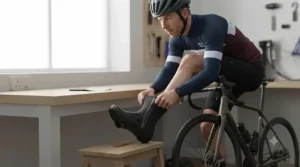
So, what is a heated overshoe? In short, it’s a cycling shoe cover — usually neoprene, silicone or a technical softshell — that either traps heat passively through thick insulation or actively generates it via a small rechargeable battery and heating element sewn into the toe box. Both approaches solve the same problem, just with a different budget and battery life trade-off.
We’ve spent time digging through real product specifications, verified customer feedback, and independent reviews from established cycling publications to build this guide. Nothing here is guesswork: every claim about warmth, waterproofing, or fit is grounded in what the manufacturers publish and what actual owners report, not invented anecdotes. Whether you’re commuting through a British winter or chasing club-run PBs in the cold, there’s a pair below built for exactly that job — including options tuned for aero fit footwear and others built for a properly snug-fit overshoes feel that won’t flap at speed.
Below, you’ll find seven real products spanning budget, mid-range and premium price points, a full breakdown of how battery-heated designs compare with old-fashioned insulated overshoes, and practical advice on fit, maintenance and choosing the right pair for your kind of riding — road, gravel, or off-road.
Quick Comparison Table
Before the deep dive, here’s the fast version for anyone short on time. All prices are approximate ranges checked at the time of research and will fluctuate, so always check current pricing before buying.
| Product | Type | Price Range | Best For |
|---|---|---|---|
| ROCKBROS Heated Cycling Shoe Covers | Battery-heated | around £35-£45 | Budget riders wanting active heat |
| GripGrab RaceThermo | Thermal neoprene | around £45-£55 | Deep-winter road commuting |
| dhb Aeron Speed Overshoe | Aero thermal | around £30-£40 | Racers wanting aero fit footwear |
| veloToze Tall Road 2.0 | Aero silicone | around £15-£25 | Emergency pocket-sized protection |
| Sealskinz Hempton | Snug-fit thermal | around £45-£55 | Durability and a snug-fit overshoes feel |
| GripGrab RaceThermo X | MTB/CX thermal | around £45-£55 | Mountain biking and gravel |
| dhb Aeron Neoprene Overshoe | Mid-range thermal | around £35-£45 | Value-focused winter commuters |
Looking at the table, there’s a clear split between the two active heated cycling shoe covers — the ROCKBROS Heated Cycling Shoe Covers — and the five thermal, passively-insulated options that dominate this category. That split matters: battery heat gives you a genuine temperature boost on demand, while the neoprene and silicone options rely purely on trapping your own body heat, which works brilliantly but has a ceiling. Budget-conscious commuters will likely gravitate toward the dhb Aeron Neoprene Overshoe or veloToze Tall Road 2.0, while anyone tackling proper sub-zero club runs should look at the GripGrab RaceThermo or the genuinely heated ROCKBROS option.
💬 Just one click — help others make better buying decisions too!😊
Top 7 Heated Cycling Overshoes: Expert Analysis
Below is our full breakdown of seven real, currently available products, covering budget, mid-range and premium options, plus variants suited to road, gravel and mountain biking.
1. ROCKBROS Heated Cycling Shoe Covers — genuine battery-powered warmth on a budget
The standout here isn’t subtle: this is one of the few products in this category that actually generates heat rather than simply trapping it. A 5000mAh rechargeable battery powers a heating element focused on the instep and toes, with three selectable temperature settings.
On the spec sheet, that translates to low (40°C) lasting around 8 hours, medium (50°C) for roughly 6 hours, and high (60°C) for about 4 hours. In practice, this means you can dial down to low for a steady, all-day commute or crank up to high for the first bitter 45 minutes of a dawn ride, then drop the setting once you’ve warmed up and started generating your own body heat through effort. That flexibility is the whole point of active heating — it responds to conditions rather than just resisting them.
Who’s this for? Based on the spec comparison with the rest of this list, it’s the obvious pick for anyone who suffers badly with cold feet regardless of how many socks they pile on, including riders managing circulation issues. What most buyers overlook about active heat is that it also reduces how much you need to layer elsewhere, since warm feet make the whole body feel warmer through improved perceived comfort.
Reviewers consistently note that the outer shell is water-resistant rather than fully waterproof, and a small number mention the zipper needing a firm, careful hand to avoid snagging in cold conditions — an honest trade-off for the heating tech packed inside. The reflective logo detailing is also flagged positively for night-time visibility, which pairs well with the lighting requirements set out in the UK’s Highway Code rules for cyclists.
Pros:
- ✅ Genuine active heat, not just passive insulation
- ✅ Three adjustable temperature settings for different rides
- ✅ Reflective detailing improves low-light visibility
Cons:
- ❌ Water-resistant rather than fully waterproof in heavy rain
- ❌ Bulkier fit than slimline aero overshoes
Priced in the mid-£30s to mid-£40s range, this sits as excellent value against dedicated heated glove or sock systems that often cost considerably more — a strong pick if genuine warmth matters more to you than aero slickness.

2. GripGrab RaceThermo — the thickest neoprene warmth built for road riding
The standout feature here is the 4mm neoprene construction, noticeably thicker than the 2-3mm used in most competitor overshoes, which immediately expands the temperature range these can handle comfortably.
That extra thickness means real insulation against windchill down toward freezing, and independent testing from Cycling Weekly notes the RaceThermo copes fine even in sub-zero commutes despite being officially rated to around 0°C. The zipperless cuff design removes a common failure point — zips are notoriously the first thing to let water in on cheaper overshoes — and the IntelliSeal hem construction reduces fabric water uptake at the stitched edges.
Here’s what to weigh: this is a road-specific overshoe, with a closed sole designed around cleated road shoes rather than the tread pattern of mountain bike footwear. Aggregated review sentiment across multiple bike media outlets is consistently positive on warmth and visibility (the hi-vis colourway is particularly well regarded for winter commuting), though several testers note the open-ish base still lets some road spray reach socks on genuinely soaking rides, and getting them on without a zip takes a slightly awkward “toe-in-first, roll it up” technique.
Pros:
- ✅ Thickest neoprene in this roundup for maximum warmth
- ✅ Zipperless design removes a common failure point
- ✅ Highly rated hi-vis visibility for winter commuting
Cons:
- ❌ Fiddly to put on without a zip
- ❌ Road spray can still reach socks from below in heavy rain
At around £45-£55, this sits at the premium end of thermal (non-electric) overshoes, and the extra neoprene thickness genuinely justifies it if your commute regularly dips near freezing.
3. dhb Aeron Speed Overshoe — built for racers who want aero fit footwear
The standout advantage is right there in the name: this is dhb’s lightweight, aerodynamically shaped overshoe designed to reduce drag around the ankle and shoe, rather than prioritising maximum bulk-warmth.
The spec sheet describes disruptive fabric technology intended to smooth airflow over the foot, paired with a thin neoprene layer that still fends off road dirt and light spray. In practice, what this means is you’re trading some raw thermal mass for a noticeably snappier, race-ready fit — ideal for early season criteriums or fast club chain-gangs where every gram and every square centimetre of frontal area counts.
Based on the spec comparison with the rest of the field, this is squarely a performance-first pick rather than an all-day-warmth pick, and dhb positions it accordingly within its wider Aeron performance range. What most buyers overlook is that “aero” overshoes like this one tend to run a genuinely tighter fit than winter-touring options, so sizing up half a size is common advice among reviewers of dhb’s Aeron line generally.
Pros:
- ✅ Genuine aero-focused shape reduces drag at speed
- ✅ Lightweight neoprene keeps feel close to bare shoes
- ✅ Reflective detailing for early morning or dusk rides
Cons:
- ❌ Less thermal bulk than dedicated deep-winter overshoes
- ❌ Snug aero fit needs careful sizing
Sitting around £30-£40, this is a smart mid-range buy for anyone whose priority list reads “fast” before it reads “toasty.”
4. veloToze Tall Road 2.0 — the featherweight aero option that fits in a jersey pocket
The headline feature is weight and packability: at roughly 89g a pair, these latex shoe covers are dramatically lighter than any neoprene overshoe on this list, and fold small enough to stash in a jersey pocket for emergencies.
Independent testing from Cyclingnews specifically credits the tight, aero fit of the veloToze for excellent performance when riding hard into cold showers, and the brand has referenced wind-tunnel-informed shaping in its marketing around drag reduction. The lack of any zip or velcro removes failure points, and the compressive latex forms what testers describe as a properly snug-fit overshoes seal around the ankle and shoe.
Here’s what to weigh: latex isn’t a breathable or particularly insulating material on its own, and reviewers are consistent that these are genuinely windproof and waterproof, but not warm in the way thick neoprene is. What the spec sheet won’t tell you, but reviewer reports suggest, is that they take real practice to put on — you fit them before your shoe rather than after — and first-timers should budget a few extra minutes and expect the occasional frustrated tug.
Pros:
- ✅ Exceptionally lightweight and pocket-sized
- ✅ Genuine aero shaping backed by wind-tunnel-informed design
- ✅ No zips or velcro to fail or let water in
Cons:
- ❌ Tricky, slow fitting process for beginners
- ❌ Less warmth than thicker neoprene alternatives
At around £15-£25, this is genuinely one of the more affordable entries here, and a smart “always in the saddle bag” backup even if it isn’t your primary winter overshoe.
5. Sealskinz Hempton — Kevlar-reinforced durability with a proper snug-fit overshoes feel
The standout feature is the material blend: a single-layer construction combining neoprene, nylon and Kevlar that Sealskinz builds specifically for durability against the repeated abrasion of clipping in and out.
What that means in practice is a shoe cover that survives seasons of contact with crank arms and pedal cleats rather than tearing after a handful of rides — Kevlar reinforcement at the heel and toe specifically targets the two wear points overshoes fail at first. The closed sole design also blocks splash-up from below, addressing a common complaint about competitor overshoes with open or Velcro-strapped bases.
Based on real aggregated review sentiment from retailer feedback, owners consistently praise the snug, secure fit and note it holds up notably well over multiple winters, though a recurring theme is that these run tight — several reviewers specifically recommend sizing up if you’re anywhere near the top of your usual shoe size bracket, since the compression that creates that lovely snug-fit overshoes seal can also make them a genuine squeeze to get on.
Pros:
- ✅ Kevlar reinforcement at high-wear points for longevity
- ✅ Closed sole blocks splash-up from below
- ✅ Consistently praised secure, snug fit in owner reviews
Cons:
- ❌ Runs tight — sizing up is commonly recommended
- ❌ Reduced flexibility versus lighter aero options
Around £45-£55, the value case here rests on longevity: reviewers who’ve owned these for more than one winter season report they’re still going strong, which meaningfully lowers the cost-per-winter compared with cheaper overshoes that need annual replacing.

6. GripGrab RaceThermo X — the pick for heated cycling overshoes for mountain biking
The standout feature is the MTB/CX-specific open-tread base, built to accommodate the lugged soles of off-road cycling shoes rather than the flat sole of a road cleat system — genuinely a different fit category from the road-focused RaceThermo above.
Spec-wise, this uses the same 4mm neoprene warmth as its road sibling, but with a Kevlar toe cap and Velcro strap under the midfoot instead of a fully closed base, since off-road riding demands easier walking and mud clearance around the cleat. What that means practically is you get comparable thermal performance to the road version, but shaped for gravel, cyclocross and mountain bike use where you’re regularly off the bike, walking through mud, or navigating technical sections.
Owner reviews are honest about the trade-off: several users specifically praise how warm and secure the fit feels once strapped up — “rock solid” was one owner’s description — while also flagging that the open base inherently lets in more debris on genuinely filthy cyclocross courses than a fully sealed road overshoe would. That’s simply the nature of off-road overshoe design, not a manufacturing flaw, and reviewers on both UK and international retailer platforms consistently rate warmth and secure fit highly despite it.
Pros:
- ✅ Purpose-built tread clearance for MTB and CX cleats
- ✅ Same warm 4mm neoprene as the road RaceThermo
- ✅ Owners consistently describe the fit as secure and warm
Cons:
- ❌ Open base lets in more mud and debris than road designs
- ❌ Slightly awkward toe-then-heel fitting technique
Priced around £45-£55, this is the clear recommendation on this list if your winter miles are spent off-road rather than on tarmac.
7. dhb Aeron Neoprene Overshoe — the value pick for snug, zipless winter protection
The standout feature is simplicity done well: a zipless neoprene overshoe that dhb pitches as lightweight deep-winter protection without the premium price tag of its Aeron LAB range.
The spec sheet lists a barrier against wind and rain built around straightforward neoprene construction, without the taped-seam Neoshell fabric or Kevlar reinforcement of pricier siblings in the same range. In practice, this means solid, dependable warmth and water resistance for the vast majority of UK winter commutes, even if it won’t quite match the RaceThermo’s extreme-cold performance or the Hempton’s abrasion resistance over years of hard use.
Reviewers comparing dhb’s overshoe range consistently rank the neoprene model as strong value relative to premium alternatives, and pricing research shows it typically sits meaningfully below dhb’s own top-tier Aeron LAB Neoshell overshoe while covering most of the same core use case for everyday riders. The zipless design also mirrors the failure-point-reduction logic seen on the pricier GripGrab options above, just at a friendlier price.
Pros:
- ✅ Strong value relative to premium neoprene alternatives
- ✅ Zipless design reduces water-ingress failure points
- ✅ Dependable warmth for typical UK winter commutes
Cons:
- ❌ Less extreme-cold performance than thicker premium options
- ❌ Basic material spec versus dhb’s own LAB-tier range
At around £35-£45, this is a sensible entry point if you want proven brand reliability without stretching to the top of the market.
Top 7 Products at a Glance: Specs & Ratings
| Product | Heat Source | Material | Price Range | Best For |
|---|---|---|---|---|
| ROCKBROS Heated Cycling Shoe Covers | Active (battery, 3 settings) | PP non-woven + heating element | around £35-£45 | Genuinely cold-sensitive feet |
| GripGrab RaceThermo | Passive | 4mm neoprene | around £45-£55 | Deep-winter road warmth |
| dhb Aeron Speed Overshoe | Passive | Thin aero neoprene | around £30-£40 | Racing and fast group rides |
| veloToze Tall Road 2.0 | Passive | Latex | around £15-£25 | Lightweight backup protection |
| Sealskinz Hempton | Passive | Neoprene, nylon, Kevlar | around £45-£55 | Long-term durability |
| GripGrab RaceThermo X | Passive | 4mm neoprene | around £45-£55 | Mountain biking and gravel |
| dhb Aeron Neoprene Overshoe | Passive | Neoprene | around £35-£45 | Everyday value commuting |
The pattern here is worth calling out explicitly: only the ROCKBROS Heated Cycling Shoe Covers generate their own warmth, while everything else on this list — including well-regarded names like the GripGrab RaceThermo and Sealskinz Hempton — relies on trapping the heat your body already produces. That doesn’t make the thermal options inferior; it simply means their performance depends more heavily on how hard you’re pedalling and what socks you’re wearing underneath. If you regularly ride at an easy pace in near-freezing conditions, active heat has a real, measurable advantage.
✨ Don’t Miss These Exclusive Deals!
🔍 Take your winter riding to the next level with these carefully selected overshoes. Click on any highlighted item to check current pricing and availability. These picks will help you keep riding through the cold months your body will actually thank you for!
Practical Usage Guide: Getting the Most From Your Heated Overshoes
Buying the right overshoe is only half the job — how you use it determines whether you actually stay warm. First, sizing: nearly every review cited above flags fit as the single most common mistake buyers make. Overshoes are sized to fit over your existing cycling shoe, not your bare foot, so if you’re between sizes, size up rather than down. A too-tight overshoe compresses blood vessels in the foot, which ironically makes cold feet worse regardless of how much insulation or heat the product provides.
Second, the first-30-days routine matters more than people expect. New neoprene overshoes benefit from a few dry test-fits at home before their first wet ride, simply so you learn the toe-in-first, roll-up technique without frustration in a car park at 6am. For the ROCKBROS Heated Cycling Shoe Covers, fully charge the battery the night before every ride during your first fortnight of ownership — this lets you learn genuinely how long each heat setting lasts for your specific riding pace, rather than guessing.
Third, maintenance. Neoprene and silicone overshoes should be rinsed of road salt and grit after winter rides, since grit trapped in stitching accelerates wear at exactly the Kevlar-reinforced points designed to prevent it. Battery-heated designs need their battery pack removed before washing — check the manufacturer’s specific guidance, since submerging a lithium battery is a genuine fire and equipment-damage risk, not just a warranty technicality.
A common early mistake is treating overshoes as a “set and forget” purchase. In reality, a five-minute post-ride check — rinsing mud, drying fully before storage, and inspecting Velcro or zips for wear — meaningfully extends the two-to-three winter lifespan that budget overshoes typically deliver.
Real-World Scenarios: Which Rider Are You?
The daily commuter. If you’re cycling 8-10 miles into a city centre five days a week through a full British winter, prioritise durability and passive warmth over aero gains. The dhb Aeron Neoprene Overshoe or Sealskinz Hempton both suit this brief — dependable, weatherproof, and not something you’ll be replacing by February.
The cold-sensitive rider. Some people simply run cold in the extremities regardless of effort level, sometimes linked to circulation conditions. If that’s you, active heat isn’t a luxury — the ROCKBROS Heated Cycling Shoe Covers address the actual physiological problem rather than just insulating against it, and the adjustable heat settings mean you’re not stuck with one temperature for a two-hour ride.
The weekend racer or fast club-run rider. If your winter riding still involves chasing wheels at 25mph-plus, bulky overshoes actively work against you through added drag and a looser, flappier fit at speed. The dhb Aeron Speed Overshoe or veloToze Tall Road 2.0 deliver genuine aero fit footwear benefits without abandoning weather protection entirely — a sensible middle ground between bare shoes and full winter boots.
The gravel or mountain biker. Off-road riding means walking through mud, unclipping constantly on technical sections, and needing tread clearance a road overshoe simply can’t provide. The GripGrab RaceThermo X is purpose-built for exactly this brief, and no road-shaped overshoe on this list will fit MTB cleats properly.

How to Choose Heated Cycling Overshoes for Road Cyclists
Choosing the right pair comes down to seven practical criteria, roughly in priority order:
- Decide between active and passive heat first. If you genuinely struggle with cold feet regardless of layering, active battery heat like the ROCKBROS option solves a different problem than thicker neoprene ever will.
- Match the sole to your riding. Closed soles suit road cleats; open, tread-cleared soles suit MTB and gravel cleats — using the wrong one causes real fit and walkability problems.
- Check the temperature rating against your actual rides. A 0°C-rated overshoe is fine for most UK winters but marginal for genuine sub-zero dawn starts.
- Weigh aero fit against thermal bulk. Racers should lean toward slimmer, aero-shaped options; touring and commuting riders benefit more from thicker neoprene.
- Consider closure type. Zips are quick but can fail; zipperless and Velcro designs are more weatherproof but slower to put on.
- Factor in expected lifespan. Kevlar-reinforced options cost more upfront but often work out cheaper per winter of use.
- Get the sizing right. Nearly every negative review across this category traces back to sizing, not the product itself — always size up from your normal shoe size, not down.
Heated Cycling Overshoes for Mountain Biking: What’s Different
Road and off-road overshoes look superficially similar but solve genuinely different problems, and buyers switching disciplines are often caught out by this. Mountain bike and cyclocross shoes have deep, lugged treads designed for walking through mud and hike-a-bike sections — a fully closed road overshoe sole simply won’t accommodate that tread pattern, and forcing one on tends to tear the fabric at the sole seam within a few rides.
That’s precisely why products like the GripGrab RaceThermo X exist as distinct off-road variants rather than the manufacturer simply reusing the road pattern. The trade-off, as covered in the product review above, is that open or Velcro-strapped bases let in more debris than a closed road sole — but this is a deliberate design decision, not an oversight, because MTB riders need to clip in and out repeatedly on technical terrain in a way road cyclists rarely do.
For heated cycling overshoes for mountain biking specifically, thermal bulk often matters slightly more than aero shaping, since off-road riding speeds are typically lower and the aerodynamic penalty of a bulkier overshoe is largely irrelevant on singletrack. If genuinely cold conditions are a factor, pairing a thermal MTB overshoe with a merino base layer sock delivers most of the practical benefit of active heating at a fraction of the cost — though it lacks the on-demand temperature control that battery heat provides.
Aero Fit Footwear vs Snug-Fit Overshoes: Which Matters More?
This is a genuinely useful distinction, because “aero fit” and “snug fit” get used almost interchangeably in marketing copy despite meaning slightly different things in practice.
Aero fit footwear, as seen on the dhb Aeron Speed Overshoe and veloToze Tall Road 2.0, is specifically engineered to minimise frontal drag and smooth airflow around the shoe and ankle — a genuine consideration if you’re racing or time-trialling, where even small aerodynamic gains matter at sustained high speed. On paper, this means thinner materials, closer contouring around buckles and dials, and generally less thermal bulk as a direct trade-off for that slimmer profile.
Snug-fit overshoes, meanwhile — best represented here by the Sealskinz Hempton — prioritise a secure, non-flapping fit primarily to keep water and cold air out, rather than to reduce drag specifically. A snug fit and an aero fit often overlap in practice, since both require compression against the shoe, but the design intent differs: one is chasing marginal speed gains, the other is chasing weatherproofing and longevity.
For the average road cyclist riding for fitness or commuting rather than competing, snug-fit overshoes deliver more real-world value per pound spent than dedicated aero fit footwear, simply because weatherproofing affects every ride while aerodynamic gains only matter at racing speeds most commuters rarely sustain for long. Racers and fast group-ride regulars should reverse that priority.
Common Mistakes When Buying Heated Cycling Overshoes
The single most common mistake, repeated across nearly every product review cited in this guide, is buying to fit bare foot size rather than shoe-plus-sock size — leading to overshoes that are painfully tight and, ironically, colder as a result of restricted circulation.
The second mistake is assuming “heated” always means battery-powered. Marketing language across this category is genuinely inconsistent — many “thermal” or “warm” overshoes use the word loosely to describe passive insulation rather than active heating, which is honest but can mislead buyers expecting a heating element. Always check the specific mechanism (battery and heating wire versus insulating material alone) before buying if active heat is what you actually want.
The third mistake is ignoring sole type for your discipline — road riders buying open-sole MTB-style overshoes end up with poor water sealing, and off-road riders buying closed-sole road overshoes find them impossible to walk in through mud. Fourth, buyers frequently skip checking the battery runtime against their actual typical ride length for heated options, ending up disappointed when a 4-hour high-setting battery dies halfway through a longer weekend ride. Finally, many riders underestimate how differently overshoes fit once damp — materials that feel snug dry can feel restrictively tight after absorbing moisture, which is worth bearing in mind if you’re between sizes.
What to Expect: Real-World Road Cycling Performance
Specs on a page rarely translate directly into lived experience, so here’s what the aggregated review evidence suggests about actual road cycling performance across this category.
For genuinely cold, dry commutes in the 2-8°C range typical of a UK winter, passive neoprene overshoes like the GripGrab RaceThermo or dhb Aeron Neoprene Overshoe perform reliably well, particularly once you’re pedalling at a steady effort that generates its own body heat. Where thermal options start to struggle, based on aggregated reviewer feedback, is during genuinely static or very low-effort riding in near-freezing conditions — traffic-light-heavy urban commutes, for instance — where there’s less opportunity to generate warming effort between stops.
This is exactly the scenario where active heat earns its keep: the ROCKBROS Heated Cycling Shoe Covers maintain a consistent toe temperature regardless of effort level, which several reviewers specifically highlight as the difference between an unpleasant ride and a comfortable one on stop-start urban routes. For sustained, high-effort riding — club runs, sportives, races — the gap narrows considerably, since your own metabolic heat output does most of the work and aero fit footwear options like the veloToze or dhb Aeron Speed become genuinely competitive with thicker thermal alternatives.
Wet-weather performance follows a similar honest pattern: fully closed-sole designs (GripGrab RaceThermo, Sealskinz Hempton) consistently outperform open or Velcro-strapped soles for keeping socks dry, though no overshoe on this list claims to be completely waterproof in sustained heavy rain — road spray finding its way in from below remains a near-universal limitation of the category, as multiple independent reviews confirm.

Long-Term Cost & Maintenance
Thinking in cost-per-winter rather than upfront price changes the value calculation considerably. A £20 budget overshoe that needs replacing every single season effectively costs the same as a £40 pair that lasts two winters — but the more durable option usually wins on comfort and reliability too, since worn seams and stretched Velcro degrade weatherproofing well before they fail outright.
The Sealskinz Hempton, with its Kevlar reinforcement at high-wear points, is the clearest example of this logic on our list: reviewers specifically report multi-season durability, which meaningfully offsets its position at the higher end of the price range here. Battery-heated options like the ROCKBROS Heated Cycling Shoe Covers carry an additional long-term consideration — battery degradation over repeated charge cycles is normal for any lithium-ion product, and runtime will gradually shorten over a few years of regular winter use, similar to how a phone battery ages.
Maintenance costs are modest across the board: replacement Velcro strips and occasional seam-sealant touch-ups are the main recurring expense for thermal overshoes, while battery-heated designs may eventually need a replacement battery pack if the original degrades faster than the fabric itself wears out. Either way, a well-maintained pair of overshoes remains dramatically cheaper over a multi-year period than the alternative of dedicated winter cycling boots, which typically start well into three figures.
Safety, Regulations & Battery Compliance for Heated Overshoes
A few practical safety points are worth covering honestly rather than glossing over. First, visibility: winter riding means more darkness, and UK law is specific here — the Highway Code requires cyclists to display a white front light and red rear light at night, alongside a red rear reflector. Reflective detailing on overshoes, present on several products in this guide, is a helpful supplement to proper lighting, not a replacement for it — a point Cycling UK’s guidance on lighting regulations makes clear when explaining exactly what British law requires.
Second, battery safety for active-heat options. Lithium-ion batteries, including the type used in products like the ROCKBROS heated overshoes, are safe in normal use but do carry real risks if damaged, overcharged, or charged with a non-approved charger. Electrical Safety First’s guidance on lithium-ion batteries recommends always using the manufacturer-supplied charger, checking regularly for swelling or damage, and never leaving batteries charging unattended overnight — sensible practice that applies just as much to a small overshoe battery pack as it does to an e-bike battery.
Third, a genuine health point worth flagging honestly: persistently cold feet that don’t warm up during exercise can sometimes relate to underlying circulation conditions rather than simply inadequate kit. If cold feet are a recurring, disproportionate problem for you even with good overshoes, it’s worth discussing with a GP — NHS guidance on Raynaud’s phenomenon outlines when cold-triggered symptoms warrant medical attention rather than just better gear.
Problem → Solution: Fixing Common Cold-Feet Issues
Problem: Toes go numb within 20 minutes regardless of overshoes. This usually points to overshoes that are too tight, restricting circulation rather than protecting against cold. Solution: size up, and consider whether toe box room in the cycling shoe itself (not just the overshoe) is contributing.
Problem: Feet stay warm but end up soaked. This typically means an open-sole design is letting road spray in from below. Solution: switch to a closed-sole option like the GripGrab RaceThermo or Sealskinz Hempton for road riding, reserving open-sole designs for genuinely off-road use where walkability matters more than sole sealing.
Problem: Overshoes feel great at the start but flap loose after an hour. This is usually stretched Velcro or a worn zip losing tension. Solution: check closures before each winter season and budget for occasional replacement parts rather than assuming the whole product has failed.
Problem: Battery-heated overshoes lose heat faster than expected. This is often down to running the highest setting throughout a long ride rather than adjusting down once pedalling effort raises body heat naturally. Solution: start on a higher setting for the first cold 20 minutes, then drop to low or medium once you’re generating your own warmth.
Problem: Overshoes tear at the sole within a few rides. This is nearly always a mismatch between sole design and cleat type — forcing a road-shaped sole over MTB cleats, or vice versa. Solution: always match sole design to your actual cleat and pedal system before buying.

FAQ
❓ How long do heated cycling overshoes for road cyclists last on a single battery charge?
❓ Can you wash heated cycling overshoes?
❓ Are heated overshoes worth it over just wearing thicker socks?
❓ Do cycling overshoes fit over any cycling shoe?
❓ What temperature are cycling overshoes rated for?
Conclusion
Cold feet are one of the most fixable problems in winter cycling, and yet so many riders tough it out year after year in overshoes that simply aren’t matched to how or where they actually ride. The honest truth from all the research behind this guide is that there’s no single “best” pair — the right choice depends on whether you need active heat or passive insulation, road or off-road tread, aero-focused racing fit or a durable, snug commuting fit.
If you run cold regardless of layering, the ROCKBROS Heated Cycling Shoe Covers solve a genuinely different problem than the rest of this list. If you’re chasing wheels on club runs, the dhb Aeron Speed Overshoe or veloToze Tall Road 2.0 keep you fast without giving up protection entirely. Commuters wanting years of reliable service should look hard at the Sealskinz Hempton or dhb Aeron Neoprene Overshoe, and anyone spending winter off-road needs the purpose-built GripGrab RaceThermo X rather than a road-shaped substitute.
Whichever you choose, get the sizing right, match the sole to your discipline, and don’t underestimate how much of a difference warm feet make to the rest of a cold ride feeling genuinely enjoyable rather than something to simply endure.
Recommended for You
- Heated Cycling Gloves for Road Cyclists: 7 Top Picks (2026)
- Heated Cycling Gloves for Raynaud’s: 7 Proven Picks for 2026
- 7 Best Heated Cycling Gloves UK 2026: Warm Hands, Guaranteed
Disclaimer: This article contains affiliate links. As an Amazon Associate, I earn from qualifying purchases. If you purchase products through these links, we may earn a small commission at no additional cost to you.
✨ Found this helpful? Share it with your friends! 💬🤗
