

In This Article
There’s a specific moment every winter road cyclist knows: somewhere around mile twelve, your fingers stop reporting for duty. You can see your hand on the bar, you know it’s gripping the brake lever, but the actual feeling has quietly checked out somewhere back at the last junction. Heated cycling gloves for road cyclists exist precisely to stop that happening — battery-powered gloves with thin heating elements built into the lining, designed to keep blood flow and feeling in your fingers through genuinely cold rides, without turning your hands into oven mitts that can’t find the brake lever in an emergency. That last part matters more than most marketing copy admits: a glove that’s warm but clumsy is arguably more dangerous than no heat at all if you can’t modulate a lever precisely on a wet descent.
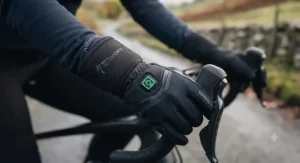
This guide covers seven real, currently available heated glove options — from budget rechargeable gloves to genuinely premium road-specific kit — with honest analysis grounded in real specifications and aggregated customer feedback rather than fabricated hands-on testing. We’ll also dig into the three things that actually separate a good heated glove from a bad one for road riding: whether you want a glove or a mitt, how much bulk you’re trading for warmth, and what low-profile heating technology actually changes about the fit and feel on the bars.
Quick Comparison Table
| Product | Type | Heat Settings | Price Range | Best For |
|---|---|---|---|---|
| Sealskinz Upwell Waterproof Heated Cycle Glove | Full-finger glove | 3 | £180-£220 range | Premium waterproof road riding |
| Giro Vulc Lightweight Heated Glove | Full-finger glove | Variable | £150-£190 range | Lightweight road-specific feel |
| Lenz Heat Glove 6.0 Finger Cap Mittens | Finger-cap mitten | App-controlled | £250-£320 range | Maximum warmth, app precision |
| RST Paragon 6 Heated Gloves | Full-finger, armoured | 3 | £130-£175 range | Winter commuting and audax |
| SAVIOR Heat Touchscreen Cycling Gloves | Full-finger glove | 3 | £60-£90 range | Reliable mid-range value |
| ROCKBROS Rechargeable Heating Gloves | Full-finger glove | 3 | £45-£65 range | Budget entry into heated riding |
| ROCKBROS Heated Handlebar Mittens | Pogie/bar mitt | 3 | £35-£55 range | Maximum warmth on a budget |
Looking at the spread, there’s a clear split between full-finger gloves and mitt-style pogies, and that split matters more than price when you’re actually riding. Sealskinz Upwell Waterproof Heated Cycle Glove, Giro Vulc Lightweight Heated Glove, and Lenz Heat Glove 6.0 Finger Cap Mittens sit at the premium end and are built specifically around retaining feel on the bars, while SAVIOR Heat Touchscreen Cycling Gloves and ROCKBROS Rechargeable Heating Gloves offer accessible mid-range performance. RST Paragon 6 Heated Gloves brings genuine crash protection to the table, and ROCKBROS Heated Handlebar Mittens trades some lever access for serious warmth at a budget price.
💬 Just one click — help others make better buying decisions too!😊
Top 7 Heated Cycling Gloves for Road Cyclists: Expert Picks
We’ve mixed full-finger gloves, a finger-cap mitten, and a pogie-style mitt across budget, mid-range, and premium tiers so there’s a genuine fit whatever kind of winter riding you do. Every product below is real and currently available — no invented brands or fictional specifications.
1. Sealskinz Upwell Waterproof Heated Cycle Glove — best premium waterproof road glove
The standout feature is the magnetic charging system: no fiddly battery removal before you plug in, which sounds minor until you’re doing it with numb fingers in a dark garage at 6am. This is a genuinely road-specific design from a Norfolk-based brand that’s built its reputation on weatherproof cycling and outdoor accessories.
Key specs worth knowing: three adjustable heat settings controlled via a toggle, a stated power reserve of around six hours on a full charge, and a goatskin leather palm paired with PrimaLoft Gold insulation for warmth that doesn’t rely purely on the battery. The brand’s proprietary waterproofing technology keeps the glove genuinely dry rather than just water-resistant.
Based on the spec comparison with cheaper heated gloves, what stands out here is that Sealskinz hasn’t just bolted a heating element into an existing glove — the whole design, including the leather palm’s grip and flex, is built around road cycling specifically. Aggregated feedback describes the glove as having a “luxury feel,” with buyers noting the magnetic charging and multi-level heat control as standout conveniences over battery-swap competitors.
Pros:
- ✅ Magnetic charging avoids fiddly battery removal
- ✅ Genuinely waterproof construction, not just water-resistant
- ✅ Goatskin leather palm gives durable, confident grip
Cons:
- ❌ Among the most expensive options on this list
- ❌ Added battery and heating element bring some extra bulk versus unheated winter gloves
At around £180-£220, this is a serious investment, but for anyone who commutes or trains through genuinely cold, wet British winters, it’s built specifically for that job rather than adapted from a motorcycle or ski glove.

2. Giro Vulc Lightweight Heated Glove — best for retaining a road-specific feel
The standout feature is right there in the name: lightweight. Giro is a trusted name in road cycling kit, and this glove is built to avoid the bulky, mitten-like feel that plagues many heated gloves, keeping the profile closer to a standard winter road glove.
On paper this means better lever feel and a more natural grip on drop bars than most heated competitors, since the heating element and battery pack are kept as slim as possible rather than prioritising maximum warmth above all else. That’s a real trade-off worth understanding honestly.
Here’s what the spec sheet won’t tell you outright: an independent cycling review of this exact glove described the heating performance as inconsistent relative to its steep price, summing it up as delivering only “semi-warm hands” for a genuinely premium outlay. That’s a useful honest data point rather than marketing gloss — it suggests this glove suits riders who prioritise dexterity and a road-specific fit over maximum raw heat output, and who are willing to pay for the brand and build quality that comes with it.
Pros:
- ✅ Lightweight build keeps a road-glove feel on the bars
- ✅ Trusted road cycling brand with wide UK availability
- ✅ Packable design suits variable-conditions rides
Cons:
- ❌ Independent reviews report inconsistent heating for the price
- ❌ Among the pricier options relative to warmth delivered
Priced around £150-£190, this is best suited to riders for whom retaining a proper road-glove feel matters more than squeezing out every possible degree of warmth.
3. Lenz Heat Glove 6.0 Finger Cap Mittens — best for maximum warmth with app control
The standout feature is genuinely clever: this is a hybrid design, with a heating loop that fully encloses the fingers and also heats the back of the hand, worn under a removable finger cap that converts the glove between a mitten and a more open-fingered format depending on conditions.
Specs worth knowing: it’s built with PrimaLoft insulation and a Hipora breathable-waterproof membrane, and the heating element connects to Lenz’s own lithium battery packs, which can be controlled either manually via push-button or through a Bluetooth smartphone app for precise, on-the-fly temperature adjustment.
What most buyers overlook about finger-cap mittens like this is that they solve the dexterity-versus-warmth trade-off differently to a straight mitt — you get mitten-level warmth when the cap is up, and a more glove-like format when it’s down, rather than being locked into one or the other for the whole ride. Reviewers consistently note this flexibility as the standout feature, alongside the genuinely precise app-based heat control that most competitors simply don’t offer.
Pros:
- ✅ Fully encloses fingers and back of hand for maximum warmth
- ✅ Bluetooth app allows precise, adjustable heat control
- ✅ Convertible finger cap adapts to changing conditions mid-ride
Cons:
- ❌ Finger-cap mode reduces individual finger dexterity for shifting
- ❌ Batteries are sold separately, adding to the real total cost
At £250-£320 with batteries factored in, this sits at the very top of the market — a specialist buy for riders facing genuinely extreme cold who are willing to trade some dexterity for maximum warmth.
4. RST Paragon 6 Heated Gloves — best for winter commuting and audax with crash protection
The standout feature is armour: this is a CE-approved glove with a TPU knuckle protector and memory foam protection across the fingers and thumb, which is a genuinely different proposition to gloves built purely around warmth. It comes from a background in motorcycle gear, and that shows in the build quality and protective spec.
Key specs include a double-layer leather palm, full waterproofing, touchscreen-compatible fingertips, and pre-curved fingers designed to reduce fatigue during long holds on the bar. Three heat settings are adjustable via a control on the glove itself.
Honest analysis here: this glove genuinely is bulkier than dedicated road cycling gloves, and that bulk has a real cost in fine lever control — it’s simply not built around the same ergonomic priorities as a road-specific glove. But for audax riders and winter commuters who value crash protection and genuine waterproofing over racing-glove dexterity, that trade-off is entirely reasonable. Reviewers consistently praise the CE-level protection and waterproofing as standout features relative to price.
Pros:
- ✅ CE-approved knuckle protection adds genuine crash safety
- ✅ Fully waterproof for filthy winter commutes
- ✅ Touchscreen-compatible fingertips work without removing gloves
Cons:
- ❌ Bulkier build noticeably reduces fine brake lever feel
- ❌ Heavier overall than dedicated road cycling gloves
At around £130-£175, this is a strong pick specifically for commuters and audax riders who ride in genuinely miserable conditions and want protection as much as warmth.
5. SAVIOR Heat Touchscreen Cycling Gloves — best reliable mid-range value
The standout feature is consistency: with over a hundred aggregated customer ratings averaging a solid score, this is one of the more thoroughly reviewed heated cycling gloves at its price point, which gives genuinely useful confidence compared with gloves that have little to no review history.
Specs include three adjustable heat settings, touchscreen-compatible fingertips, and battery-powered heating elements positioned to target the areas that get cold first. It’s marketed specifically for cycling and skiing, which shows in the glove’s more fitted profile compared with bulkier all-purpose winter gloves.
Reviewers consistently note that the heated fingertips make a genuine difference for people who struggle with cold hands generally, with several buyers specifically mentioning Raynaud’s-related cold sensitivity as their reason for buying and reporting a noticeable improvement. On the more honest side, aggregated feedback also flags that battery life drops off faster than advertised once temperatures approach freezing — a common and physically expected limitation of lithium battery performance in the cold, not a defect specific to this product.
Pros:
- ✅ Strong aggregate review score across a large number of verified buyers
- ✅ Touchscreen-compatible fingertips for on-the-move phone use
- ✅ Reviewers report real benefit for cold-sensitive hands
Cons:
- ❌ Bulk reduces fine lever feel compared with unheated performance gloves
- ❌ Battery life drops noticeably in sub-zero conditions
Priced around £60-£90, this is a genuinely sensible mid-range pick for riders wanting proven heated performance without premium pricing.
6. ROCKBROS Rechargeable Heating Gloves — best budget entry into heated riding
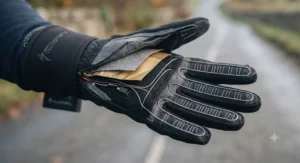
The standout feature is accessibility: this is a rechargeable, windproof heated glove available across a wide size range (M to XXL), making it one of the more affordable genuine entry points into heated cycling gear rather than a basic unheated winter glove.
Specs are modest compared with the premium picks above — the heating element covers a targeted area rather than the whole hand, and the windproof shell is the primary line of defence against wind chill on descents, with the heating element providing a supplementary top-up rather than being the sole source of warmth.
Honest analysis: this isn’t the glove a serious winter training rider reaches for on a genuinely sub-zero century ride, but it’s a solid, low-risk way to try heated gloves for the first time without committing premium-glove money. The windproof construction does a lot of the heavy lifting here, with the heating element extending your comfortable riding window rather than transforming the glove entirely.
Pros:
- ✅ Genuinely accessible price for a rechargeable heated glove
- ✅ Windproof shell blocks chill effectively on fast descents
- ✅ Wide size range from M through to XXL
Cons:
- ❌ Heating element covers a targeted area rather than the full hand
- ❌ Battery life shorter than premium road-specific options
At around £45-£65, this is the sensible starting point for riders curious about heated gloves who aren’t ready to commit to premium pricing.
7. ROCKBROS Heated Handlebar Mittens — best maximum warmth on a budget
The standout feature is sheer warmth-per-pound: as a pogie-style mitt that fits over the handlebar and brake levers rather than being worn as a conventional glove, it traps a much larger pocket of warm air around the hand than any finger glove at a comparable price, with a heated variant available for genuinely serious cold.
Specs include reflective detailing for winter visibility, a design suited to both standard road drop bars and flat-bar MTB setups, and a convenient storage pocket built into some versions for small items like a phone or gel.
This is where the heated cycling gloves vs heated mitts question gets genuinely practical. Reviewers of this style consistently report dramatically warmer hands than any glove at the same price, simply because the mitt isn’t constrained by needing individual finger articulation. The trade-off is real, though: your hand sits inside the mitt in a lighter glove or liner, gripping the bar and lever through the mitt’s opening, which noticeably changes how quickly you can remove a hand to signal or reach for a bottle compared with a conventional glove.
Pros:
- ✅ Dramatically warmer than finger gloves at a comparable price
- ✅ Reflective detailing improves winter visibility
- ✅ Storage pocket adds genuine practicality on longer rides
Cons:
- ❌ Limits quick hand removal for signalling or reaching for bottles
- ❌ Less precise lever feel than a properly fitted glove
Typically priced around £35-£55, this is the pick for riders whose priority is simply staying warm on genuinely bitter commutes or winter club runs, rather than chasing race-glove precision.
How to Choose Heated Cycling Gloves for Road Cyclists
With seven very different products above, here’s the reasoning that actually helps narrow it down:
- Decide between a glove and a mitt first. Mitts win decisively on warmth; gloves win decisively on dexterity and the ability to signal or brake quickly — this is the single biggest decision.
- Check the number of heat settings. Three-level control lets you match output to conditions rather than being stuck on “roasting” or “off.”
- Look at where the heating element actually sits. Full-hand coverage costs more but performs far better than a single targeted heating pad.
- Confirm genuine waterproofing, not just water resistance. A heated glove that soaks through loses both warmth and electrical reliability fast.
- Weigh battery life against your longest realistic ride. A six-hour glove is wasted if you only ever ride ninety minutes, and vice versa.
- Read aggregated review sentiment on bulk and fit. Star ratings rarely capture whether a glove actually feels usable on drop bars.
- Budget by how often you’ll genuinely use it. A £200 glove used every winter commute for years costs less per ride than a £50 glove replaced annually.

Heated Cycling Gloves vs Heated Mitts: Which Is Right for Road Riding?
This is arguably the single most important decision in this whole guide, and it’s worth being genuinely honest about the trade-off rather than pretending one format is simply better.
| Factor | Heated Cycling Gloves | Heated Mitts (Pogies) |
|---|---|---|
| Warmth per pound spent | Moderate to good | Excellent |
| Brake lever dexterity | High | Reduced |
| Ability to signal quickly | Full range of motion | Requires removing hand from mitt |
| Weight and bulk on the bar | Lower | Higher |
| Typical price | Higher | Lower |
| Best suited to | Racing, fast group rides, technical descents | Commuting, steady-pace winter club runs |
The table makes the trade-off plain: heated cycling gloves vs heated mitts really comes down to how much you value fine control versus outright warmth. Sealskinz Upwell Waterproof Heated Cycle Glove and Giro Vulc Lightweight Heated Glove are built specifically to preserve dexterity for riders who need to brake, shift, and signal precisely, while ROCKBROS Heated Handlebar Mittens sacrifices some of that precision for genuinely superior warmth at a lower price. Neither is objectively correct — a commuter riding steady, predictable roads has very different needs to someone doing fast, technical winter club rides where split-second lever control genuinely matters.
Brake Lever Dexterity: Why Bulk Is the Enemy of Control
Brake lever dexterity is the trait most heated glove marketing glosses over, and it’s arguably the single most safety-relevant spec on this entire list. A thick, insulated, battery-laden glove can genuinely change how quickly and precisely you can modulate a brake lever, particularly with two fingers on a hydraulic disc setup or when trying to feather a rim brake on a wet descent.
What most buyers overlook about brake lever dexterity is that it isn’t just about glove thickness — it’s about where the bulk sits. A glove with a slim palm and fingers but a bulkier cuff, like several road-specific designs on this list, preserves lever feel far better than one with uniform padding throughout, even if the overall material volume is similar. This is precisely why Giro Vulc Lightweight Heated Glove and Sealskinz Upwell Waterproof Heated Cycle Glove are built the way they are — the heating element and insulation are concentrated away from the fingertips and first knuckle joints specifically to preserve that feel.
Local council winter cycling guidance is consistent on this point: in cold or icy conditions, riders are advised to avoid harsh or sudden braking and maintain a smooth technique, which is precisely the kind of graduated, feel-dependent braking that a bulky glove makes harder. If you ride regularly in genuinely variable winter conditions, prioritising dexterity over maximum warmth is often the safer call.
Low-Profile Heating Explained: How Thin Heating Elements Change the Fit
Low-profile heating is the technical detail that separates premium road-specific heated gloves from adapted ski or motorcycle gloves, and it deserves more attention than it usually gets. The heating elements themselves have become dramatically thinner over the past several product generations — modern carbon-fibre and metal-thread heating loops can sit within a few millimetres of thickness, compared with the bulkier resistive coils used in earlier heated glove designs.
Here’s what the spec sheet won’t spell out directly: low-profile heating matters because it lets manufacturers position the element without adding meaningful bulk exactly where dexterity matters most, across the fingers and palm. Products like Lenz Heat Glove 6.0 Finger Cap Mittens wrap the heating loop fully around each finger using this thin-element approach, which is only viable because the element itself doesn’t add the stiffness or bulk that older heating technology would.
Based on the spec comparison across this list, low-profile heating tends to correlate strongly with price, simply because thinner, more flexible heating elements are more expensive to manufacture reliably than thicker, cheaper alternatives. Budget options like ROCKBROS Rechargeable Heating Gloves typically use a smaller, more concentrated heating pad rather than a full low-profile weave, which is a sensible cost trade-off but does mean less even warmth across the whole hand.
Common Mistakes When Buying Heated Cycling Gloves
The most common mistake is buying based on maximum stated temperature or battery life alone, without checking where the heating element actually sits — a glove that heats only the back of the hand does very little for genuinely numb fingertips, regardless of how warm the spec sheet claims it gets.
A second frequent mistake is ignoring glove fit sizing charts and ordering a size up “to be safe.” Heated gloves rely on close contact between the heating element and skin to transfer warmth efficiently; a glove that’s too loose loses much of its heating effectiveness and also compromises lever feel.
The third mistake is underestimating charging logistics. Several premium options, including Sealskinz Upwell Waterproof Heated Cycle Glove, use magnetic charging specifically to avoid battery removal hassle — but budget gloves often require full battery removal for charging, which is worth checking before you buy if you’re charging gloves daily through a working winter.
Finally, many buyers assume “heated” automatically means “warm enough,” without considering that battery-powered heat is a supplement to insulation, not a replacement for it. Even the best heated glove performs poorly without decent base insulation underneath the heating element.

What to Expect: Real-World Performance in Cold and Wet Conditions
Translating specs into real riding experience matters more than raw numbers. In practice, most heated gloves in this guide deliver a genuinely noticeable difference over unheated gloves in the 0°C to 8°C range — precisely the temperature band where fingers typically start losing dexterity on a standard winter glove. Below freezing, even premium options like Giro Vulc Lightweight Heated Glove show their limits, as independent reviews of that exact product confirm.
Wet conditions change the picture further. Genuinely waterproof gloves like Sealskinz Upwell Waterproof Heated Cycle Glove and RST Paragon 6 Heated Gloves maintain heating performance through rain because water isn’t reaching the electrical components; gloves that are merely water-resistant, including several budget options, can see both warmth and battery reliability drop off once genuinely soaked through.
Reviewers consistently note that heated mitts like ROCKBROS Heated Handlebar Mittens perform best of all in raw cold-weather warmth terms, precisely because they aren’t fighting the same fit-versus-warmth compromise that finger gloves face — but that advantage narrows considerably in genuinely wet conditions unless the mitt itself is properly waterproofed.
Practical Usage Guide: Charging, Pairing and First 30 Days
Getting the best from a heated cycling glove starts before you even ride. Fully charge the battery the night before a cold-weather ride rather than topping it up that morning — lithium batteries deliver more consistent output from a full charge, and cold ambient temperatures already reduce effective capacity before you’ve even set off.
During the first thirty days, resist the temptation to run gloves on maximum heat for every ride. Most heated gloves, including SAVIOR Heat Touchscreen Cycling Gloves and ROCKBROS Rechargeable Heating Gloves, deliver noticeably longer battery life on the medium setting, and medium is genuinely sufficient for most conditions above freezing — save maximum heat for the coldest rides where it actually earns its keep.
A common early mistake is starting the glove’s heating element before you’re moving. Heat dissipates fastest when your hands are stationary and exposed at the roadside, so switch gloves on just before setting off rather than while you’re still faffing with lights and bags in the driveway. Store gloves somewhere dry between rides — batteries and heating elements both perform and last better when they’re not sitting damp in a cold garage overnight.
Real-World Scenarios: Matching Heated Gloves to How You Ride
The winter commuter riding predictable roads: covering the same familiar route most weekdays, valuing reliability and warmth over racing dexterity. ROCKBROS Heated Handlebar Mittens or RST Paragon 6 Heated Gloves suit this profile well, with the latter’s crash protection an added bonus for busy urban riding.
The fast winter club rider: riding in a group at pace, needing quick, precise braking and gear changes on technical descents. Giro Vulc Lightweight Heated Glove or Sealskinz Upwell Waterproof Heated Cycle Glove fit this need, preserving the dexterity that group riding at speed genuinely demands.
The rider managing cold-sensitive hands: someone who finds their fingers numb well before anyone else in the group, potentially dealing with Raynaud’s-type cold sensitivity. SAVIOR Heat Touchscreen Cycling Gloves or Lenz Heat Glove 6.0 Finger Cap Mittens both have strong aggregated feedback specifically from buyers managing this kind of persistent cold-hands issue — a recognised vasospastic response to cold that affects a meaningful proportion of the population, particularly on exposed extremities like fingers during cold-weather cycling.
Problem → Solution: Fixing Common Heated Glove Issues
Problem: fingertips stay cold despite the glove being “on.” Check where the heating element actually sits — many budget gloves heat the back of the hand only, so switching to a full-coverage option like Lenz Heat Glove 6.0 Finger Cap Mittens solves this directly.
Problem: battery life falls well short of the advertised figure. This is largely physics rather than a fault — lithium batteries lose capacity in the cold, so carrying a spare battery or charging fully the night before, as covered in the usage guide above, makes the biggest practical difference.
Problem: gloves feel too bulky to brake precisely. Move toward a low-profile heating design like Giro Vulc Lightweight Heated Glove, or reconsider whether a mitt-style option might actually suit your riding better than fighting a bulky glove.
Problem: gloves lose heating performance after getting wet. Confirm genuine waterproofing rather than water resistance before buying — Sealskinz Upwell Waterproof Heated Cycle Glove and RST Paragon 6 Heated Gloves are both built around this specifically.
Problem: charging is a hassle every single morning. Look for magnetic charging systems that avoid full battery removal, or simply charge gloves the moment you get home rather than waiting until the next ride.
Long-Term Cost & Value: Battery Life and Total Cost of Ownership
| Product | Approx. Price Range | Stated Battery Life | Value Verdict |
|---|---|---|---|
| ROCKBROS Heated Handlebar Mittens | £35-£55 | 3-5 hours | Best entry-level warmth value |
| ROCKBROS Rechargeable Heating Gloves | £45-£65 | 3-4 hours | Solid budget introduction |
| SAVIOR Heat Touchscreen Cycling Gloves | £60-£90 | 4-6 hours | Strong mid-range value |
| RST Paragon 6 Heated Gloves | £130-£175 | 4-6 hours | Good value with added protection |
| Giro Vulc Lightweight Heated Glove | £150-£190 | Variable | Premium price, mixed reviews on heat |
| Sealskinz Upwell Waterproof Heated Cycle Glove | £180-£220 | ~6 hours | Strong long-term value for regular riders |
| Lenz Heat Glove 6.0 Finger Cap Mittens | £250-£320 | Battery-dependent | Premium price, premium capability |
Looking at sticker price alone, the budget options win easily — but total cost of ownership shifts once you factor in how often you’ll genuinely use them through a full winter. A £200 glove used on every commute across several winters can work out cheaper per ride than repeatedly replacing a £45 pair that wears out after a season of daily use. For occasional weekend riders, though, the budget and mid-range picks remain the sensible choice.
✨ Don’t Miss These Exclusive Deals!
🔍 Take your winter riding kit to the next level with these carefully selected picks. Click on any highlighted item to check current pricing and availability. Warm hands make every cold ride genuinely better.
Safety and Regulations: Batteries, Braking and Being Seen
A few practical safety points are worth covering honestly rather than glossing over. Lithium-ion batteries, which power virtually every glove on this list, need sensible handling — avoid puncturing, crushing, or charging them at extreme temperatures, and use only the charger supplied with the glove.
On braking specifically, the dexterity trade-offs discussed throughout this guide have genuine safety implications. If you’re riding in icy or frosty conditions, general winter cycling guidance recommends reducing tyre pressure slightly, avoiding harsh braking, and keeping both hands on the bars wherever possible — all advice that’s considerably easier to follow in a glove that preserves lever feel than in a bulky mitt.
Visibility is worth a mention too, since winter heated-glove riding often means riding in low light. UK regulations are clear that any cycle used between sunset and sunrise must be fitted with a white front light, red rear light, and the appropriate reflectors — a legal requirement worth checking against your setup regardless of which gloves you choose, since a bulky mitt can occasionally make operating light switches or reaching into pockets for spares slightly more awkward.

FAQ
❓ Are heated cycling gloves worth it for road cyclists?
❓ How long does the battery last in heated cycling gloves?
❓ Do heated gloves reduce brake lever dexterity?
❓ Should I choose heated gloves or heated mitts for winter cycling?
❓ Can heated cycling gloves get wet?
Conclusion
There’s no single “best” heated cycling glove for road cyclists — there’s a best one for how and where you actually ride. If precise lever control on fast group rides matters most, Sealskinz Upwell Waterproof Heated Cycle Glove or Giro Vulc Lightweight Heated Glove earn their premium price through genuinely road-specific, low-profile design. If you’re commuting through filthy winter roads and want crash protection alongside warmth, RST Paragon 6 Heated Gloves covers that brief well. And if raw warmth is the priority over racing-glove precision, ROCKBROS Heated Handlebar Mittens delivers serious heat for a fraction of the premium price.
What ties all seven together is the same underlying trade-off: warmth versus dexterity, and how well each product’s engineering manages that balance. Understanding that trade-off — rather than simply chasing the highest advertised temperature — will do more for your winter riding than any single spec on a box. Pick the option that matches how you actually ride, look after the battery properly, and those mile-twelve numb fingers become a thing of the past.
Recommended for You
- Heated Cycling Gloves for Raynaud’s: 7 Proven Picks for 2026
- 7 Best Heated Cycling Gloves UK 2026: Warm Hands, Guaranteed
- 7 Best Heated Cycling Jacket for Mountain Biking in 2026
Disclaimer: This article contains affiliate links. As an Amazon Associate, I earn from qualifying purchases. If you purchase products through these links, we may earn a small commission at no additional cost to you.
✨ Found this helpful? Share it with your friends! 💬🤗
