
In This Article
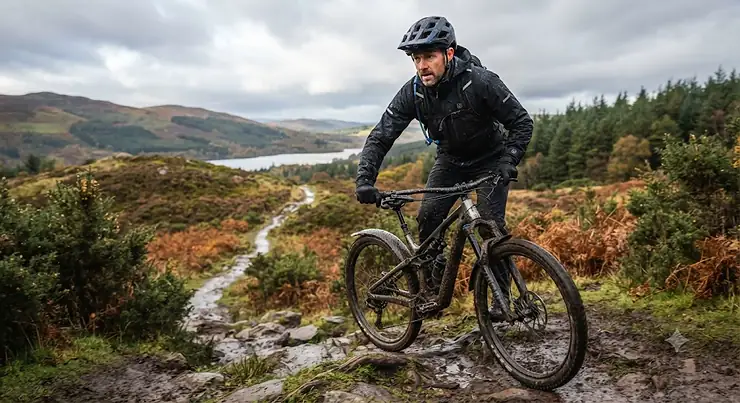
There’s a very specific kind of cold that hits you on a November trail ride — not the dry, still cold of standing at a bus stop, but the damp, wind-driven cold that seems to find every gap in your kit within the first mile of singletrack. Your core’s working hard, your hands are numb, and somewhere around the third climb you start wondering whether this is actually fun anymore. A heated cycling jacket for mountain biking exists to solve exactly that problem: a battery-powered garment with built-in carbon-fibre heating panels that you switch on and, within seconds, feel warmth spreading across your chest, back or arms, regardless of what the trail or the weather is doing to you.
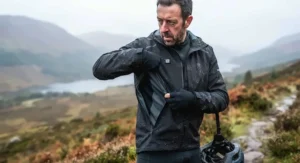
This guide walks through seven real, currently available heated jackets and vests, weighs them against traditional insulated MTB kit, and gets into the details that actually matter on a trail — durability over roots and branches, freedom of movement through technical sections, and how a heated jacket differs from a simpler heated gilet. As with most cycling kit, BikeRadar’s layering advice for cold-weather riding is worth reading alongside this piece, because a heated jacket works best as part of a system, not a replacement for one.
In short: a heated cycling jacket for mountain biking is a windproof or waterproof riding jacket with embedded electric heating elements, powered by a rechargeable battery, that adds on-demand warmth to your chest, back and sometimes arms and offers precise heat settings that fixed insulation simply can’t match.
Quick Comparison Table: Heated Cycling Jackets for Mountain Biking at a Glance
| Product | Heating Zones | Battery Runtime (low) | Best For |
|---|---|---|---|
| Keis J501RP Premium Heated Jacket | 4 (chest, back, arms) | Up to 8+ hours | Serious winter riders wanting full-arm warmth |
| Venture Heat Men’s Softshell Heated Jacket | 3 (chest, back) with app control | 6-10 hours | Riders who want fine-tuned, phone-adjustable heat |
| ORORO Men’s Soft Shell Heated Jacket | 5 (chest, back, arms) | Up to 20 hours (arms only) | All-round value and daily winter commuting |
| Keis V501RP Heated Vest (Gilet) | 2 (chest, back) | Up to 8+ hours | Lightweight core warmth with total arm freedom |
| ARRIS Men’s Heated Jacket, Detachable Hood | 8 zones | 3-16 hours (varies by mode) | Budget riders wanting maximum heating coverage |
| GOTOBI Women’s Fleece Heated Jacket | 8 zones | Up to 12 hours | Women needing a fitted, sized-for-women cut |
| DEWBU Heated Jacket, 12V Battery | 5 (chest, back, collar) | 4-10 hours | Occasional trail riders trying heated kit for the first time |
Looking across the table, the pattern that jumps out is the trade-off between heating coverage and freedom of movement: the ARRIS Men’s Heated Jacket and GOTOBI Women’s Fleece Heated Jacket pack in the most heating zones for the money, while the Keis V501RP Heated Vest deliberately strips things back to give your arms complete, unrestricted motion through technical trail sections. Runtime figures also vary more than most riders expect — the ORORO Men’s Soft Shell Heated Jacket claims the longest arm-only runtime, which matters if you’re out for a full day rather than a two-hour loop. None of these are exact like-for-like comparisons, since battery capacity, ambient temperature and your chosen heat setting all move the numbers around, but they give a fair starting point for narrowing down your options before you dig into the individual reviews below.
💬 Just one click — help others make better buying decisions too!😊
Top 7 Heated Cycling Jackets for Mountain Biking: Expert Analysis
Choosing the right heated cycling jacket for mountain biking isn’t just about which one has the most heat settings — it’s about how the jacket behaves when you’re stood on the pedals, ducking under branches, or hauling the bike over a fallen log with your arms fully extended. The seven picks below span budget, mid-range and premium options, cover both jacket and vest formats, and include dedicated women’s sizing, so there’s a genuine option here whatever your riding style and budget.
1. Keis J501RP Premium Heated Jacket — full-arm warmth for the deepest winter rides
The Keis J501RP stands out immediately because it heats your arms as well as your torso, which most rivals in this list don’t attempt. Under the shell sits Keis’s Micro Carbon Fibre heating panel system across the chest, back and both sleeves, wired to a three-setting controller that’s genuinely simple to operate with gloves on. In practice, that arm heating matters more on a bike than it does on a motorbike, where Keis originally built its reputation — your arms are locked in a riding position, taking the brunt of wind chill with almost no muscular movement to generate their own warmth. Based on the spec sheet and its dual power options (a portable battery pack or a direct 12V lead), this jacket suits riders doing genuinely long, cold winter loops rather than short commutes, and its snug, motorcycle-influenced fit means it also works as a cold-weather off-bike layer. Reviewers of the J501 range consistently describe the jacket holding residual warmth for a noticeable period after the heat is switched off, and several long-distance riders and tourers — including at least one account of the jacket being used on a winter cycling expedition through sub-zero European temperatures — report it kept their core comfortable even when hands and feet were struggling. A recurring theme in aggregated feedback is that the snug fit is deliberate and works best over a genuinely non-static base layer, with a smaller number of users flagging sizing as running close rather than generous.
Pros:
- ✅ Full-sleeve heating, not just chest and back
- ✅ Lifetime warranty on the heating elements themselves
- ✅ Retains noticeable warmth for a while after switch-off
Cons:
- ❌ Premium price puts it above most rivals here
- ❌ Snug motorcycle-style fit needs the right base layer
Expect to pay in the £180-£220 range depending on retailer and bundle; given the full-arm heating and elements warranty, it represents strong long-term value for anyone riding through genuinely harsh UK winters.
2. Venture Heat Men’s Softshell Heated Jacket — app-controlled heat for tech-minded riders
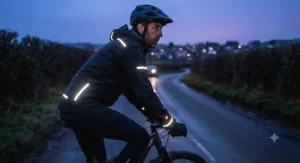
Venture Heat’s softshell jacket leans into precision rather than raw heating area, with Bluetooth app control sitting alongside the usual physical button. What that means in practice is you can nudge the temperature up or down mid-ride from your phone (or a paired remote) without stopping to fumble with a zip pocket, which is a genuinely useful trick when you’re managing effort on a climb versus a fast, cold descent. The carbon-fibre panels cover the chest and upper back, powered by Venture Heat’s rechargeable battery with built-in overheat-prevention circuitry — a detail worth flagging for anyone nervous about lithium battery safety, covered in more depth further down this guide. On paper, this jacket suits riders who already manage other kit through an app-based ecosystem and want that same fine control over their body temperature rather than a blunt three-setting dial. Verified customer feedback specific to the softshell jacket is thinner than for Venture Heat’s longer-running product lines, so it’s fairer to say the brand’s twenty-plus years in heated apparel and its wider catalogue reputation for reliable heat output are the strongest evidence available, rather than claiming a deep well of jacket-specific reviews.
Pros:
- ✅ Bluetooth app control for on-the-fly adjustment
- ✅ Built-in overheat-prevention microchip
- ✅ Softshell shell resists light rain and wind
Cons:
- ❌ Independently verifiable jacket-specific reviews are limited
- ❌ App dependence adds a step some riders won’t want
Prices typically sit in the £150-£190 range; it’s a fair value pick specifically for riders who’ll actually use the app control, less so if you’d only ever touch the physical button.
3. ORORO Men’s Soft Shell Heated Jacket — best all-round value for regular commuters
ORORO’s soft shell jacket spreads five heating panels across the upper back, both sides of the chest and both arms, controlled through two separate LED buttons so you can run arm heating and core heating independently. That distinction matters more than it sounds: on a steady climb your arms are working and generating some warmth, so you might only need core heat, while on a fast, technical descent your arms are static and exposed, and that’s when arm-specific heating earns its keep. What most buyers overlook about this jacket is the runtime spread — up to roughly 20 hours on arms-only heating versus around 7.5 hours with everything running at once, which means sensible heat-zone management stretches a single charge across several rides rather than one long day out. The shell itself is wind-resistant and treated for light rain and snow, with a removable three-piece hood, though it isn’t built to the same waterproof standard as a dedicated hardshell MTB jacket. Aggregated feedback on ORORO’s heated jackets is broadly positive and centres on reliable, even heat distribution and washability rated for 50-plus cycles, with the more common complaint being that sizing runs generously, so a size down is often recommended for a snugger, more athletic fit under a hydration pack.
Pros:
- ✅ Independent arm and core heating controls
- ✅ Machine washable for 50+ cycles
- ✅ Strong runtime on lower, arms-only settings
Cons:
- ❌ Sizing tends to run large — order down
- ❌ Not fully waterproof, only water-resistant
Typically priced in the low-to-mid £100s, this is one of the strongest value propositions in this whole list for riders who want proper arm coverage without paying Keis-level premiums.
4. Keis V501RP Heated Vest (Gilet) — lightest core warmth without bulky sleeves
The Keis V501RP swaps the full jacket format for a heated vest, or gilet, with Micro Carbon Fibre panels across just the chest and back. Here’s what to weigh with a vest format specifically: because there are no sleeves at all, there’s nothing to restrict shoulder rotation or elbow movement, which on technical singletrack — reaching for the brakes, absorbing a drop, hauling the bars through a tight switchback — can matter more than a few extra degrees of arm warmth. Layered underneath a separate breathable MTB jacket or worn on its own over a base layer on milder days, the V501 works as a dedicated core-warming layer rather than a do-it-all outer shell, and it’s dual-powered, so it can run from a 12V lead or a portable battery pack depending on how you’re riding. Aggregated review sentiment for the V501 vest is strongly positive on comfort and snugness, with several users specifically praising the “central hub” design that lets it also power heated gloves or trousers through the same battery system, while a smaller number note the vest alone isn’t enough insulation once temperatures drop much below freezing without an outer layer on top.
Pros:
- ✅ Zero sleeve bulk — full shoulder and arm freedom
- ✅ Can power other Keis heated accessories from one battery
- ✅ Comfortable enough to double as a casual off-bike layer
Cons:
- ❌ No arm heating at all, unlike full jackets
- ❌ Needs an outer layer in genuinely severe cold
Around the £130-£160 range, and directly relevant to the jacket-versus-gilet decision covered in detail later in this guide.
5. ARRIS Men’s Heated Jacket, Detachable Hood — most heating zones for the money
ARRIS packs eight independent heating zones — chest, abdomen, back, waist and neck areas — into a jacket that typically undercuts the premium options here on price by a significant margin. Based on the spec comparison, that zone count is genuinely unusual at this price point, and the selectable LED controller lets you switch specific zones on or off rather than running an all-or-nothing system, which is useful if you only want warmth on your chest during a climb but everything running on a long, exposed descent. The rapid-heating claim — reaching working temperature within seconds of switching on — lines up with how most carbon-fibre panel systems behave, since the heating element itself responds almost instantly; the bigger variable is how quickly that heat actually penetrates through your base layers to your skin. Detachable hood aside, the shell is waterproof and windproof rather than merely water-resistant, which is a genuine point in its favour for muddy trail conditions. Where reviews exist for ARRIS’s wider heated jacket range, the recurring theme is straightforward value — buyers consistently note that the heating performance outstrips the price tag — alongside occasional comments that the battery life on higher settings is the first thing to compromise if you’re chasing maximum warmth for a full day out.
Pros:
- ✅ Eight independently controllable heating zones
- ✅ Fully waterproof and windproof shell, not just resistant
- ✅ Detachable hood adds versatility off the bike
Cons:
- ❌ Higher heat settings drain the battery quickly
- ❌ Build quality doesn’t match premium motorcycle-brand jackets
Sitting in the £70-£100 range, this is arguably the best entry point for riders who want to try heated kit without a premium outlay.
6. GOTOBI Women’s Fleece Heated Jacket — best women’s specific fit and sizing
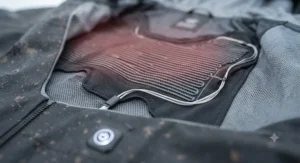
Most heated jacket ranges are designed around a men’s block and then simply scaled down, but the GOTOBI women’s fleece jacket is cut and proportioned specifically for a women’s fit, which changes how it sits under a hydration pack and how the sleeves move through a full riding reach. Eight heating zones spread across the torso and lower back, run from a 12V power bank rated at roughly 18,400mAh, with three selectable temperature levels. What most buyers overlook about fleece-lined heated jackets specifically is that the fleece itself provides meaningful passive insulation even with the heat switched off, so the electric heating is really there to extend your comfortable range into properly cold conditions rather than to do all the work alone. The hooded design and included power bank make it a genuinely complete out-of-the-box package rather than one requiring a separate battery purchase, which isn’t always the case with jackets sold as a “shell only.” Aggregated Amazon feedback for GOTOBI’s heated jacket range tends to highlight the combination of visible warmth and reasonable pricing as standout points, with the most common criticism relating to the fit running slightly boxy for very petite frames, worth checking against GOTOBI’s own size chart before ordering.
Pros:
- ✅ Genuinely women’s-specific cut and sizing
- ✅ Fleece lining adds passive warmth alongside the electric heat
- ✅ Power bank included, not sold separately
Cons:
- ❌ Can run boxy on smaller or petite frames
- ❌ Fleece bulk is noticeable under a tight-fitting jersey
Priced around £60-£90, it’s a strong-value pick specifically for female riders who’ve found men’s-cut jackets awkward through the shoulders and chest.
7. DEWBU Heated Jacket, 12V Battery Pack — easiest entry point for occasional trail use
The DEWBU jacket keeps things simple: five heating zones across the chest, back and collar, a 12V battery pack, and three heating modes controlled from a single button. Here’s what to weigh before buying on price alone: this isn’t a jacket built for daily winter commuting or long expedition-style rides, but for riders who mostly ride fair-weather trails and just want a reliable option for the occasional properly cold weekend without committing to premium pricing. The soft shell fabric is water-resistant rather than waterproof, and the multiple pockets are a genuinely practical touch for stashing gloves or a phone during a trailhead stop. Because DEWBU’s own product line sits toward the budget end of the heated apparel market, independently verifiable review data is comparatively sparse next to more established brands like ORORO or Keis, so it’s more honest to flag that as a gap than to invent a review consensus that doesn’t clearly exist — what can be said with confidence is that the spec sheet lines up with typical entry-level heated jacket construction, using the same carbon-fibre panel technology found in every jacket on this list, just with fewer zones and a simpler control system.
Pros:
- ✅ Straightforward single-button operation
- ✅ Multiple practical pockets for trailhead stops
- ✅ Lowest price point of the seven options here
Cons:
- ❌ Water-resistant only, not waterproof
- ❌ Thinner independent review evidence than bigger brands
Typically found under £70, making it the natural first step for anyone testing whether heated kit suits their riding style before spending more.
Practical Usage Guide: Getting the Most from Your Heated Jacket
Unboxing a heated cycling jacket and immediately blasting it on maximum for a two-hour ride is the fastest way to drain the battery before you’re halfway home. Start every ride on the lowest setting and only increase it if you’re genuinely cold after the first ten minutes — your body generates its own heat once you’re pedalling, so what feels chilly standing at the trailhead often feels fine once you’re moving. Charge the battery fully before every ride during winter, and get into the habit of checking charge level the night before rather than the morning of, since most heated jacket batteries take several hours to reach full capacity. During the first thirty days, the most common mistake riders make is running the jacket at full heat throughout a ride purely because the option exists, burning through battery life in two or three hours rather than stretching it across a full day. Wash cycles matter too: always disconnect and remove the battery pack before machine washing, use a gentle cycle with cold water, and never tumble dry, since heat from a dryer can degrade the carbon-fibre heating elements over repeated cycles. Store the battery partially charged rather than fully flat over the summer months when the jacket isn’t in regular use, as lithium batteries degrade faster when left at very low or very high charge for extended periods. A quick maintenance check every few weeks — inspecting the charging port for trail grime and confirming all heating zones still respond when switched on — catches most faults before they become a mid-ride problem.
Real-World Scenarios: Which Rider Needs Which Jacket
Picture three different riders heading out on the same frosty Saturday morning. The first is a weekend enduro rider tackling technical, root-strewn trails for three to four hours at a stretch, riding hard enough that their core stays warm but their arms — locked out through rock gardens and braking bumps — go numb within twenty minutes. For that rider, the Keis J501RP Premium Heated Jacket‘s full-sleeve heating is the obvious fit, because it’s specifically solving the arm-cold problem that a vest simply can’t touch. The second is a cross-country commuter-turned-trail-rider who covers a shorter loop most evenings after work, values keeping costs down, and mostly just wants to stop dreading the first fifteen minutes of every ride — the ARRIS Men’s Heated Jacket or DEWBU Heated Jacket fit that budget and frequency profile well, since neither demands a long-haul battery for an hour-long loop. The third is a female rider doing longer, more social weekend rides in a group, prioritising fit and all-day comfort over raw heat output, for whom the GOTOBI Women’s Fleece Heated Jacket solves the sizing frustration that comes with wearing a men’s-cut jacket under a hydration pack. None of these are rigid rules — riding style, local climate and personal cold tolerance all shift the calculation — but matching your actual riding pattern to a jacket’s strengths, rather than simply buying the most expensive option, gets far better real-world results.
Problem → Solution: Fixing Common Heated Jacket Frustrations
Problem: The jacket feels warm standing still but cold once riding. This usually comes down to wind exposure at speed overwhelming the heating output — check the shell is genuinely windproof (not just water-resistant) and consider a base layer that traps heat rather than wicking it away too aggressively, since moisture-wicking fabrics designed for high-output summer riding can work against a heated jacket’s job in winter.
Problem: Battery drains faster than expected. Cold ambient temperatures genuinely reduce lithium battery output and capacity, so a jacket rated for eight hours in a mild garage test might deliver five or six hours in a genuine sub-zero trail environment — carrying a spare battery or power bank solves this for longer days out.
Problem: Static shocks when removing the jacket. This is a known issue with carbon-fibre heating elements worn over synthetic base layers, as flagged in genuine Keis reviews — switching to a non-static, natural-fibre or purpose-made cycling base layer typically resolves it.
Problem: Sizing feels off once loaded with a hydration pack. Several jackets in this guide, including the ORORO and GOTOBI options, run generously — sizing down one from your usual jersey size, and trying the jacket on over a base layer before committing, avoids the bulk that makes pack straps dig in.
Problem: Heating zones feel uneven. This is often a controller or connection issue rather than a genuine element failure — checking the connector pins are clean and fully seated before assuming a panel has failed saves an unnecessary return.
How to Choose a Heated Cycling Jacket for Mountain Biking
- Match heating zones to your actual cold points. If your arms go numb first, prioritise a full-sleeve jacket like the Keis J501RP over a vest; if it’s your core that suffers, a gilet may genuinely be enough.
- Check the shell rating, not just the heating spec. Waterproof and windproof shells cost more but earn their keep on muddy, exposed trail sections where a water-resistant jacket will eventually soak through.
- Think in terms of runtime versus your typical ride length. A jacket boasting 15 hours on its lowest setting is solving a different problem to one built for a fast two-hour loop at higher heat.
- Prioritise freedom of movement over sheer heating power. A jacket that restricts shoulder rotation on technical terrain will get switched off in frustration long before its battery runs flat.
- Factor in genuine sizing fit, including hydration pack compatibility. Order a size down if the aggregated reviews consistently mention generous sizing, and always check against the brand’s own chart rather than a generic jersey size.
- Look for independently controllable zones if you ride varied terrain. Being able to switch arm heating off on a climb and on for a descent stretches battery life significantly further than an all-or-nothing system.
- Weigh total cost of ownership, not just sticker price. A cheaper jacket with a short-lived battery and no replacement part availability can cost more over three winters than a premium jacket with a long elements warranty.
Heated Cycling Jacket vs Heated Gilet: Which Suits Mountain Biking Better?
This is genuinely one of the most common decision points for anyone shopping in this category, and it doesn’t have a single right answer — it comes down to where you actually feel the cold and how technical your riding is. A heated cycling jacket, like the Keis J501RP or ORORO Men’s Soft Shell Heated Jacket, heats your arms as well as your core, which matters enormously on a bike because your arms sit locked in a fixed riding position with minimal muscular movement to generate their own warmth, especially on long descents where wind chill is at its worst. A heated gilet, such as the Keis V501RP Heated Vest, strips the sleeves out entirely, which means zero restriction through the shoulders and elbows during technical moves, better breathability on climbs, and typically a lower price point and lighter overall weight.
| Factor | Heated Jacket | Heated Gilet |
|---|---|---|
| Arm warmth | Yes, dedicated panels | No arm heating |
| Freedom of movement | Good, but more fabric across shoulders | Excellent — zero sleeve restriction |
| Best For | Long, cold, arm-exposed descents | Technical, climb-heavy trail riding |
| Typical price | Higher | Lower |
The honest analysis here is that trail riders doing genuinely technical singletrack, with lots of climbing and constant upper-body movement, often prefer a gilet precisely because it disappears — you stop noticing it’s there, which is exactly what you want from riding kit. Riders doing longer, more exposed rides with sustained descents, where the arms are static and taking the full brunt of wind chill, get more practical benefit from full-sleeve jackets. If you’re genuinely torn, the Keis V501RP’s ability to layer underneath a separate breathable MTB jacket offers a reasonable middle ground — heated core, unrestricted arms, and a conventional shell doing the wind and rain job on top.
Off-Road Durability: What Trail Riding Really Does to a Heated Jacket
Road cycling jackets rarely have to survive branches, brambles, rock strikes and repeated mud saturation in the same ride, but that’s the everyday reality for a heated cycling jacket for mountain biking. The heating elements themselves — thin carbon-fibre panels sewn into the lining — are generally well protected from surface abrasion because they sit beneath the outer shell fabric, not on it, so a scuff from a low branch is far more likely to mark the shell than damage the electronics underneath. The more genuine durability risk is at the wiring connection points, particularly where a removable battery cable plugs into the jacket, since repeated flexing and the occasional yank from a snagged branch is exactly the kind of stress that eventually loosens a connector. Waterproof-rated shells, like the one on the ARRIS Men’s Heated Jacket, hold up better over a full muddy winter than water-resistant fabrics, which tend to wet through under sustained trail spray long before a genuine downpour would test them. Reviewers across the heated apparel category consistently flag machine washability as a practical durability feature rather than a nice-to-have, since trail mud simply has to come off between rides, and jackets rated for 50-plus wash cycles are a meaningfully safer long-term bet than those without a clear washing spec. Practically, extending the working life of any heated jacket on technical trails comes down to three habits: drying it properly after a muddy ride rather than leaving damp fabric bunched in a kit bag, avoiding harsh detergents that can degrade the heating element’s protective coating over time, and periodically checking connector pins for corrosion or trail grit before it causes an intermittent heating fault.
Freedom of Movement: Fit, Flex and Riding Position
Freedom of movement is arguably the single most underrated factor in choosing a heated cycling jacket for mountain biking, because a jacket that looks perfect on a hanger can feel completely wrong the moment you’re reaching for the bars in an attack position. The riding posture on a mountain bike — bent elbows, rounded shoulders, a forward lean through the torso — puts constant tension across the back and shoulder seams, which is exactly where a poorly cut jacket will bind and restrict. This is where the trade-off between full jackets and vests becomes really tangible: the Keis V501RP Heated Vest‘s total absence of sleeves means there’s simply nothing left to restrict, while full-sleeve jackets like the ORORO and Venture Heat options rely on articulated cutting — pre-curved sleeves, stretch panels under the arms, longer hems at the back — to achieve a similar range of motion. What most buyers overlook about sizing here is that a jacket that fits comfortably standing upright in a shop changing room can feel noticeably tighter across the back once you’re bent forward over the bars, so trying a jacket on in a riding-adjacent posture, or at minimum checking a brand’s specific MTB or cycling fit notes rather than a generic outdoor sizing chart, avoids a genuinely common and frustrating mismatch. Reflecting on the spec sheets across all seven jackets in this guide, the ones with the best reported freedom of movement tend to share stretch-panel construction under the arms and articulated elbows, rather than simply being cut generously loose, which is a subtly different (and generally better) engineering approach to solving the same problem.
Common Mistakes When Buying a Heated Cycling Jacket
The single most common mistake is buying based on heating zone count alone, without checking whether those zones actually align with where you personally feel the cold — eight heating zones sound impressive, but they’re wasted if your specific cold points are your arms and the jacket concentrates its heat around your waist. A close second is underestimating runtime needs: riders consistently buy a jacket rated for a two-hour loop and then feel let down when it can’t sustain a full day of winter trail riding, when the real issue is a mismatch between ride length and battery spec rather than a faulty product. Ignoring shell waterproofing in favour of chasing the highest heat output is another frequent misstep, since a jacket that soaks through in genuine trail conditions will struggle to keep you warm regardless of how powerful its heating elements are — wet insulation simply doesn’t perform the same way dry insulation does. Charging habits cause more real-world disappointment than manufacturing defects: leaving a battery to fully discharge repeatedly, or charging with an unapproved third-party charger, both shorten a lithium battery’s usable lifespan faster than normal wear would, a point echoed in the London Fire Brigade’s guidance on safe battery charging. Finally, skipping the returns window is a costly mistake specific to this category — heated jacket fit genuinely needs to be assessed under riding conditions with a base layer and possibly a hydration pack, not just tried on standing still in a hallway, so checking a retailer’s return policy before buying is worth the extra two minutes it takes.
What to Expect: Real-World Performance
Specs on a page rarely translate directly into what a jacket actually feels like on a genuinely cold trail, so it’s worth setting realistic expectations. On the lowest heat setting, most jackets in this guide produce a gentle, background warmth that’s noticeable within roughly thirty seconds to a minute of switching on — not an intense blast, but enough to take the edge off sub-10°C conditions when combined with the effort of riding itself. Medium settings are where most riders actually spend their time in typical UK winter conditions, reserving the highest setting for genuinely severe cold or for warming up quickly at the very start of a ride before dropping back down to conserve battery. What the spec sheet won’t tell you, but reviewers note consistently across brands, is that heated jackets perform best as part of a layering system rather than as a single magic garment — a breathable base layer underneath still matters for moisture management, because a heating panel can’t do much for you if you’re damp with sweat from an earlier climb. Cold-related discomfort on a bike isn’t purely about comfort, either; struggling to concentrate or losing dexterity due to cold hands and a cold core is a genuine safety consideration worth taking seriously, and the early symptoms are worth knowing, as covered in NHS Inform’s guidance on the signs of hypothermia. In practice, most riders report that a well-fitted heated jacket noticeably extends their comfortable riding window into weather they’d previously have skipped entirely, which is really the whole point of the category.
Long-Term Cost & Maintenance
A heated cycling jacket is a bigger upfront outlay than a standard insulated MTB jacket, so it’s worth thinking in terms of total cost of ownership rather than sticker price alone. A premium option like the Keis J501RP, priced around £180-£220, comes with a lifetime warranty specifically on its heating elements, which meaningfully changes the long-term maths versus a budget jacket where a failed heating panel after year two means buying a whole new garment. Battery replacement is the other recurring cost worth budgeting for: most lithium battery packs used in this category retain the bulk of their capacity for roughly 300-500 charge cycles, which for a typical UK winter of regular use works out to somewhere in the region of two to three seasons before performance noticeably drops, at which point a replacement battery — usually available separately for established brands — is a far cheaper fix than replacing the whole jacket. Cost-per-use also favours riders who genuinely ride through winter regularly over those who might use the jacket only a handful of times a year, since the upfront cost amortises far better across frequent use. Machine-washable construction, rated for 50-plus cycles on several jackets in this guide, keeps ongoing maintenance costs close to zero provided the battery is removed before every wash, and a jacket that survives repeated washing without degraded heating performance is genuinely the better long-term investment even if its sticker price is higher on day one.
Safety, Regulations & Battery Compliance
Because every jacket on this list runs on a rechargeable lithium battery, it’s worth understanding the basic safety picture rather than treating the battery as an afterthought. Lithium-ion batteries are safe products used by millions of people daily, but they do carry a genuine fire risk if damaged, overcharged, or charged with an incompatible charger, and UK fire services have specifically flagged rising incidents linked to lithium battery misuse in recent years. The practical takeaway for heated jacket owners is straightforward: always use the charger supplied with the jacket rather than a generic third-party alternative, never charge the battery under bedding or soft furnishings where heat can build up, and store it away from direct sunlight or extreme temperatures when not in use. If a battery is ever visibly swollen, damaged, or behaves unusually while charging, stop using it immediately rather than continuing on the assumption it’ll be fine — this is consistent, sensible advice repeated across UK fire safety guidance. On the clothing regulation side, there’s no specific UK licensing requirement for wearing a heated jacket while cycling, unlike the regulatory framework around e-bike motor power, so the main compliance considerations here sit with the battery itself rather than the garment. Buying from established retailers who stock CE or UKCA-marked electrical accessories, rather than unbranded imports with no visible safety certification, is the simplest practical safeguard available to any buyer in this category.

Frequently Asked Questions
❓ How long does the battery last on a heated cycling jacket?
❓ Can I wash a heated cycling jacket?
❓ Is a heated jacket better than a heated gilet for mountain biking?
❓ Are heated cycling jackets waterproof?
❓ How many heating zones does a mountain biking jacket actually need?
Conclusion
A heated cycling jacket for mountain biking isn’t a gimmick — it’s a genuinely practical solution to a problem every winter trail rider recognises: the cold that creeps in on exposed descents and long climbs regardless of how many conventional layers you’re wearing. Across the seven options in this guide, the right choice comes down to matching heating zones and format to your actual cold points, checking shell waterproofing against your typical trail conditions, and prioritising genuine freedom of movement over raw heating power or zone count. The Keis J501RP Premium Heated Jacket remains the strongest all-round pick for riders who feel the cold in their arms on long, exposed rides, while the Keis V501RP Heated Vest solves the same problem with total sleeve freedom for more technical terrain. Budget-conscious riders shouldn’t overlook the ARRIS and DEWBU options, which deliver a genuinely usable heated riding experience without the premium price tag, and the GOTOBI Women’s Fleece Heated Jacket fills a fit gap that too many ranges in this category still ignore. Whichever you choose, treat the battery with the same care you’d give any lithium-powered device, layer it sensibly rather than relying on it alone, and you’ll likely find — as plenty of winter riders already have — that it extends your riding season further than you expected.
✨ Don’t Miss These Exclusive Deals!
🔍 Take your winter mountain biking to the next level with the heated jackets and gilets featured in this guide. Click through on any highlighted pick to check current pricing and availability before the cold snap hits!
Recommended for You
- Heated Cycling Jacket for Road Cyclists: 7 Best Picks for 2026
- Heated Cycling Jacket: 7 Genuinely Warm Picks for 2026
- Heated Motorcycle Vest for Cold Commuters: 7 Picks for 2026
Disclaimer: This article contains affiliate links. As an Amazon Associate, I earn from qualifying purchases. If you purchase products through these links, we may earn a small commission at no additional cost to you.
✨ Found this helpful? Share it with your friends! 💬🤗
