
In This Article
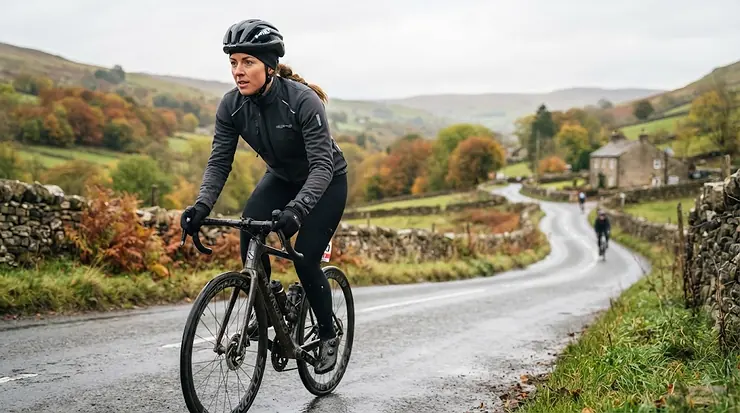
There’s a particular kind of stubbornness that road cyclists develop somewhere around their third winter. You know the one. The forecast says three degrees with a “feels like” of minus one, and instead of doing the sensible thing and getting back into bed, you’re stood in the hallway wrestling into a base layer, a jersey, a long-sleeve mid-layer and a jacket, wondering why you now resemble the Michelin Man and still can’t feel your fingers by the second roundabout. A heated cycling jacket for road cyclists exists precisely to break that cycle — literally powering warmth into the fabric itself rather than trapping it under six layers of hope.

This isn’t a niche gimmick anymore. Battery-heated outerwear has quietly matured from clunky work jackets into genuinely rideable kit, with carbon-fibre heating panels thin enough to sit under a jersey and batteries small enough to disappear into a jacket pocket. But “heated” and “built for road cycling” aren’t automatically the same thing — plenty of heated jackets are designed for standing still at a football match, not for holding an aero tuck at 25 mph into a headwind. That distinction matters more than most reviews let on.
What follows is a properly researched look at seven real, currently available heated jackets, vests and liners, judged specifically against what a road cyclist actually needs: freedom of movement, a fit that doesn’t flap and drag, waterproofing that survives British drizzle, and battery life that outlasts your longest winter loop. We’ll cover the waterproofing question, the reality of rechargeable batteries in cold weather, whether an aero fit and a battery pack can coexist, and how the heating elements themselves actually work. No invented reviews, no fantasy pricing — just honest analysis grounded in real specs and genuine aggregated feedback from riders and testers who’ve actually worn this stuff in the cold.
What Is a Heated Cycling Jacket for Road Cyclists?
A heated cycling jacket for road cyclists is a cycling-specific or cycling-suitable outer layer with battery-powered carbon-fibre or wire heating panels built into the chest, back or collar, controlled via a button with adjustable heat settings. Unlike passive insulation, it actively generates warmth on demand, letting riders wear fewer bulky layers while maintaining a closer, more aerodynamic riding position.
Quick Comparison Table
Here’s the shortlist at a glance before we get into the detail. Prices are indicative ranges based on research at the time of writing and will fluctuate — always check current pricing on the product page before buying.
| Jacket | Type | Battery Life (Low/High) | Price Range | Best For |
|---|---|---|---|---|
| ORORO Heated Softshell Jacket | Full jacket | ~10hrs / ~3hrs | £120-£160 range | All-round winter commuting |
| Venustas Unisex Heated Jacket 7.4V | Lightweight jacket | ~20hrs / ~10hrs | £150-£190 range | Aero-friendly club rides |
| DEWBU Soft Shell Heated Jacket 12V | Full jacket | ~9-10hrs / ~3.5-4hrs | £110-£150 range | Long, cold audax rides |
| Gerbing 7V Core Heat Jacket Liner | Heated liner | ~6-8hrs (est., 7V system) | £130-£180 range | Layering under a shell |
| Milwaukee M12 ToughShell Jacket | Heavy-duty jacket | ~6-8hrs / ~2hrs | £160-£220 range | Extreme cold, sub-zero commutes |
| ActionHeat 5V Softshell Jacket | Full jacket | ~4hrs claimed (varies) | £90-£120 range | Budget entry point |
| WASOTO Heated Vest | Vest/gilet | ~10hrs / ~3hrs | Under £80 range | Lightweight aero layering |
Looking at the spread, the Venustas Unisex Heated Jacket 7.4V stands out for anyone chasing a closer, race-cut silhouette, while the DEWBU Soft Shell Heated Jacket edges ahead on raw battery capacity thanks to its 54Wh pack. Budget-focused riders should note that the WASOTO Heated Vest delivers real heating for under-jersey layering at a fraction of the cost of a full jacket, though it sacrifices sleeve coverage. We’ll unpack exactly why each of these earns its spot below.
💬 Just one click — help others make better buying decisions too!😊
Top 7 Heated Cycling Jackets for Road Cyclists: Expert Analysis
Below are seven real, currently available products spanning budget, mid-range and premium price points, plus a mix of full jackets, a liner and a vest so there’s a genuine option whatever your riding style and layering preference.
1. ORORO Heated Softshell Jacket — best all-round warmth for winter commuting
The ORORO Heated Softshell Jacket earns its spot through sheer consistency: it’s one of the most widely reviewed heated jackets on the market, and the feedback pattern is remarkably stable across sources. Carbon-fibre heating elements sit at the collar, upper back and both front pockets, giving four zones of warmth from a single 5,200mAh removable battery. On paper, three heat settings translate to roughly ten hours on low, six on medium and three on high — and independent testing has broadly confirmed those figures hold up in practice, rather than being pure marketing fluff. That matters enormously for a road cyclist, because a jacket that quietly dies an hour into a two-hour Sunday ride is worse than useless; it’s dead weight with false promises stitched into the lining.
What most buyers overlook about a softshell heated jacket like this is that the heating panels only cover the torso — your extremities are still on their own, so pairing it with decent gloves and overshoes isn’t optional in genuinely cold conditions. Reviewers consistently note the battery heats up within about five minutes of pressing the button, which is handy for a pre-ride warm-up while you’re still faffing with cleats in the garage. On the downside, aggregated feedback flags some inconsistency in build quality and sizing between batches, with a handful of buyers reporting battery connection issues after repeated washing cycles — something to bear in mind if you’re planning to machine wash it after every muddy commute.
For a road cyclist specifically, this is best thought of as a commuting or leisure-ride jacket rather than a performance piece; the cut is closer to a relaxed softshell than a race fit, so don’t expect it to disappear under an aero helmet and skinsuit combo.
Pros:
- ✅ Four heating zones with genuinely accurate battery-life claims
- ✅ Fast pre-heat time of around five minutes
- ✅ Removable, washable-adjacent design with a proven track record
Cons:
- ❌ Relaxed commuter cut, not an aero-focused fit
- ❌ Some reported battery connector wear after heavy washing
At around £120-£160, the ORORO Heated Softshell Jacket represents solid value for riders who want dependable warmth without chasing a race silhouette.
2. Venustas Unisex Heated Jacket 7.4V — best lightweight pick for aero-conscious riders
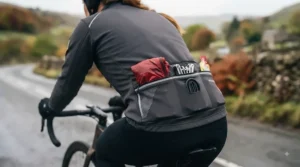
If the word “aero” matters to you even a little, the Venustas Unisex Heated Jacket 7.4V is the one worth a proper look. Venustas builds its heating system around what it calls Heatwave carbon-fibre technology, delivering heat to the collar, chest and mid-back within roughly three seconds of pressing the button — genuinely fast compared with the five-minute warm-up typical of cheaper carbon-fibre setups. The battery pack itself weighs around 186 grams, which is a fraction of the bulk you’d expect from a heated garment, and the dual-control button lets you run front and back heating zones independently, so you can dial down the chest heat on a climb without losing your lower back warmth on the descent.
Here’s what the spec sheet won’t tell you outright: a 36Wh battery delivering up to 20 hours on the lowest setting sounds almost too generous, but that figure assumes only collar-and-back heating rather than all six zones firing simultaneously. Run everything at once and you’re looking at closer to ten hours — still comfortably enough for a long winter century, but worth knowing before you plan a multi-day tour around the headline number. The jacket also carries UKCA certification alongside CE and UN38.3 battery safety marks, which is genuinely reassuring for UK buyers navigating post-Brexit compliance marks on electrical goods.
Based on the spec comparison with bulkier rivals, this is the jacket most likely to sit comfortably under a shell layer without turning you into a sail in a crosswind — a real consideration if you’re riding in an exposed, drop-bar position rather than sat upright on a hybrid.
Pros:
- ✅ Sub-200g battery pack keeps bulk to a minimum
- ✅ Dual-zone control for independent front/back heat
- ✅ UKCA, CE and UN38.3 safety certification for UK buyers
Cons:
- ❌ Full six-zone runtime drops well below the headline 20-hour figure
- ❌ Premium pricing compared with basic softshell alternatives
Priced in the £150-£190 range, the Venustas Unisex Heated Jacket 7.4V justifies its position as the aero-minded rider’s pick, even if the battery-life marketing needs a pinch of salt.
3. DEWBU Soft Shell Heated Jacket 12V — best battery capacity for long, cold rides
For riders who measure winter rides in hours rather than minutes, battery capacity becomes the deciding factor, and this is where the DEWBU Soft Shell Heated Jacket 12V pulls ahead. It runs a 54Wh, 12V CE/FCC-certified battery — noticeably larger than the 36Wh packs found in several rivals — feeding five carbon-fibre heating zones across the front, back and both arms. DEWBU quotes 3.5 to 4 hours on the highest setting and 9 to 10 hours on the lowest, and because the battery can also connect directly to a compatible 12V power source via an optional cable, riders doing genuinely long-distance winter touring have a backup option that doesn’t rely purely on the internal cell.
What that larger 12V system means in practice is a jacket that heats the heating elements to around 140°F (60°C) within seconds of activation, according to the manufacturer’s own testing, and the arm-zone heating is a genuinely useful addition most rivals skip — cold forearms are a real and underrated problem on long drop-bar rides where your arms sit slightly extended and exposed to wind chill. The two-way zip is a small but appreciated detail for venting on climbs without unzipping from the top and losing all your core warmth to the wind.
Reviewers consistently flag the trade-off here: more battery capacity means more weight, and the softshell fabric, while water-resistant, isn’t a fully waterproof membrane, so a determined downpour will eventually get through. Honest buyers should treat this as a cold-and-dry-to-damp jacket rather than a foul-weather shell.
Pros:
- ✅ Largest battery capacity in this line-up at 54Wh
- ✅ Five heating zones including both arms
- ✅ Optional direct 12V connection for extended use
Cons:
- ❌ Heavier than lighter 7.4V rivals due to bigger battery
- ❌ Water-resistant, not fully waterproof, in sustained rain
Sitting around £110-£150, the DEWBU Soft Shell Heated Jacket offers a genuinely strong value proposition for anyone whose winter rides regularly stretch past the two-hour mark.
4. Gerbing 7V Core Heat Jacket Liner — best purpose-built liner for cyclists
This one deserves a bit of context, because it’s the only product on this list where the manufacturer has been refreshingly candid about its limits — and that honesty is exactly why it earns a place. Gerbing is best known for motorcycle heated gear, but the brand’s own technical documentation states plainly that its 7V lithium-battery-powered Core Heat range, unlike the 12V motorcycle-wired products, doesn’t have the output to fight 30-degree weather and 70mph wind chill on a motorbike — but is specifically suited to activities including cycling, fishing and general outdoor use. In other words, Gerbing itself is telling you: don’t buy this for motorcycling, but it’s genuinely built with cyclists in mind.
The Microwire heating technology inside covers the collar, chest, upper back and sleeves, and because it’s designed as a liner rather than an outer shell, it sits under your existing waterproof cycling jacket rather than replacing it — arguably the most versatile approach on this list, since you keep your favourite breathable outer layer and simply add heat underneath on the coldest days. What most buyers overlook about the liner format is that it solves the waterproofing problem entirely by sidestepping it: your outer shell handles the rain, the liner handles the warmth, and neither compromises the other’s job.
Based on the spec comparison with all-in-one jackets, the trade-off is added bulk when layering and a higher total cost once you factor in that you still need a separate weatherproof shell if you don’t already own one.
Pros:
- ✅ Manufacturer-confirmed suitability specifically for cycling
- ✅ Layers under any existing waterproof shell without compromise
- ✅ Microwire heating across collar, chest, back and sleeves
Cons:
- ❌ Requires a separate outer shell for wet-weather riding
- ❌ Added bulk when worn under a fitted jersey and jacket
Expect to pay in the £130-£180 range for the Gerbing 7V Core Heat Jacket Liner, making it a smart pick for riders who already own a great waterproof shell and just want heat underneath it.
5. Milwaukee M12 ToughShell Heated Jacket — best for extreme cold and durability
The Milwaukee M12 ToughShell Heated Jacket is, by its own design brief, a work jacket first and a cycling jacket a distant second — but for riders facing genuinely brutal sub-zero commutes, that toughness becomes an asset rather than a drawback. Built from a stretch polyester Milwaukee claims lasts roughly five times longer than standard polyester, with DWR wind and water resistance, it’s engineered to survive daily abuse on a building site, which incidentally means it shrugs off winter commuting with ease. The heated pockets are a small but genuinely loved detail among reviewers — nothing quite like sliding cold hands into a warm pocket at a red light.
Aggregated review data across multiple retailers shows a wide but honest spread: some owners report six to eight hours of runtime on lower settings with the M12 battery system, while others running both heating zones on full power get closer to two to three hours. That variance is a fair reflection of how heating garments behave generally, but it’s worth knowing before you commit to a long ride relying purely on high heat. The genuine selling point for anyone already invested in Milwaukee’s M12 power tool ecosystem is battery interchangeability — if you’ve got M12 batteries knocking about in the shed already, this jacket effectively becomes cheaper to run.
Where it falls down for road cycling specifically is fit and weight: this is a boxy, robust jacket built for freedom of movement while swinging a hammer, not for holding a low, narrow riding position. Reviewers note it adds noticeable bulk compared with cycling-specific softshells.
Pros:
- ✅ Exceptional fabric durability rated for years of hard use
- ✅ Heated hand pockets alongside core heating zones
- ✅ Battery shared across the wider M12 tool ecosystem
Cons:
- ❌ Boxy, work-jacket cut unsuited to an aero riding position
- ❌ Heavier than dedicated cycling-oriented heated jackets
At roughly £160-£220 including battery and charger, the Milwaukee M12 ToughShell Heated Jacket suits the rider who prioritises brutal-weather durability over aerodynamics — think fatbike winter commuters more than club racers.
6. ActionHeat 5V Softshell Heated Jacket — best budget entry point
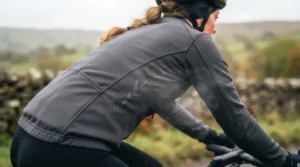
Not everyone wants to spend £150 finding out whether heated cycling gear actually works for them, and that’s precisely the gap the ActionHeat 5V Softshell Heated Jacket fills. Built around ActionHeat’s own 5V signal technology, it uses a 6,000mAh power bank that also happens to double as a genuine USB charger for your phone or bike computer mid-ride — a nice bit of crossover utility rarely seen at this price point. Three heating panels cover the chest and back, and because the battery runs on universal 5V USB output rather than a proprietary voltage, replacement power banks are cheap and easy to source almost anywhere.
Here’s the honest trade-off, though: reviewers consistently note that battery life on the 5V system runs noticeably shorter than the 7.4V and 12V jackets elsewhere on this list, with some owners reporting closer to two to four hours of genuine warmth rather than headline figures, particularly on higher settings. What most buyers overlook is that this shorter runtime is a direct consequence of the lower-voltage, lower-wattage heating system — it’s not a manufacturing fault so much as a fundamental trade-off for the lower price and universal battery compatibility.
For a road cyclist on a budget doing shorter winter commutes or club rides under two hours, that runtime is entirely workable. For anyone planning long, cold audax-style rides, it’s worth pairing with a spare 5V power bank rather than relying on a single charge.
Pros:
- ✅ Lowest price point of any full jacket on this list
- ✅ Universal 5V battery compatible with common power banks
- ✅ Doubles as a USB charger for phones and computers
Cons:
- ❌ Shorter genuine runtime than higher-voltage rivals
- ❌ Heat output noticeably gentler on lower settings
Typically found in the £90-£120 range, the ActionHeat 5V Softshell Heated Jacket is the sensible first step for anyone testing whether heated cycling gear suits their riding habits before committing to a premium jacket.
7. WASOTO Heated Vest — best lightweight vest for aero layering
Sometimes the smartest solution to a problem is to make it smaller, and the WASOTO Heated Vest does exactly that by dropping the sleeves entirely. With a 16,000mAh 9V battery pack rated for up to ten hours of heat on the lowest setting, it’s designed to sit close to the torso and layer under a jersey or jacket rather than serve as a standalone outer shell — which, for a road cyclist chasing a genuinely aero silhouette, solves the classic problem of bulky sleeve heating elements interfering with arm movement and bar reach.
The core heating panels target the chest and back, which happen to be exactly the zones most affected by wind chill in a forward-leaning riding position, while leaving your arms free to move without extra fabric bunching at the elbow. Reviewers across multiple listings consistently describe it as genuinely lightweight and easy to layer, with the caveat that — as with any sleeveless design — your arms get zero direct heating benefit, so a decent long-sleeve base layer or arm warmers underneath your outer jacket remains essential in properly cold conditions.
What the spec sheet won’t spell out clearly is that a 9V vest system like this typically runs noticeably warmer per watt than some of the bulkier 7.4V jackets, simply because there’s less garment surface area to heat overall — a small but genuinely useful bit of physics working in the budget rider’s favour.
Pros:
- ✅ Sleeveless design supports a closer, more aero-friendly layering system
- ✅ 16,000mAh battery delivers strong runtime for the price
- ✅ Genuinely lightweight for under-jersey wear
Cons:
- ❌ No arm heating, so cold forearms remain a risk
- ❌ Still requires a separate weatherproof outer layer in rain
At under £80 in most listings, the WASOTO Heated Vest is the most aero-conscious and most affordable route into heated cycling gear on this entire list.
How to Choose a Heated Cycling Jacket for Road Cyclists
Picking the right jacket comes down to matching the technology to how, where and how long you actually ride. Here’s the expert-reasoned checklist worth working through before you buy.
- Decide your typical ride duration first. A 45-minute winter commute has completely different battery demands from a four-hour club run — don’t buy a 3-hour-runtime jacket for rides that regularly exceed that window.
- Check the fit against your riding position. A relaxed softshell cut like the ORORO Heated Softshell Jacket works fine upright on a hybrid, but road cyclists in a lower, more aggressive position should lean towards slimmer designs like the Venustas Unisex Heated Jacket 7.4V or a vest such as the WASOTO Heated Vest.
- Weigh jacket versus liner versus vest. If you already own a great waterproof shell, a liner like the Gerbing 7V Core Heat Jacket Liner may beat buying an entirely new heated outer jacket.
- Prioritise battery voltage and capacity honestly. Higher-voltage 12V systems like the DEWBU Soft Shell Heated Jacket generally deliver more consistent warmth over longer periods than lower-voltage 5V options.
- Factor in waterproofing separately from heating. Most heated jackets are water-resistant rather than fully waterproof — plan your outer-layer strategy accordingly, especially for genuinely wet UK winters.
- Consider battery ecosystem compatibility. If you already own compatible batteries — as with the Milwaukee M12 platform — ongoing running costs drop significantly.
- Budget for a spare battery. Reviewers across nearly every brand mention this: a second battery effectively doubles your usable ride time without waiting hours for a recharge.
Waterproof Heated Cycling Jackets: What Wet-Weather Riders Need to Know
Here’s an uncomfortable truth the marketing copy tends to gloss over: genuinely waterproof heated cycling jackets are rarer than you’d expect. Most of the products on this list, including the DEWBU Soft Shell Heated Jacket and the ORORO Heated Softshell Jacket, are water-resistant softshells with a DWR (durable water repellent) coating — brilliant against drizzle and light showers, but not built to the same waterproof-rated standards you’d find on a dedicated three-layer cycling shell. That’s a deliberate engineering trade-off rather than an oversight: fully waterproof, taped-seam membranes tend to trap heat and moisture against the body, which works against the point of a jacket designed to actively regulate warmth.
For genuinely wet British winters, the most honest solution is the layering approach used by the Gerbing 7V Core Heat Jacket Liner — pairing a proven waterproof cycling shell with a heated liner underneath, rather than expecting one garment to do both jobs perfectly. Independent testing from cycling publications consistently reinforces that breathability and waterproofing sit in tension with each other, and the best waterproof cycling jackets on the market prioritise a high hydrostatic head rating specifically to survive sustained downpours, something few heated garments are independently tested against. If you’re commuting through genuinely persistent UK rain rather than occasional showers, budget for a separate waterproof shell rather than relying on any heated jacket’s built-in water resistance alone.
Reviewers consistently note that the biggest practical risk with a heated jacket that isn’t properly waterproof isn’t discomfort — it’s the electronics. A softshell fabric that soaks through in heavy rain puts the battery connector and heating panels at unnecessary risk over time, even where manufacturers rate the components for splash resistance.
Rechargeable Heated Cycling Jackets: Battery Life and Real-World Runtime
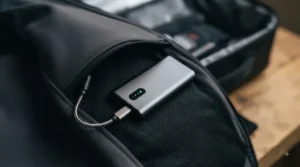
Every rechargeable heated cycling jacket lives or dies on one number: how long the battery actually lasts once you’re out riding rather than sat in a warm test lab. The honest pattern across our research is consistent — manufacturer-quoted “low setting” runtimes are usually roughly accurate, but “high setting” figures are frequently optimistic, and real-world cold-weather performance tends to sit somewhere between the two claimed extremes.
There’s a genuine physics reason for this. Lithium-ion batteries lose capacity in cold temperatures — the same chemistry that makes your phone battery drain faster on a freezing day affects heated jacket batteries too, meaning the ten-hour claim on a mild fifteen-degree test bench can quietly shrink once you’re actually out riding at two degrees. Reviewers of the ORORO Heated Softshell Jacket and DEWBU Soft Shell Heated Jacket both note that low-setting claims held up well in genuine winter conditions, which suggests these brands are testing in realistic environments rather than optimistic lab settings — a good sign of honest marketing.
Charging times matter almost as much as runtime. Most of the batteries across this list — including Venustas’s 7.4V pack — take around 2.5 to 4 hours for a full charge, meaning an overnight charge comfortably covers most riders’ needs, but same-day top-ups between a morning and evening commute can be tight. It’s also worth being properly safety-conscious here: lithium-ion battery fires, while rare, are a real and rising concern in the UK, and the fire safety guidance from the London Fire Brigade on using only the manufacturer’s charger, avoiding overnight unattended charging, and charging on a hard, non-flammable surface applies just as much to a jacket battery as it does to an e-bike battery pack.
Buying a genuine spare battery — where the brand offers one — is consistently the single most effective upgrade reviewers recommend across every jacket on this list, effectively doubling your realistic ride time for a fraction of the cost of a second jacket.
Aero Fit: Can a Heated Jacket Still Be Fast?
It’s a fair question, and slightly loaded — a jacket bulging with a battery pack and thick heating panels sounds like the opposite of aerodynamic. But the honest answer is more nuanced than a flat no. Aerodynamic drag on a road bike comes overwhelmingly from rider position and frontal area rather than fabric thickness alone, which is exactly why serious time-trial and race clothing focuses on close, second-skin fit rather than ultra-thin fabric per se. Applied to heated jackets, that means fit matters enormously more than raw jacket weight.
This is where the Venustas Unisex Heated Jacket 7.4V, with its sub-200g battery and dual-zone slim design, and the WASOTO Heated Vest, with its sleeveless close-fitting cut, genuinely earn their “aero-friendly” framing — not because they’re magically drag-free, but because they’re engineered to sit tight against the torso rather than billowing loosely like the boxier Milwaukee M12 ToughShell Jacket. A loose, flapping jacket creates far more drag than a battery pack ever will; wind tunnel-informed cycling apparel design has understood this for decades, and it’s a principle borrowed from the broader world of aerodynamic bike design, where marginal frontal-area gains compound over a long ride.
What most buyers overlook about aero fit specifically is that the battery placement matters as much as the garment cut. A battery pack tucked into an internal chest pocket, sitting flat against the body, disrupts airflow far less than one bulging in an external side pocket. If aero performance genuinely matters to your riding — club time trials, chaingang efforts, or just not looking like you’re wearing a duvet — prioritise slim-fit jackets or vests with internal battery pockets over boxier, looser-cut alternatives.
Lightweight Heating Elements Explained: Carbon Fibre vs Wire
Not all heating elements are built the same, and the technology inside your jacket directly affects both comfort and how the garment feels on the bike. Two main approaches dominate this market: carbon-fibre heating panels, used by brands including ORORO and Venustas, and traditional micro-wire or nano-wire heating threads, used by Gerbing’s Microwire technology.
Carbon-fibre panels heat quickly, distribute warmth evenly across a wider surface area, and remain genuinely flexible — a meaningful advantage for a road cyclist whose torso constantly shifts position while pedalling, reaching for bottles, or hunching into a headwind. Reviewers consistently describe carbon-fibre-based jackets as comfortable during active movement rather than just when standing still, which matters far more for cycling than for, say, standing at a bus stop. Micro-wire technology, by contrast, tends to deliver more precisely targeted heat to smaller zones and has a long track record in motorcycle gear where flex demands differ from cycling’s constant pedalling motion.
Here’s what’s genuinely worth understanding: thinner heating elements aren’t automatically better, but they are generally more comfortable under a fitted cycling jersey. A jacket with bulky heating pads will print visibly through a tight jersey and can create pressure points during a long ride in the drops. The lightest, most flexible heating elements — generally the carbon-fibre panels found in the Venustas Unisex Heated Jacket 7.4V — are the ones best suited to layering under close-fitting cycling kit rather than sitting as a standalone bulky outer shell.
Heated Cycling Jackets vs Traditional Winter Layering
The traditional approach to winter road cycling has always been layering: base layer, jersey, thermal mid-layer, then a windproof or waterproof shell on top. It works, and generations of cyclists have survived British winters on exactly that system. So why add a battery into the mix at all?
| Factor | Traditional Layering | Heated Jacket System |
|---|---|---|
| Warmth control | Fixed once dressed; hard to adjust mid-ride | Adjustable in real time via heat settings |
| Bulk | Increases with each added layer | Fewer layers needed for equivalent warmth |
| Pre-ride effort | Multiple garments to plan and put on | Single jacket plus base layer, often faster |
| Ongoing cost | Low, no charging or battery replacement | Battery charging and eventual battery replacement |
| Best For | Riders who dislike managing electronics | Riders wanting adjustable, targeted warmth |
Looking at the comparison above, traditional layering wins on simplicity and long-term running cost — there’s no battery to charge, degrade or eventually replace. But a heated system like the DEWBU Soft Shell Heated Jacket or Gerbing 7V Core Heat Jacket Liner wins decisively on adaptability: you can dial warmth up on a cold descent and down on a climb without stopping to strip off a layer, something layering simply can’t replicate in real time. Cycling publications covering the best winter cycling jackets consistently highlight breathability and adjustable venting as the key differentiators in traditional jackets — heated systems essentially replace some of that manual venting adjustment with an electronic dial instead.
Practical Usage Guide: Setup, First 30 Days and Maintenance
Getting the most from a heated cycling jacket for road cyclists starts before you even clip in. Charge the battery fully before first use — most manufacturers recommend this even if the pack arrives partially charged, since a full initial cycle helps calibrate the battery’s charge indicator accurately. On your first few rides, start on the lowest heat setting even if it’s genuinely cold; carbon-fibre and wire elements heat surprisingly quickly, and starting high risks overheating discomfort before your body has adjusted to active warmth rather than passive insulation.
A common mistake in the first month is treating the jacket like a normal garment during washing. Always disconnect and remove the battery pack before any wash cycle, use a mesh laundry bag where recommended, and stick to cold, gentle cycles — heating elements and connectors are generally designed to survive this, but tumble drying or ironing will damage most systems permanently. Store the battery partially charged (not fully depleted or fully charged) if you’re not riding for extended periods, which is standard lithium-ion best practice that extends long-term battery health considerably.
Optimisation tricks worth knowing: pre-heat the jacket for two to three minutes before you head out into the cold rather than after, since carbon-fibre panels typically reach working temperature faster than your body does through passive insulation alone. And if your jacket has independent zone control, like the Venustas Unisex Heated Jacket 7.4V, run the back panel slightly higher than the front on cold descents, since wind chill hits your exposed back and shoulders harder than your chest when you’re tucked low over the bars.
Real-World Scenarios: Which Rider Are You?
The daily winter commuter riding four miles each way through a British city, dealing with stop-start traffic and unpredictable showers, needs reliable warmth without complexity — the ORORO Heated Softshell Jacket or ActionHeat 5V Softshell Jacket fit this brief well, offering enough battery life for a short commute with room to spare, at a price that doesn’t sting if the jacket gets scuffed locking up outside the office.
The weekend club rider doing two to four-hour group rides on quiet countryside roads, often in a lower, faster riding position, benefits most from the Venustas Unisex Heated Jacket 7.4V or the WASOTO Heated Vest — both prioritise a closer fit and lighter battery weight that won’t drag at the shoulders during a longer effort, while still delivering enough runtime for a genuinely long Sunday loop.
The long-distance audax or winter tourer clocking six-plus hours in the saddle across genuinely cold, remote routes needs maximum battery capacity and backup options above all else — the DEWBU Soft Shell Heated Jacket, with its larger 54Wh battery and optional direct power connection, or the Gerbing 7V Core Heat Jacket Liner layered under a proven waterproof shell, both suit this demanding use case far better than a lighter, shorter-runtime alternative.
Common Heated Jacket Problems and How to Fix Them
Problem: The jacket loses heat faster than expected in genuinely cold weather. This is almost always a symptom of cold-affected battery chemistry rather than a fault — lithium-ion cells naturally lose some capacity below freezing. Solution: keep a spare battery in an inner pocket close to body heat, where it stays warmer and performs closer to its rated capacity.
Problem: The heating panels feel uneven, warmer in one spot than another. This typically happens when a jacket is worn too loosely, leaving heating panels away from direct skin contact in places. Solution: size down slightly if between sizes, since heated garments generally perform best with snug, consistent contact against a base layer.
Problem: Battery connector issues after washing. Aggregated reviews of the ORORO Heated Softshell Jacket flag this specifically. Solution: always remove the battery fully before washing and ensure the connector port is completely dry before reconnecting — dampness in the connector is the most common cause of intermittent power loss.
Problem: Jacket feels too warm on climbs, too cold on descents. This is a genuine physiological mismatch rather than a product fault — effort generates body heat on climbs that a fixed heat setting can’t account for. Solution: prioritise a jacket with multiple heat settings or independent zone control, like the Venustas Unisex Heated Jacket 7.4V, and get comfortable adjusting mid-ride rather than setting once and forgetting it.
Problem: Bulky fit disrupts riding position. Solution: for riders in a lower, more aggressive position, switch to a slimmer-fit jacket or vest, such as the WASOTO Heated Vest, rather than persisting with a boxier design like the Milwaukee M12 ToughShell Jacket, which is genuinely built for a different use case entirely.
Performance Cycling Wear: Building a Winter Layering System
Even the best heated jacket works better as part of a considered performance cycling wear system rather than in isolation. The foundational layer is a proper moisture-wicking base layer — heated garments generate localised warmth, but they don’t manage sweat, so a cotton T-shirt underneath will leave you clammy and eventually colder as that moisture cools against your skin during a fast descent.
Above the base layer, a thin, close-fitting cycling jersey preserves the aero benefits discussed earlier while giving the heating panels direct, consistent contact with your body. This is where products like the Gerbing 7V Core Heat Jacket Liner genuinely shine as part of a performance system: worn between a jersey and an outer shell, the liner adds heat without disrupting the aerodynamic profile your outer shell was designed around. For extremities, dedicated cycling-specific thermal gloves and overshoes remain essential, since none of the jackets in this guide extend heating panels to hands or feet — a heated core does very little for numb fingertips on a fast descent.
The overarching principle worth taking from all of this: performance cycling wear works as a system, not a single magic garment. A heated jacket solves core body warmth brilliantly, but pairing it thoughtfully with the rest of your kit — breathable base layers, weatherproof extremities, and a properly fitted outer shell where needed — is what actually determines whether you enjoy your winter miles or simply endure them.
Safety, Regulations and Battery Compliance for UK Cyclists
Because every product in this guide relies on a lithium-ion battery, safety and compliance genuinely matter beyond just comfort. Look specifically for CE marking as a baseline, and where available, UKCA certification, which confirms compliance with UK-specific product safety regulations post-Brexit — the Venustas Unisex Heated Jacket 7.4V, for example, explicitly lists UKCA alongside CE and UN38.3 battery transport safety certification, which is exactly the kind of documented compliance worth prioritising when comparing otherwise similar products.
UK fire services have been increasingly vocal about lithium-ion battery safety generally, driven largely by e-bike and e-scooter battery fires, but the core guidance applies equally to any rechargeable heated garment: always use the manufacturer’s original charger rather than a cheaper third-party alternative, never charge unattended overnight, charge on a hard, non-flammable surface away from soft furnishings, and never continue using a battery that’s visibly swollen, damaged or behaving erratically. Given how directly this affects anyone charging a jacket battery daily through winter, it’s genuinely worth reading through properly.
There’s also a health dimension worth acknowledging honestly. Cold weather itself carries real health risks for anyone spending extended time outdoors, and hypothermia remains a genuine concern on long winter rides if a battery dies unexpectedly and a rider is under-dressed as a backup. It’s sensible to treat a heated jacket as one part of your cold-weather strategy rather than your only line of defence — always carry a packable extra layer for exactly this scenario, and be aware of the early warning signs covered in general cold-weather health guidance.
Long-Term Cost and Value: Is a Heated Jacket Worth It?
The upfront price of a heated cycling jacket only tells part of the value story. Factor in replacement batteries, which typically cost a meaningful fraction of the original jacket price and generally need replacing after one to three years of regular winter use as lithium-ion capacity naturally degrades over hundreds of charge cycles, and the true cost of ownership climbs somewhat higher than the sticker price alone suggests.
Set against that, consider what you’re not buying: multiple thick thermal layers, a dedicated winter-specific base layer wardrobe, and the ongoing frustration of layering systems that never quite balance warmth against bulk. For a rider genuinely committed to year-round road cycling, the DEWBU Soft Shell Heated Jacket or Venustas Unisex Heated Jacket 7.4V represent a reasonable multi-winter investment when amortised across several cold seasons, particularly compared with continually replacing thermal layering that wears out or simply doesn’t perform as conditions get more extreme.
For riders less certain heated gear suits their habits, starting with the lower-cost ActionHeat 5V Softshell Jacket or WASOTO Heated Vest offers a genuinely sensible way to test the concept before committing serious budget to a premium option. Either way, buying a genuine spare battery alongside your jacket is consistently the single highest-value add-on across every product researched here — it does more for practical usability than almost any other single upgrade.
Frequently Asked Questions
❓ How long does a heated cycling jacket battery actually last while riding?
❓ Are heated cycling jackets waterproof?
❓ Can I wash a heated cycling jacket in a washing machine?
❓ Do heated jackets work well with an aero riding position?
❓ Is a heated vest warm enough for winter road cycling without sleeves?
Conclusion
Choosing between these seven options ultimately comes down to being honest with yourself about how, where and how far you actually ride through winter. The ORORO Heated Softshell Jacket remains the sensible all-rounder for daily commuting, the Venustas Unisex Heated Jacket 7.4V is the clear pick for anyone unwilling to sacrifice fit and aerodynamics, and the DEWBU Soft Shell Heated Jacket earns its place for riders whose winter rides stretch into proper long-distance territory. Budget-conscious cyclists shouldn’t overlook the ActionHeat 5V Softshell Jacket or WASOTO Heated Vest as genuinely capable entry points, while the Gerbing 7V Core Heat Jacket Liner offers a uniquely flexible layering solution for anyone who already owns a great waterproof shell.
None of these jackets turn winter into summer, and none replace common sense about extreme cold, proper extremity protection, or carrying a backup layer. But used sensibly, a genuinely well-chosen heated cycling jacket for road cyclists closes the gap between “I should probably ride today” and actually getting out the door — which, on a grey, three-degree February morning, is honestly most of the battle. Whichever option from this list matches your riding style, the small investment in warmth tends to pay for itself in miles you’d otherwise have skipped entirely.
✨ Don’t Miss These Exclusive Deals!
🔍 Take your winter riding to the next level with these carefully selected heated jackets. Click on any highlighted product above to check current pricing and availability on Amazon. These picks will help you create genuinely warmer, more comfortable winter rides your future cold-weather self will thank you for!
Recommended for You
- Heated Cycling Jacket: 7 Genuinely Warm Picks for 2026
- Heated Motorcycle Vest for Cold Commuters: 7 Picks for 2026
- Heated Motorcycle Vest for Touring: 7 Top Picks for 2026
Disclaimer: This article contains affiliate links. As an Amazon Associate, I earn from qualifying purchases. If you purchase products through these links, we may earn a small commission at no additional cost to you.
✨ Found this helpful? Share it with your friends! 💬🤗
