
In This Article
Cold legs ruin a ride long before cold hands do. Your fingers might still find the levers, but once your knees and thighs lose feeling somewhere around mile fifteen of a January commute, your reaction times slow, your riding position stiffens, and every junction becomes a slightly worse version of itself. Waterproof heated motorcycle trousers exist to solve exactly that problem: an electrically heated garment, usually worn as a liner beneath your outer riding trousers or occasionally built directly into a waterproof shell, that wires into your bike’s 12V system and keeps your legs warm regardless of what the forecast throws at you. That’s the short version. The honest, slightly more complicated version — which combination of liner, shell, wattage and wiring actually works for a real UK winter — is what the rest of this guide covers.
We’ve researched seven real heated trouser products, spanning genuine budget entry points through to the two options on the market that are properly waterproof outer garments rather than liners needing a shell over the top. Before we get into who makes what, it’s worth being upfront about the terminology, because it trips up a lot of first-time buyers: most “heated motorcycle trousers” sold today are heated liners, designed to sit under your existing waterproof riding trousers, not standalone waterproof outerwear in their own right. Understanding that distinction now will save you money and disappointment later. As nidirect’s guidance on protective motorcycling clothing puts it plainly, your clothing protects you both from the weather and from injury, so getting the layering right matters for comfort and for safety alike — you can read the full nidirect protective clothing guidance for the wider picture. If you’re commuting through a British winter and tired of losing feeling in your knees by the second roundabout, read on.
What Is a Waterproof Heated Motorcycle Trouser?
A waterproof heated motorcycle trouser is an electrically heated garment — usually a close-fitting liner, occasionally a full outer trouser — that uses carbon-fibre or micro-wire heating panels wired to a 12V motorcycle battery or portable pack, combined with a windproof, water-resistant or waterproof outer layer to block the chill that would otherwise strip the heat away. Most riders pair a heated liner with separate waterproof over-trousers rather than buying one all-in-one garment.
Quick Comparison Table
| Trouser | Type | Heating Zones | Power Draw | Best For |
|---|---|---|---|---|
| Keis T103RP Heated Trousers | Liner (water-resistant front) | Thighs, knees | ~3.3A | Best all-round UK liner |
| Gerbing 12V Heated Pant Liner | Liner | Leg (2), hip (2) | ~3.6A | Budget entry with Microwire tech |
| California Heat 12V Heated Pant Liner | Liner | Thighs, legs | ~3.5A | Lightest, most packable liner |
| Venture Heat Bluetooth 39W Pant Liner | Liner | Thighs, shins | ~3.25A | Best app-controlled heat |
| Warm & Safe Gen-4 WindBlock Liner | Liner (waterproof front panel) | Thigh, knee, seat | ~3.5A | Highest wattage output |
| Gerbing EX Pro 12V Heated Pants | Full waterproof outer trouser | Leg (2), hip (2) | ~3.6A | True integrated waterproof + heat |
| Heated 4U 12V Heated Outer Pants | Full waterproof outer trouser | Full leg | ~3.5A | Widest sizing, lifetime warranty |
Scan down that “Type” column and the pattern that matters most jumps out immediately: five of these seven are liners, and only two — the Gerbing EX Pro 12V Heated Pants and the Heated 4U 12V Heated Outer Pants — are genuinely waterproof standalone trousers with heating built in. That’s not a flaw in our research; it reflects how this market actually works. Most riders get better results, better fit, and better value pairing a slim heated liner with dedicated waterproof over-trousers than hunting for an all-in-one garment, and we’ll explain exactly why later in this guide.
💬 Just one click — help others make better buying decisions too!😊
Top 7 Waterproof Heated Motorcycle Trousers: Expert Analysis
We’ve grouped these from budget liners through to the two genuine waterproof outer options, so you can see clearly what your money buys at each level.
1. Keis T103RP Heated Trousers — best all-round UK liner
The Keis T103RP Heated Trousers are arguably the most talked-about heated liner among UK commuters, and the reputation is earned rather than inherited from Keis’s wider jacket range. They’re built as a slim base layer designed to sit under your existing armoured trousers, using Micro Alloy-Fibre heating technology across the thighs and knees, with a soft-shell water-resistant front panel and a stretchy, breathable rear for all-day comfort. Based on the spec comparison with rivals, what sets the T103RP apart isn’t raw wattage — it’s the connector system, which lets the trousers plug directly into a Keis heated jacket without extra cables, a detail that sounds minor until you’re the one untangling wiring in a car park at 7am. It suits commuters who already own or plan to buy a Keis jacket, and anyone who values a tidy, low-fuss wiring setup over squeezing out the last few watts of heat. Reviewers consistently report that these trousers run genuinely hot — testers riding at sub-zero temperatures found themselves turning the heat down rather than up, which says more about effective heat retention than raw power. One long-term reviewer covering over 1,500 miles noted the reinforced groin patch and well-stitched seams held up to daily commuting, and singled out the ankle connectors for heated insoles as a genuinely useful, easy-to-miss extra.
Pros:
- ✅ Direct plug-in compatibility with Keis jackets
- ✅ Runs very warm even in sub-zero conditions
- ✅ Reinforced groin patch for durability
Cons:
- ❌ Requires a separate power controller purchase
- ❌ Sizing runs slightly generous versus jeans size
Expect a price somewhere in the £150-£190 range at the time of research, though always check current price before ordering. For riders building a full Keis heated system piece by piece, this remains the natural starting point for the legs.
2. Gerbing 12V Heated Pant Liner — budget entry with proven tech
The Gerbing 12V Heated Pant Liner brings a genuinely established heating platform down to a more accessible price point. Built from windproof, durable ripstop nylon with a taffeta lining, it uses Gerbing’s patented Microwire technology — thousands of hair-thin stainless steel fibres woven through the fabric and sealed in a proprietary waterproof coating — across four heating zones covering both legs and hips. What most buyers overlook about budget heated liners is that heating technology pedigree matters more than headline wattage; Gerbing has been refining Microwire for decades, and that shows in even, consistent warmth rather than obvious hot spots. It suits riders who want a trusted, long-standing brand without paying for the premium EX Pro tier, and anyone already invested in Gerbing gloves or jackets thanks to the shared interconnect system. Aggregated customer sentiment across Gerbing’s retail partners consistently praises the fit — described as snug enough to layer under riding trousers without adding noticeable bulk — while a recurring theme is that a battery harness and temperature controller are sold separately, an extra cost first-time buyers frequently miss when budgeting.
Pros:
- ✅ Proven Microwire heating technology
- ✅ Four heating zones across legs and hips
- ✅ Compatible with wider Gerbing glove and jacket range
Cons:
- ❌ Battery harness and controller sold separately
- ❌ Liner only — needs a waterproof shell over the top
Pricing on imported units typically falls around £140-£170. For riders wanting dependable, well-proven heat without committing to the premium tier, this remains a sensible middle ground.
3. California Heat 12V Heated Pant Liner — lightest, most packable liner
If bulk under your riding trousers is your main concern, the California Heat 12V Heated Pant Liner is worth serious attention. Designed to be worn under outer trousers, rain gear or chaps with just a single thin base layer beneath, it’s built from wind-resistant, water-repellent ripstop nylon and is genuinely highly compressible, making it one of the easiest liners on this list to stuff into a tank bag for a ride where you’re not sure you’ll need it. Here’s what to weigh: the trade-off for that packability is a slightly less structured, less reinforced build than heavier rivals like the Keis or Warm & Safe liners, so this suits riders prioritising travel convenience over maximum durability. It’s a strong pick for touring riders who want a “just in case” heated layer that doesn’t eat luggage space, or for anyone layering it under an already-tight-fitting set of waterproof trousers where bulk is a genuine fit problem. Reviewers highlight the pre-wired sock and insole connections at the ankle as a thoughtful touch matching the wider heated-gear ecosystem, letting you extend the same power source down to your feet without buying a separate plug adapter.
Pros:
- ✅ Genuinely compact and packable design
- ✅ Sits comfortably under a single thin base layer
- ✅ Pre-wired connections for heated socks or insoles
Cons:
- ❌ Less structured build than heavier-duty rivals
- ❌ Requires 12V DC power source, not portable-battery ready
Expect pricing in the region of £110-£140. For minimalist packers who’d rather carry a spare heated layer than leave it at home, this is the most travel-friendly option here.
4. Venture Heat Bluetooth 39W Pant Liner — best app-controlled heat
The Venture Heat Bluetooth 39W Pant Liner takes a more tech-forward approach than most of its rivals. Delivering 39 watts of warmth through carbon fibre heating panels positioned along the thighs and shins, it connects to Venture Heat’s HeatSync Bluetooth app, letting you adjust temperature from your phone rather than fumbling for an on-garment button through thick winter gloves. On paper this means genuinely useful control at speed — dropping the heat a notch at a red light without unzipping your outer trousers to reach a physical dial — and in practice, reviewers of Venture Heat’s wider Bluetooth range have praised exactly this convenience. It suits tech-comfortable riders who already run a phone mount or intercom system and won’t mind one more Bluetooth pairing in their routine, and commuters who ride varied routes where temperature needs change repeatedly through a single trip. The 4-way stretch softshell front and poly-spandex rear echo the construction approach used across most liners in this category, prioritising wind-blocking at the front where you face the airflow and moisture-wicking stretch at the back where you’re sat on the seat. One independently measured current draw came in close to the claimed spec — around 2.9A at 12V measured against a claimed 3.25A — a small but honest gap that widens slightly once your bike’s charging system pushes above 13V.
Pros:
- ✅ Bluetooth app control via HeatSync
- ✅ 39W output for genuinely strong warmth
- ✅ On-garment button as backup if phone isn’t handy
Cons:
- ❌ Bluetooth adds another device to keep charged/paired
- ❌ Measured current draw runs slightly below claimed spec
Prices generally sit around £150-£180. For riders who already live in an app-connected riding setup, the convenience here is a genuine, not just gimmicky, upgrade.
5. Warm & Safe Gen-4 WindBlock Heated Pants Liner — highest wattage output
Stepping up in both price and raw heat output, the Warm & Safe Gen-4 WindBlock Heated Pants Liner is built for riders who find other liners simply don’t produce enough warmth in genuinely miserable conditions. Using Warm & Safe’s Soft Heat carbon panels across the thighs, knees, and upper seat area, the men’s version draws roughly 48 watts while the women’s specification runs even higher at approximately 96 watts — a meaningful jump over most rivals on this list. The front uses Gelanots, a breathable, waterproof, stretch fabric that blocks wind and prevents the wicking effect you’d otherwise get wearing a heated liner over jeans or other porous trousers, while the rear uses an anti-bacterial, moisture-wicking spandex blend. Based on the spec comparison, this is the pick for riders who run genuinely cold — a known medical sensitivity to cold, poor circulation, or simply someone who’s tried a lower-wattage liner before and found it wasn’t enough. It’s less suited to milder UK winters or riders who mostly want a “take the edge off” layer, since running near-100W liners in relatively mild conditions can actually mean overheating and having to dial the controller right down. Buyers consistently highlight the brand’s build longevity, with some units reportedly still functioning after two decades of use, a claim that lines up with Warm & Safe’s long-standing reputation in the heated-gear space.
Pros:
- ✅ Highest wattage output on this list
- ✅ Waterproof Gelanots front panel blocks wind effectively
- ✅ Reputation for exceptional long-term durability
Cons:
- ❌ Can run too hot in milder UK winter conditions
- ❌ Among the pricier liners in this comparison
Expect pricing around £190-£230. For riders who feel the cold more than most, the extra wattage here solves a genuine problem rather than adding an unnecessary luxury.
6. Gerbing EX Pro 12V Heated Pants — true integrated waterproof and heated trouser
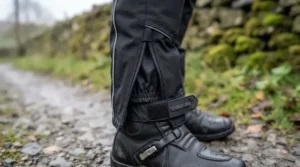
Where the previous five entries are liners needing a shell, the Gerbing EX Pro 12V Heated Pants are one of only two genuinely standalone waterproof heated trousers in this guide. Built around a genuine Cordura 500 denier outer shell with an AQUATEX breathable waterproof G-Liner membrane and a durable water repellent finish, the removable insulated liner inside carries four Microwire heating zones across the legs and hips, while Knox CE-approved armour sits in height-adjustable pockets at the knees. Here’s what to weigh: you’re not just paying for heat here, you’re paying for a complete piece of protective, waterproof riding kit that happens to be heated, which explains the considerably higher price versus a simple liner. It suits serious winter commuters and touring riders who want to consolidate their kit rather than layering a liner under separate waterproof trousers, and anyone who values genuine impact protection alongside warmth. Reviewers who’ve tested the EX Pro range describe a relaxed, flexible fit that doesn’t feel restrictive despite the armour, reliable protection against typical road hazards, and comfortable performance across a wide temperature range — with one aggregated review summary citing effective comfort roughly between 18 and 50 degrees Fahrenheit (around minus 8 to 10 degrees Celsius), a genuinely useful span for a UK winter.
Pros:
- ✅ Genuine waterproof outer shell, not just a liner
- ✅ Knox CE-approved knee armour included
- ✅ AQUATEX membrane with DWR finish for real weatherproofing
Cons:
- ❌ Significantly pricier than liner-only alternatives
- ❌ Battery harness and controller sold separately
Pricing typically falls around £300-£350 for imported units. For riders who want one waterproof, armoured, heated garment rather than a two-piece system, this is the most complete solution on our list.
7. Heated 4U 12V Heated Outer Pants — widest sizing, lifetime warranty
The second genuinely standalone option here, the Heated 4U 12V Heated Outer Pants, takes a more affordable and size-inclusive approach to the same “waterproof and heated in one garment” idea. Marketed explicitly as 12V motorcycle rain gear with heating built in, these outer trousers are designed to go over your existing riding kit rather than under it, with full-leg heating coverage, a hip pocket and cargo pocket layout, and knee armour rated to EN 1621-1. What most buyers overlook about this category is that “over trousers” heated rain gear solves a slightly different problem than liner-based systems — rather than replacing your existing waterproofs, it adds a heated, waterproof shell on top for the specific days when rain and cold arrive together, which for many UK riders is most winter days. It suits riders in larger sizes poorly served by some of the more fashion-forward European liner brands, since this range extends generously through plus sizing, and anyone who wants a single “grab it when it’s grim” garment rather than a permanently worn system. The manufacturer backs the garment with a lifetime warranty against manufacturing defects, an unusually strong guarantee in a category where wiring failures are the most common long-term issue, and one that signals genuine confidence in build quality.
Pros:
- ✅ Genuine waterproof rain-gear outer with heating
- ✅ Generous plus-size range
- ✅ Lifetime manufacturer’s warranty
Cons:
- ❌ Bulkier to store than a slim liner
- ❌ Less widely reviewed than established brands
Expect a price around £260-£300. For riders who want a dedicated “worst weather” garment rather than an everyday liner, this fills a genuinely useful gap.
Practical Usage Guide: Fitting, Wiring and Your First Season
Getting a heated trouser system right in its first season comes down to three things: correct fitting, safe wiring, and disciplined battery management. Fit your liner snugly against the skin or a thin base layer — heated garments transfer warmth most efficiently with direct, even contact, and a loose liner bunching under your outer trousers will create cold spots exactly where the fabric has pulled away from your leg. When wiring into your bike’s electrical system, always route the harness away from moving parts, hot exhaust components, and pinch points around the steering head, securing it with cable ties rather than letting it hang loose; a fuse-protected battery harness is not optional; connecting heated gear directly to a battery without one risks a short circuit doing real damage to your bike’s electrics. In the first few rides, start on the lowest heat setting and increase gradually rather than blasting full power immediately — this lets you judge genuine comfort rather than overheating and then having to fumble for the controller mid-ride. A common early mistake is leaving heated gear permanently wired live even with the bike off; disconnect or switch off fully when parked to avoid slowly draining your battery, particularly relevant on shorter commuter bikes with smaller battery capacity. Finally, budget realistically for the accessories: most liners and heated trousers require a separate battery harness and temperature controller, so factor that into your first-season costs rather than being caught out at checkout.
Real-World Scenarios: Which Heated Trousers Suit Your Riding
Picture three different riders. First, a daily commuter on a mid-size naked bike doing eight miles each way through a typical British winter — for them, a straightforward liner like the Gerbing 12V Heated Pant Liner or Keis T103RP, worn under their existing waterproof trousers, solves the problem without overcomplicating their kit or budget. Second, a longer-distance tourer covering serious motorway miles in genuinely miserable conditions, who’s tried a basic liner before and found it wasn’t warm enough on exposed motorway stretches — for this rider, the higher wattage of the Warm & Safe Gen-4 WindBlock Liner addresses a real, previously-felt problem rather than adding unnecessary extras. Third, a rider who’s never quite trusted layering two separate garments and would rather have one complete, waterproof, armoured, heated trouser they can simply put on and go — here, either the Gerbing EX Pro 12V Heated Pants or the Heated 4U 12V Heated Outer Pants removes that layering decision entirely, at a correspondingly higher price. None of these riders are making a mistake; they’re solving genuinely different versions of the same cold-weather problem, and the right answer depends on your usual ride length, how cold you personally run, and whether you already own decent waterproof trousers to layer under a liner.
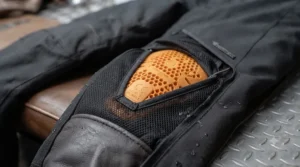
Problem → Solution: Common Heated Trouser Issues
Even well-reviewed heated trousers throw up predictable problems, most with straightforward fixes. If you’re getting inconsistent warmth with obvious cold patches, the liner has likely shifted or bunched under your outer trousers during the ride — stop and readjust rather than assuming the garment has failed, since poor skin contact is the most common cause of uneven heat. If the trousers feel warm when stationary but cold once moving, check your outer waterproof layer’s wind resistance; a heated liner can only do so much if cold air is being driven straight through a worn-out or non-windproof outer shell. If your battery seems to drain unusually fast on short rides, confirm the heated trousers are wired through a proper fused harness with an on/off switch rather than being permanently live, and check you’re not accidentally leaving them powered when the bike is parked. If a heating zone stops working entirely, most modern heated garments use zoned wiring, so a single dead zone often points to a loose connector rather than a failed heating panel — check every plug along the chain before assuming the worst. Finally, if you’re experiencing genuine dampness rather than just cold, remember that liner-based systems rely entirely on your separate waterproof trousers to keep water out; a heated liner getting wet isn’t a fault, it’s a sign your outer waterproofing needs attention or reproofing.
✨ Ready to Stop Dreading Winter Commutes?
🔍 Compare current prices and availability on any of the heated trousers above before your next cold snap — stock, sizing, and pricing shift regularly, so check before you commit.
How to Choose Waterproof Heated Motorcycle Trousers
- Decide liner or full outer trouser first. A liner paired with your existing waterproofs is cheaper and more flexible; a full outer garment like the Gerbing EX Pro consolidates everything into one purchase at a higher price.
- Match wattage to how cold you actually run. Most riders are well served by 40-50W liners; only genuinely cold-sensitive riders or extreme conditions need the 90W-plus tier.
- Check the power source compatibility. Confirm whether you’ll wire directly to your bike’s 12V system or need a portable battery pack, and budget for a harness and controller if not included.
- Consider your existing brand ecosystem. If you already own heated gloves or a jacket, matching brands often means shared connectors and one simpler wiring run to the bike.
- Look at heating zone coverage. Thigh-only heating suits milder needs; hip, knee and seat coverage matters more on longer, colder rides where circulation issues start further from the core.
- Factor in armour if buying a full outer trouser. Only genuine outer garments like the EX Pro or Heated 4U carry CE-rated impact protection; liners rely entirely on your outer trousers for that.
- Read aggregated review themes around durability. Wiring failure, not heating panel failure, is the most commonly reported long-term issue across this entire product category.
Common Mistakes When Buying Heated Motorcycle Trousers
The most frequent mistake is assuming “heated trousers” means a complete, standalone waterproof garment, then being disappointed to discover a slim liner arrives with no waterproofing of its own. A second common error is under-budgeting: many liners are sold without the battery harness or temperature controller included, and skipping this detail at checkout leads to an unpleasant surprise when the garment arrives unable to actually be powered. Buyers also frequently overlook sizing guidance, ordering their normal trouser size rather than checking the brand’s specific chart — heated liners in particular are designed to fit snugly, and going up or down a size from your usual can significantly affect both comfort and heating efficiency. Another overlooked detail is failing to check wattage against realistic UK winter temperatures; buying the highest-wattage option available “to be safe” often means overheating on all but the coldest days, with the controller permanently on its lowest setting anyway. Finally, plenty of first-time buyers skip verifying wiring compatibility with existing heated gear, discovering only after purchase that their new trousers use a different connector standard to their heated jacket or gloves, requiring an additional adaptor cable.
Heated Motorcycle Trousers vs Ordinary Thermal Liners
The choice between a heated liner and an unpowered thermal liner comes down to a genuine trade-off between active warmth and simplicity. Thermal liners work by trapping body heat with insulating fabric, which means their warmth is entirely dependent on how much heat your body is already generating — on a long, cold motorway ride where you’re sitting relatively still, that heat generation drops, and a thermal liner’s performance drops with it. Heated liners, by contrast, generate their own warmth independent of your activity level, delivering consistent heat whether you’ve been riding for five minutes or two hours, which is precisely why serious winter commuters and tourers increasingly choose electric over passive insulation. The practical trade-off is complexity and cost: thermal liners need no wiring, no battery consideration, and no controller, while heated liners require a proper electrical setup and an upfront investment that can be three to five times higher.
| Factor | Heated Liner | Thermal Liner |
|---|---|---|
| Warmth source | Active, electrically generated | Passive, body heat retention |
| Consistency on long rides | High — stays constant | Drops as body heat is lost |
| Setup complexity | Wiring, harness, controller needed | None — just wear it |
| Upfront cost | Higher | Lower |
| Best For | Long, cold, motorway-heavy riding | Short trips, milder conditions |
Reading across this comparison, the clearest takeaway is that thermal liners remain a perfectly sensible choice for milder conditions or short urban commutes, while heated liners earn their extra cost and complexity specifically on longer, colder, more exposed rides where passive insulation alone starts to fall short. For many UK riders, the honest answer is owning both and choosing based on the forecast rather than treating one as a universal replacement for the other.
Heated Motorcycle Trouser Liner: Fitting It Into Your Riding Kit
Once you’ve decided a heated motorcycle trouser liner is the right approach rather than a full outer garment, fitting it into your existing kit is mostly about layering order and wiring discipline. The liner goes directly against skin or a thin, moisture-wicking base layer — never over jeans or thick trousers, since that reduces the direct contact the heating panels need to transfer warmth efficiently. Your existing waterproof riding trousers then go over the top as normal, meaning the liner adds negligible bulk to your usual kit if sized correctly. Route the connecting cable down the inside of the leg to the ankle cuff, where most systems provide a clean exit point, rather than letting excess cable bunch at the knee where it can pinch during gear changes or become uncomfortable over a long ride. If you already run a heated jacket, check whether your chosen liner uses a compatible connector before buying, since matching-brand systems often let you run a single power lead to the bike rather than two separate connections competing for the same power source.
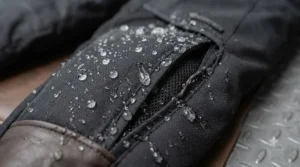
Heated Motorcycle Trousers for Winter Commuting
For the specific case of winter commuting — repeated, relatively short, cold-start rides rather than long tours — heated trousers solve a problem that’s easy to underestimate until you’ve actually experienced it. A cold engine on a first-thing-in-the-morning commute means the bike itself takes several minutes to warm up, and without heated gear, your legs are absorbing that cold the entire time. This is precisely the scenario where hypothermia risk, while rarely dramatic on a short commute, still meaningfully affects concentration and reaction time; cold exposure symptoms can develop gradually rather than suddenly, which is exactly why noticing you’re cold matters before it becomes a genuine safety issue, as covered in NHS inform’s guidance on hypothermia. Practically, this means winter commuters benefit from having heat available from the moment they set off rather than waiting for body heat to build naturally, which is exactly what a wired-in heated liner delivers and a passive thermal liner cannot. A mid-wattage liner in the 40-50W range, worn under existing waterproof trousers, tends to suit most UK commuting patterns well, reserving higher-wattage options for riders on longer motorway-heavy commutes or those who are simply more cold-sensitive than average.
Waterproof Membranes Explained: What Actually Keeps You Dry
Understanding waterproof membranes helps explain why a heated liner alone will never keep you dry, and why the outer shell matters just as much as the heating element. A waterproof breathable membrane works by using pores small enough to block liquid water droplets but large enough to let water vapour — the moisture your body produces as sweat — pass through and escape, which is what stops you feeling clammy inside a fully sealed garment. According to the technical definition of breathability in textiles, this balance between blocking liquid water and allowing vapour through is what separates a genuinely “waterproof breathable” fabric from one that’s simply waterproof and stuffy, a distinction covered in more technical depth on Wikipedia’s breathable fabric entry. In practice, this is exactly the technology behind the AQUATEX membrane in the Gerbing EX Pro 12V Heated Pants, and it’s also why a Durable Water Repellent finish needs periodic reapplication — the DWR coating causes surface water to bead and roll off, protecting the membrane underneath from becoming saturated, but that coating wears down with washing and general use over a season or two. For liner-based systems, this membrane technology sits entirely in your separate waterproof over-trousers rather than the heated garment itself, which is worth remembering when you’re troubleshooting dampness rather than cold.
Building an All-Weather Riding Gear System
Treating heated trousers as one component of a wider all-weather riding gear system, rather than a standalone fix, tends to produce far better results over a full winter. Start with a genuinely waterproof outer trouser — whether that’s a dedicated waterproof shell or one of the two integrated options covered earlier — since no amount of heating compensates for water actually getting through to your base layers. Add your chosen heated liner as the active warmth layer, sized and fitted correctly against skin. Consider pairing it with heated grips or gloves powered through the same controller system where possible, since cold hands remain one of the most immediate safety concerns on a winter ride, affecting lever and throttle control directly. Round out the system with a decent base layer under the heated liner for moisture management, and don’t neglect your feet — heated insoles or socks, often compatible with the same connector system as your trousers, close the final gap in an otherwise well-heated setup. Riders who build this system piece by piece across a season, rather than buying everything at once, often find it easier to identify exactly which layer is actually delivering the comfort improvement, and where their money is genuinely well spent.
Long-Term Cost and Maintenance
Beyond the initial purchase, heated trousers carry modest but real ongoing costs worth planning for. Wiring and connectors are the most common long-term failure point across this entire product category, so budget for the occasional replacement lead or connector rather than assuming the garment will need nothing further once bought — a theme echoed consistently across independently tested heated motorcycle gear reviews, where build quality and wiring reliability separate the genuinely good garments from the disappointing ones far more than headline wattage does. If you’ve gone the liner route, your separate waterproof outer trousers will need periodic DWR reproofing as the factory coating wears down with washing and UK weather exposure, typically every season or two depending on how often you ride. Battery harnesses with fuse protection are a small, one-off cost that’s worth treating as mandatory rather than optional, since a failure here risks damage to your bike’s wider electrical system, not just the heated garment. Over a three-to-five-year ownership window, the total cost of running heated trousers — an occasional connector, reproofing spray for your outers, maybe a replacement controller — tends to be modest against the initial purchase price, particularly when weighed against how much a genuinely comfortable winter commute is worth to someone who’d otherwise be tempted to leave the bike at home on cold mornings.
Heated Motorcycle Trouser Deals: Price Ranges and Value Analysis
Chasing heated motorcycle trouser deals is sensible, but real value only becomes clear once you look past the headline price to what’s actually included and what you’ll need to buy separately. A liner sold without a battery harness or controller can end up costing considerably more than its sticker price once those essentials are added, narrowing the apparent gap between budget and mid-range options.
| Trouser | Price Range | Harness/Controller Included | Value Verdict |
|---|---|---|---|
| California Heat 12V Heated Pant Liner | £110-£140 | No | Best for minimalist, packable use |
| Gerbing 12V Heated Pant Liner | £140-£170 | No | Strong budget entry with proven tech |
| Keis T103RP Heated Trousers | £150-£190 | No | Best all-round UK liner value |
| Venture Heat Bluetooth 39W Pant Liner | £150-£180 | Yes (harness) | Good value for app-control feature |
| Warm & Safe Gen-4 WindBlock Liner | £190-£230 | No | Justified by highest wattage output |
| Heated 4U 12V Heated Outer Pants | £260-£300 | No | Strong value for full waterproof outer |
| Gerbing EX Pro 12V Heated Pants | £300-£350 | No | Premium but genuinely complete kit |
Reading across this table, the clearest pattern is that most liners exclude the harness and controller, so add roughly £30-£60 to your real budget regardless of which liner you choose, unless the listing explicitly states otherwise. Meanwhile, the two full outer trousers — despite sitting at the top of the price range — arguably offer the strongest genuine value once you account for the waterproof shell and, in the Gerbing’s case, CE armour that a liner-plus-separate-trousers combination would otherwise require buying independently. As always, remember that displayed prices fluctuate regularly, so check current price before finalising any purchase rather than relying on the ranges quoted here.
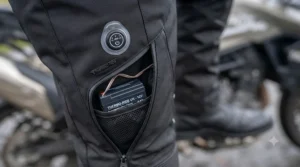
Frequently Asked Questions
❓ Are heated motorcycle trousers actually waterproof?
❓ How do heated motorcycle trousers get power?
❓ Can I wear heated trouser liners under normal jeans?
❓ Do heated trousers drain a motorcycle battery?
❓ What wattage do I need for UK winter commuting?
Conclusion
There’s no single “best” waterproof heated motorcycle trouser here, and that’s really the point of comparing all seven honestly rather than crowning a winner. If you already own decent waterproof riding trousers and just want reliable, well-proven warmth underneath them, the Keis T103RP or Gerbing 12V Heated Pant Liner are hard to fault. If you run properly cold or ride long, exposed motorway stretches, the extra wattage of the Warm & Safe Gen-4 WindBlock Liner solves a genuine problem rather than adding luxury. If you’d rather buy one complete, protective, waterproof, heated garment and stop thinking about layering altogether, the Gerbing EX Pro 12V Heated Pants or the Heated 4U 12V Heated Outer Pants do exactly that, at a correspondingly higher price. Whichever route you take, the fundamentals stay consistent: fit the liner snugly, wire it through a proper fused harness, and don’t neglect the waterproofing of whatever sits over the top. Get that right, and winter stops being the season you dread riding through.
Recommended for You
- Heated Motorcycle Trousers: 7 Best UK Picks for Winter 2026
- Heated Motorcycle Gloves vs Heated Grips: The Ultimate 2026 UK
- Heated Motorcycle Gloves for Raynaud’s: 7 Best Picks 2026
Disclaimer: This article contains affiliate links. As an Amazon Associate, I earn from qualifying purchases. If you purchase products through these links, we may earn a small commission at no additional cost to you.
✨ Found this helpful? Share it with your friends! 💬🤗
