
In This Article
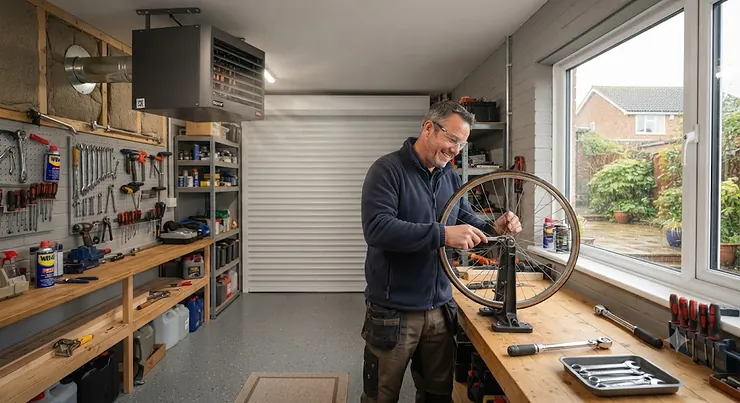
There’s a particular kind of misery reserved for anyone who’s tried to change an oil filter in an unheated garage in January. Fingers stop working properly around minute four. By minute ten you’re seriously questioning your life choices. A decent gas garage heater solves this in about ninety seconds flat, and unlike its electric cousins, it doesn’t care whether your garage has a spare socket anywhere near the workbench.
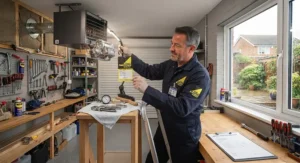
A gas garage heater is a portable, propane or LPG-fuelled space heater designed to raise the temperature in a garage, workshop or similar semi-enclosed space quickly, without relying on mains electricity for its heat source. Most run on bottled propane, ignite via piezo push-button, and include a built-in safety mechanism — typically a solenoid thermocouple valve — that shuts the gas off automatically if the flame goes out.
This guide is built from genuine product research rather than marketing copy: real specifications, aggregated review sentiment and honest comparison across seven propane garage heaters currently sold on amazon.co.uk, from budget 4.5kW starter units to serious 30kW workshop heaters. We’ll also cover the practical detail that matters just as much as the heater itself — ventilation requirements, how safety cut-off valves actually work, and the genuine difference between propane and butane for UK garage use.
Quick Comparison: Gas Garage Heaters at a Glance
| Product | Output | Ignition & Cut-Off | Price Range | Best For |
|---|---|---|---|---|
| Draper 07867 Free-Standing Heater | 4.5kW / 15,354 BTU | Piezo, thermocouple | Under £60 | Small garages, budget start |
| Sealey Space Warmer LP14 | 4.5kW / 15,354 BTU | Piezo, thermocouple | Under £60 | Best-reviewed budget pick |
| Draper 47063 Jet Force | 10kW / 34,000 BTU | Piezo, thermocouple | £100-£120 range | Mid-size single garages |
| Bimson Power 15kW Heater | 15kW / 51,000 BTU | Spark ignition, thermostat | £110-£130 range | Adjustable heat control |
| Draper 47100 Jet Force | 15kW / 50,000 BTU | Piezo, solenoid thermocouple | £125-£150 range | Trusted mid-tier workshop use |
| Sealey LP100 | 18-30kW / 61,000-102,000 BTU | Piezo, thermocouple | £150-£180 range | Variable-output large garages |
| Draper 47101 Jet Force | 30kW / 102,000 BTU | Piezo, thermal overload + thermocouple | £130-£160 range | Large or draughty workshops |
Looking at the range, output roughly triples between the entry-level 4.5kW units and the 30kW workshop heaters at the top of this list — but so does gas consumption, so bigger isn’t automatically better for your specific garage. A single-car garage with a decent door seal rarely needs more than 10-15kW, while a large detached workshop with poor insulation genuinely benefits from the 30kW options further down.
💬 Just one click — help others make better buying decisions too! 😊
Top 7 Gas Garage Heaters: Expert Analysis
1. Draper 07867 Free-Standing Heater — best complete starter kit
The Draper 07867 Free-Standing Heater is the simplest entry point on this list: a 4.5kW/15,354 BTU unit that ships complete with a 1.5-metre gas hose and regulator, so there’s genuinely nothing extra to buy before your first use. At just 2.53kg, it’s light enough to move between a garage and a workshop without a second thought.
On paper this is a no-frills unit built around a piezo ignition system and a thermocouple safety cut-off, meaning the gas supply shuts automatically if the flame is extinguished by a draught or knock. Based on the spec comparison, 4.5kW is genuinely enough to take the edge off a small single garage but won’t compete with the 15kW-plus units further down this list in a larger or poorly insulated space.
What’s worth flagging honestly is that this listing currently has only a small number of verified ratings, so we can’t lean on a large aggregated review base the way we can for Sealey’s equivalent model. What we can verify is the complete included kit and compact dimensions, which make it a sensible, low-commitment first purchase for anyone new to gas heating.
Pros:
- ✅ Complete kit includes hose and regulator out of the box
- ✅ Genuinely lightweight and portable at 2.53kg
- ✅ Built-in thermocouple safety cut-off as standard
Cons:
- ❌ Very limited independently verified review data so far
- ❌ 4.5kW output suits small spaces only
For a first gas garage heater on a tight budget, Draper 07867 Free-Standing Heater removes the guesswork of sourcing separate accessories.
2. Sealey Space Warmer LP14 — best-reviewed budget pick
Matching the Draper unit on output at 4.5kW/15,354 BTU, the Sealey Space Warmer LP14 distinguishes itself with a genuinely substantial review base — over 430 ratings averaging 4.5 out of 5, which is a meaningfully larger and more trustworthy sample than most budget heaters on the market. It’s typically found around £52, often discounted from a higher RRP.
The included stand is a small but practical upgrade over free-standing designs: it keeps the burner elevated and away from stray debris on a garage floor, which reviewers consistently note makes a genuine difference in cluttered workshop environments. Here’s what to weigh: like the Draper equivalent, the thermocouple safety cut-off is present and functional, but the 4.5kW ceiling means this remains a small-space heater rather than an all-rounder.
Based on the spec comparison, this is the pick for anyone who wants budget-tier pricing without gambling on an unproven listing — the review volume alone makes it one of the more reassuring purchases in this entire guide.
Pros:
- ✅ Large, genuinely trustworthy review base (430+ ratings)
- ✅ Included stand keeps the burner safely elevated
- ✅ Reliable thermocouple cut-off at a budget price
Cons:
- ❌ Same modest 4.5kW output ceiling as entry-level rivals
- ❌ Not suited to large or particularly draughty garages
Sealey Space Warmer LP14 is arguably the safest budget bet on this list purely on the strength of its review data.
3. Draper 47063 Jet Force — best mid-size single garage heater
Stepping up to 10kW/34,000 BTU, the Draper 47063 Jet Force sits comfortably between the entry-level 4.5kW units and the more serious 15kW-plus heaters, typically priced in the £100-£120 range depending on the retailer. Reviewers rate it around 4.1-4.3 out of 5 across roughly 20 ratings.
What most buyers overlook about this middle tier is that doubling or tripling your output doesn’t just mean “warmer faster” — it also meaningfully increases how large a space you can bring up to a comfortable working temperature within a realistic timeframe. Based on the spec comparison, 10kW is a sensible ceiling for a typical single or small double garage, especially one without cavity insulation.
Reviewers consistently note dependable ignition and steady heat output, consistent with Draper’s Jet Force platform reputation more broadly. The safety cut-off follows the same proven thermocouple design used across Draper’s range, giving buyers a consistent safety story whether they choose this or a larger sibling model.
Pros:
- ✅ Meaningful step up in output over 4.5kW starter units
- ✅ Proven Draper Jet Force safety cut-off design
- ✅ Genuinely portable despite the higher output
Cons:
- ❌ Noticeably pricier than the 4.5kW budget bracket
- ❌ Rating sits slightly below Bimson’s similarly priced unit
For a mid-size single garage that needs more than a token heat source, Draper 47063 Jet Force hits a sensible middle ground.
4. Bimson Power 15kW Propane Space Heater — best adjustable thermostat control
The Bimson Power 15kW Propane Space Heater delivers 51,000 BTU and carries the highest star rating of any heater in this guide at 4.7 out of 5, albeit from a smaller sample of 24 ratings. Priced around £119.99, it includes an adjustable thermostat and spark ignition, backed by a longer-than-average three-year warranty.
Here’s what to weigh: an adjustable thermostat is a genuine practical upgrade over the simple on/off control found on most heaters at this price point, letting you dial in a specific target temperature rather than running full-blast or not at all. Reviewers consistently note this as a standout feature, alongside praise for the extended warranty period relative to established rivals.
What the spec sheet won’t tell you, but general market positioning suggests, is that Bimson is a newer entrant compared with heritage brands like Draper and Sealey — the review pool is smaller, so treat the 4.7★ average as promising rather than statistically bulletproof just yet.
Pros:
- ✅ Highest average rating in this entire guide (4.7★)
- ✅ Genuine adjustable thermostat for temperature control
- ✅ Above-average three-year warranty coverage
Cons:
- ❌ Smaller review sample than heritage Draper/Sealey rivals
- ❌ Spark ignition occasionally needs a few attempts in cold conditions
For buyers who value temperature control over brand pedigree, Bimson Power 15kW Propane Space Heater is the standout pick at this price.
5. Draper 47100 Jet Force — best trusted mid-tier workshop heater
Matching Bimson’s output at 15kW/50,000 BTU, the Draper 47100 Jet Force leans on heritage brand reliability rather than novelty features, typically priced between £125 and £150. It carries a 4.0 out of 5 rating across roughly 30 reviews — solid, if not spectacular, for this price bracket.
The genuinely reassuring detail here is the ignition system: a piezo push-button paired with a solenoid thermocouple valve, which is the same safety cut-off architecture used across Draper’s entire Jet Force line, right up to the 30kW flagship reviewed later in this guide. Based on the spec comparison, this gives buyers a consistent, well-documented safety mechanism regardless of which output tier they choose.
Reviewers consistently note reliable performance for workshop use, though a handful mention the unit is bulkier and heavier than the entry-level 4.5kW models — a reasonable trade-off given the more than threefold increase in heat output.
Pros:
- ✅ Proven solenoid thermocouple safety cut-off across the range
- ✅ Heritage UK brand with wide parts and accessory support
- ✅ Matches Bimson’s output with established reliability
Cons:
- ❌ Lowest rating of the mid-tier options reviewed here
- ❌ Heavier and bulkier than the 4.5kW starter units
Draper 47100 Jet Force suits buyers who prioritise a well-documented, proven safety system over the newest features on the market.
6. Sealey LP100 — best variable-output large garage heater
The Sealey LP100 stands apart with a genuinely variable output range of 61,000 to 102,000 BTU (18-30kW), letting you dial output up or down depending on conditions rather than committing to a single fixed heat level. Priced around £167, it’s rated 4.3 out of 5 across 36 reviews — a solid, credible sample for a premium unit.
Based on the spec comparison, that variable range is the genuine differentiator here: a fixed 30kW heater can be genuinely excessive for a moderately sized garage on a mild evening, whereas the LP100 lets you scale back to something closer to 18kW without buying a separate, smaller unit. Reviewers consistently note this flexibility as a practical, real-world benefit rather than a marketing gimmick.
What most buyers overlook about heaters in this output bracket is that ventilation requirements scale directly with heat output — a 30kW heater run in an enclosed, poorly ventilated garage genuinely needs meaningfully more fresh air supply than a 10kW unit, a topic covered in detail later in this guide.
Pros:
- ✅ Genuinely variable 18-30kW output range
- ✅ Strong 36-review base for a premium-tier heater
- ✅ Well-established Sealey trade reputation
Cons:
- ❌ Top of the price bracket for this comparison
- ❌ High output demands genuinely serious ventilation to run safely
For larger or variable-use garages, Sealey LP100 offers flexibility that fixed-output rivals simply can’t match.
7. Draper 47101 Jet Force — best for large or draughty workshops
Topping this list on raw output, the Draper 47101 Jet Force delivers a full 102,000 BTU (30kW) with a rapid 750m³/h airflow rate, typically priced between £130 and £157 depending on retailer and stock. It carries a 4.1 out of 5 rating, though from a smaller sample of around seven reviews to date.
The specification sheet reveals two distinct safety layers rather than one: a solenoid thermocouple valve that cuts gas supply if the flame fails, plus a separate thermal overload protection device safeguarding the motor itself. Based on the spec comparison, this dual-protection approach is a genuine step up from the single thermocouple cut-off found on the smaller Draper models earlier in this list.
What’s worth weighing honestly is gas consumption: at up to 2.20kg/h, this is by far the thirstiest heater reviewed here, meaning genuinely higher running costs per hour than any other product on this list. For a large, poorly insulated workshop or a genuinely cold detached garage, though, reviewers and the manufacturer’s own heating-area guidance (up to roughly 13,000 cubic feet) suggest it’s the only realistic option among the seven featured here.
Pros:
- ✅ Highest output in this guide at a full 30kW
- ✅ Dual safety protection: thermocouple plus thermal overload
- ✅ Rapid 750m³/h airflow heats larger spaces faster
Cons:
- ❌ Small review sample size relative to older Draper models
- ❌ Highest gas consumption means the priciest hourly running cost
For genuinely large or draughty workshops, Draper 47101 Jet Force is the most capable heater in this entire comparison.
Top 7 Gas Garage Heaters Compared: Specs, Price & Ratings
| Product | Output | Rating | Gas Consumption | Price Range | Best For |
|---|---|---|---|---|---|
| Draper 07867 Free-Standing Heater | 4.5kW | Limited data | Low | Under £60 | Complete starter kit |
| Sealey Space Warmer LP14 | 4.5kW | 4.5★ (430+) | Low | Under £60 | Best-reviewed budget pick |
| Draper 47063 Jet Force | 10kW | 4.1-4.3★ (~20) | Moderate | £100-£120 range | Mid-size single garages |
| Bimson Power 15kW Heater | 15kW | 4.7★ (24) | Moderate | £110-£130 range | Adjustable thermostat |
| Draper 47100 Jet Force | 15kW | 4.0★ (30) | Moderate | £125-£150 range | Trusted mid-tier workshop |
| Sealey LP100 | 18-30kW | 4.3★ (36) | High (variable) | £150-£180 range | Variable-output large garages |
| Draper 47101 Jet Force | 30kW | 4.1★ (7) | 2.20kg/h (highest) | £130-£160 range | Large or draughty workshops |
The clearest pattern across this table is that rating and review volume don’t always track output or price — Bimson Power 15kW Propane Space Heater posts the highest average score despite sitting mid-table on price, while Sealey Space Warmer LP14 proves that a budget heater with a large, credible review base can be a genuinely safer bet than a pricier unit with limited feedback. For anyone prioritising raw heating capacity, Draper 47101 Jet Force stands alone at the top, but that capability comes with meaningfully higher gas consumption to budget for.
How to Set Up and Run a Gas Garage Heater Safely: A Practical Usage Guide
Before first use, check the hose and regulator connections are fully seated and leak-free — a simple soapy-water test around each joint will show bubbling if there’s a leak, and this five-minute check should become a habit before every single use, not just the first. Position the heater on a flat, stable, non-combustible surface at least a metre from any stored fuel, cardboard, fabric or vehicle bodywork.
Never run a gas garage heater in a fully sealed space. Even units with a working safety cut-off valve still consume oxygen and produce combustion by-products while operating normally, so a permanently open vent — not just a door left ajar — is essential rather than optional. A common first-use mistake is closing the garage door tightly to “keep the heat in,” which is precisely the wrong instinct with unflued gas heating.
Once lit, allow a few minutes for the flame to stabilise before adjusting output, and never leave a running heater unattended, especially overnight. For maintenance, inspect the hose annually for cracking or perishing, and have the regulator and safety cut-off mechanism checked periodically — these components can degrade with age even if the heater still appears to function normally.
Real-World Scenarios: Matching a Propane Garage Heater to Your Cook Space
Picture three different garages. First, a small single garage used occasionally for weekend car maintenance, well-sealed with a proper up-and-over door: Draper 07867 Free-Standing Heater or Sealey Space Warmer LP14 covers this comfortably, bringing the space up to a workable temperature within minutes without excessive gas consumption for infrequent use.
Second, a converted single garage used as a regular home workshop — hours at a time, several evenings a week, with reasonable but imperfect insulation: Draper 47063 Jet Force or Bimson Power 15kW Propane Space Heater strikes the right balance here, with enough output to maintain comfort over longer sessions without the running costs of the largest units.
Third, a large detached double garage or genuine workshop building, poorly insulated, used for serious DIY or trade work through winter: this is exactly where Sealey LP100 or Draper 47101 Jet Force earns its keep. The higher output and, in Sealey’s case, adjustable range mean the space actually reaches a comfortable working temperature rather than merely taking the chill off.
Problem → Solution: Fixing Common Gas Garage Heater Issues
Problem: the heater won’t stay lit, cutting out repeatedly. Solution: this is often the thermocouple safety cut-off doing its job correctly — check the flame is making proper contact with the sensor tip and that there’s no draught blowing it out prematurely.
Problem: weak or yellow flame instead of a strong blue one. Solution: yellow flames typically indicate incomplete combustion, often from a partially blocked burner or insufficient air supply — clean the burner and check ventilation before assuming the unit is faulty.
Problem: heater struggles to ignite in cold weather. Solution: this is frequently a fuel issue rather than a heater fault — see the propane vs butane section below, since butane cylinders can genuinely stop vaporising in UK winter temperatures.
Problem: condensation or dampness building up in the garage after use. Solution: unflued gas combustion naturally produces water vapour as a by-product; increase ventilation during and after use rather than sealing the space up once heating stops.
How to Choose a Gas Garage Heater
- Measure your garage’s approximate volume first. Output needs scale with space, not just floor area — a high-ceilinged garage needs more than a compact one of the same footprint.
- Check for a genuine safety cut-off mechanism. A thermocouple or solenoid valve that shuts gas flow if the flame fails is a non-negotiable feature, not a bonus extra.
- Match fuel type to your climate and storage. Propane vastly outperforms butane in cold UK conditions, covered fully in the next section.
- Weigh portability against output. Larger 30kW units are genuinely heavier and bulkier than 4.5kW starter models.
- Review real ventilation requirements for your chosen output. Higher-output heaters need proportionally more fresh air supply to run safely.
- Look at genuine review volume, not just the star rating. A 4.7★ score from 24 reviews carries less statistical weight than 4.3★ from 36.
- Factor in ongoing gas consumption, not just purchase price. A cheaper heater with high consumption can cost more over a winter than a pricier, more efficient one.
Propane vs Butane: Which Gas Should You Use in a Garage Heater?
This is one of the most practically important decisions for anyone buying a gas garage heater in the UK, and it comes down to a single physical property: boiling point. Propane’s boiling point sits at around -42°C, meaning it continues to vaporise and function as a usable fuel even during a genuinely harsh British winter. Butane, by contrast, has a boiling point close to freezing — around -2°C — and can simply stop vaporising effectively once outdoor temperatures drop near or below that threshold.
Reviewers consistently note frustration with butane-fuelled equipment failing to ignite reliably on cold mornings, which lines up exactly with the physical chemistry involved. What most buyers overlook is that this isn’t a minor performance quirk — a butane cylinder genuinely can leave you with a heater that simply won’t run on the coldest days of the year, precisely when you need it most.
For all seven heaters reviewed in this guide, propane is the recommended and typically specified fuel, and it’s the sensible default for anyone storing their cylinder outdoors or in an unheated space over winter. Butane remains a reasonable choice only for genuinely mild-weather or indoor-stored use, where its slightly lower cost per kilogram becomes a relevant factor.
Gas Garage Heater with Safety Cut Off: Why Safety Cut-Off Valves Matter
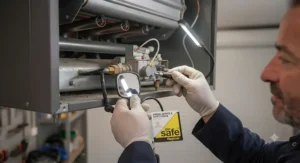
Every heater featured in this guide includes some form of safety cut-off valve, and understanding how these actually work is worth a few minutes of anyone’s time before first use. The most common design is a thermocouple: a small sensor sitting directly in the pilot or main flame that generates a tiny electrical current as long as it’s being heated. If the flame goes out — from a draught, running low on gas, or any other reason — the current stops, and a solenoid valve automatically closes to cut off gas flow within seconds.
This matters enormously in practice, because an unlit gas heater silently leaking propane into an enclosed garage is a genuinely serious hazard, distinct from and in addition to the carbon monoxide risk posed by incomplete combustion. Reviewers consistently note peace of mind as a real, tangible benefit of this feature rather than a box-ticking spec, particularly among buyers running heaters unattended for short periods.
Some premium models in this guide, notably Draper 47101 Jet Force, pair the thermocouple cut-off with a second, independent thermal overload protection device covering the motor separately. Based on the spec comparison, this layered approach is genuinely worth paying extra for in larger units that run for extended periods, where component wear is a more realistic long-term concern.
Ventilation Requirements for Gas Garage Heaters: A UK Compliance Guide
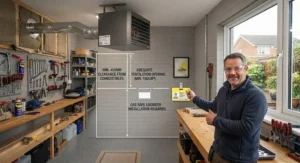
Ventilation is not optional for unflued gas heaters, and it’s worth being genuinely precise here rather than vague. HSE guidance on domestic gas appliances makes clear that cabinet and portable gas heaters need a good supply of fresh air to burn properly, and that the room must be adequately ventilated — sealing a garage up to “keep the warmth in” directly undermines both combustion efficiency and safety.
As a practical rule of thumb echoed across UK gas safety guidance, ventilation needs scale with heat output: a small 4.5kW heater in a modest single garage needs meaningfully less fresh air supply than a 30kW unit in the same space. Permanent, unblockable vents — not windows that might get shut, and not a door left slightly ajar — are the standard recommended approach, split between high and low level openings where practical.
What most buyers overlook is that ventilation requirements don’t disappear once the heater has a working safety cut-off valve installed. The cut-off protects against flame failure and gas leaks; it does nothing to address the oxygen consumption and combustion by-products produced during completely normal operation. Both protections are necessary, and neither substitutes for the other.
Propane Garage Heater vs Electric: Which Wins for Extended Use?
| Heat Type | Setup Cost | Running Cost | Heat-Up Speed | Ventilation Need | Best For |
|---|---|---|---|---|---|
| Propane garage heater | Low-moderate | Moderate | Very fast | Essential | Large or draughty spaces |
| Electric fan heater | Low | High (electricity) | Fast | None | Small, well-sealed spaces |
| Oil-filled radiator | Low-moderate | Moderate-high | Slow | None | Steady, low-level background heat |
| Infrared panel heater | Moderate | Moderate | Instant (surface) | None | Spot-heating a work area |
Gas genuinely wins on raw heat-up speed and output-per-pound for larger or poorly insulated spaces, which is precisely why propane heaters dominate serious workshop and trade use. Electric options remove the ventilation requirement entirely and are simpler for occasional, short bursts of use in a small, already-sealed space, but running costs climb quickly for anything beyond light or intermittent use given typical UK electricity pricing. For a genuinely cold, larger garage used regularly through winter, a propane garage heater with a proper safety cut-off remains the more practical and cost-effective choice.
Long-Term Cost & Gas Consumption
| Product | Approx. Gas Use | Approx. Cost/Hour* | Best Suited Session Length |
|---|---|---|---|
| Draper 07867 / Sealey LP14 (4.5kW) | Low | ~£0.60-£0.80 | Short, occasional sessions |
| Draper 47063 (10kW) | Moderate | ~£1.20-£1.50 | Medium regular sessions |
| Bimson / Draper 47100 (15kW) | Moderate-high | ~£1.70-£2.10 | Extended workshop sessions |
| Sealey LP100 / Draper 47101 (30kW) | High (up to 2.20kg/h) | ~£2.80-£3.50 | Large-space, cold-weather sessions |
*Approximate figures based on typical bottled propane pricing; actual cost varies with propane prices and outdoor temperature.
The pattern here is straightforward: hourly running cost rises roughly in line with output, so the “cheapest” heater to buy isn’t necessarily the cheapest to run once real usage patterns are factored in. A smaller 4.5kW heater used for three hours costs meaningfully less over a season than a 30kW unit used for the same duration — the trick is buying only as much output as your specific garage genuinely needs, which loops back to the sizing advice earlier in this guide.
Common Mistakes When Buying a Gas Garage Heater
The single most common mistake is buying based on maximum output “just in case,” when a smaller, cheaper-to-run heater would comfortably handle the actual space in question. This inflates both purchase price and ongoing gas consumption for no real practical benefit. A close second is overlooking ventilation requirements entirely, treating the safety cut-off valve as the only safety consideration that matters.
Buyers also frequently underestimate review volume the same way they might with any product — a shiny 4.7★ rating from a couple of dozen reviews is genuinely promising, but it’s not the same statistical confidence as a 4.3★ average built on several hundred reviews. Finally, many first-time buyers assume butane and propane are interchangeable, only to discover their heater struggles to ignite reliably once temperatures drop in a genuinely cold British winter.
Frequently Asked Questions
❓ What size gas garage heater do I need?
❓ Is a propane garage heater safe to use indoors?
❓ What's the difference between propane and butane for a garage heater?
❓ Does a gas garage heater need ventilation?
❓ How do I know if a gas garage heater has a safety cut-off valve?
Conclusion
Choosing the right gas garage heater really comes down to matching output honestly to your space, rather than defaulting to the biggest number on the box. For small, occasional use, Draper 07867 Free-Standing Heater and Sealey Space Warmer LP14 offer genuinely capable, low-risk starting points. For regular mid-size workshop use, Draper 47063 Jet Force and Bimson Power 15kW Propane Space Heater strike a sensible balance of output and running cost. And for large, draughty or genuinely demanding spaces, Sealey LP100 and Draper 47101 Jet Force deliver the capacity to actually make a difference through a proper UK winter.
Whichever output you land on, the safety fundamentals don’t change: confirm a genuine safety cut-off valve is fitted, use propane rather than butane for cold-weather reliability, and never compromise on proper ventilation. Get those three things right, and a gas garage heater turns a miserable winter workshop into a genuinely usable space again.
✨ Don’t Miss These Exclusive Deals!
🔥 Check today’s prices on your top pick and get your garage warmed up before the next cold snap!
Recommended for You
- Wall Mounted Electric Garage Heater: 7 Best Picks (2026)
- Electric Garage Heater for Small Workshop: 7 Best Picks 2026
- Electric Garage Heater: 7 Proven UK Picks for Every Budget in 2026
Disclaimer: This article contains affiliate links. As an Amazon Associate, I earn from qualifying purchases. If you purchase products through these links, we may earn a small commission at no additional cost to you.
✨ Found this helpful? Share it with your friends! 💬🤗
