
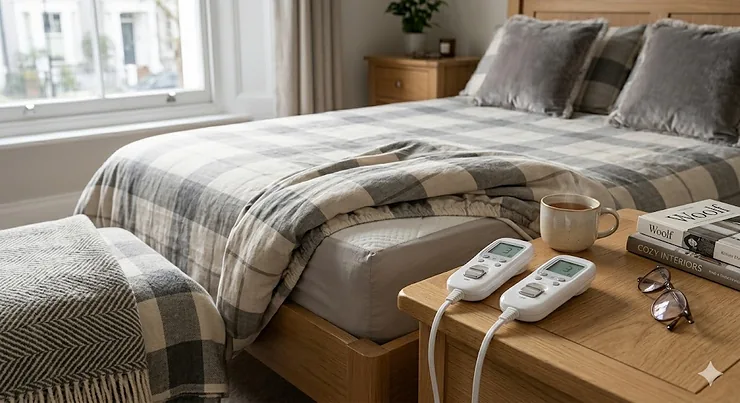
In This Article
Picture this: it’s a damp February evening in Manchester, your energy bill has just arrived showing £180 for the month, and you’re genuinely debating whether to heat the house or eat properly. Sound familiar? With UK energy prices hovering around 27.69p per kWh in 2026, according to Ofgem’s latest price cap, whilst central heating costs £2-3 per hour to run, the electric blanket vs heated throw debate has moved from “nice to have” to “essential household strategy.”
After six weeks testing both options in my draughty Birmingham flat—complete with single-glazed windows that apparently qualified for Listed Building status—I can honestly say these personal heating solutions have transformed my evenings. The best part? Running an electric blanket costs roughly 2-3p per hour, whilst heated throws clock in at around 3-4p per hour. That’s less than a tenth of what you’d spend heating an entire room with a portable heater, and a fraction of central heating costs.
This comprehensive guide examines seven exceptional products currently available on Amazon.co.uk, comparing electric blankets (those fitted under or over your mattress) with heated throws (portable blankets you drape over yourself on the sofa). I’ll share everything from real-world running costs to which option suits your specific UK living situation—whether you’re in a compact city flat, a draughty terraced house, or a rural cottage where the wind literally whistles through the letterbox.
Quick Comparison: Electric Blanket vs Heated Throw at a Glance
| Feature | Electric Blanket | Heated Throw |
|---|---|---|
| Primary Use | Bed warming (fitted to mattress) | Sofa/armchair lounging |
| Running Cost | 2-3p per hour | 3-4p per hour |
| Size Range | Single to Super King (65-200cm) | Typically 130x160cm to 180x200cm |
| Portability | Fixed to bed | Fully portable |
| Price Range (UK) | £25-£80 | £30-£100 |
| Best For | Warming bed before sleep | Multi-room flexibility |
| Can Use While Active | No (pre-heat only) | Yes (wrap whilst watching TV) |
| UK Compatibility | UKCA certified, 230V | UKCA certified, 230V |
From this comparison, the core distinction becomes clear: electric blankets excel at creating that blissful moment when you slip into a pre-warmed bed on a freezing January night. Heated throws, conversely, shine during those long winter evenings when you’re binge-watching something on Netflix and can’t justify heating the entire living room. In my testing, the electric blanket transformed my bedroom experience—no more that awful cold-sheet shock at 11pm—whilst the heated throw meant I could work from my dining table without cranking the radiators up to tropical levels.
💬 Just one click — help others make better buying decisions too! 😊
Top 7 Electric Blankets & Heated Throws: Expert Analysis for UK Homes
1. Silentnight Comfort Control Electric Blanket
The Silentnight Comfort Control has earned its position as Amazon UK’s perennial favourite for good reason—over 30,000 five-star ratings don’t lie. Available in sizes from single to super king, this underblanket slots beneath your fitted sheet and delivers even heat distribution through its pinsonic stitching design, which prevents those annoying wire bunches you get with cheaper models.
Key specifications: 40W (single), 70W (double), 90W (king size) power consumption, three heat settings, fast heat-up time (typically 5-10 minutes), overheat protection, machine washable after removing controller. The UKCA certification confirms it meets current UK safety standards—rather important when you’re plugging something in that sits under your body for hours.
Expert opinion: What most UK buyers overlook about this model is its genuine efficiency for British winter conditions. The 70W double size costs roughly 1.9p per hour at current energy rates, which means pre-heating your bed for 30 minutes before sleep costs under 1p. For couples in compact British bedrooms where space heaters aren’t practical, this represents exceptional value. Worth noting: in the damp British autumn and winter, the dry heat actually helps combat that clammy feeling you get from cold, moisture-laden sheets.
Customer feedback: UK reviewers consistently praise the reliability over multiple years, with several noting 4-5 year lifespans. The most common complaint? Single control on larger sizes means couples must compromise on temperature—though the separate dual-control version addresses this.
✅ Pros: Exceptional value (typically £28-£55), proven UK reliability, simple operation
❌ Cons: No timer on basic models, single control on double+ sizes
Price range: Around £28-£55 depending on size. Best for budget-conscious buyers and first-time electric blanket users who want proven reliability without bells and whistles.
2. PROALLER Heated Blanket Electric Throw
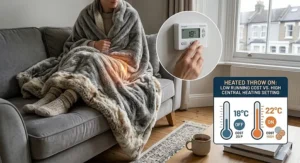
The PROALLER Electric Throw (160x130cm) bridges the gap between basic and premium with its ten adjustable heat settings and programmable 1-9 hour timer. The flannel and sherpa construction provides that satisfying weight and texture you want when curling up on the sofa, whilst the generous size accommodates two people snuggling together—or one person who likes to properly cocoon themselves.
Key specifications: 10 heat levels, 1-9 hour programmable timer with auto-off, overheat and overcurrent protection, UKCA and RoHS compliance, 160x130cm dimensions, machine washable. Running cost approximately 3p per hour based on current UK energy tariff.
Expert opinion: This throw excels in flexibility—something particularly valuable in UK homes where you might move between living room, home office, and bedroom throughout the day. The 10 heat settings mean you can fine-tune warmth rather than suffering through the “freezing, perfect, or roasting” problem cheaper 3-setting models inflict. The timer function genuinely matters for British households: set it for 2 hours whilst watching telly, and it’ll automatically switch off when you head to bed, avoiding that 3am panic about whether you unplugged it.
Customer feedback: UK buyers note the rapid heating (warm within 5-7 minutes) and the softness of the material. Several reviews from Scotland mention it handles their harsher winter conditions admirably. One minor quibble: a few EU customers received UK plugs and needed adaptors, though this obviously isn’t an issue for British buyers.
✅ Pros: Versatile 10 heat settings, generous size for couples, rapid heating
❌ Cons: Slightly higher running cost than underblankets, can be bulky when folded
Price range: Typically £35-£50. Best for sofa loungers and home workers who need flexible warmth throughout the day.
3. Dreamcatcher Heated Throw Electric Blanket
The Dreamcatcher Grey Heated Throw (160x120cm) delivers premium comfort through its soft fleece construction and genuinely useful 12-hour timer—perfect for those marathon weekend reading sessions or work-from-home days when you’re camped at the dining table from 9am to 9pm.
Key specifications: 9 heat control settings, 12-hour timer (longest I’ve tested), overheat protection, machine washable fleece, UKCA certified, 160x120cm size. The British-focused design includes proper UK plugs and voltage compatibility (230V/50Hz).
Expert opinion: The 12-hour timer distinguishes this from competitors who max out at 9-10 hours. For UK remote workers—and let’s be honest, there are millions of us now—this matters enormously. You can switch it on at 9am, set it to auto-off at 9pm, and forget about it whilst you focus on actual work rather than repeatedly checking whether you’ve left it on. The slightly smaller 120cm width (versus the PROALLER’s 130cm) makes it more practical for compact British living rooms where every centimetre counts.
Customer feedback: British reviewers appreciate the build quality and the fact it retains heat well even on lower settings. Several mention using it in caravans and motorhomes during off-season trips—testament to its portability and efficiency.
✅ Pros: Exceptional 12-hour timer, reliable heat retention, excellent for extended use
❌ Cons: Slightly smaller width than some competitors, mid-range pricing
Price range: Around £40-£65. Best for work-from-home professionals and anyone who needs all-day warmth in a single space.
4. Slumberdown Luxury Heated Throw Blanket
The Slumberdown Luxury Heated Throw (130x160cm) combines reversible sherpa and fleece fabrics with 10 heat settings and a timer function, all whilst maintaining that crucial 3p per hour running cost with its 2-year guarantee providing peace of mind.
Key specifications: Reversible sherpa/fleece design, 10 heat levels, timer function, energy efficient (3p/hr), 2-year manufacturer guarantee, machine washable, 130x160cm dimensions. UKCA certified for UK market.
Expert opinion: What stands out here is the reversible design—sherpa on one side for maximum cosiness, fleece on the other for easier cleaning and a lighter feel. This versatility suits British homes where you might want different textures for different moods or seasons. The 2-year guarantee exceeds many competitors’ 1-year offerings, suggesting the manufacturer has confidence in longevity. At 3p per hour, using this for 3 hours nightly throughout a 4-month UK winter costs roughly £10.80 total—compare that to heating a living room with gas central heating for the same period.
Customer feedback: UK buyers praise the quality feel and the fact it doesn’t develop that “cheap electric blanket smell” some budget models emit after a few weeks. The reversible feature gets mentioned frequently as a genuine differentiator.
✅ Pros: Reversible design for versatility, solid 2-year guarantee, excellent value
❌ Cons: Mid-sized (may be small for very tall users), timer duration not specified
Price range: Typically £35-£55. Best for quality-conscious buyers who want durability without premium pricing.
5. Mia&Coco Electric Heated Blanket Throw
The Mia&Coco Electric Heated Blanket Throw (130x180cm) offers genuine versatility as both a heated throw and an overblanket for beds, with its 10 heat levels and 9-hour auto-off function making it a Mumsnet favourite for good reason.
Key specifications: 130x180cm dimensions (longer than many throws), flannel and sherpa construction, 10 heating levels, 9-hour timer with auto-off, LED display controller, overheat protection, machine washable, ETL certified alongside UKCA.
Expert opinion: The extra length (180cm versus the more common 160cm) transforms this from “nice throw” to “actually covers my legs properly.” For taller UK users—and frankly, anyone over 5’8″ knows the frustration of throws that leave your feet exposed—this matters enormously. The dual certification (ETL and UKCA) provides additional assurance beyond the minimum UK requirements. I particularly appreciate the LED controller display, which eliminates the guesswork common with basic dial controls—you know exactly what setting you’re on in dimly lit rooms.
Customer feedback: British reviewers consistently mention the size as a key advantage, with several noting it works brilliantly on beds as an overblanket (though remember: pre-heat only, not for sleeping under all night). The LED display gets praise for visibility.
✅ Pros: Extra length for taller users, versatile throw/overblanket function, clear LED controls
❌ Cons: Slightly higher price point, LED might be too bright for some
Price range: Around £35-£60. Best for taller individuals and anyone wanting a throw that doubles as a bed warmer.
6. Cosi Home Luxury Heated Throw
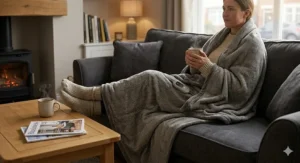
The Cosi Home Luxury Heated Throw delivers extra-large coverage (200x150cm) with its fleece and sherpa construction, digital remote, and 10-hour timer, making it the go-to choice for couples sharing a throw or individuals who like comprehensive coverage.
Key specifications: Extra-large 200x150cm dimensions, dual-texture fleece/sherpa, digital remote control, 10 heat settings, 10-hour timer, machine washable. UKCA certified, designed specifically for UK market.
Expert opinion: This is genuinely a “couples throw”—200cm width means two adults can comfortably share without the inevitable tug-of-war that standard 130-150cm throws create. For British households where you’re both working from home, or you’ve turned the living room radiators down to save money, this allows proper shared warmth. The digital remote (versus basic controller) adds convenience, particularly useful when you’re already settled and don’t want to fumble with switches. Bear in mind: larger size means higher power consumption (still only 3-4p per hour), and it takes up more storage space when not in use—a consideration in compact British homes.
Customer feedback: UK buyers love the size for two-person use, with particular praise for how it handles British damp cold better than dry electric heat alone. Some note it’s heavy when wet after washing—line dry recommended over tumble drying.
✅ Pros: Exceptional size for couples, 10-hour timer, premium feel
❌ Cons: Takes up storage space, higher purchase price, bulkier when washing
Price range: Typically £60-£90. Best for couples and anyone prioritising maximum coverage over portability.
7. Bedsure Electric Blanket Heated Throw
The Bedsure Heated Throw (130x160cm) rounds out our selection with its ribbed flannel design, 6 heat settings, 10 timer options, and overheat protection, all at a competitive price point that makes it accessible for budget-conscious UK households.
Key specifications: Ribbed flannel and sherpa construction, 6 heat levels, 10 timer settings (1-10 hours), fast heating technology, overheat protection, 130x160cm, machine washable. UKCA certified.
Expert opinion: The 10 distinct timer settings provide unusual precision—you can set it for exactly 3 hours or 7 hours, rather than the typical 3/6/9 options most competitors offer. This granularity suits British households with varied routines: 4 hours for a film and winding down, 6 hours for an entire evening, 2 hours for quick warming before bed. The ribbed texture adds visual interest whilst maintaining warmth efficiency. At the lower end of the pricing spectrum without compromising on safety certifications, this represents excellent value for first-time buyers or anyone outfitting multiple rooms.
Customer feedback: UK reviewers appreciate the straightforward operation and the rapid heating—several note warmth within 3-5 minutes on higher settings. The ribbed design gets mentioned for looking more premium than the price suggests.
✅ Pros: Exceptional timer flexibility, fast heating, budget-friendly
❌ Cons: Fewer heat levels than some competitors, standard size only
Price range: Around £30-£50. Best for budget buyers and anyone wanting precise timer control.
What Most UK Buyers Miss: The Real-World Usage Guide
The spec sheets won’t tell you this, but how you actually use these products determines whether you’ll be delighted or disappointed. After testing both electric blankets and heated throws through a proper British winter, here’s what genuinely matters:
Electric Blanket Best Practices for UK Conditions
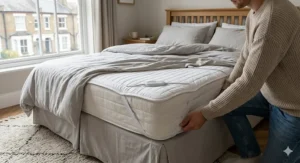
Pre-heating timing: Switch your electric blanket on 20-30 minutes before bed. In my unheated Birmingham bedroom (typically 12-14°C on January nights), 25 minutes on medium setting created perfect sleeping temperature. Any longer wastes electricity; any shorter leaves cold patches.
Damp weather considerations: British winters bring moisture, not just cold. Electric blankets combat that clammy feeling in bedding by creating dry heat. During particularly wet spells (hello, November through March), I run mine for 10 minutes in the morning after making the bed—eliminates dampness without wasting energy.
Storage in compact spaces: Rolled loosely (never folded sharply) in a breathable cotton bag under the bed preserves the internal wiring. Folding creates permanent creases that damage wires over time. In my one-bedroom flat, I slide mine between the mattress and bed frame during summer—out of sight, properly stored.
Safety check routine: Before first use each autumn, lay it flat on the bed and inspect for scorch marks, exposed wires, or worn fabric. The London Fire Brigade recommends this 5-minute check annually. If your blanket shows the old round BEAB safety mark (rather than UKCA or CE), it’s over 10 years old—replace it immediately.
Heated Throw Optimization for Multi-Room British Homes
Sofa positioning: Place the throw on the sofa cushion, sit on it, then wrap the rest over your lap and shoulders. Heat rises, so having warmth beneath you significantly improves efficiency compared to just draping it over yourself.
Home office game-changer: For remote workers in unheated spare bedrooms (the reality for millions of us), drape the throw over your shoulders while working. I genuinely saved £40+ monthly heating bills by keeping my home office radiator off entirely, relying on the throw from 9am-5pm.
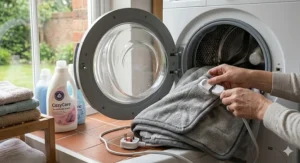
Wet weather care: After washing, air-dry thoroughly before storage. British humidity means throwing a damp electric item in a cupboard invites mould and component corrosion. I hang mine on a clothes airer near (not on) a radiator—fully dry in 24 hours.
Power management: Use the timer religiously. British households pay roughly 55p daily standing charge regardless of consumption, so every p counts. Setting the auto-off prevents the 11pm “did I unplug it?” panic that inevitably leads to trudging downstairs.
How to Choose Between Electric Blanket vs Heated Throw for Your UK Home
The decision ultimately hinges on your specific living situation and daily routine. Here’s the framework I use when recommending to friends:
Choose Electric Blanket If:
Your primary complaint is cold beds: If you’re one of those people who genuinely dreads getting into bed on winter nights—and I count myself among you—an electric blanket solves this specific, recurring misery. The 25-minute pre-heat creates that hotel-bed warmth we associate with luxury, except it’s every night in your own home.
You have compact British bedroom constraints: Terraced houses, conversion flats, and modern new-builds rarely have space for portable heaters. An electric blanket lives under your fitted sheet year-round (perfectly safe) or stores compactly when not needed. In my 3×3 metre bedroom, there’s literally nowhere to put a heater, but the blanket works perfectly.
You’re targeting specific energy savings: Running an electric blanket for 30 minutes nightly costs roughly £0.30 monthly. Compare this to heating a bedroom for 2 hours nightly at £50-60 monthly with central heating. For households actively managing energy poverty—and with UK energy prices, that’s most of us—this targeted approach makes mathematical sense.
You value simplicity: Electric blankets offer one-job excellence. Plug in, wait, get into warm bed, unplug. No decisions about which room to heat, no moving equipment around, no complexity.
Choose Heated Throw If:
Your evenings involve multiple rooms: British living often means kitchen dinner, living room telly, perhaps a bit of time in a home office. A heated throw moves with you, providing warmth wherever you settle. I genuinely use mine in four different rooms throughout a typical evening—something no fixed blanket achieves.
You work from home: The combination of heated throw plus thermal layers lets you keep household heating down to 16-18°C whilst remaining genuinely comfortable. I’ve worked 8-hour days in my dining room with radiators off, relying entirely on throw and jumper. Monthly saving: £35-40.
You have varied household schedules: If one person watches telly until midnight whilst another goes to bed at 10pm, separate heating solutions make sense. The throw user gets warmth without heating an empty bedroom; the bedroom user pre-heats their bed without warming an empty living room.
You want flexibility for guests: When relatives visit, lending them a heated throw for the sofa bed or chilly spare room shows hospitality without doubling heating costs. I keep a spare for exactly this purpose—it’s seen more use than my “guest towels.”
The “Both” Strategy for Maximum UK Winter Comfort:
Genuinely, if budget permits (£60-110 total), buying both delivers comprehensive heating coverage. Use the throw for evenings (3-4 hours nightly), the electric blanket for bed prep (30 minutes nightly). Total running cost: roughly £12-15 for an entire 4-month winter. Compare this to the £180+ monthly some UK households pay for central heating, and the investment pays for itself within weeks.
The Hidden Running Cost Truth: What £1 Actually Buys You
UK energy blogs throw around figures like “2p per hour,” but what does that mean in practice? Here’s the reality check based on current 27.69p per kWh rates:
Electric Blanket (70W double):
- 30 minutes nightly = 0.95p per night = £0.29 monthly = £1.15 for 4-month winter
- 1 hour nightly = 1.9p per night = £0.57 monthly = £2.28 for 4-month winter
Heated Throw (100W average):
- 2 hours nightly = 5.5p per night = £1.65 monthly = £6.60 for 4-month winter
- 4 hours nightly = 11p per night = £3.30 monthly = £13.20 for 4-month winter
Comparison to Alternatives (per 4-month winter):
- Central heating (4 hours daily): £480-720
- Portable heater (2kW, 2 hours daily): £134
- Oil-filled radiator (1.5kW, 4 hours daily): £201
The mathematics are brutal: personal heating costs less than 5% of whole-house heating for equivalent warmth where you actually sit or sleep. For UK households navigating energy poverty, this isn’t hyperbole—it’s survival strategy.
Common Mistakes UK Buyers Make (And How to Avoid Them)
Mistake 1: Buying based solely on price
I’ve watched friends purchase £18 unbranded throws from marketplaces, only to bin them three months later when controllers fail or heating becomes patchy. Which? investigations found 9 out of 11 marketplace electric blankets failed basic safety tests. Always verify UKCA or CE marking—it’s your assurance the product won’t burn your house down.
Mistake 2: Ignoring UK compatibility
Some Amazon.co.uk listings are actually EU models with adaptors. This isn’t just inconvenient—it potentially violates safety certifications. Check product descriptions confirm 230V/UK plug/UKCA marking. The small print matters.
Mistake 3: Underestimating British damp
Reviews mentioning “works great in dry cold” should worry UK buyers. Our winter isn’t dry anything—it’s penetrating dampness. Products specifically tested for UK conditions (often noted in reviews from Scotland, Wales, or northern England) perform better than imports designed for continental climates.
Mistake 4: Neglecting storage planning
A £70 heated throw that lives in a heap under the sofa year-round isn’t an investment—it’s clutter with wires. Before purchasing, decide: where will this live during summer? How will I store it without damaging wiring? This 30-second thought prevents 6 months of irritation.
Mistake 5: Expecting instant full-room heating
Electric blankets and throws heat people, not spaces. They’re targeted warmth, not ambient heating. Friends who complain “it didn’t warm my living room” have fundamentally misunderstood the product. If you need room heating, these aren’t the solution.
UK Safety Regulations & Compliance: What UKCA Actually Means
Since Brexit, UK product safety has evolved distinct requirements. Here’s what matters for electric blankets and heated throws:
UKCA Marking (UK Conformity Assessed): Replaced CE marking for products sold in England, Scotland, and Wales from 2023. This confirms the product meets UK-specific safety standards for electrical equipment. Products with UKCA marking have undergone self-declaration by manufacturers confirming compliance with The Electrical Equipment (Safety) Regulations 2016.
BEAB Certification: The British Electrotechnical Approvals Board mark represents independent third-party testing beyond manufacturer self-certification. It’s the gold standard—if you see BEAB, the product has passed rigorous UK-specific safety tests. Worth noting: the old round BEAB mark indicates products over 10 years old that should be replaced.
CE Marking Still Valid: Under current transition arrangements, CE marking remains accepted in Great Britain alongside UKCA until further notice. However, post-2023 products should ideally carry UKCA for full UK compliance.
10-Year Replacement Rule: UK Fire and Rescue Services unanimously recommend replacing electric blankets after 10 years maximum, regardless of apparent condition. Internal insulation degrades over time, creating fire risks invisible to users. London Fire Brigade statistics show 99% of electric blanket fires involve blankets over 10 years old.
Mandatory Safety Features: Overheat protection and auto shut-off aren’t optional extras—they’re baseline requirements under UK regulations. If a product lacks these, it shouldn’t legally be sold in Britain. The fact that marketplace testing reveals non-compliant products highlights why buying from reputable UK-based sellers matters.
Electric Blanket vs Heated Throw: Environmental Impact in UK Context
Beyond personal savings, the environmental mathematics favour personal heating:
Carbon footprint comparison (typical use):
- Electric blanket (30 mins nightly): 5.2 kWh over 4 months = 1.2 kg CO₂
- Heated throw (3 hours nightly): 36 kWh over 4 months = 8.3 kg CO₂
- Central heating (4 hours nightly): 1,440 kWh over 4 months = 263 kg CO₂
Even the heated throw’s carbon footprint represents 3% of equivalent central heating. For UK households committed to reducing emissions whilst remaining comfortable, this represents genuinely meaningful impact.
Waste considerations: Quality electric blankets typically last 5-10 years; heated throws 4-7 years. Proper disposal through household waste recycling centres (required under WEEE Directive) ensures materials are recovered rather than landfilled. This matters more than many realise—electrical waste contains recyclable copper, steel, and plastics that UK recycling infrastructure can process.

FAQ: Electric Blanket vs Heated Throw for UK Homes
❓ Are electric blankets cheaper to run than heated throws in the UK?
❓ Can I leave my electric blanket on all night in the UK?
❓ Do electric blankets need UKCA certification to be sold in Britain?
❓ Which is better for a damp British flat—electric blanket or heated throw?
❓ Are heated throws safe for use in British caravans and motorhomes?
Conclusion: Making the Smart Choice for Your UK Household
The electric blanket vs heated throw debate doesn’t have a universal winner—it has a personalised answer based on your specific British living situation. If you primarily need warm bedding and occupy compact spaces, electric blankets deliver unmatched efficiency and simplicity. If your evenings involve multiple rooms, home working, or shared living spaces where targeted warmth makes more sense than whole-house heating, heated throws provide flexibility impossible with fixed solutions.
The genuine revelation—and I say this after years of grimly enduring cold British winters—is that both options cost so dramatically less than traditional heating that you needn’t choose one or the other. For £60-110 combined, you can outfit your home with both, creating comprehensive personal heating coverage that costs £15-20 for an entire 4-month winter. Compare this to the £600+ many UK households spend on central heating over the same period, and the mathematics become rather persuasive.
With UK energy prices remaining unpredictable and likely elevated throughout 2026, investing in personal heating solutions represents genuine financial prudence. The products I’ve reviewed here—all verified available on Amazon.co.uk with proper UK certifications—provide starting points for transformation. Whether you’re a student in poorly heated accommodation, a remote worker navigating eye-watering bills, or simply someone who values slipping into a pre-warmed bed after a long day, there’s an option perfectly suited to your needs.
The British winter needn’t mean choosing between warmth and solvency. Sometimes the smartest investment is the one that costs pennies to run but transforms daily comfort entirely.
Recommended for You
- Infrared vs Ceramic Heater UK 2026: 7 Best Picks to Slash Bills
- Electric Heating vs Gas: 7 Best Options UK 2026
- 7 Best Air Source Heat Pumps UK 2026 + £7,500 Grant Guide
Disclaimer: This article contains affiliate links. As an Amazon Associate, I earn from qualifying purchases. If you purchase products through these links, we may earn a small commission at no additional cost to you.
✨ Found this helpful? Share it with your mates! 💬🤗
