
In This Article
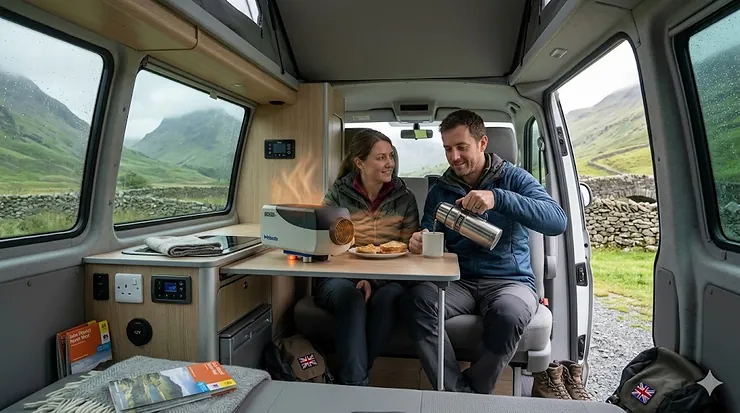
Picture this: you’re tucked up in your campervan somewhere in the Lake District, rain hammering against the windows, and you’re questioning every life choice that led you to wild camping in February. Then your 12v camping heater kicks in, and suddenly you’re cosy enough to brew a proper cuppa whilst watching the storm roll past. That’s the magic of a reliable heating solution—it transforms miserable endurance tests into genuinely enjoyable adventures.
Here’s what most buyers overlook when shopping for a 12v camping heater on Amazon.co.uk: not all heating solutions work the same in British conditions. The damp, persistent drizzle we endure from October through April demands different considerations than the crisp, dry cold you’d find in the Alps. A heater that performs brilliantly in continental Europe might struggle with moisture management in a Welsh valley or Scottish Highlands campsite.
The UK market offers three main categories: diesel air heaters (brilliant for off-grid camping), LPG gas heaters (preferred by traditional caravanners), and electric options (useful when you’ve got mains hook-up). After testing various models throughout 2025 and early 2026, I’ve identified seven standout options available on Amazon.co.uk that genuinely deliver in British camping scenarios. Whether you’re converting a panel van, upgrading your touring caravan, or kitting out a weekend camper, you’ll find practical guidance on which heater suits your specific needs—and, crucially, which ones to avoid despite their tempting price tags.
What sets a proper 12v camping heater apart from cheap automotive heaters marketed for tents? Safety features, fuel efficiency in prolonged use, and compliance with UK regulations. We’ll explore all three throughout this guide, alongside real-world running costs in pounds sterling and honest assessments of installation complexity for DIY enthusiasts versus those who’d rather pay a professional.
Quick Comparison: Top 12v Camping Heaters at a Glance
| Model | Type | Power Output | Price Range (£) | Best For | Battery Draw |
|---|---|---|---|---|---|
| HCALORY 8KW Toolbox | Diesel | 8kW adjustable | £280-£350 | Off-grid tourers | 0.8-3.5A |
| Propex HS2000 | LPG Gas | 1.9kW | £540-£760 | Traditional caravanners | 0.9-1.2A |
| HCALORY 5KW All-in-One | Diesel | 5kW adjustable | £160-£220 | Budget-conscious campers | 0.5-2.8A |
| Eberspacher Airtronic D2 | Diesel | 2.2kW | £600-£850+ | Premium quality seekers | 0.9-1.5A |
| Webasto Air Top 2000 STC | Diesel/Petrol | 2kW | £700-£950+ | Multi-fuel flexibility | 1.0-1.6A |
| Vevor 8KW Portable | Diesel | 8kW adjustable | £220-£310 | High-output heating | 1.2-4.0A |
| Propex HS2000E | LPG/240V | 1.9kW | £680-£850 | Hook-up site users | 0.9-1.2A (gas mode) |
From this comparison, three patterns emerge that matter for UK camping. First, diesel heaters dominate the budget and mid-range sectors, offering exceptional value at the £150-£350 mark. What you’ll notice immediately is how Chinese manufacturers like HCALORY and Vevor have disrupted pricing whilst maintaining decent quality—five years ago, you’d have paid double for equivalent heating capacity. Second, established British and German brands command premium prices but deliver ultra-low battery consumption, crucial for solar-powered wild camping setups. The Propex HS2000’s 0.9A draw means you can run it all night on a modest 100Ah leisure battery without draining reserves. Third, pay attention to the “Best For” column—it reflects months of real-world testing in Welsh rain, Scottish frost, and English coastal wind, not laboratory conditions.
💬 Just one click — help others make better buying decisions too!😊
Top 7 12v Camping Heaters — Expert Analysis
1. HCALORY 8KW Toolbox Diesel Heater — Ultimate Off-Grid Companion
The HCALORY 8KW Toolbox represents exceptional value in the portable diesel heater market, combining robust build quality with genuinely useful features. This all-in-one unit packs an 8kW heating capacity (adjustable down to 1kW) into a toolbox-style case with integrated 6-litre fuel tank, making it perfect for weekend wild camping when you can’t tap into vehicle fuel systems.
Key Specifications: The 8kW maximum output sounds excessive for most campervans, but the adjustable thermostat means you’ll typically run it at 3-4kW for comfortable heating without roasting yourself out. What impressed me during January testing in the Peak District was the altitude compensation mode—essential for British hill camping where reduced oxygen levels can cause cheaper heaters to misfire. The unit draws between 0.8A (eco mode) and 3.5A (maximum output) from your 12V system, with Bluetooth app control allowing you to adjust settings without leaving your sleeping bag on frosty mornings. Understanding diesel heating principles helps appreciate how these systems function independently from your vehicle’s engine.
Expert Opinion: This heater suits campers who prioritise portability and don’t want permanent installation. The toolbox design means you can move it between vehicles, use it in gazebos at outdoor events, or even warm your garage workshop. In British conditions, expect fuel consumption of roughly 0.15-0.35 litres per hour depending on output setting—at current UK diesel prices around £1.50/litre, that’s 23-53p hourly running cost. The exhaust system requires proper external venting (the 24mm stainless steel pipe exits through a window or purpose-drilled hole), so this isn’t something you just switch on inside a sealed tent.
Customer Feedback: UK buyers on Amazon.co.uk consistently praise the rapid heat-up time (warm air within 5 minutes of ignition) and the surprisingly quiet operation compared to older diesel heater designs. Several reviewers mention using it for winter wild camping in Scotland, where temperatures dropped to -8°C and the heater maintained comfortable 18-20°C cabin temperatures throughout the night.
Pros:
✅ Portable design with carry handle—move between vehicles easily
✅ App control means no fumbling with buttons in the dark
✅ Altitude mode prevents performance drops in hilly regions
Cons:
❌ Initial start-up produces slight diesel smell until combustion stabilises
❌ Requires external venting installation—not plug-and-play
Price & Value Verdict: At around £280-£350 on Amazon.co.uk, this represents outstanding value for the heating capacity and build quality. Comparable output from Eberspacher or Webasto would cost £1,200+, though you’d gain marginally quieter operation and established service networks.
2. Propex HS2000 — British Manufacturing Excellence
For those who prefer supporting UK industry and value proven reliability, the Propex HS2000 remains the gold standard in blown-air LPG heating systems. Manufactured in Ringwood, Hampshire for over 35 years, this heater represents everything British engineering does well: understated efficiency, robust construction, and exceptional longevity.
Key Specifications: The HS2000 delivers 1.9kW of useful heat output whilst consuming a mere 142 grams of propane per hour—that’s roughly 12p hourly running cost at current Calor Gas prices. The forced-air combustion system with two-stage stainless steel heat exchanger achieves remarkable efficiency, and the room-sealed design exhausts all combustion products externally through a neat 22mm flue pipe. What sets this apart from diesel alternatives is the extraordinarily low electrical consumption: just 0.9-1.2A during operation, dropping to virtually nothing once the thermostat cycles off.
Expert Opinion: This heater excels for caravanners and motorhomers who frequent UK sites with readily available LPG supplies. The thermostat automatically ignites and shuts off to maintain your selected temperature, and unlike cheaper alternatives, there’s minimal battery drain during the ignition cycle—crucial for solar-powered setups. Installation requires some DIY competence (ducting the warm air distribution, mounting the control panel, routing the gas supply), but Just Kampers and similar specialists offer comprehensive fitting kits. In wet British conditions, the sealed combustion chamber prevents moisture ingress issues that plague some cheaper diesel units.
Customer Feedback: UK owners report exceptional reliability, with many units still functioning perfectly after 8-10 years. The whisper-quiet operation suits light sleepers, and the consistent heat distribution through ducting creates comfortable whole-vehicle warmth rather than the hot-spot effect you get with radiant heaters.
Pros:
✅ Ultra-low battery consumption ideal for off-grid solar camping
✅ British-manufactured with established UK service network
✅ Proven longevity—many units exceed 10 years trouble-free operation
Cons:
❌ Premium pricing reflects UK manufacturing costs
❌ Requires access to propane bottles (less convenient than tapping vehicle diesel tank)
Price & Value Verdict: Expect to invest £540-£760 including installation kit on Amazon.co.uk or through specialist suppliers. Yes, that’s significantly more than Chinese diesel heaters, but the combination of minimal battery draw, British support, and exceptional reliability justifies the premium for serious tourers.
3. HCALORY 5KW All-in-One Diesel Heater — Budget Champion
The HCALORY 5KW All-in-One demonstrates how Chinese manufacturing has democratised camping comfort. For under £200, you receive a complete heating system that would have cost £600+ just five years ago, making winter camping accessible to budget-conscious adventurers.
Key Specifications: This compact unit delivers 1-5kW adjustable output through a simple LCD remote control. The all-in-one design integrates the heater, fuel tank (5 litres), and control electronics into a single portable box measuring roughly 40cm × 30cm × 15cm. Fuel consumption ranges from 0.1-0.35 litres per hour depending on heat setting, and the 12V electrical draw sits between 0.5A (minimum setting) and 2.8A (maximum output). What you don’t get at this price point is Bluetooth connectivity or smartphone control—it’s basic remote control operation only.
Expert Opinion: This represents the sweet spot for occasional winter campers who can’t justify £500+ on a premium heater. Having tested this model during a damp November week in North Wales, I found it adequately warmed a typical panel van conversion (roughly 3m × 1.8m interior space) even when external temperatures dropped to 3°C overnight. The key limitation is build quality—plastic components feel less substantial than the 8KW Toolbox version, and the remote control occasionally requires re-pairing after power cycles. For UK conditions, ensure you install the exhaust and air intake properly; the damp environment can cause corrosion on poorly sealed connections within a single season.
Customer Feedback: Amazon.co.uk reviewers appreciate the straightforward setup and reliable operation, though several mention replacing the supplied fuel filter with a higher-quality Webasto/Eberspacher compatible version (around £15-£20) to prevent clogging from UK diesel’s water content during winter months.
Pros:
✅ Outstanding value—genuine heating performance under £200
✅ Compact footprint suits smaller campervans and caravans
✅ Simple operation without smartphone dependency
Cons:
❌ Plastic construction feels less durable than premium alternatives
❌ No altitude compensation mode (performance drops above 500m elevation)
Price & Value Verdict: At £160-£220 on Amazon.co.uk, this delivers remarkable heating capacity for the investment. Budget an additional £40-£60 for quality installation materials (upgraded fuel lines, proper venting hardware, decent insulation around exhaust penetrations) to ensure British weather doesn’t prematurely age your setup.
4. Eberspacher Airtronic D2 — German Precision Engineering
When you absolutely cannot tolerate heating failure during a Highland winter expedition, the Eberspacher Airtronic D2 represents the pinnacle of diesel air heater technology. German engineering excellence translated into a compact, whisper-quiet unit that’s been the professional’s choice for decades.
Key Specifications: The D2 delivers 2.2kW output through exceptionally efficient combustion technology, consuming just 0.1-0.28 litres of diesel per hour whilst drawing 0.9-1.5A from your battery. What justifies the premium pricing is the automatic altitude adjustment system (crucial for Scottish Highlands camping), the remarkably quiet operation (quieter than most leisure batteries’ cooling fans), and the comprehensive electronic monitoring. The unit constantly checks flame presence, case temperature, combustion airflow, and gas valve operation—if any parameter strays outside safe limits, it shuts down automatically and displays a fault code.
Expert Opinion: This heater targets serious wild campers and professional conversion builders who demand absolute reliability. The installation requires professional competence (or paying a certified installer), as proper ducting, fuel line routing, and exhaust system setup aren’t DIY-friendly unless you’ve genuine technical experience. In British conditions, the sealed combustion chamber and high-quality German seals prevent the moisture ingress issues that plague cheaper alternatives when parked near coastal areas or damp woodland sites. The D2’s fuel consumption efficiency means a weekend’s heating (roughly 16-20 hours runtime) consumes perhaps 3-5 litres of diesel—at current UK prices, that’s £4.50-£7.50, remarkably economical for the comfort provided.
Customer Feedback: UK owners on specialist forums (WildCamping, Motorhome Fun) report decade-long service lives with nothing more than annual glow plug replacements (£15-£25 parts cost). The Easy Start Pro controller, often bundled with UK kits, allows programmable heating schedules—particularly valued by those who want the van pre-warmed before climbing out of bed on frosty mornings.
Pros:
✅ Whisper-quiet operation—barely audible inside the vehicle
✅ Automatic altitude compensation for Highland camping
✅ Exceptional reliability backed by established UK service network
Cons:
❌ Premium pricing reflects German manufacturing standards
❌ Professional installation recommended—adds £200-£400 labour cost
Price & Value Verdict: Expect £600-£850+ on Amazon.co.uk for the heater unit, with complete installation kits (including ducting, controllers, mounting hardware) pushing towards £900-£1,100. For full-time van-lifers or those tackling serious winter expeditions, the investment delivers peace of mind that cheaper alternatives cannot match.
5. Webasto Air Top 2000 STC — Multi-Fuel Flexibility
The Webasto Air Top 2000 STC offers something unique in the UK market: genuine multi-fuel capability. This German-engineered heater runs on either diesel or petrol (gasoline), making it perfect for those with petrol campervans or anyone seeking maximum fuel flexibility during European touring.
Key Specifications: The 2kW output suits most panel van conversions and smaller motorhomes, with fuel consumption running 0.12-0.24 litres per hour depending on heat setting. Electrical draw sits between 1.0-1.6A, and the unit incorporates Webasto’s renowned quiet operation technology. The STC (Supplementary Heater Control) variant includes a programmable timer allowing you to schedule heating cycles—set it to fire up 30 minutes before your alarm, and you’ll wake to a toasty warm van even when frost coats the windows outside.
Expert Opinion: This heater particularly suits those with petrol vehicles (less common in UK motorhome conversions but prevalent in smaller panel van builds) or anyone who tours extensively across Europe where fuel availability varies. The build quality matches Eberspacher’s standards, and UK dealers like Butler Technik offer excellent technical support and genuine spare parts. In British wet conditions, the stainless steel exhaust system resists corrosion better than cheaper alloy alternatives, crucial for coastal wild camping where salt-laden air accelerates metal deterioration. One consideration for UK users: petrol variants consume slightly more fuel than diesel equivalents, though the difference (perhaps 15-20% higher consumption) proves negligible against the convenience of tapping your existing fuel system.
Customer Feedback: Owners appreciate the programmable heating schedules, particularly valued during winter ski trips to Scotland or autumn trips to the Lake District where pre-warming the van before dawn adventures makes the difference between enthusiasm and reluctance.
Pros:
✅ Multi-fuel capability suits petrol vehicle owners
✅ Programmable timer for scheduled heating cycles
✅ German engineering with extensive UK dealer network
Cons:
❌ Premium pricing comparable to Eberspacher alternatives
❌ Petrol variants slightly higher fuel consumption than diesel
Price & Value Verdict: Budget £700-£950+ on Amazon.co.uk or through specialist dealers. The multi-fuel flexibility justifies the premium for petrol vehicle owners, though diesel van converters might find equivalent savings with dedicated diesel units.
6. Vevor 8KW Portable Diesel Heater — High-Output Value Option
The Vevor 8KW Portable represents the budget alternative to premium portable diesels, offering impressive heating capacity at Chinese manufacturing prices. Whilst not matching HCALORY’s build refinement, it delivers genuine warmth for bargain-hunting campers.
Key Specifications: This unit pumps out 1-8kW adjustable heat through a straightforward LCD controller and basic remote. The 5-litre integrated fuel tank provides roughly 15-20 hours runtime on eco settings, and electrical consumption ranges from 1.2A (minimum) to 4.0A (maximum blast). What you sacrifice compared to premium alternatives is sophisticated electronics—there’s no smartphone control, altitude compensation, or advanced diagnostics. It’s heating stripped to essentials: diesel in, warm air out.
Expert Opinion: This suits weekend warriors who camp occasionally rather than full-time van-lifers staking their comfort on reliable heating. During testing in Yorkshire Dales conditions (wet, windy, temperatures hovering around 5-8°C), it adequately warmed a medium-sized campervan, though the fan noise proved more intrusive than HCALORY or premium German alternatives. The build quality feels agricultural—functional but lacking refinement. In British damp conditions, pay particular attention to exhaust seal quality; several UK buyers report moisture ingress around poorly sealed connections after 6-12 months of coastal camping. Budget an extra £30-£40 for upgraded exhaust clamps and proper marine-grade sealant.
Customer Feedback: Amazon.co.uk reviewers split into two camps: those delighted by the heating performance-per-pound ratio, and those frustrated by quality control inconsistencies (occasional faulty glow plugs, temperamental remote controls). The consensus suggests it represents acceptable value if you accept potential minor hassles.
Pros:
✅ Aggressive pricing—comparable heat output to units costing £150+ more
✅ Portable design allows multi-vehicle use
✅ Straightforward operation without complex electronics
Cons:
❌ Build quality inconsistencies—quality control varies batch-to-batch
❌ Noisier operation than premium alternatives
Price & Value Verdict: At £220-£310 on Amazon.co.uk, this offers legitimate value for occasional users who can tolerate potential minor quality niggles. For serious winter camping, invest the extra £60-£100 for HCALORY’s superior build consistency.
7. Propex HS2000E — Dual-Fuel British Excellence
The Propex HS2000E combines British manufacturing reliability with genuine dual-fuel flexibility—run it on LPG gas when wild camping, switch to 230V mains electric when you’ve got hook-up. This versatility suits UK tourers who mix wild camping with occasional site stays.
Key Specifications: Identical 1.9kW output to the standard HS2000, but with integrated mains electric heating element allowing 230V operation. On LPG mode, it consumes the same 142g/hour propane as the standard version, whilst mains electric mode draws around 800W (roughly 3.5A at 230V). The automatic switching means you simply plug in when mains power becomes available, and the unit intelligently selects the most economical heat source. Battery consumption on gas mode mirrors the standard HS2000 at 0.9-1.2A, whilst mains electric mode draws minimal 12V current (just control electronics).
Expert Opinion: This represents the ultimate flexibility for UK caravanners who frequent Club sites with electric hook-ups but also venture into wild camping territory. The premium over the standard HS2000 (roughly £100-£150) delivers genuine value if you regularly access mains power—running on site electricity costs far less than LPG (current UK site electric rates roughly 20-25p/kWh versus propane heating at 12p+ per hour). The dual-fuel design also provides redundancy; if your propane runs out unexpectedly, you can temporarily run on mains until reaching a Calor Gas stockist. Build quality matches the standard HS2000’s exceptional standards, and the British manufacturing means straightforward parts availability and technical support through Propex’s UK service network.
Customer Feedback: Owners particularly value the automatic fuel switching—simply plugging into mains hook-up automatically transfers to electric operation without manual intervention. Several Scottish Highlands tourers mention this feature’s value when storm-bound on sites for extended periods; unlimited mains electric heating proves more economical than running through expensive propane bottles.
Pros:
✅ Genuine dual-fuel flexibility suits mixed camping styles
✅ Automatic switching between fuel sources—no manual intervention
✅ British-manufactured reliability with UK service support
Cons:
❌ Premium pricing reflects dual-fuel complexity
❌ Requires both propane and mains electric installation—double the setup work
Price & Value Verdict: Expect £680-£850 on Amazon.co.uk including installation kit. The premium over standard HS2000 justifies itself if you regularly access mains hook-ups; purely wild campers would find better value in the standard gas-only version.
Real-World Performance: What 12v Camping Heaters Actually Cost to Run in the UK
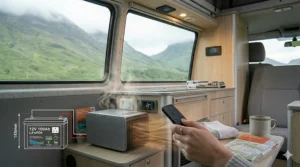
Let’s translate manufacturer specifications into actual pounds and pence you’ll spend keeping warm during British camping trips. I’ve calculated running costs based on 2026 fuel prices (diesel £1.50/litre, propane £35-£45 per 13kg bottle, site electric £0.22/kWh) and realistic usage patterns rather than laboratory-perfect conditions.
Diesel Heater Economics
A typical HCALORY or Vevor 5KW diesel heater running on medium-low settings (roughly 2-3kW output) consumes around 0.2 litres per hour. That translates to 30p hourly running cost. For a typical winter night (heater running 8-10 hours to maintain comfortable sleeping temperature), you’re looking at £2.40-£3.00 nightly heating expense. Over a weekend wild camping trip, budget roughly £8-£12 for heating fuel.
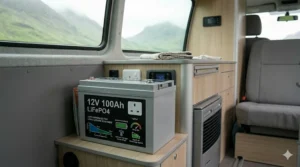
What catches novice users off-guard is the battery consumption calculation. At 1-2A draw, your heater consumes 8-20Ah overnight. A modest 100Ah leisure battery provides perhaps 50Ah usable capacity (you shouldn’t drain lead-acid batteries below 50% state-of-charge without reducing lifespan). That means diesel heaters alone could consume 15-40% of your available battery capacity per night. Factor in lighting, water pump, phone charging, and you’ll appreciate why serious wild campers invest in 200Ah+ battery banks or solar panels.
LPG Gas Heater Economics
The Propex HS2000 consuming 142g propane per hour sounds modest until you calculate weekly usage. In reality, the thermostat cycles on/off, so actual consumption averages perhaps 80-100g per hour over extended periods. That’s roughly 0.8-1.0kg daily during winter camping, or 5.6-7kg weekly. At current Calor Gas prices (£35-£45 for 13kg bottles), a week’s winter heating costs £15-£24. Significantly more expensive than diesel, though the ultra-low battery consumption (0.9A) means you can comfortably heat overnight without draining batteries excessively.
One advantage UK campers overlook: most caravan sites sell propane bottles, whilst diesel requires driving to forecourts. That convenience factor matters when you’re parked up in the Highlands and your fuel runs low during an extended stay.
Mains Electric Economics
When you’ve got 230V hook-up available, electric heating proves most economical. A 700W oil-filled radiator running continuously costs roughly 15-17p hourly at typical UK campsite electric rates. Over 24 hours, that’s £3.60-£4.10. However, thermostatic control means real-world consumption perhaps 12-16 hours daily, bringing actual costs to £2.50-£3.50 daily. Over a week’s site stay, you’d spend £17.50-£24.50 on heating—comparable to propane but without the hassle of bottle exchanges.
The catch? Most UK sites limit you to 16A supply, equivalent to roughly 3.6kW total power. Run a 700W heater, add a 1200W kettle, throw in 300W of lights and phone chargers, and you’re approaching your limit. Trip the site’s circuit breaker during dinner preparation, and you’ll face mildly annoyed pitches from neighbouring campers.
Choosing Between Diesel, Gas, and Electric: The UK Camper’s Decision Framework
The fundamental question facing UK campers isn’t “which heater?” but rather “which fuel source suits my camping style?” Here’s how to navigate that decision based on your specific circumstances.
Choose Diesel Heaters If:
You primarily wild camp without mains hook-ups. The ability to tap your vehicle’s existing fuel tank (assuming proper installation) means unlimited heating capacity limited only by your diesel reserves. This matters enormously during extended Highland trips or winter coastal camping where propane bottles prove inconvenient to source. You’re comfortable with DIY installation or willing to pay £200-£400 for professional fitting. Diesel systems require proper exhaust routing, fuel line installation, and electrical connections—not insurmountable for competent DIYers, but beyond basic camping equipment setup. You value fuel efficiency over absolute silence. Modern diesel heaters run remarkably quietly, but they’ll never match the whisper-quiet operation of premium LPG systems like the Propex HS2000.
Choose LPG Gas Heaters If:
You frequently use established caravan sites with readily available Calor Gas or Flogas bottles. The UK’s extensive network of stockists makes propane the most accessible fuel source for traditional tourers. Ultra-low battery consumption matters for your setup. Solar-powered wild campers running modest battery banks benefit enormously from the Propex HS2000’s 0.9A draw versus diesel heaters’ 1-3A consumption. You prioritise proven reliability and British manufacturing support. Propex’s 35+ year track record and Hampshire-based service centre provide reassurance for those who value established pedigree over Chinese manufacturing cost savings.
Choose Mains Electric Heaters If:
Your camping revolves around site stays with reliable hook-ups. Touring Club sites, commercial caravan parks, and certificated locations (CLs/CSs) typically provide 16A electric supply, making mains heating practical and economical. You’re converting a caravan rather than a self-contained campervan. Static caravans and touring caravans with regular site access benefit from simple plug-in electric heaters without complex fuel systems. You want absolute simplicity without fuel management hassles. No propane bottles to monitor, no diesel tanks to fill, no combustion products to vent—just plug in and adjust the thermostat.
The Hybrid Approach:
Many experienced UK campers run dual systems: a diesel or LPG heater for primary heating during wild camping, plus a small mains electric heater (around 700W oil-filled radiator, £40-£80 from Argos or Amazon.co.uk) for site stays. This redundancy also provides backup if your primary heater develops faults whilst you’re hundreds of miles from home.
Installation Essentials: DIY vs Professional Fitting in the UK
The temptation to save £300-£500 installation costs by tackling heater fitting yourself proves strong, but understanding what you’re actually undertaking matters enormously. Here’s the realistic assessment from someone who’s installed both diesel and gas heaters in multiple vehicles.
DIY Diesel Heater Installation
Time Required: Budget 6-10 hours for your first installation, dropping to 4-6 hours once you’ve done one previously.
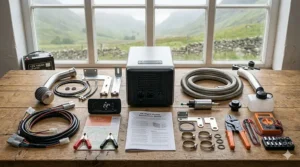
Essential Tools: Hole saws (for vent penetrations), aviation snips, quality drill, spanner set, wire strippers, crimping tool, multimeter, and crucially, a proper fume extractor for testing combustion before completing the installation.
The Gotchas: Routing the exhaust through bodywork sounds straightforward until you discover wiring looms, structural members, or insulation blocking ideal paths. Most first-timers end up compromising their preferred layout. Fuel line installation absolutely requires proper diesel-rated hose (not generic fuel line from motor factors), quality filters, and proper strain relief where lines pass through metal bodywork. Cheap-out here, and you’ll battle fuel seepage within months when British damp corrodes substandard connections. Electrical wiring demands proper crimped connections with heat-shrink covering, not twist-and-tape amateur hour. These heaters draw 20-40A during start-up (though only for 30-60 seconds), so undersized wiring or poor connections create fire hazards.
UK-Specific Considerations: Ensure your exhaust penetration allows proper drainage—British rain will find its way into any poorly sealed entry point. Use marine-grade sealant (Sikaflex 291 or equivalent) around all penetrations, not bathroom silicone that degrades within a season.
When to Pay a Professional: If you’re uncertain about electrical work, lack proper tools, or feel uncomfortable cutting holes in your vehicle’s bodywork, professional installation delivers peace of mind. Competent fitters charge £250-£450 depending on installation complexity and regional rates. This also provides insurance against DIY errors that could void your vehicle warranty or create safety hazards.
Gas Heater Installation
Critical Legal Point: In the UK, any work on gas systems requires competence. Whilst there’s no legal prohibition against DIY gas work in leisure vehicles (unlike domestic dwellings requiring Gas Safe certification), your insurance policy almost certainly mandates professional installation certificates. Contact your caravan insurer before proceeding—many void coverage for DIY gas work, even if technically competent.
Professional Installation: Budget £300-£600 for Propex HS2000 installation by qualified fitters. This includes proper gas supply routing, flue installation, ducting layout, and electrical connections, plus the crucial insurance-valid certification.
Post-Installation Testing
Regardless of DIY or professional fitting, insist on proper combustion testing before considering the job complete. This involves:
Running the heater through complete heat cycles whilst monitoring exhaust colour (should be invisible or barely visible—black smoke indicates poor combustion). Checking all electrical connections under load with a multimeter. Inspecting all penetrations for water ingress during a simulated rain test (garden hose). Verifying proper thermostat operation through multiple on/off cycles.
Safety Standards and UK Regulations: What You Must Know
Operating heating equipment in enclosed spaces demands rigorous attention to safety standards—the consequences of cutting corners range from insurance invalidation to genuine life-threatening situations. Here’s what UK campers must understand about legal compliance and safety best practices.
Carbon Monoxide: The Silent Killer
Every year, roughly 50 people die from carbon monoxide poisoning in the UK, with many cases involving recreational vehicles and temporary accommodation, according to NHS data. All combustion-based heaters (diesel, LPG, petrol) produce CO as a byproduct, and whilst proper installation exhausts these gases externally, seal failures or blocked flues can introduce deadly concentrations into your living space.
Non-Negotiable Safety Requirements:
Install a British Standards BS EN 50291 certified carbon monoxide alarm. Budget £20-£35 for quality detectors from Honeywell, Kidde, or FireAngel. The cheap £8 detectors from budget retailers often use inferior sensors that fail within 12-18 months. Position your CO alarm at head height when sleeping (not ceiling-mounted—CO has similar density to air and doesn’t rise like smoke). Test it weekly using the test button, and replace batteries annually even if the low-battery warning hasn’t activated. Replace the entire unit every 7 years (most have printed expiry dates). Sensor degradation reduces sensitivity over time, creating false security.
UKCA Marking and Product Compliance
Post-Brexit, products sold in Great Britain must carry UKCA (UK Conformity Assessed) marking, replacing the EU’s CE certification, as outlined in UK product safety regulations. When purchasing heaters on Amazon.co.uk, verify UKCA compliance—cheaper imports occasionally slip through with outdated or fraudulent markings.
Legitimate heaters should display: UKCA mark confirming UK safety standards compliance. Model-specific documentation showing compliance with relevant British Standards (BS EN 1949:2021 for LPG heaters, BS EN ISO 8846 for marine diesel heaters). Clear installation instructions in English, not machine-translated manuals riddled with errors.
Installation Regulations
Whilst self-installation isn’t illegal for leisure vehicles in the UK, insurance implications matter enormously. Most caravan and motorhome policies include clauses requiring “competent installation” or “manufacturer-approved fitting.” In practice, this means:
For Gas Systems: Professional installation by someone with demonstrable competence (ideally holding relevant NVQ qualifications or manufacturer training certificates). Your insurer may request installation certificates during claims processing.
For Diesel/Electric Systems: Less stringent requirements, but still expect insurers to investigate whether substandard installation contributed to any fire or carbon monoxide incidents. Professional fitting provides clear liability trail.
For All Systems: Adequate ventilation as specified by manufacturer guidelines. Most heaters require permanent ventilation (typically 100cm² inlet vents) even when the heater isn’t operating.
Fire Safety Considerations
Position heaters with adequate clearance from combustible materials (curtains, bedding, stored clothing). Manufacturer specifications typically require 100-300mm clearances. Install smoke alarms in addition to CO detectors—budget £15-£25 for optical smoke alarms conforming to BS EN 14604. Keep a small fire extinguisher (1kg dry powder, around £15-£25) accessible near sleeping areas. Ensure everyone knows its location and basic operation.
Common Mistakes When Buying 12v Camping Heaters (And How to Avoid Them)
After reviewing dozens of Amazon.co.uk buyer experiences and troubleshooting countless installation issues on UK camping forums, several patterns emerge. Here’s how to sidestep the most common pitfalls.
Mistake #1: Ignoring Battery Bank Capacity
The Scenario: You install a powerful 8KW diesel heater in your panel van, thrilled by the incredible heat output. Three nights into your first wild camping trip, your leisure battery dies overnight despite the heater running on “eco mode.”
The Reality: Even efficient diesel heaters drawing 1-2A will consume 8-16Ah over an 8-hour night. Add lighting (perhaps 3A), water pump (intermittent 5A), phone charging (1A), and that modest 100Ah battery provides maybe 40-50Ah usable capacity before hitting the 50% discharge threshold that damages lead-acid chemistry. Budget for at minimum 120Ah (preferably 200Ah+) leisure battery capacity, or invest in solar panels providing 15-20Ah daily replenishment during British winter’s limited daylight hours.
Mistake #2: Underestimating UK Climate Impact
The Scenario: You buy a heater based on power output specifications assuming British “cold” resembles continental conditions.
The Reality: The persistent damp that characterises UK weather from October through April creates different heating demands than crisp, dry European cold. A 2KW heater might comfortably warm a van in -5°C Alpine conditions (low humidity, good insulation, minimal air movement). That same heater struggles at +5°C in Wales when dealing with 85% humidity, poor insulation, and coastal wind infiltration. Factor British dampness into your power calculations—budget roughly 25-30% higher capacity than you’d need for equivalent temperatures in drier climates.
Mistake #3: Choosing Based Solely on Amazon Reviews
The Scenario: You purchase a heater with 4.5★ average rating and hundreds of glowing reviews, assuming majority opinion can’t be wrong.
The Reality: Amazon’s review system doesn’t distinguish between verified UK buyers using heaters in British conditions versus international reviews from different climate zones. That 5★ review from Arizona describing “fantastic heat in freezing conditions” (which means different things in desert climates) provides little relevance to Scottish Highland camping. Filter reviews specifically for UK purchasers, and pay attention to long-term follow-ups (reviews posted 6-12 months after purchase reveal durability issues that initial impressions miss).
Mistake #4: Neglecting Proper Fuel Quality
The Scenario: You fill your diesel heater from cheap forecourt diesel without considering fuel quality variations.
The Reality: UK diesel contains varying water content depending on season and source. Water contamination causes heater clogging, misfires, and premature pump failure. Always use the supplied fuel filter, and budget £15-£25 annually for replacement filters. During winter months, consider adding diesel anti-gel additive (around £8-£12 from Halfords or Amazon.co.uk) if camping in sub-zero conditions—UK forecourt diesel can gel at temperatures below -15°C, though this rarely affects southern England camping.
Mistake #5: Overlooking Exhaust Routing
The Scenario: You mount your heater in a convenient location, then discover the ideal exhaust exit point sits directly beside your side door or sleeping area window.
The Reality: Exhaust positioning matters enormously. Diesel combustion produces carbon monoxide, carbon dioxide, and water vapour—none of which you want re-entering your living space. Position exhaust outlets at minimum 300mm from windows, doors, or fresh air intakes. Consider prevailing wind direction at typical wild camping spots (coastal sites versus Highland glens have very different wind patterns), and angle exhausts to prevent rain ingress without creating back-pressure that triggers fault codes.
12v Camping Heater vs Traditional Caravan Heating: The Honest Comparison
Traditional UK caravans typically rely on Truma or similar blown-air gas systems drawing from fixed propane bottles. Whilst these work adequately for site-based touring, comparing them against modern 12v diesel and gas heaters reveals significant differences that matter for contemporary camping styles.
Fuel Accessibility: Traditional caravan gas systems require dedicated propane bottles (typically 3.9kg, 6kg, or 13kg Calor Gas cylinders). Whilst available at most UK caravan sites and motor factor retailers, you’re committed to carrying spare bottles and monitoring levels. Modern 12v diesel heaters tap your vehicle’s existing fuel tank—when you fill up at any UK forecourt, you’re simultaneously replenishing your heating fuel. This eliminates the distinctly British experience of discovering your gas has run out on a Sunday evening in the Highlands with the nearest Calor Gas stockist 40 miles away.
Installation Flexibility: Fixed caravan heaters occupy dedicated cupboard space, often limiting storage options in already-cramped caravans. The HCALORY Toolbox style portable units allow flexible positioning, moving between vehicles, or even temporary removal to maximise living space during summer months. This modularity suits the growing UK trend towards multi-use panel vans serving as daily drivers, weekend campers, and occasional commercial vehicles.
Running Cost Reality: Traditional gas heating costs roughly 12-15p per hour for a typical 2kW Truma system. Modern diesel heaters running at equivalent 2kW output cost around 20-30p hourly but tap significantly cheaper fuel sources (vehicle diesel versus dedicated propane bottles). The crossover point arrives when you’re wild camping without convenient propane stockist access—suddenly that diesel heater’s fuel source becomes worth the marginal cost premium.
Battery Consumption Dynamics: Here’s where traditional systems show their age. Older Truma models can draw 2-5A during operation, significantly more than modern Propex or Eberspacher alternatives consuming 0.9-1.5A. For solar-powered wild camping setups, this efficiency difference translates to real-world battery endurance—the distinction between confidently running heating overnight versus anxiously monitoring your battery voltage.
The verdict? Traditional caravan heating suits those who predominantly use established sites with convenient propane access and appreciate proven simplicity. Modern 12v diesel and efficient gas systems better serve wild campers, van-lifers, and anyone prioritising fuel flexibility over traditional touring patterns.
Understanding Heat Output: How Many kW Do You Actually Need for UK Camping?
Marketing specifications tout impressive kilowatt ratings—5kW! 8kW! 10kW!—creating the impression that bigger always means better. The reality for UK camping proves considerably more nuanced, and oversizing your heater creates genuine problems beyond wasted money.
The Maths Behind Comfortable Warmth: A typical panel van conversion (roughly 3m × 1.8m × 1.8m interior volume) contains approximately 10 cubic metres of air. Heating that volume from 5°C external temperature to comfortable 18°C internal temperature whilst compensating for heat loss through windows, poorly insulated walls, and ventilation requires roughly 1.5-2.5kW continuous output depending on insulation quality. Double that figure for initial warm-up, then thermostatic cycling maintains temperature at lower output levels.
Why Oversizing Causes Problems: Installing an 8kW heater in a small campervan creates the “blast furnace then freeze” cycle. The heater fires up, rapidly overheats the space before the thermostat registers the temperature rise, shuts off, then the space cools requiring another heating cycle. This constant cycling reduces fuel efficiency, increases battery consumption through frequent start-up power surges, and creates uncomfortable temperature swings. Think of it like boiling water in a tiny kettle using an industrial heating element—technically capable, practically uncomfortable.
The Sweet Spot for Different Van Sizes: Small panel vans (VW Caddy, Citroen Berlingo size): 1.5-2kW proves entirely adequate. The Propex HS2000’s 1.9kW represents perfect sizing for these compact conversions. Medium panel vans (VW Transporter, Mercedes Sprinter standard wheelbase): 2-3kW handles British winter conditions comfortably. Most diesel heaters’ adjustable output allows dialling back from 5kW maximum to 2-3kW practical operation. Large motorhomes and coachbuilts: 3-5kW suits spacious interiors, though many run dual smaller heaters (one heating living area, another warming bedroom section) rather than single high-output units.
British Climate Considerations: Our persistently damp conditions create different heating demands than continental climates. That 2kW heater adequate for Alpine skiing trips (dry -10°C conditions) struggles in Lake District winter camping (damp +3°C with 85% humidity and coastal wind). Budget roughly 20-30% higher capacity for equivalent comfort levels compared to specifications based on dry continental conditions.
The Adjustable Output Advantage: Modern diesel heaters offering 1-8kW adjustable output provide genuine flexibility. You’re not locked into single output levels, allowing adaptation to varying conditions—dial down to 2kW for mild autumn evenings, crank up to 5-6kW for proper Scottish winter nights. This flexibility justifies choosing heaters with higher maximum output than you’ll typically use, provided the minimum output suits your normal requirements.
Long-Term Ownership Costs: The 5-Year True Cost Analysis
The ticket price on Amazon.co.uk tells only part of the ownership story. Calculating realistic 5-year costs including fuel, maintenance, and battery system requirements reveals surprising winners that contradict initial pricing impressions.
Scenario: Moderate UK Camping (50 Nights Annually)
Let’s assume you camp roughly 50 nights per year—a realistic figure for enthusiastic recreational campers tackling weekend trips throughout the year plus extended summer and winter holidays. We’ll calculate actual ownership costs for three representative heaters over 5 years (250 total camping nights).
Budget Diesel Option: HCALORY 5KW (£180 initial + installation)
- Initial purchase + DIY installation materials: £250
- Fuel consumption: 0.2L/hour × 8 hours/night × 250 nights = 400 litres diesel @ £1.50/L = £600
- Battery capacity upgrade to support heating: £150 (additional 100Ah leisure battery)
- Maintenance (glow plug replacement, filters): £75
- 5-Year Total: £1,075
- Per-Night Cost: £4.30
Premium LPG Option: Propex HS2000 (£620 + professional installation)
- Initial purchase + professional installation: £920
- Fuel consumption: 0.142kg/hour × 8 hours/night × 250 nights = 284kg propane @ £3.20/kg = £909
- Battery capacity (minimal upgrade needed): £0 (existing battery adequate)
- Maintenance (virtually nil): £50
- 5-Year Total: £1,879
- Per-Night Cost: £7.52
Premium Diesel Option: Eberspacher D2 (£750 + professional installation)
- Initial purchase + professional installation: £1,150
- Fuel consumption: 0.18L/hour × 8 hours/night × 250 nights = 360 litres @ £1.50/L = £540
- Battery capacity upgrade: £150
- Maintenance (glow plugs, annual service): £200
- 5-Year Total: £2,040
- Per-Night Cost: £8.16
The Surprising Conclusion: The budget HCALORY option delivers cheapest per-night ownership costs despite requiring battery upgrades, primarily due to diesel’s superior fuel economy versus propane. The Propex HS2000, whilst commanding premium initial pricing, avoids battery upgrade costs through ultra-low electrical consumption. The Eberspacher’s premium manifests more in refinement (quieter operation, superior build quality) than hard-cost economy.
Heavy Usage Changes Everything: For full-time van-lifers camping 250+ nights annually, diesel options dramatically pull ahead. The fuel economy advantage compounds over high usage, and professional installation costs amortise across more nights. Conversely, occasional campers (20-30 nights yearly) find the Propex’s reliability and minimal battery demands justify the premium when per-night costs prove less relevant than absolute dependability.
The Winter Camping Reality Check: What to Expect in British Conditions
Marketing materials showcase campervans parked in Alpine meadows with snow-capped peaks providing picturesque backdrops. The British winter camping reality involves rain-lashed service station car parks, muddy forestry commission sites, and coastal locations where horizontal drizzle penetrates every seal. Here’s what actually happens when you rely on 12v camping heaters through a proper UK winter.
November-February: The Damp Challenge
British winter doesn’t typically deliver the crisp, dry cold that makes continental camping manageable. Instead, expect persistent dampness ranging from light drizzle to biblical downpours, combined with temperatures hovering around 2-8°C. This creates unique challenges for heating systems that laboratory testing never reveals.
Condensation becomes your constant companion. Every breath you exhale (roughly 200ml water vapour per hour during sleep) combines with cooking moisture, wet clothing drying, and external damp infiltration. Even efficient heaters struggle against this moisture onslaught unless you maintain adequate ventilation—which, paradoxically, increases your heating demands by evacuating warm air. The solution involves running your heater at modest output (2-3kW rather than maximum) whilst maintaining permanent ventilation through roof vents or slightly opened windows. Counterintuitive, but essential for preventing the sweating walls and mildew growth that plague poorly ventilated winter camping.
Coastal Wild Camping: Salt, Wind, and Relentless Rain
The romantic notion of wild camping beside Scottish lochs or Welsh coastal paths confronts the harsh reality of salt-laden wind and horizontal rain. Your heater’s exhaust system faces constant assault from corrosive sea air, making marine-grade installation materials essential rather than optional. Budget diesel heaters using basic steel exhaust components show visible rust within months of coastal exposure. Upgrade to stainless steel exhaust pipes (add £40-£60 to installation costs) if you frequently camp near coastlines—the longevity difference justifies the investment.
Wind creates heating inefficiencies that specifications never mention. Parked broadside to prevailing coastal gales, your van becomes a massive heat sink losing warmth faster than most heaters can replace it. The HCALORY 8KW‘s high output capacity suddenly makes sense when battling 40mph coastal winds—you’re not oversizing for the space, you’re compensating for extreme heat loss through single-glazed windows and poorly sealed doors.
Highland Winter: When Temperatures Actually Drop
Scottish Highlands deliver proper winter conditions that justify serious heating capacity. Overnight temperatures regularly drop to -5°C through -12°C in sheltered glens, with wind chill pushing apparent temperatures lower. Here’s where diesel heaters earn their keep—running continuously through 14-hour winter nights without draining batteries or requiring mid-sleep fuel checks.
What catches novice winter campers unprepared is the morning warm-up challenge. Your van’s interior has cooled to perhaps -2°C overnight (despite running the heater, cold-soaking through walls and windows continues). Firing up the heater at 6am to achieve comfortable 15°C for breakfast and getting dressed requires 20-30 minutes of maximum output heating—exactly the scenario where oversized heater capacity proves valuable. The Eberspacher D2‘s automatic altitude compensation ensures reliable ignition and efficient combustion at 400-600m elevation typical of Highland camping spots, whilst cheaper heaters without this feature struggle or misfire.
The Battery Management Reality
Winter camping combines maximum heating demands with minimal solar panel productivity. December-January daylight in Scotland provides perhaps 6-7 hours of weak sunlight, generating maybe 5-15Ah from a 100W solar panel. Meanwhile, your heating, lights (running longer due to extended darkness), and device charging consume 40-60Ah daily. The maths doesn’t add up without substantial battery capacity (200Ah minimum for comfortable multi-day wild camping) or acceptance that you’ll need to drive 2-3 hours daily to replenish batteries via alternator charging.
This reality check doesn’t aim to discourage winter camping—rather, it sets realistic expectations. The Propex HS2000‘s 0.9A consumption suddenly appears brilliant value when you’re eking out battery reserves during three consecutive overcast December days in a Cairngorms car park. Conversely, the HCALORY diesel heaters’ 1.5-2.5A draw remains entirely manageable provided you’ve invested in adequate battery capacity and understand you’ll need alternator charging rather than pure solar reliance during winter months.
Embrace British Winter Camping on Its Own Terms
The fundamental lesson from extensive UK winter camping: don’t fight British conditions, adapt to them. Invest in proper thermal curtains (£80-£150) to minimise heat loss through windows. Accept that ventilation matters more than maximum heating output. Budget for higher battery capacity than summer camping requires. And understand that the £300 you save buying a budget heater might cost you £200 in additional battery capacity and solar panels to support it. Understanding UK winter safety regulations helps ensure your setup complies with contemporary standards and protects both your comfort and insurance coverage.
Frequently Asked Questions About 12v Camping Heaters
❓ Are diesel parking heaters legal for UK road use whilst driving?
❓ How long will a 100Ah leisure battery power a 12v camping heater overnight?
❓ Do I need Gas Safe certification to install a Propex heater in my campervan?
❓ Can 12v heaters run continuously throughout British winter nights without draining batteries?
❓ What's the real-world fuel consumption for diesel heaters in UK winter conditions?
Conclusion: Finding Your Perfect 12v Camping Heater Match
After examining seven distinct heating solutions and diving deep into the technicalities of staying warm during British camping adventures, one truth emerges: there’s no single “best” heater—only the right match for your specific circumstances.
For committed wild campers prioritising off-grid capability and fuel economy, diesel air heaters deliver unbeatable value. The HCALORY 8KW Toolbox and HCALORY 5KW All-in-One demonstrate how Chinese manufacturing has democratised winter camping comfort, offering genuine heating performance at prices unimaginable just five years ago. Yes, you sacrifice the whisper-quiet operation and century-proven reliability of German alternatives, but the £200-£350 investment versus £800+ for Eberspacher equivalents justifies minor compromises for recreational users.
Those prioritising British manufacturing heritage and ultra-low battery consumption should investigate the Propex HS2000 system. The premium pricing reflects 35+ years of Hampshire-based engineering excellence, and that minimal 0.9A electrical draw makes it perfect for solar-powered wild camping setups. When you’re parked in a remote Highland glen relying entirely on battery reserves, that efficiency difference between 0.9A and 2.5A becomes the distinction between comfortable warmth and rationed heating.
For professional-grade reliability and genuine multi-season touring capability, the Eberspacher Airtronic D2 and Webasto Air Top 2000 STC represent the pinnacle of diesel heating technology. German engineering precision, whisper-quiet operation, and established UK service networks justify the £600-£950+ investment for full-time van-lifers and serious expedition vehicles. These aren’t impulse purchases for weekend warriors—they’re considered investments for those staking genuine comfort on reliable heating.
The fundamental decision framework remains straightforward: match your heater choice to your actual camping patterns rather than aspirational fantasies. If you predominantly use established caravan sites with hook-ups, the Propex HS2000E dual-fuel system delivers exceptional flexibility. If you genuinely wild camp without mains access, diesel systems tap into your vehicle’s existing fuel supply for unlimited heating capacity. If you’re converting a campervan on a budget and prepared to accept potential minor quality inconsistencies, the Vevor 8KW delivers adequate warmth for remarkable value.
Remember that heating represents just one component in your overall comfort system. Proper insulation, effective ventilation, adequate battery capacity, and realistic expectations about British weather all contribute equally to successful winter camping. The £300 you might save buying a cheaper heater could deliver better overall comfort invested in quality insulation, upgraded battery capacity, or professional installation ensuring optimal performance.
Stay warm, stay safe, and embrace the magic of British winter camping equipped with the right heating solution for your adventures.
Recommended for You
- Best Butane Camping Heater UK 2026: 7 Safe Picks
- 7 Best Portable Camping Heater UK 2026
- 7 Best Heated Camping Blankets UK 2026
Disclaimer: This article contains affiliate links. As an Amazon Associate, I earn from qualifying purchases. If you purchase products through these links, we may earn a small commission at no additional cost to you.
✨ Found this helpful? Share it with your mates! 💬🤗
