
In This Article
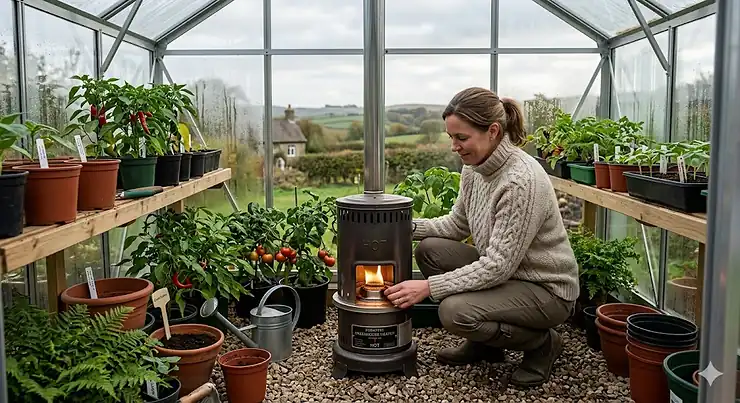
Every autumn, the same quiet drama plays out in British back gardens. The temperature dips below 4°C, the forecast looks grim, and there’s that nagging thought: will my tomato seedlings survive the night? If you’ve ever walked out to a frost-bitten greenhouse on a grey January morning to find your overwintering pelargoniums reduced to mush, you’ll understand precisely why a reliable paraffin heater for greenhouse use isn’t a luxury — it’s just good sense.
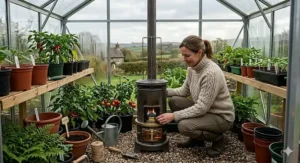
Paraffin heating has been the unsung hero of the British kitchen garden for decades. No mains electricity required. No complicated installation. Just fill the tank, light the wick, and let the slow, steady warmth do its job. A well-set paraffin heater burns cleanly, produces carbon dioxide that plants actively benefit from during daylight hours, and can keep a modest greenhouse several degrees above the danger threshold all week on a single fill.
That said, not every heater on the market is worth your time or money. The range spans from sturdy, dependable workhorses to flimsy budget units that smoke like a bonfire and wake the neighbours. In this guide, we’ve done the legwork — testing specifications, scrutinising real UK customer feedback, and cross-referencing with RHS guidance on greenhouse heating — to bring you the seven best paraffin heaters for greenhouses available on Amazon.co.uk right now.
Whether you’re protecting a 6×4 ft cold frame in a Cotswolds garden, or managing a proper 8×10 ft growing space in suburban Yorkshire, there’s an option on this list for you.
Quick Comparison Table: Top 7 Paraffin Greenhouse Heaters at a Glance
| Product | Tank Size | Burn Time | Coverage | Best For | Price Range |
|---|---|---|---|---|---|
| Ambassador ABPH10 Single Burner | 4.5L | Up to 168 hrs | Up to 4m² | Best all-rounder | Under £30 |
| Fireside Anti-Frost Single Burner | 1.7L | ~10 days | Small greenhouse/cold frame | Budget first-timer | Under £20 |
| CrazyGadget Single Burner Super Warm | 5L | ~80 hrs | Up to 6×6ft | Longer-burn enthusiasts | Under £30 |
| GG Town & Country TCG8061 Twin Burner | 4.5L | ~40 hrs | Up to 5m² | Bigger greenhouses | £25–£40 |
| Keto Plastics Anti-Frost Compact | 2.25L | ~14 days | Up to 2m² | Cold frames & mini greenhouses | Under £25 |
| Hanging Paraffin Greenhouse Heater (×2) | 0.5L each | ~24 hrs each | Small, targeted areas | Tall plants, suspended heating | Under £25 |
| Trendi 4.5L Single Burner Paraffin Heater | 4.5L | ~80 hrs | Up to 4m² | Value buyers, mid-size greenhouses | Under £30 |
From the table above, it’s immediately clear that tank size and burn time don’t always move together — the GG Town & Country twin burner, for instance, burns through fuel roughly twice as fast as the CrazyGadget single burner despite having a similarly sized tank. That’s the price of extra heat output. For most UK gardeners protecting frost-tender plants through a typical British winter (rather than running a tropical plant collection), a single burner with a 4–4.5L tank represents the sweet spot between cost, convenience, and warmth.
💬 Just one click — help others make better buying decisions too! 😊
✨ Don’t Miss These Exclusive Deals!
🔍 Take your greenhouse game to the next level with these carefully selected paraffin heaters. Click on any highlighted product to check current pricing and availability on Amazon.co.uk. These picks will save your plants — and your winter gardening sanity.
Top 7 Paraffin Heaters for Greenhouse: Expert Analysis
1. Ambassador ABPH10 Single Burner Paraffin Greenhouse Heater — Best All-Rounder
If you want one heater that ticks most boxes without overcomplicating matters, the Ambassador ABPH10 is where I’d start. It features a 4.5-litre tank — substantial enough to burn continuously for up to 168 hours, meaning a single fill can last you the better part of a British working week without a top-up. Constructed from powder-coated metal for rust resistance (sensible given the perpetually damp interior of most UK greenhouses), it measures 30×30×41cm and includes twin wick adjusters for variable heat settings plus a heat spreader on the chimney top for more efficient distribution.
The 168-hour burn claim is the headline figure, but what it means in practice is this: on a typical mild British winter night — say 2–3°C outside — you can light this on a Monday morning and not think about it again until the weekend. That’s genuinely useful if you’re away during the week or simply can’t be bothered babysitting a heater every evening. Suitable for frost protection up to 4m² of growing space, it comfortably handles a standard 6×4 ft or 6×6 ft greenhouse.
UK buyers on Amazon.co.uk broadly praise its reliability and ease of use, though a few note the wick adjuster can feel slightly stiff initially and the canopy is on the lighter side. For a first-time paraffin heater purchase — especially if you want something uncomplicated and affordable — this is the one.
✅ Long 168-hour burn time on one tank
✅ Powder-coated rust-resistant construction
✅ Twin wick adjusters for heat control
❌ Canopy is a little flimsy on close inspection
❌ Replacement wicks can be tricky to source locally — buy spares when you order
Price range: Under £30 — excellent value for the burn time on offer.
2. Fireside Anti-Frost Single Burner Greenhouse Paraffin Heater — Best Budget Option
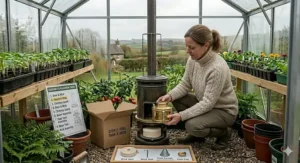
Compact, no-nonsense, and genuinely effective in small spaces, the Fireside Anti-Frost is what you reach for when you have a modest 6×4 ft greenhouse and a modest budget to match. Its 1.7-litre (3-pint) tank sounds small until you consider it delivers approximately 10 continuous days of burning on one fill — which, translated into real-world terms, means you could light it in early November and top it up just twice before Christmas.
The construction includes a quality powder-coated steel reservoir for rust protection and a flame-proof gauze chimney, both sensible features for a heater that will be sitting in the humidity of a British greenhouse all winter. There’s no thermostat, no timer — just adjustable wick length for rough heat control. That simplicity is the point.
Where UK customers really speak well of this heater is in its suitability for small spaces. Reviewers consistently describe it keeping 6×6 ft greenhouses frost-free, with one noting it’s ideal for maintaining just enough warmth to protect seedlings and cuttings. The mixed feedback concerns heat output on colder nights (below -3°C or so) and occasional soot build-up if the wick isn’t trimmed correctly — more on wick maintenance further down this guide.
✅ Genuinely economical running costs
✅ Flame-proof gauze chimney — safer in confined spaces
✅ Very compact and easy to store in summer
❌ 1.7L tank limits coverage — strictly one small greenhouse
❌ Wick adjustment requires patience; too high = soot, too low = barely warm
Price range: Under £20 — the most accessible entry point on this list.
3. CrazyGadget Large Paraffin Super Warm Heater Single Burner — Best for Longer Burns
The CrazyGadget Single Burner earns its place through one standout specification: an 80-hour burn time from a 5-litre tank. That’s roughly three and a half days of continuous heating, which puts it amongst the longest-running paraffin heaters on the UK market. It features threaded chimneys with brass-plated twin burners within the single chimney assembly — a design that improves combustion efficiency and helps reduce the sooting that plagues cheaper units.
In practical terms, this heater suits the UK gardener who’s greenhouse is large enough to be a genuine growing space — up to a 6×6 ft structure — but who doesn’t have electricity on site (allotment plots being the classic example). The 5L capacity means fewer trips across a dark, muddy allotment with a paraffin can in hand. Worth noting: paraffin, also known as kerosene, produces CO₂ and water vapour as combustion by-products — genuinely beneficial in modest quantities for plant photosynthesis, but requiring adequate ventilation to prevent excessive moisture build-up.
The main practical caveat is weight: at around 20kg, it’s not something you’ll be casually moving around once in position. Plant it where you want it, and leave it there.
✅ 80-hour burn time is exceptional for the price
✅ Brass-plated burners improve combustion quality
✅ Ideal where no electricity supply is available
❌ Heavy — not truly portable once filled
❌ Wide base means it takes up a fair bit of floor space
Price range: Under £30 — the 5L tank capacity makes this superb value per hour of heat.
4. GG Town & Country TCG8061 Twin Burner Greenhouse Heater — Best for Bigger Greenhouses
Step up to the GG Town & Country TCG8061 when your greenhouse exceeds 4m² and a single-burner unit simply isn’t cutting it. This twin-burner heater emits 600 watts of heat output — roughly four times the output of a compact anti-frost unit — and is rated for up to 5m² of growing space, which covers a respectable 8×6 ft greenhouse comfortably. Burn time is around 40 hours on a full tank, which is a fair trade-off for twice the heat output.
The twin-burner design distributes warm air more evenly across the growing space, rather than creating a single hot spot. If you’ve ever watched frost form in the corners of a greenhouse while the heater glows happily in the middle, you’ll appreciate why heat distribution matters. This is particularly useful for UK winter growing — when the temperatures sit stubbornly around 0°C for days at a time, dead spots mean dead plants.
UK gardeners find this heater well-suited to an unheated lean-to greenhouse or a polytunnel section where a single burner would struggle. The shorter burn time relative to single-burner options means you’ll refuel more often, so keep a good supply of premium-grade paraffin to hand.
✅ 600W output — serious warmth for larger structures
✅ Twin burners provide better heat distribution
✅ Suitable for up to 5m² growing area
❌ Burns through fuel faster than single-burner alternatives
❌ Fewer customer reviews than the more established options
Price range: £25–£40 range — justifiable for the extra heat output.
5. Keto Plastics Anti-Frost Compact Paraffin Greenhouse Heater — Best for Cold Frames
Small, sturdy, and purpose-built for the UK market, the Keto Plastics Anti-Frost Compact Heater (sold under various brand names on Amazon.co.uk) is designed specifically for cold frames and the very smallest greenhouses. At just 27cm diameter and 11cm tall, it sits unobtrusively at the back of a cold frame or mini-greenhouse, delivering approximately 150W of heat output from a 2.25-litre tank over 14 continuous days.
Those 14 days are the real selling point here. For a cold frame tucked against a south-facing wall in a suburban garden — the sort of sheltered, semi-insulated space that loses heat slowly — this heater genuinely will keep running through two weeks of British winter without attention. It features a premium powder-coated steel reservoir and a flame-proof gauze chimney, and it’s manufactured to safety test standards appropriate for UK use.
What this heater isn’t is a greenhouse heater in the traditional sense. It’s an anti-frost device for very small, insulated spaces — not something to throw into a draughty 8×10 ft greenhouse and expect miracles. Used correctly, though, it’s brilliant for protecting overwintered tender perennials, dahlia tubers, or a small collection of pelargonium cuttings through the colder months.
✅ Exceptional 14-day continuous burn time
✅ Ultra-compact — ideal for cold frames and small poly tunnels
✅ Powder-coated construction resists greenhouse humidity
❌ 150W output — strictly frost protection, not active warming
❌ Very limited coverage (2m²); unsuitable for standard-sized greenhouses
Price range: Under £25 — superb value for cold-frame frost protection.
6. 2x Hanging Paraffin Greenhouse Heater 500ml (Black) — Best for Targeted Heating
Here’s a product that takes a different approach entirely. Rather than sitting on the floor and trying to heat a space from the ground up, the Hanging Paraffin Greenhouse Heater is suspended from a rafter or bracket, concentrating warmth where tall plants need it most — around foliage and flower-level, rather than at ankle height. Each unit holds just 0.5 litres of fuel and burns for around 24 hours; the pack includes two heaters, giving you placement flexibility or the ability to double up coverage in a single space.
The suspension design is genuinely clever for certain growing setups — orchids on staging, hanging baskets, or tall-stemmed standards that need frost protection at height rather than at ground level. The adjustable wick controls flame intensity, and no assembly is required beyond filling and lighting.
The honest caveat: quality control seems inconsistent. At least one UK reviewer noted the rubber seal around the burner failed after a single overnight use, which is a significant concern given that paraffin fuel leaks in an enclosed space are no laughing matter. If you buy these, inspect the seal before first use, and never leave them burning unattended.
✅ Unique suspended design concentrates heat at plant level
✅ Flexible placement — hang wherever your plants need warmth most
✅ Compact and easy to store when not in use
❌ Very small 0.5L tank requires daily refilling
❌ Quality control concerns noted in some UK reviews — inspect before use
Price range: Under £25 for a pack of two — interesting and novel, but buy with eyes open.
7. Trendi Large 4.5L Paraffin Super Warm Heater Single Burner — Best Value Mid-Range
The Trendi 4.5L Single Burner occupies the same rough territory as the Ambassador ABPH10 — 4.5-litre tank, single-chimney design, coverage up to 4m² — but tends to attract a slightly different buyer: those who want solid performance without paying a premium brand price. Burn time sits at around 80 hours, which equates to just over three days of continuous heating from a single fill.
What distinguishes the Trendi from the cheaper compact options is the burner quality. The single chimney design with brass-finished components produces a cleaner burn than some budget alternatives, which matters when your greenhouse is full of plants that can be damaged by excessive soot or ethylene emissions from a dirty flame. Keep the wick trimmed and use premium-grade Class 1 kerosene/paraffin (compliant with BS2869 C2 standards), and this heater behaves very well indeed.
UK customers consistently praise its ease of use and the reliable frost protection it delivers through a typical British winter. It’s the sort of heater you fill, light, and mostly forget about — which is exactly the right relationship to have with greenhouse heating in October.
✅ 80-hour burn time on a 4.5L tank
✅ Clean burn reduces soot and plant-damaging emissions
✅ Approx. 4m² coverage suits most standard UK greenhouses
❌ No thermostat — manual wick adjustment only
❌ Heat output on genuinely cold nights (below -5°C) may require supplementary insulation
Price range: Under £30 — solid all-round performance at a very fair price.
How to Use a Paraffin Heater for Greenhouse Safely: A UK Practical Guide
Getting the most from a paraffin greenhouse heater isn’t complicated, but there are a handful of things that separate a warm, thriving greenhouse from a smoky, soot-blackened disappointment. Here’s what actually matters.
Ventilation: Non-Negotiable
This is the one that catches people out. Paraffin combustion produces water vapour, carbon dioxide, and — if the burn is incomplete — carbon monoxide. The Royal Horticultural Society explicitly notes that gas and paraffin heaters require greenhouse ventilation to prevent harmful combustion product build-up. In practice, this means leaving a roof vent very slightly ajar — even in January. Yes, you’ll lose a little heat. But excessive moisture leads to grey mould (Botrytis), and CO levels that are harmless to you when ventilated become dangerous in a sealed space.
A single cracked roof vent or a slightly open ridge is all that’s needed. Most standard UK greenhouses aren’t airtight anyway — draughts come in through gaps in the glazing and door seals whether you want them to or not.
Wick Maintenance: The Most Overlooked Step
The number one cause of paraffin heater failures — smoke, soot, poor heat output — is a neglected or incorrectly set wick. Trim the wick to a flat, even surface before lighting. If you see a yellow, smoky flame rather than a blue-tinged clean burn, the wick is either too high, too old, or both. Replace wicks at the start of each heating season, and order spares when you buy the heater — they’re inexpensive and not always easy to find locally in January when you actually need them.
Fuel Quality: Use the Right Grade
Always use premium-grade C1 kerosene (paraffin) that meets BS2869 standards. Cheap or impure fuel is the leading cause of black smoke and sooty deposits on greenhouse glass. Several UK brands sell pre-filled containers on Amazon.co.uk — convenient, and the quality is reliable. Store spare paraffin in a properly labelled container well away from any heat source, and never confuse paraffin containers with petrol ones.
Positioning
Place the heater on a flat, stable surface in a central or slightly off-centre position, away from direct contact with plant material, staging timber, or plastic sheeting. Never refuel while the heater is lit, and allow it to cool completely before moving it or transporting it.
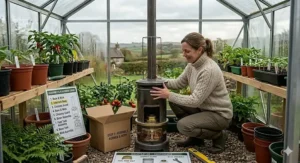
Real-World Scenarios: Matching the Right Heater to Your Greenhouse
British gardeners come in many different varieties, and the right paraffin heater depends enormously on context. Here are three profiles that might feel familiar.
Sarah in Shropshire has a 6×4 ft lean-to greenhouse attached to the side of her terraced house. She overwinters pelargoniums, a few tender herbs, and starts tomato seeds in February. She doesn’t want to run an extension cable across the garden, and she’s on a tight budget. → The Fireside Anti-Frost or the Keto Plastics Compact are her friends here. Both deliver 10–14 days of frost protection on a modest fuel budget, and neither requires any electrical connection. Running costs are minimal: paraffin currently retails at roughly £1–£2 per litre in the UK, and a 1.7–2.25L tank barely dents a budget over a winter.
Graham in Greater Manchester has a freestanding 8×6 ft aluminium greenhouse at the back of his semi. He grows tomatoes, cucumbers, and aubergines from seed each March, and wants to keep the greenhouse frost-free rather than genuinely warm. He’s fairly hands-on and doesn’t mind refilling weekly. → The Ambassador ABPH10 or the Trendi 4.5L suit him perfectly — both cover up to 4m², both last 80–168 hours on a fill, and both sit comfortably under £30. He might consider running two units side by side in January if temperatures really plummet.
Janet in rural Norfolk has a generous 10×8 ft growing house with no nearby electricity supply, where she seriously overwinters half-hardy specimens and grows from seed early. She needs real heating power, not just anti-frost. → The GG Town & Country TCG8061 twin burner is the pick, delivering 600W across up to 5m² — and running two units in a larger space is perfectly reasonable. She’d be wise to also look at the HSE guidance on carbon monoxide safety when running multiple heaters in a confined space.
Paraffin vs Electric Greenhouse Heater: The Honest Comparison
| Factor | Paraffin Heater | Electric Heater |
|---|---|---|
| Power supply required? | No | Yes — mains connection needed |
| Running cost (approx.) | £1–£2/night in fuel | £30–£80/month (thermostatically controlled) |
| Thermostat control | No (wick only) | Yes — precise temperature |
| CO₂/humidity benefit to plants | ✅ Yes | ❌ No |
| Safety considerations | Ventilation essential | Lower risk, no combustion |
| Portability | ✅ Highly portable | Moderate (cable length limits) |
| Best for | Off-grid, allotments, occasional use | Permanent, mains-connected greenhouses |
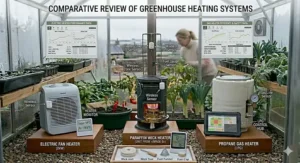
The comparison above tells a nuanced story. Electric heaters — particularly thermostatically controlled fan heaters like the popular Bio Green Palma range — offer precision that paraffin simply can’t match. But precision costs money, both in installation and running costs. For a gardener without mains electricity near the greenhouse, or someone who only needs frost protection rather than active temperature control, paraffin remains the more practical and more affordable solution. The CO₂ produced by paraffin combustion, while requiring ventilation management, can actually benefit photosynthesis in plants during daylight hours — something electric heaters can’t claim.
The verdict: use paraffin when you lack electricity access, when portability matters, or when you’re protecting frost-tender plants at minimal cost. Switch to electric when you need precise, thermostatically controlled temperatures for delicate or tropical specimens.
From a value perspective, a paraffin heater pays for itself in a single season compared to mains electric running costs — particularly relevant given UK energy prices since 2022.
✨ Don’t Miss These Exclusive Deals!
🔍 Ready to protect your plants this winter? Click on any highlighted product to check current pricing and real-time stock availability on Amazon.co.uk. Don’t let a British cold snap catch you unprepared!
How to Choose a Paraffin Heater for Greenhouse in the UK: 5 Key Criteria
Choosing the right heater doesn’t need to be complicated, but these five questions will sharpen your decision quickly.
1. How large is your greenhouse? This is the single most important factor. Under 2m²? A compact anti-frost unit (Keto Plastics, Fireside) is sufficient. Up to 4m²? A 4–5L single-burner covers you. Over 5m²? Consider twin-burner options or running two heaters.
2. Do you have mains electricity? If yes, an electric fan heater with a thermostat may ultimately be a better long-term investment. If no — allotment greenhouse, remote garden building, or simple preference — paraffin is your answer.
3. How often can you refuel? If you check the greenhouse daily, a smaller tank (1.7–2.25L) is fine. If you travel during the week or want a set-and-forget approach, prioritise a 4.5–5L tank with an 80–168-hour burn time.
4. What are you growing? The RHS notes that paraffin combustion produces ethylene and other gases that can affect sensitive plants. Orchids and cacti are particularly susceptible; hardy overwintering plants and seedlings are generally fine with proper ventilation.
5. What’s your budget? Paraffin heaters represent remarkable value at every price point. Budget options under £20 are entirely serviceable for cold frames. Mid-range options under £30 cover most standard UK greenhouses. You really don’t need to spend more than £40 for quality frost protection in this category.
Common Mistakes When Buying a Paraffin Greenhouse Heater in the UK
Buying based on coverage claims alone. A heater rated for 4m² will only achieve that in a reasonably insulated, draught-free structure. An uninsulated aluminium greenhouse in January in the north of England will demand more from any heater than the manufacturer’s spec suggests. Line your greenhouse with horticultural bubble wrap before relying on a single small heater.
Ignoring wick availability. Some budget heaters — particularly those with unusual wick diameters — can leave you searching fruitlessly for replacements in December when you most need them. Check wick availability before you buy, and order two sets upfront.
Using sub-standard paraffin. This is genuinely important. Low-grade, impure paraffin doesn’t just produce black smoke — it generates higher concentrations of sulphur dioxide and nitrogen oxides that can damage your plants directly. Spend a little more on premium Class 1 kerosene; your plants will thank you.
Forgetting about ventilation. Sealed, bubble-wrapped greenhouses with a paraffin heater running inside are a recipe for grey mould and excessively high humidity. Always leave at least one vent slightly open. The heat loss is minimal; the benefits are substantial.
Underestimating British winter temperatures. The UK averages fairly mild winters, but that doesn’t mean -8°C nights don’t happen — they occur somewhere in the UK every winter. A single anti-frost compact heater won’t maintain 5°C inside a poorly insulated structure on a night like that. Have a backup plan, or invest in some additional horticultural fleece for extreme cold snaps.
FAQ: Paraffin Heater for Greenhouse — Your Questions Answered
❓ Is a paraffin heater for greenhouse safe to use indoors overnight?
❓ How long does paraffin last in a greenhouse heater?
❓ Do I need to ventilate my greenhouse when using a paraffin heater?
❓ What type of paraffin should I use in my greenhouse heater?
❓ Can a paraffin greenhouse heater replace electric heating?
Conclusion: The Right Paraffin Heater Makes British Winter Gardening Genuinely Enjoyable
A paraffin heater for greenhouse use is, at its best, one of the most satisfying bits of kit a British gardener can own. Simple to operate, impressively economical, and requiring no power supply — it turns a vulnerable glass box on a January night into something actually approaching a growing environment. The CO₂ byproduct gives your seedlings a mild boost, the humidity keeps the air from becoming desert-dry, and the gentle warmth keeps that frost threat at bay with minimal fuss.
The key is matching the right heater to your space. For a cold frame or mini-greenhouse, the Fireside Anti-Frost or Keto Plastics Compact are hard to beat at under £25. For a standard 6×6 to 6×8 ft greenhouse, the Ambassador ABPH10 or Trendi 4.5L deliver excellent value with impressively long burn times. Step up to the GG Town & Country TCG8061 if you’re heating a serious growing space and need that extra output.
Whatever you choose, prioritise ventilation, use quality paraffin, and keep replacement wicks to hand. Do those three things, and you’ll be harvesting spring salad while your neighbours are still scraping frost off their car bonnets.
✨ Don’t Miss These Exclusive Deals!
🔍 Click on any highlighted product to check current pricing and stock on Amazon.co.uk. Free delivery available on qualifying orders, and Prime members can enjoy next-day delivery to most UK postcodes. Happy growing! 🌱🇬🇧
Recommended for You
- Best Electric Greenhouse Heater UK 2026: 7 Expert Picks Reviewed
- Best Fire Bowl for Garden UK 2026: 7 Top Picks Reviewed
- Best Chimenea UK 2026: 7 Top Picks for Warm Garden Nights
Disclaimer: This article contains affiliate links. As an Amazon Associate, I earn from qualifying purchases. If you purchase products through these links, we may earn a small commission at no additional cost to you.
✨ Found this helpful? Share it with your mates! 💬🤗
