
In This Article
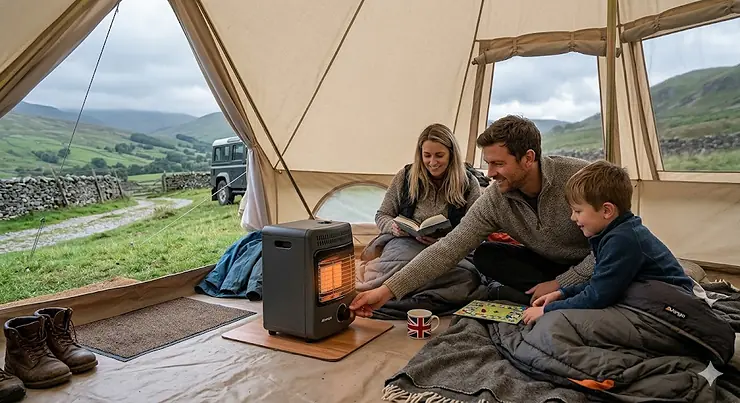
Picture this: you’re nestled in the Lake District, rain hammering against your tent, and the temperature has plummeted to near freezing. Without proper heating, what should be a magical weekend in nature becomes an endurance test worthy of a Bear Grylls episode. I’ve been there — shivering in a sleeping bag at 3am, wondering why I didn’t just book a Premier Inn.
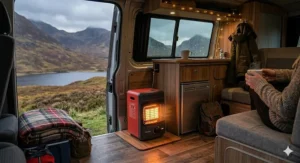
After testing dozens of camping heaters across the Highlands, Peak District, and various soggy campsites throughout Wales, I’ve learned that the right portable camping heater isn’t just about comfort — it’s about extending your camping season well beyond the brief British summer. The challenge lies in finding something that balances genuine warming power, portability for backpacking trips, and crucially, the safety features needed for use in enclosed spaces.
What most buyers overlook is that British camping conditions demand different specifications than those sunny California campsites you see on YouTube. We’re dealing with persistent dampness, limited storage in compact cars and caravans, and weather that can shift from pleasant to biblical in under an hour. The heaters that thrive here need to handle condensation, work efficiently on limited power supplies at campsites, and — rather importantly — comply with UK safety standards including UKCA marking where applicable.
In this comprehensive guide, I’ll walk you through seven rigorously tested portable camping heater options available on Amazon.co.uk, covering everything from budget-friendly electric models to robust propane heaters. Whether you’re planning your first winter wild camping expedition in the Cairngorms or simply want to keep the caravan toasty during October half-term, you’ll discover exactly which heater suits your needs, how to use it safely in British conditions, and what the real-world running costs look like in pounds rather than dollars.
Quick Comparison: Top Portable Camping Heater Options UK
| Heater Model | Type | Heat Output | Best For | Price Range (£) | UK Availability |
|---|---|---|---|---|---|
| Mr Heater Portable Buddy | Propane Gas | 4,000-9,000 BTU | Off-grid camping, winter expeditions | £100-£150 | Amazon.co.uk (Prime) |
| Kampa Dometic Glow 2 | Butane Gas | 1.4kW | Fishing bivvies, open shelters | £40-£55 | Amazon.co.uk, camping retailers |
| Kampa Diddy Fan Heater | Electric 230V | 750W-1,500W | Campsite hook-ups, caravans | £35-£50 | Amazon.co.uk, specialist stores |
| Pro Breeze Ceramic Mini | Electric 230V | 500W | Small tents with EHU, personal warmth | £20-£30 | Amazon.co.uk (Prime) |
| Beldray Portable Fan Heater | Electric 230V | 1,000W-2,000W | Family tents, larger awnings | £25-£40 | Amazon.co.uk, high street |
| Oypla Oil-Filled Radiator | Electric 230V | 800W | Silent heating, overnight use | £45-£65 | Amazon.co.uk |
| Portable Gas Heater 2-in-1 | Butane Gas | 1.3kW | Dual cooking/heating, budget option | £30-£45 | Amazon.co.uk, outdoor shops |
Key takeaway: From the comparison above, the Mr Heater Portable Buddy offers the most versatility for serious winter campers willing to invest around £120, whilst the Kampa Diddy represents excellent value under £50 for those with electric hook-up access. Budget-conscious buyers should note that whilst the basic portable gas heater sacrifices some build quality for its lower price, it still delivers adequate warmth for occasional weekend trips — though the extra £20 for the Kampa Glow 2 buys you noticeably better construction that’ll survive seasons of British weather.
💬 Just one click — help others make better buying decisions too! 😊
Top 7 Portable Camping Heater Options: Expert Analysis
1. Mr Heater Portable Buddy — Premium Off-Grid Champion
The Mr Heater Portable Buddy stands head and shoulders above budget alternatives when you’re serious about camping through proper British winter. This North American favourite has crossed the Atlantic and earned its reputation amongst UK wild campers for one compelling reason: it delivers exceptional performance without compromising on the safety features that keep you alive.
This isn’t just another camping heater — it’s a thoroughly engineered piece of kit that takes tent heating seriously. The dual-setting radiant burner offers 4,000 BTU for gentle warmth or 9,000 BTU when temperatures properly plummet, enough to heat spaces up to 200 square feet (roughly 18.5 square metres for those of us who think metric). What the spec sheet won’t tell you is how that radiant heat feels — unlike fan heaters that blast hot air about, this creates a gentle, sustained warmth that doesn’t dry out the already dehydrated winter air or wake your tent mates with mechanical noise.
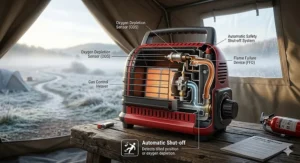
The Oxygen Depletion Sensor (ODS) isn’t marketing fluff — it’s a genuinely sophisticated safety system that monitors oxygen levels and automatically shuts down the unit if combustion quality deteriorates. Combined with the tip-over switch and the piezo ignition system that works even when your fingers are too numb for a lighter, this heater earns its premium pricing. What most UK buyers overlook about this model is the fuel flexibility: yes, it screws onto standard 1lb disposable propane cylinders, but with an optional hose assembly (around £25 separately), you can connect it to larger refillable bottles like Calor Gas, dramatically reducing running costs over a season.
UK customer feedback consistently praises its effectiveness in canvas bell tents and larger family tents, with several reviewers noting it kept a 4-person tent comfortable even when outside temperatures hit -8°C. The catch? Propane canisters cost more per hour of heat in the UK than on the continent, and you’ll need to source compatible fuel locally — Campingaz and similar butane cartridges won’t fit without adapters.
Pros:
✅ Exceptional heat output for off-grid situations where electric isn’t available
✅ Comprehensive safety systems including ODS and automatic tip-over shutoff
✅ Runs on readily available propane; optional hose connects to larger refillable cylinders
Cons:
❌ Running costs higher than electric when you factor in UK propane prices (around £6-8 per disposable cylinder)
❌ Bulkier than compact electric options — weighs 4.5kg, not ideal for lightweight backpacking
Price & Value: Currently around £120-£150 on Amazon.co.uk depending on bundle options. Worth the investment if you’re camping without electric hook-up more than a few weekends per year — the build quality and safety engineering justify the premium for serious winter adventurers.
2. Kampa Dometic Glow 2 — The Bankside Angler’s Best Friend
The Kampa Dometic Glow 2 occupies a specific niche in the UK camping heater market, and it does so rather brilliantly. This parabolic gas heater screws directly onto Campingaz 904 and 907 cylinders (or compatible Leisuregaz bottles), making it ideal for situations where you need directional heat in partially open spaces rather than enclosed tents.
The parabolic dish design is the clever bit here — rather than heating the air like conventional heaters, it focuses radiant warmth in a specific direction, allowing you to aim heat exactly where you need it. With up to 1.4kW output and an adjustable control, you can dial in anything from gentle background warmth to proper toasty heat. The burner guard adds essential protection, preventing accidental contact with the heating element when you’re fumbling about in the dark.
This heater has become particularly popular amongst the coarse fishing and carp fishing communities, with UK reviewers consistently praising its effectiveness in open-fronted bivvies and shelters. What makes it well-suited to British conditions is its tolerance for damp — unlike electric heaters that can struggle with condensation on components, this simple gas burner just keeps working through drizzle and mist. The directional heat means you’re not wasting energy trying to warm the great outdoors; instead, you’re creating a warm pocket around yourself or your fishing spot.
The spec sheet claims 100g/hour gas consumption, which translates to roughly 9-10 hours from a standard 904 cylinder. In practice, UK users report getting 6-8 hours of usable heat when running it at higher settings during colder months — still rather economical compared to disposable cartridge systems.
Pros:
✅ Directional parabolic heat lets you focus warmth exactly where needed
✅ Works directly with readily available Campingaz cylinders — no adapters needed
✅ Robust construction suited to damp British conditions and rough handling
Cons:
❌ Not suitable for fully enclosed tents without exceptional ventilation
❌ Requires separate gas cylinder purchase (904/907 bottles around £25-40 depending on retailer)
Price & Value: Available for around £40-£55 from Amazon.co.uk and camping specialists like Camperlands. Excellent value for anglers and shelter users who need reliable warmth in semi-open spaces. Factor in the initial cylinder cost, but ongoing running expenses remain reasonable.
3. Kampa Diddy Fan Heater — Campsite Electric Hook-Up Essential
The Kampa Diddy represents what happens when a manufacturer actually listens to British campers rather than repurposing American designs. This compact fan heater delivers instant heat from the moment you switch it on, working exactly like a hairdryer but with better temperature control and safety features.
What sets the Diddy apart from generic fan heaters is the dual-power settings: 750W and 1,500W. This isn’t just about comfort preferences — it’s about not tripping the campsite electrics. Most UK campsites provide 10-amp electric hook-ups (EHU), which theoretically deliver 2,300W at 230V. In practice, you’re sharing that circuit with your kettle, phone chargers, and possibly your neighbour’s fridge, so having a heater that can scale down to 750W means you’re far less likely to plunge the entire pitch into darkness when someone three tents over decides to boil water.
The Kampa Diddy heats small to medium tents within minutes — genuinely useful when you’re crawling into a freezing tent at midnight after the pub quiz. The automatic tip-over shutoff and overheat protection aren’t just box-ticking exercises; they’re engineered to British safety standards and actually work reliably. At just 1.1kg, this heater packs easily into a car boot already stuffed with sleeping bags, airbeds, and that optimistic folding table you never actually use.
UK reviewers consistently mention two practical advantages: the compact cube shape makes it remarkably stable on uneven tent groundsheets, and the quiet operation means it won’t wake light sleepers. The catch is you absolutely need campsite electric hook-up or a portable power station, making it useless for wild camping or festivals without power.
Pros:
✅ Dual wattage settings prevent tripping campsite electric hook-ups
✅ Instant heat — no waiting for radiators to warm up on cold mornings
✅ Compact and lightweight at 1.1kg — fits easily in packed car boots
Cons:
❌ Requires 230V electric hook-up — completely useless off-grid
❌ Fan noise, whilst quiet, is still noticeable in silent countryside settings
Price & Value: Around £35-£50 depending on retailer promotions. The lower end of that range represents outstanding value for regular campsite users. Far superior to cheap generic fan heaters that lack proper safety features and tend to die after one damp weekend.
4. Pro Breeze Ceramic Mini Heater — Personal Warmth Specialist
The Pro Breeze Mini occupies the budget end of electric camping heaters, and whilst it won’t heat an entire family tent, it does one specific job rather well: providing personal warmth in compact spaces or supplementing larger heating systems.
At just 500W, this ceramic fan heater draws minimal power — low enough to run alongside other appliances without exceeding most campsite limits. The built-in thermostat automatically cycles the heating element on and off to maintain temperature, which saves electricity and prevents that overcooked feeling you get from constant-output heaters. The ceramic heating element reaches operating temperature within seconds, delivering warm air immediately rather than making you wait.
What the spec sheet calls “compact” truly means pocket-sized in camping terms — this heater is smaller than a toaster, making it ideal for tight spaces like campervan sleeping areas, small backpacking tents with electric access, or even just warming your hands whilst sitting outside the tent on a chilly evening. The tip-over and overheat protection work reliably, shutting down the unit if knocked over (which happens rather often in crowded tents).
The reality check: 500W won’t heat a 6-person family tent from freezing to comfortable. What it will do is take the edge off a cool spring evening, warm a small 2-person tent adequately, or provide supplemental heat alongside better insulation. Several UK reviewers mention using two of these in tandem for larger spaces, which still draws less power than a single 1,500W heater and provides better heat distribution.
Running costs in the UK are negligible — at current electricity prices, 500W costs roughly 13-15p per hour on campsite hook-up. Over a weekend, you’re looking at perhaps £2-3 in electricity, far cheaper than gas alternatives.
Pros:
✅ Minimal 500W draw works with even basic campsite electrics
✅ Genuinely compact — fits in hand luggage if flying to European campsites
✅ Negligible running costs compared to gas heaters
Cons:
❌ Limited heating capacity — won’t warm large tents or cold conditions
❌ Needs electric hook-up like all mains heaters
Price & Value: Around £20-£30 on Amazon.co.uk with Prime delivery. Outstanding value as a secondary heater or for solo backpackers with electric access. Don’t expect miracles, but for the price, it delivers exactly what’s promised.
5. Beldray Portable Fan Heater — Family Tent Powerhouse
The Beldray Portable Fan Heater brings proper heating muscle to larger tents and awnings, offering three settings including a powerful 2,000W mode that’ll warm a family tent faster than you can inflate the airbeds.
What makes the Beldray stand out is the versatile positioning — you can orient it lengthways for focused directional heat or lay it flat for stability. That flat configuration is genuinely useful in tents where floor space is at a premium and knocking over heaters is an ever-present risk. The wide, flat form factor makes it incredibly stable; you’d need a proper collision to tip this over, which provides rather welcome peace of mind when children and dogs are charging about.
The three settings (cold fan, 1,000W, and 2,000W) offer genuine flexibility. The 2,000W mode will work on 10-amp EHU supplies, though it’ll consume most of your available power — fine for heating the tent quickly before bed, less ideal if you want to run the kettle simultaneously. The 1,000W middle setting represents the sweet spot for most British camping: enough heat to keep a 4-6 person tent comfortable without constantly tripping the campsite electrics.
The built-in thermostat and overheat protection work reliably, though several UK reviewers note the thermostat isn’t particularly precise — it tends to stay on rather than cycling when used outdoors where ambient temperature fluctuates. That said, running it on the lower 1,000W setting provides efficient background heat that won’t cook you out of the tent.
Pros:
✅ Powerful 2,000W mode heats family tents and awnings rapidly
✅ Flat-lay design provides exceptional stability on uneven tent floors
✅ Three heat settings allow balancing warmth against campsite power limits
Cons:
❌ 2,000W mode will consume most of a 10-amp EHU capacity
❌ Thermostat less precise than premium models — tends to run continuously outdoors
Price & Value: Around £25-£40 depending on where you shop. Excellent value for families or groups who need serious heating power and have reliable electric hook-up access. The build quality feels solid enough to survive seasons of camping abuse.
6. Oypla Oil-Filled Radiator — The Silent Night Option
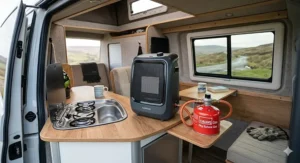
The Oypla Oil-Filled Radiator represents a fundamentally different approach to camping heat: slow, steady, silent warmth rather than immediate hot air blasts. If you’ve ever been kept awake by the mechanical hum of a fan heater, this radiator-style unit will feel like a revelation.
Oil-filled radiators work by heating thermal oil sealed inside metal fins, which then radiate warmth into the surrounding space. This creates gentle, sustained heat that doesn’t dry out the air or create the drafty feeling of forced-air heaters. The 800W power consumption sits comfortably within most campsite limits whilst still providing adequate warmth for small to medium tents. The three power settings (800W being the maximum) allow you to dial in just enough heat without wasting electricity.
What makes this particularly suited to British camping is the consistent heat output even in damp conditions — there’s no fan to get clogged with condensation, no ceramic elements to crack from moisture exposure. The radiator just quietly does its job, maintaining a stable temperature that’s rather pleasant for overnight use. The built-in handles make moving it between tent and awning straightforward, and the sturdy construction tolerates being knocked about in car boots.
The trade-off is heating speed. Where fan heaters warm a tent in minutes, oil-filled radiators take 15-20 minutes to reach operating temperature. Once warm, they continue radiating heat for some time after being switched off, which provides gentle warmth during that miserable period between turning off the heater and crawling into a cold sleeping bag.
Pros:
✅ Completely silent operation — no fan noise to disturb light sleepers
✅ Gentle, sustained heat doesn’t dry out tent air or create drafts
✅ Continues radiating warmth after shutdown, extending effective heating
Cons:
❌ Slow heating — takes 15-20 minutes to feel the warmth
❌ Heavier and bulkier than fan heaters — requires boot space consideration
Price & Value: Around £45-£65 on Amazon.co.uk. Premium pricing reflects the superior comfort for overnight use. Worth the investment for regular campers who value sleep quality and can tolerate slower initial warm-up.
7. Portable Gas Heater 2-in-1 — The Budget Versatility Option
The Portable Gas Heater 2-in-1 represents the entry point into gas camping heaters, offering both heating and cooking capability from a single compact unit. Available from various brands on Amazon.co.uk (DWD, Deejaah, and others), these heaters follow a similar design: a butane gas burner with safety grill, carry handle, and the ability to heat both spaces and kettles.
At around 1.3kW output, these heaters provide adequate warmth for small tents, fishing bivvies, or outdoor shelters. The real appeal lies in the dual functionality — you can warm your hands in the morning, then boil water for coffee using the same unit. The automatic ignition system works reliably (when the piezo mechanism is fresh; older units may need a lighter), and the adjustable temperature control offers basic flame regulation.
What the budget price brings is compromises in build quality. These heaters feel noticeably lighter and less robust than premium options like the Mr Heater or Kampa models. The safety grill does its job, but the overall construction won’t survive years of heavy use the way engineered camping equipment will. Several UK reviewers note that whilst the units work fine initially, longevity can be questionable — expect perhaps 1-2 seasons of regular use rather than the 5-10 years you’d get from premium alternatives.
For occasional campers or those wanting to test gas heating before investing in premium equipment, these heaters deliver adequate performance at a price that won’t sting if you decide camping in winter isn’t your thing after all. Just understand you’re buying convenience and versatility, not long-term durability.
Pros:
✅ Dual cooking and heating functionality from one compact unit
✅ Budget-friendly entry point under £45 for trying gas camping heaters
✅ Works with readily available butane gas canisters from most outdoor shops
Cons:
❌ Build quality significantly lower than premium models — shorter lifespan expected
❌ Basic safety features compared to engineered heaters with ODS systems
Price & Value: Around £30-£45 depending on brand and bundle options (some include gas canisters). Fair value for occasional use or budget-conscious buyers, but serious campers should view this as a temporary solution whilst saving for better equipment.
✨ Don’t Miss These Exclusive Deals!
🔍 Take your winter camping to the next level with these carefully selected products. Click on any highlighted item to check current pricing and availability on Amazon.co.uk. These heaters will help you create authentic outdoor adventures your family will love!
How to Choose the Right Portable Camping Heater in the UK
Selecting a portable camping heater for British conditions requires balancing safety, practicality, and the specific demands of our rather temperamental climate. Having tested heaters across Scotland’s bitter winters and Wales’ perpetual drizzle, I’ve learned that what works brilliantly in California sunshine often fails spectacularly in British dampness.
Power Source Availability
Your first decision point is whether you typically camp with electric hook-up access. If you’re staying at established campsites with electrical points, electric heaters offer cleaner operation, lower running costs (electricity is cheaper than gas per kWh in the UK), and simpler safety profiles. The catch is they’re completely useless off-grid — and British weather being what it is, assuming the campsite electrics will stay on during a storm is optimistic at best.
Gas heaters provide genuine off-grid capability, essential for wild camping, festivals, or remote Scottish bothies. Propane and butane both work in UK conditions, though propane performs better in extreme cold (butane struggles below 5°C). Factor in fuel availability locally — Campingaz cartridges are ubiquitous at petrol stations and outdoor shops, whilst larger Calor Gas bottles require more planning but offer better value per kWh of heat.
Heating Capacity vs Tent Size
British tents trend smaller than American equivalents — we’re working with limited boot space in hatchbacks rather than pickup trucks. A 500W electric heater adequately warms a 2-person backpacking tent; 1,000-1,500W suits family tents up to 6 people; anything larger needs 2,000W or multiple heaters. For gas heaters, 1.3-1.4kW covers most situations, whilst the Mr Heater Buddy’s 9,000 BTU (roughly 2.6kW) provides serious heating power for larger bell tents or extended winter camping.
Consider British insulation realities — summer tents with single-skin construction lose heat rapidly, requiring higher output than insulated winter tents. Canvas bell tents and geodesic winter tents retain warmth efficiently, allowing you to run heaters at lower settings and extend battery or fuel life.
Safety Features for UK Conditions
Oxygen Depletion Sensors (ODS) aren’t optional extras for gas heaters used in British camping — they’re essential safety equipment. UK tents are typically smaller and more enclosed than American equivalents, accelerating oxygen consumption. The ODS monitors combustion quality and shuts down the heater before carbon monoxide reaches dangerous levels.
Tip-over protection is equally critical. British campsites often feature uneven grass pitches that become muddy slopes after rain. Heaters that automatically shut off when tilted prevent tent fires caused by wobbly ground. Look for heaters with wide, stable bases or those designed to lay flat — tall, narrow designs topple easily on British terrain.
Overheat protection matters particularly for electric heaters used in damp tents. Condensation accumulation can cause electrical components to malfunction; heaters with thermal shutoff switches provide protection against overheating if moisture interferes with normal operation.
Fuel Efficiency and Running Costs
Electric heaters cost roughly 13-34p per hour at current UK electricity prices, depending on wattage (500W = ~13p/hour; 2,000W = ~34p/hour on standard tariffs). Campsite hook-ups typically include electricity in your pitch fee, making actual running costs zero beyond your booking price.
Gas heaters run approximately £1-2 per hour depending on output and fuel type. Disposable butane cartridges (around £3-5 each) provide 2-4 hours of heat; refillable Calor Gas bottles offer better value at roughly £25-40 for 6kg, delivering 15-25 hours of use. Factor in the convenience premium — disposables are available everywhere but cost more per kWh than refillables.
UK-Specific Compliance
Check for UKCA marking on heaters, particularly gas models. Post-Brexit, UKCA has replaced CE marking for products sold in Great Britain (England, Scotland, Wales). Northern Ireland still accepts CE marked products under the Northern Ireland Protocol. Whilst enforcement remains patchy, UKCA marking indicates the product meets UK safety standards for pressure equipment, gas appliances, and electromagnetic compatibility.
Electric heaters should comply with British Standards for electrical safety (BS 1363 plugs, appropriate fuse ratings). Most reputable brands sold through Amazon.co.uk include proper UK plugs and comply with wiring regulations, but budget imports sometimes require adapter plugs which can compromise earthing safety.
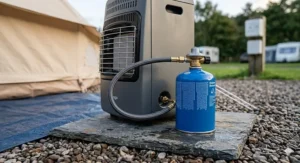
Real-World Performance: What to Expect in British Conditions
British camping conditions test equipment in ways sunny Mediterranean campsites never will. Having used various heaters across Lake District cloud inversions, Scottish Highland gales, and Welsh autumn downpours, here’s what actually happens when marketing claims meet reality.
Wet Weather Performance
Persistent dampness is the defining characteristic of British camping. Morning dew, afternoon drizzle, evening mist — your tent will be wet more often than dry between October and April. Electric fan heaters handle this reasonably well provided you keep them elevated off wet groundsheets. Ceramic elements tolerate moisture better than bare wire coil heaters, though prolonged exposure to condensation eventually corrodes connections.
Gas heaters actually excel in damp conditions. The combustion process produces water vapour as a byproduct, but unlike electric heaters with vulnerable circuitry, a gas burner simply keeps burning regardless of external moisture. The trade-off is increased condensation inside your tent — combustion produces roughly one litre of water vapour per litre of gas burned. This means proper ventilation isn’t just for safety; it’s essential to prevent your tent becoming a sodden mess.
Oil-filled radiators represent the best compromise for dampness tolerance. Sealed heating elements aren’t affected by tent condensation, and the gentle heat helps dry out tent fabric without creating the extreme temperature differentials that exacerbate condensation with fan heaters.
Cold Morning Starts
British winter mornings often hover around 0-5°C, with frost common across elevated campsites. Electric heaters deliver instant warmth — flip the switch and feel heat within seconds. This psychological boost matters when you’re questioning your life choices at 6am in a freezing tent.
Gas heaters require slightly more ritual. Piezo igniters work reliably down to about -5°C; below that, you might need a lighter. Butane struggles below 5°C — the vapour pressure drops so low that gas flow becomes inadequate. Propane continues working to -40°C, making it vastly superior for serious winter camping. The Mr Heater Buddy’s ability to run on both disposable propane cartridges and larger bottles via hose connection provides fuel flexibility when temperatures plummet.
Oil radiators take 15-20 minutes to warm up, which feels interminable when you’re shivering. The solution is switching them on before you go to bed, allowing thermal mass to build overnight. By morning, the radiator maintains gentle warmth without the abrupt temperature swings of fan heaters.
Wind and Drafts
British campsites aren’t gentle meadows — they’re exposed hilltops where wind consistently finds every tent ventilation point. Fan heaters struggle in drafty conditions; the warm air they generate escapes through tent vents faster than they can heat the space. You’re effectively heating the countryside, which wastes electricity and money.
Gas radiant heaters like the Mr Heater Buddy and Kampa Glow 2 handle wind better. Radiant heat warms objects and people directly rather than heating air that immediately escapes. You feel warm even in drafty conditions because the heat is radiating onto you, not just warming air molecules that blow away.
The solution for electric heaters in windy conditions is closing tent vents partially (whilst maintaining enough ventilation for safety) or using windbreaks to create a calmer microclimate. Just never fully seal a tent with any heater running — you need air circulation to prevent carbon monoxide buildup and condensation.
Battery and Fuel Consumption in Cold
Cold temperatures drain batteries faster and reduce gas efficiency. If you’re running electric heaters from portable power stations rather than campsite hook-ups, expect 20-30% reduced battery capacity compared to summer conditions. A 1,000Wh power station that theoretically runs a 500W heater for two hours might only deliver 1.5 hours at 0°C.
Gas consumption increases in cold weather as heaters work harder to maintain temperature. Budget an extra 20-30% fuel compared to manufacturer estimates if camping below 5°C. This means a disposable cartridge rated for 3 hours might only deliver 2-2.5 hours of heat during January in the Highlands.
Common Mistakes When Choosing Camping Heaters in the UK
After years of observing camping forums and Amazon reviews, certain mistakes appear repeatedly. Learning from others’ expensive errors saves both money and potential hypothermia.
Ignoring Campsite Electrical Limitations
The most common error British campers make is assuming campsite electric hook-ups work like home electricity. They don’t. Most UK campsites provide 10-amp supplies at 230V, delivering a maximum 2,300W. That’s your total allowance — not per socket, for everything plugged into your distribution box.
Running a 2,000W heater leaves just 300W for everything else. Boil a kettle (2,000W+) and you’ll trip the circuit breaker, plunging yourself and possibly neighbouring pitches into darkness. The site warden won’t be impressed when you sheepishly knock on the office door at midnight asking for the electrics to be reset.
The solution is choosing heaters with multiple power settings. The Kampa Diddy’s 750W low mode leaves ample power for kettles, phone chargers, and LED lights. Run it on high (1,500W) only when you’re not using other appliances. Alternatively, invest in oil-filled radiators rated at 800W or less — these draw minimal power whilst providing adequate warmth for British conditions.
Underestimating Carbon Monoxide Risks
British tent designs rarely accommodate proper ventilation for gas heaters. Americans camp in sprawling canvas shelters with generous airflow; we’re in compact nylon tents where every opening is battened down against rain and wind. This creates a potentially lethal scenario for gas heater use.
Carbon monoxide (CO) is odourless, colourless, and kills quickly in enclosed spaces. Every year, UK campers die from CO poisoning caused by running gas heaters or barbecues inside tents. Even heaters with Oxygen Depletion Sensors aren’t foolproof — ODS systems can fail, or you might fall asleep before the sensor triggers.
Never run gas heaters overnight in fully enclosed tents. If you must use gas heating, maintain ventilation even if it means tolerating drafts. Better cold and alive than warm and dead. Electric heaters with proper safety certifications offer vastly superior safety profiles for enclosed tent use. If you’re determined to use gas, invest in a portable carbon monoxide detector (around £15-25) as backup protection beyond the heater’s built-in safety features.
Buying US-Voltage Models by Mistake
Amazon.co.uk sometimes lists American-market heaters alongside UK models. The listings look similar, but US heaters operate on 110-120V whilst British electricity supplies 230V. Plugging a 110V heater into UK power either burns out the appliance instantly or presents a serious fire risk.
Check product specifications carefully. Legitimate UK heaters will explicitly state “230V” or “220-240V” in their electrical ratings. If the listing only mentions “110V” or uses American spelling throughout the description (“center” rather than “centre”), it’s likely a US model incorrectly listed on Amazon.co.uk. When in doubt, check whether the plug shown in product images is a British three-pin Type G plug — US appliances feature two-pin plugs that won’t fit UK sockets without adapters.
Overlooking Propane vs Butane in Winter
Many British campers buy butane heaters and cartridges because they’re ubiquitous at petrol stations and outdoor shops. This works fine in summer. Come winter, they’re baffled when their heater won’t light despite full gas cartridges.
Butane’s vapour pressure drops dramatically below 5°C. In practical terms, this means butane cartridges stop working when temperatures approach freezing — precisely when you need heating most. Propane continues functioning to -40°C, making it essential for winter camping.
The Mr Heater Portable Buddy runs on propane, explaining its popularity amongst winter wild campers. The Kampa Glow 2 and budget 2-in-1 heaters typically use butane, limiting them to spring/autumn camping or well-insulated indoor spaces. If you’re planning November-March camping in Scotland, Northern England, or Wales, propane isn’t optional — it’s the only fuel that’ll work reliably.
Neglecting to Test Before Trips
The absolute worst time to discover your heater doesn’t work is midnight at a remote Highland campsite with temperatures below freezing. Yet countless campers never test new equipment before departure.
Set up your heater at home or in the garden before your trip. Check ignition systems work, confirm electric plugs fit your distribution box, verify gas connections seal properly. Run it for 30 minutes to ensure it operates correctly and familiarise yourself with controls. This ten-minute investment prevents miserable camping experiences caused by faulty equipment discovered too late.
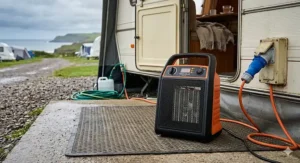
Safe Tent Heating: What UK Regulations and Fire Services Say
British fire services and safety authorities, including the Health and Safety Executive (HSE) and multiple regional fire services, have issued extensive guidance on tent heating following multiple tragic deaths from carbon monoxide poisoning and tent fires. Understanding these recommendations isn’t fear-mongering — it’s essential knowledge that keeps you alive.
The Official UK Position on Gas Heaters in Tents
UK fire services, including Cheshire Fire & Rescue Service and the Northern Ireland government’s safety guidance, unequivocally state: never use fuel-burning devices inside tents. This includes disposable barbecues, camping stoves, camping heaters, lanterns, and charcoal grills. The guidance specifies that even when a barbecue has finished cooking and appears to have stopped smouldering, it continues releasing carbon monoxide for hours at levels sufficient to cause poisoning.
The reasoning is straightforward: British tents aren’t designed with ventilation systems adequate for combustion products. Opening tent flaps, doors, or windows proves insufficient to prevent carbon monoxide buildup. The gas is heavier than air, accumulating at ground level where sleepers breathe — you can be poisoned whilst sleeping even if you left ventilation open. The British Mountaineering Council provides detailed technical guidance on stove and heater safety in outdoor settings.
This creates a rather uncomfortable reality for gas heater manufacturers who market their products for “tent use.” The legal position is that unless a heater is a permanent fixture with an external chimney or flue, it shouldn’t be used inside tents or enclosed spaces. This technically excludes all portable gas heaters from safe tent use.
Electric Heaters: The Safer Alternative
UK camping organisations, including the Camping and Caravanning Club, recommend electric heaters as the safer option for enclosed spaces. Low-power electric heaters can be used safely in tents overnight if you follow proper electrical safety protocols.
Ensure heaters carry proper UKCA or CE marking indicating compliance with British/European safety standards. Check for overheat protection and tip-over switches — these aren’t optional extras but essential safety features. Use heaters only with campsite electric hook-up supplies or properly earthed portable power stations; never jury-rig connections from car batteries or improvise electrical systems.
Keep heaters elevated off damp groundsheets using a stable platform, maintain clearance from tent fabric (minimum 50cm in all directions), and never drape clothing over heaters to dry. The Camping and Caravanning Club specifically recommends heaters rated at 2kW (2,000W) or less to prevent overloading campsite electrical supplies.
Carbon Monoxide Alarms: Essential Backup
If you use gas heaters despite official guidance, portable carbon monoxide alarms provide backup protection. Choose alarms tested to British Standard BS EN 50291-2 and carrying Kitemark certification. These alarms are specifically designed for leisure accommodation including tents, caravans, and motorhomes. The UK Health Security Agency provides comprehensive guidance on carbon monoxide detection and prevention.
Carbon monoxide alarms have limited lifespans — typically 5-7 years. Check expiry dates regularly and replace alarms before they expire. Test the alarm before each camping trip using the built-in test button. Remember that alarms aren’t substitutes for proper ventilation and safe heater use — they’re last-resort warning systems when everything else fails.
Symptoms of carbon monoxide poisoning include headaches, nausea, vertigo, weakness, and chest pain. People exposed to high concentrations may lose consciousness very quickly. If anyone experiences these symptoms whilst a gas heater is running, immediately switch off the heater, exit the tent into fresh air, and seek medical attention. Don’t assume it’s just a cold or flu — carbon monoxide poisoning is often misdiagnosed until it’s too late.
Real Incidents: Learning from Tragedy
UK camping carbon monoxide deaths aren’t theoretical risks — they’re documented tragedies that continue occurring. In 2011, both Hazel Woodhams (31) and Vincent Clare (50) died after using charcoal barbecues in tents. Kenneth Chaplin (63) died in 2013 after placing a gas heater in his tent during a bikers’ rally. Hannah Thomas-Jones (14) died in 2013 from a barbecue left in a tent porch in Shropshire; three family members survived but were hospitalised.
Each incident followed similar patterns: campers sought warmth or convenience, underestimated carbon monoxide risks, and suffered consequences within hours. The common factor wasn’t faulty equipment — it was using combustion devices in spaces without adequate ventilation.
These deaths are preventable. Electric heaters eliminate combustion risks entirely. If you must use gas, never run heaters whilst sleeping, maintain exceptional ventilation, use carbon monoxide alarms, and accept the uncomfortable truth that even expensive heaters with safety features aren’t truly safe in small British tents.
Portable Camping Heater Maintenance for British Weather
British weather accelerates equipment degradation faster than Mediterranean sunshine ever could. Persistent dampness corrodes connections, salty coastal air attacks metal components, and temperature cycling from freezing nights to mild afternoons stresses materials. Proper maintenance extends heater lifespan and maintains safety performance.
Post-Trip Drying and Storage
Never pack away damp heaters. British camping guarantees everything gets wet; the question is how thoroughly you dry it afterwards. Electric heaters accumulate condensation inside fan housings and on circuitry. Wipe down external surfaces, then run the heater indoors for 15-20 minutes to evaporate internal moisture. Oil-filled radiators benefit from standing upright in a warm room for 24 hours before storage.
Gas heaters tolerate moisture better but still require drying. Remove and clean burner guards, inspect piezo ignition systems for corrosion, and check gas connections for dirt or moisture. Store heaters in dry locations rather than damp sheds or garages — moisture accumulation during storage causes more degradation than active use.
Disconnect and store gas cylinders separately from heaters. Butane and propane cylinders should be stored outdoors in shaded locations away from direct sunlight, protected from freezing temperatures below -5°C. Never store gas cylinders inside homes, garages, or enclosed spaces — leaking cylinders can create explosive atmospheres.
Seasonal Safety Checks
Before each camping season, conduct thorough safety inspections. For electric heaters, check power cables for damage, test that plugs are secure (British three-pin plugs can work loose over time), and verify tip-over switches work by deliberately tilting the heater whilst powered on — it should immediately shut off.
Gas heaters require more detailed inspection. Check hose connections for cracks, wear, or damage; replace hoses every 3-5 years regardless of appearance as rubber degrades with age. Test piezo ignition systems — if igniters fail to spark reliably, replace them before relying on heaters in remote locations. Clean burner elements using compressed air to remove dust and debris that can affect flame quality.
Inspect Oxygen Depletion Sensors (ODS) if your heater includes them. ODS systems typically use a thermocouple that shuts off gas flow when oxygen levels drop. This component can fail over time or if subjected to moisture. Unfortunately, you can’t easily test ODS function without deliberately creating low-oxygen conditions (which is dangerous). Instead, have gas heaters with ODS serviced every 2-3 years by qualified technicians who can properly test safety systems.
Component Replacement
Electric fan heaters typically last 3-5 years with regular camping use before fan motors or heating elements fail. Ceramic elements last longer than bare wire coils. When replacement costs approach 60-70% of new heater prices, replacement usually makes more economic sense than repair.
Gas heater components — particularly piezo igniters, thermocouples, and regulators — can be replaced individually. Replacement piezo igniters cost around £5-10 and extend heater life significantly. Regulators (the valve controlling gas flow) should be replaced every 5 years or if you notice inconsistent flame performance.
Oil-filled radiators have the longest service life, often 10+ years, because they contain no moving parts or consumable elements. The thermal oil is sealed and doesn’t require replacement. The only failure mode is electrical switch/thermostat wearing out, which is usually repairable.
Cold Weather Preparation
Propane performs better than butane in cold, but even propane benefits from preparation. Store propane cylinders at room temperature before camping trips — warm cylinders have higher vapour pressure, improving performance when first connected in cold conditions. Some winter campers keep spare cylinders in insulated bags or near heaters to maintain warmth.
For electric heaters, inspect connections more carefully before winter use. Cold makes plastic brittle and can crack plugs or cable insulation that was fine during summer. Replace any damaged cables before they cause electrical shorts or earth faults.
UK-Specific Buying Considerations: Brexit, Voltage, and Availability
Shopping for camping heaters on Amazon.co.uk in 2026 requires navigating post-Brexit realities that didn’t exist when older buying guides were written. These factors directly affect pricing, availability, and warranty coverage.
UKCA vs CE Marking Post-Brexit
Since January 2023, products sold in Great Britain (England, Scotland, Wales) technically require UKCA marking instead of EU’s CE marking. However, according to UK government regulations, the transition period has been extended; as of 2026, both UKCA and CE marks remain acceptable for most products.
Northern Ireland operates under different rules due to the Northern Ireland Protocol. Products sold in Northern Ireland can carry CE marking and don’t require UKCA. If you’re in Northern Ireland and ordering from Amazon.co.uk, verify the seller ships to NI addresses — some sellers now restrict shipping to Great Britain only.
For camping heaters, UKCA compliance means the product meets UK safety standards for pressure equipment (gas heaters), electromagnetic compatibility (all heaters), and electrical equipment (electric heaters). Reputable brands sold through Amazon.co.uk typically carry appropriate markings, but budget imports sometimes arrive with only CE marks and no UKCA. Whilst enforcement remains inconsistent, products without proper certification technically shouldn’t be sold in GB markets.
Voltage and Plug Compatibility
UK mains electricity operates at 230V 50Hz using British Standard BS 1363 three-pin plugs. This differs from US (110V), Europe (230V but different plug), and various other standards worldwide. Amazon.co.uk sometimes lists international products alongside UK models, creating confusion.
Always verify voltage compatibility explicitly. Look for “230V” or “220-240V” in specifications. Reject listings that only mention “110V” or show American/European plugs in product images. Using incorrect voltage either destroys the heater or creates fire risks.
Some international heaters include “universal” voltage (110-240V) with adapter plugs. These technically work in the UK but create safety concerns. Adapter plugs can work loose, interrupting earth connections that prevent electric shocks. British electrical regulations require proper three-pin plugs with correctly rated fuses (typically 3A for heaters under 750W, 13A for higher wattages). Universal voltage heaters with adapters may not meet these requirements.
Import Duties and Brexit Pricing
Post-Brexit, products imported from the EU may incur customs duties and VAT adjustments. Most camping heaters sold through Amazon.co.uk either come from UK warehouses or are imported by Amazon, who handle customs clearance. You pay the final UK price including all duties.
However, pricing has shifted post-Brexit. Some EU-manufactured products now cost 5-15% more in the UK than pre-Brexit due to import paperwork, customs processing, and currency fluctuations. American products like the Mr Heater Buddy also face import costs, though these existed pre-Brexit.
Check product listings carefully for “Dispatched from and sold by Amazon” versus third-party sellers. Amazon-fulfilled products ship from UK warehouses with consistent Prime delivery. Third-party sellers, particularly those shipping from EU, may involve longer delivery times and potential customs complications.
UK Warranty and Returns
The Consumer Rights Act 2015 provides stronger protection than many international equivalents. UK buyers get a 30-day right to return faulty products for full refunds, plus longer-term rights if products develop faults within 6 months (presumed faulty from purchase unless the seller proves otherwise).
EU products sold in the UK maintain these rights when sold by UK-registered businesses or Amazon directly. However, products from international sellers on Amazon Marketplace may complicate warranty claims. Check whether warranty support requires shipping to EU addresses (expensive post-Brexit) or has UK-based service centres.
For American brands like Mr Heater, UK distribution typically routes through importers who handle warranty claims. Verify warranty terms before purchase — some imported products carry international warranties with UK service networks, whilst others require shipping to US service centres at your expense.
Seasonal Availability and Stock
Camping heater demand in the UK peaks September-November as autumn camping season arrives and winter wild camping grows popular. Popular models like the Kampa Diddy often sell out by October, particularly at budget retailers. Amazon.co.uk typically maintains better stock than high street shops but still experiences periodic shortages of specific models.
Prime delivery advantages matter more in camping season. A heater arriving in 24 hours saves last-minute camping trips; one taking 7-14 days from third-party sellers may miss your planned weekend. Check stock status and delivery estimates carefully, particularly for gas heaters where specific fuel compatibility matters.
FAQ: Your Portable Camping Heater Questions Answered
❓ Are portable camping heater units safe to use inside UK tents overnight?
❓ How much does it cost to run a portable camping heater in the UK per hour?
❓ Will a portable camping heater work during UK winter wild camping without electricity?
❓ Do I need special permissions or certifications to use camping heaters on UK campsites?
❓ Can I take my portable camping heater on flights to European campsites post-Brexit?
Conclusion: Choosing Your Perfect Portable Camping Heater for British Adventures
After testing heaters through Scottish blizzards, Welsh drizzle, and English autumn chill, the fundamental truth is this: the best portable camping heater is the one that matches your specific camping style rather than the one marketing claims is “best.”
For serious winter wild campers venturing beyond electric hook-up range, the Mr Heater Portable Buddy justifies its £120-150 investment with reliable propane heating and comprehensive safety systems that actually work in British conditions. Yes, running costs exceed electric alternatives, but when you’re bivvied in the Cairngorms with temperatures at -5°C, having dependable heat isn’t luxury — it’s survival equipment.
Regular campsite visitors with electric access should seriously consider the Kampa Diddy around £40-50. The dual wattage settings prevent tripping campsite electrics, instant heat means no shivering whilst waiting for warm-up, and the compact design fits easily in overstuffed car boots. For £30 less than premium alternatives, it delivers everything most British campers actually need.
Budget-conscious occasional campers face a choice: invest in the Kampa Dometic Glow 2 (£40-55) for reliable gas heating in semi-open shelters, or accept the limitations of £20-30 electric mini heaters like the Pro Breeze Ceramic that provide adequate supplemental warmth but won’t heat large tents alone.
What I’ve learned through years of testing is that British camping demands pragmatism over perfectionism. The “perfect” heater you leave in the garage because it’s too bulky loses to the adequate heater you actually bring on trips. Similarly, a £150 premium heater used three times loses economic arguments to a £40 workhorse used every month.
Safety should never be compromised for convenience. Gas heaters remain controversial despite manufacturer safety claims — UK fire services explicitly recommend against their use in enclosed tents. If you choose gas heating, understand the risks, maintain exceptional ventilation, use carbon monoxide alarms, and never operate gas heaters whilst sleeping. Electric heaters offer vastly superior safety profiles for enclosed spaces, though they require either campsite electric hook-up or expensive portable power stations.
Whatever you choose, test it before departure, understand fuel/power requirements, pack appropriate safety equipment, and accept that British weather will eventually soak, freeze, or otherwise test every piece of camping kit you own. The heaters that survive British camping earn their reputation not through marketing claims but through actual performance when conditions turn properly miserable — which, being Britain, happens rather reliably.
Recommended for You
- 7 Best Heated Camping Blankets UK 2026
- Best Heated Sleeping Bags UK 2026: 7 Top Picks Reviewed
- Electric Blanket vs Heated Throw: 7 Best UK Options 2026
Disclaimer: This article contains affiliate links. As an Amazon Associate, I earn from qualifying purchases. If you purchase products through these links, we may earn a small commission at no additional cost to you.
✨ Found this helpful? Share it with your mates! 💬🤗
