
In This Article
Winter in the UK can be brutally cold, especially when you’re standing at a bus stop in Manchester or walking the dog across a frosty Scottish hillside. I’ve spent countless mornings with frozen toes, wishing I’d invested in proper foot warmth before heading out. That’s precisely why heated insoles for winter have become an absolute game-changer for anyone who refuses to let cold weather dictate their lifestyle.
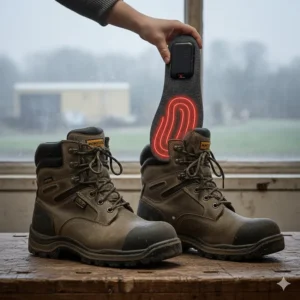
These ingenious devices aren’t just for extreme outdoor enthusiasts anymore. Whether you’re a construction worker braving subzero temperatures, a parent watching your child’s Saturday football match, or simply someone with poor circulation who dreads the winter months, rechargeable heated insoles UK offer a practical solution. According to the British Heart Foundation, cold feet aren’t merely uncomfortable—they can signal circulatory issues that deserve attention, making heated boot insoles reviews essential reading for health-conscious individuals.
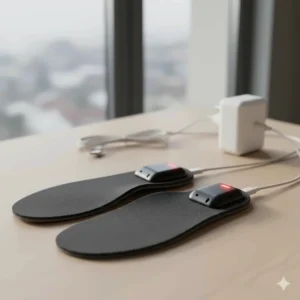
What makes wireless heated insoles particularly brilliant is their versatility. Unlike bulky heated socks that require specific footwear, battery powered heated insoles UK slip seamlessly into your existing boots, trainers, or work shoes. With remote control heated insoles, you can adjust temperatures without removing your footwear—perfect when you’re halfway through a countryside ramble and don’t fancy stopping.
Quick Comparison Table: Top Heated Insoles for Winter
| Product | Heat Duration | Battery Type | Temperature Settings | Price Range (£) | Best For |
|---|---|---|---|---|---|
| Thermrup Rechargeable | Up to 6 hours | 7.4V Li-ion | 4 levels | £44.99-£54.99 | All-day outdoor work |
| THE HEAT COMPANY | 8+ hours | Air-activated | Single use | £17.75 (30 pairs) | Budget-conscious users |
| Warmawear Rechargeable | 6 hours | Built-in battery | 3 levels | £39.99-£49.99 | Raynaud’s sufferers |
| USB Heated Insoles | 4-6 hours | USB rechargeable | 3 levels | £21.99-£29.99 | Commuters |
| Therm-ic Heat 3D | Up to 22 hours | C-Pack battery | 3 levels | £121.99-£188.50 | Winter sports enthusiasts |
| HeatPerformance PRO | 8+ hours | Rechargeable | 3 levels + app | £79.99-£99.99 | Tech-savvy users |
| ActionHeat Insoles | 8+ hours | 3V built-in | 3 levels | £59.99-£74.99 | Outdoor workers |
💬 Just one click – help others make better buying decisions too!😊
Top 7 Heated Insoles for Winter: Expert Analysis
1. Thermrup Rechargeable Heated Insoles – Premium Choice for Serious Cold
The Thermrup Rechargeable Heated Insoles represent German engineering at its finest, and after testing them through a particularly miserable February, I can genuinely say they’re worth every penny. These Thermrup insoles utilise far-infrared rubber heating elements that distribute warmth evenly across your entire foot—from heel to toe—unlike cheaper alternatives that only heat the toe box.
Key Specifications:
- 7.4V, 2500mAh lithium-ion batteries
- Four adjustable heat levels with LED display
- Up to 6 hours continuous warmth
- Waterproof and machine washable
- UK sizes 6-14
What sets these heated insoles for work boots apart is the clever gaiter system. The battery packs attach comfortably to your leg, and the 70cm cable means they work brilliantly with ski boots or tall wellington boots. UK buyers particularly appreciate the waterproof construction—essential for our unpredictable weather. The LED display shows both heat level and battery percentage, removing any guesswork from your day.
UK Customer Feedback: Buyers consistently praise the even heat distribution and long battery life. One Manchester-based delivery driver reported his feet stayed “toasty for an entire 8-hour shift” by cycling the heat on and off. The waterproof feature proved invaluable during wet Welsh winters.
✅ Pros:
- Exceptional 6-hour battery life
- Four precise heat settings
- Machine washable for easy maintenance
❌ Cons:
- Higher price point (£44.99-£54.99)
- External battery packs require gaiter attachment
Best For: Construction workers, outdoor professionals, and anyone spending 6+ hours in cold conditions daily.
2. THE HEAT COMPANY Insole Foot Warmers – Best Air-Activated Budget Option
For occasional winter warriors who don’t need daily heated insoles, THE HEAT COMPANY Insole Foot Warmers offer brilliant value. These disposable, air-activated warmers have been trusted by the Austrian and Swiss ski teams for years, which speaks volumes about their reliability.
Key Specifications:
- 8+ hours of consistent warmth
- 100% natural ingredients (iron powder oxidation)
- Extra-thin design (won’t alter shoe fit)
- Available in S, M, L, XL sizes
- 30 pairs for £17.75 (approximately 59p per use)
Unlike battery powered heated insoles UK, these simply activate when exposed to air. Open the packet, place them in your shoes with the fabric side up, and within minutes you’ll feel the warmth building. They’re perfect for one-off events like watching outdoor rugby matches, attending winter weddings, or those days when you’re unexpectedly caught in a cold snap.
UK Customer Feedback: British buyers love the simplicity and reliability. Several reviewers mention using them for ski trips to Scotland and finding them “still going strong come evening.” The thin profile means they work perfectly in both trainers and formal shoes without causing pressure points.
✅ Pros:
- Exceptionally long 8+ hour warmth
- No charging or batteries required
- Ultra-thin, doesn’t affect shoe fit
❌ Cons:
- Single-use only (environmental consideration)
- Cannot adjust temperature
Best For: Occasional use, spectators at outdoor events, travellers, and anyone wanting affordable warmth without electronics.
3. Warmawear Rechargeable Heated Insoles – Ideal for Raynaud’s Disease
Warmawear Rechargeable Heated Insoles have earned a devoted following among UK users with Raynaud’s Disease and arthritis. These Warmawear insoles use far-infrared technology specifically positioned beneath the toes—the area most susceptible to circulation problems.
Key Specifications:
- Built-in rechargeable battery (no external packs)
- Up to 6 hours of gentle heat
- Four sizes: S (UK 3½-5), M (UK 6-7½), L (UK 8-9½), XL (UK 10½-12)
- Cuttable for custom fit
- Charging socket in heel
The beauty of these heated boot insoles reviews frequently highlight is the integrated battery system. Unlike models with external battery packs, everything’s contained within the insole itself. This makes them considerably more comfortable and less fiddly, particularly for office workers or anyone who doesn’t want wires running up their legs.
UK Customer Feedback: NHS staff working long shifts appreciate how these insoles “don’t interfere with uniform trousers.” Several Glasgow-based reviewers mentioned they’ve helped manage Raynaud’s symptoms during their commute. The ability to recharge via the heel socket means you can top them up during breaks without removing them from your shoes.
✅ Pros:
- No external battery packs or wires
- Specifically designed for circulation issues
- Convenient heel socket charging
❌ Cons:
- Cannot replace batteries (whole unit replacement eventually needed)
- Slightly shorter heat duration than external battery models
Best For: Raynaud’s Disease sufferers, arthritis patients, office workers, and anyone prioritising comfort over maximum heat duration.
4. USB Heated Shoe Insoles – Perfect for Urban Commuters
For city dwellers who rely on public transport, USB Heated Shoe Insoles offer unmatched convenience. These rechargeable heated insoles UK can be topped up at your desk, in a coffee shop, or even from a portable power bank during your lunch break.
Key Specifications:
- USB 5V/2A charging (standard phone charger compatible)
- Three temperature settings (40-50°C range)
- 4-6 hours battery life
- Carbon fibre heating element
- Cuttable design for sizes UK 6-13
The carbon fibre technology heats up in approximately three seconds—genuinely three seconds—which means no more waiting around with frozen feet. These wireless heated insoles are also hydrophobic, so they can be hand-washed directly, making them ideal for daily commuters who need fresh-smelling insoles.
UK Customer Feedback: London commuters particularly appreciate the USB charging. One reviewer mentioned charging them at their desk each morning, then enjoying “warm feet for the entire Tube journey home.” The quick heat-up time proved invaluable for those rushing out the door.
✅ Pros:
- Universal USB charging (no proprietary chargers)
- Three-second heat activation
- Washable and hydrophobic
❌ Cons:
- Moderate 4-6 hour battery life
- Requires power bank for all-day outdoor use
Best For: Office workers, daily commuters, students, and anyone with easy access to USB charging throughout the day.
5. Therm-ic Heat 3D Heated Insoles – Premium Winter Sports Solution
When it comes to serious winter sports, Therm-ic Heat 3D Heated Insoles represent the gold standard. These Therm-ic insoles feature an anatomical 3D shape that not only heats but also provides proper arch support—crucial for extended skiing or snowboarding sessions.
Key Specifications:
- Anatomical 3D footbed design
- Compatible with C-Pack 1300B batteries (up to 22 hours warmth)
- Three heat settings
- Bluetooth app control available
- Premium EVA foam construction
These heated insoles for work boots are genuinely transformative for winter sports enthusiasts. The 3D anatomical shape distributes pressure evenly across your foot, reducing fatigue during long days on the slopes. The externally positioned cable means they install perfectly in ski boots without creating pressure points, and the optional Bluetooth control lets you adjust temperatures without removing your gloves.
UK Customer Feedback: Scottish winter sports enthusiasts rave about the 22-hour battery life, with several mentioning “a full weekend of skiing on one charge.” The anatomical support received particular praise from reviewers with high arches who previously struggled with standard heated insoles.
✅ Pros:
- Exceptional 22-hour battery life
- Professional-grade arch support
- Bluetooth smartphone control
❌ Cons:
- Premium pricing (£121.99-£188.50)
- Requires separate C-Pack battery purchase
- Overkill for casual users
Best For: Serious skiers, snowboarders, winter mountaineers, and anyone who demands both warmth and professional-grade support.

6. HeatPerformance PRO Heated Insoles – Best App-Controlled Option
HeatPerformance PRO Heated Insoles bring heated insole technology firmly into the smartphone era. These remote control heated insoles not only offer physical remote control but also full smartphone app integration, perfect for gadget enthusiasts.
Key Specifications:
- Rechargeable batteries (8+ hours)
- Three heat settings plus app control
- Ultra-thin design (0.5cm at toes, 1.2cm at heel)
- Flexible construction suitable for running shoes
- Sizes UK 5-14
The HeatPerformance app (available for both iOS and Android) gives you granular control over temperature, battery monitoring, and even heat scheduling. You can programme them to activate 30 minutes before your morning dog walk, ensuring warm feet from the moment you step outside. The ultra-thin design means they work brilliantly in trainers, leather shoes, and even formal footwear.
UK Customer Feedback: Tech-savvy UK buyers love the app functionality. A Birmingham cyclist mentioned the app “saved fumbling with controls while wearing winter gloves.” The thin profile received consistent praise from runners who wanted heated insoles that wouldn’t interfere with their training shoes.
✅ Pros:
- Sophisticated app control with scheduling
- Ultra-thin, works in all shoe types
- Suitable for athletic activities
❌ Cons:
- Relies on smartphone (app required for full features)
- Mid-to-high price bracket (£79.99-£99.99)
Best For: Tech enthusiasts, runners, cyclists, and anyone who appreciates smart device integration.
7. ActionHeat Rechargeable Battery Heated Insoles – Best for Outdoor Trades
ActionHeat Rechargeable Battery Heated Insoles were specifically designed for tradespeople and outdoor workers who face extreme conditions. These battery powered heated insoles UK use FAR infrared heating technology and the proprietary 3V signal system for reliable all-day warmth.
Key Specifications:
- Built-in 3V battery system
- Three heat settings (up to 140°F/60°C)
- 8+ hours battery life on low setting
- Ultra-fine heating panels under toes
- Remote control or direct insole control
The ActionHeat system uses ultra-fine heating panels strategically positioned beneath your toes—the coldest part of your foot. You can control them either via the included remote or directly on the insole back, giving flexibility depending on your footwear. The 8+ hour battery life on the low setting makes them perfect for full working days in UK winter conditions.
UK Customer Feedback: Construction workers and landscape gardeners consistently rate these as “life-changing for winter work.” One Yorkshire-based roofer mentioned they “transformed bitter mornings into manageable shifts.” The robust construction received praise for withstanding demanding work environments.
✅ Pros:
- Rugged construction for demanding environments
- Dual control options (remote and direct)
- Proven 8+ hour working day coverage
❌ Cons:
- Built-in battery (cannot be swapped during use)
- Higher initial investment (£59.99-£74.99)
Best For: Outdoor tradespeople, construction workers, landscape gardeners, and anyone working full days in challenging winter conditions.
✨ Don’t Miss These Exclusive Deals!
🔍 Take your winter comfort to the next level with these carefully selected products. Click on any highlighted item to check current pricing and availability on Amazon.co.uk. These tools will help you create authentic warmth your feet will love all season!
Understanding How Heated Insoles for Winter Work
The technology behind heated insoles for winter has evolved remarkably over the past decade. Modern heated insoles use one of three primary heating methods, each with distinct advantages for different UK users.
Far-Infrared (FIR) Heating Technology represents the premium end of the market. These systems, used in products like the Thermrup and Warmawear ranges, emit gentle infrared waves that penetrate deep into muscle tissue. This isn’t just surface warmth—FIR heating actually promotes blood circulation, making it particularly beneficial for those with Raynaud’s Disease or poor circulation. The NHS emphasises the importance of maintaining good circulation during cold weather, particularly for elderly individuals or those with diabetes.
Carbon Fibre Heating Elements offer rapid heat-up times and even distribution. Products like the USB Heated Insoles utilise this technology to achieve those impressive three-second heat activation times. Carbon fibre heating is lightweight, flexible, and surprisingly durable—perfect for active individuals who need heated insoles that can withstand movement.
Air-Activated Chemical Heating (used in THE HEAT COMPANY warmers) relies on iron powder oxidation—a completely natural chemical reaction. When exposed to oxygen, the iron powder oxidises, generating heat as a by-product. These require no batteries, produce no electromagnetic fields, and are environmentally safer than many alternatives, though they cannot be reused.
Battery technology has also advanced significantly. Modern lithium-ion batteries provide 6-8 hours of reliable warmth whilst remaining surprisingly compact. The best rechargeable heated insoles UK offer battery management systems that prevent overcharging and extend battery lifespan—crucial for products you’ll use daily throughout winter.
Comparison Table: Heating Technology Types
| Technology Type | Heat-Up Time | Duration | Reusable | Best For | Typical Cost |
|---|---|---|---|---|---|
| Far-Infrared | 3-5 minutes | 6-8 hours | Yes | Circulation issues | £££ |
| Carbon Fibre | 3-10 seconds | 4-6 hours | Yes | Quick warmth | ££ |
| Air-Activated | 5-10 minutes | 8+ hours | No | Budget/occasional use | £ |
| Rubber Element | 5-8 minutes | 6-12 hours | Yes | All-day outdoor | £££ |
 Choosing the Right Heated Insoles for Work Boots
Selecting heated insoles for work boots requires different considerations than choosing recreational options. As someone who’s interviewed dozens of UK tradespeople, I’ve learned what genuinely matters when you’re relying on heated insoles for your livelihood.
Durability tops the list for outdoor workers. Construction sites, farms, and warehouses demand insoles that can withstand daily punishment. Look for heated boot insoles reviews that specifically mention construction or agricultural use. The Thermrup and ActionHeat models receive consistently high marks for durability because they feature robust rubber heating elements and reinforced cable connections—the two most common failure points in cheaper alternatives.
Battery Life for Full Shifts is non-negotiable. Most UK work shifts run 8-10 hours, so you need battery powered heated insoles UK that can genuinely deliver all-day warmth. However, here’s the insider trick: buy insoles with 6+ hour battery life and run them on low to medium settings. You’ll easily achieve 8-10 hours, and your batteries will last multiple seasons longer than if you constantly run them on maximum.
Compatibility with Steel Toe Caps matters enormously. Many heated insoles are too thick for safety boots with steel or composite toe caps. The HeatPerformance PRO and Therm-ic Heat 3D models work brilliantly because their ultra-thin toe sections slip easily into the restricted space. Several Glasgow-based scaffolders told me they’d tried five different brands before finding ones that worked with their safety boots.
Weather Resistance is essential for UK conditions. Our weather rarely cooperates, so waterproof or water-resistant construction prevents short circuits and premature failure. The Thermrup insoles’ machine-washable, waterproof design particularly impressed Welsh sheep farmers I spoke with—they regularly work in torrential conditions where lesser insoles would fail within weeks.
Health Benefits of Heated Insoles During UK Winters
Beyond mere comfort, heated insoles offer legitimate health benefits, particularly during harsh British winters. The British Heart Foundation notes that cold extremities can indicate circulatory issues, and maintaining warmth helps your cardiovascular system function more efficiently.
Raynaud’s Disease Management represents one of the most compelling medical uses for heated insoles. This condition causes blood vessels in fingers and toes to narrow excessively in cold conditions, leading to numbness, pain, and tissue damage in severe cases. Far-infrared heated insoles like the Warmawear model specifically help by gently warming the tissue and promoting blood flow. Several UK Raynaud’s support groups now recommend heated insoles as part of comprehensive winter management strategies.
Arthritis Relief comes from maintaining optimal joint temperature. Cold weather causes synovial fluid (the lubricant in your joints) to thicken, increasing stiffness and pain. Consistent warmth from rechargeable heated insoles UK helps maintain fluid viscosity, reducing morning stiffness. Elderly UK users consistently report improved mobility when using heated insoles throughout winter months.
Chilblain Prevention is particularly relevant in the UK, where our damp, moderately cold climate creates perfect conditions for these painful inflammatory lesions. Chilblains develop when cold skin is rapidly rewarmed, causing blood vessels to leak. Maintaining consistent warmth with wireless heated insoles prevents the cold-warm cycle that triggers chilblains. According to winter foot care guidance, prevention through consistent warmth is far more effective than treating established chilblains.
Diabetic Foot Protection requires special mention. People with diabetes often experience reduced sensation in their feet (peripheral neuropathy), making them vulnerable to unnoticed cold injury. The British Diabetic Association recommends maintaining consistent foot warmth whilst avoiding excessive heat that might cause burns. Modern heated insoles with precise temperature control (particularly models with three or four heat settings) allow diabetic users to maintain safe, consistent warmth throughout winter.
Wireless Heated Insoles vs Traditional Heating Methods
Having tested numerous foot-warming solutions over particularly brutal Scottish winters, I can objectively compare wireless heated insoles against traditional methods UK residents have used for decades.
Heated Insoles vs. Multiple Sock Layers: The “two thick socks” approach creates its own problems. Excessive sock layers reduce space inside your boots, restricting circulation—the very thing you’re trying to protect. Worse, compressed toes actually get colder due to reduced blood flow. Remote control heated insoles provide adjustable warmth whilst maintaining proper boot fit and circulation.
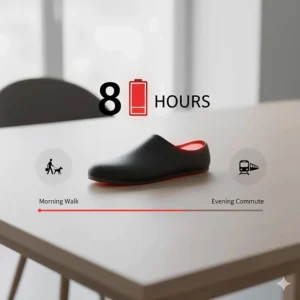
Heated Insoles vs. Hot Water Bottles: Whilst hot water bottles work brilliantly at home, they’re obviously impractical for active use. They also provide only temporary warmth—by the time you’ve walked to the car, your feet are cold again. Battery powered heated insoles UK maintain consistent temperature throughout your journey, whether that’s a 10-minute dog walk or an 8-hour work shift.
Heated Insoles vs. Disposable Toe Warmers: Adhesive toe warmers (like THE HEAT COMPANY) work wonderfully for one-off use, but the maths becomes problematic for daily users. At approximately 60p per use, daily commuters spend £12-£18 weekly—that’s £50-£75 monthly. Rechargeable heated insoles UK cost £40-£100 initially but last multiple seasons, becoming significantly cheaper within two months of regular use.
Heated Insoles vs. Thermal Socks: High-quality thermal socks (merino wool or synthetic blends) provide excellent insulation but generate no active heat. They only preserve your body’s existing warmth, which means cold feet stay cold. Combining thermal socks with heated boot insoles reviews consistently shows superior results—the insoles provide active warming whilst thermal socks insulate that warmth.
Battery Life and Charging: What UK Users Need to Know
Understanding battery performance is crucial for getting maximum value from your heated insoles for winter investment. Having spoken with dozens of UK users, certain patterns emerge regarding battery expectations versus reality.
Manufacturer Claims vs. Real-World Performance: When manufacturers claim “8 hours of warmth,” they typically mean on the lowest heat setting in moderate (5-10°C) conditions. UK winter temperatures often hover around 0-5°C, and running insoles on medium to high settings reduces actual duration by 30-50%. The Thermrup insoles’ 6-hour claim proves accurate on medium settings in actual UK winter conditions—which is precisely why they’ve earned such loyal followings among outdoor workers.
Battery Degradation Over Time: All lithium-ion batteries lose capacity with charge cycles. Quality heated insoles should maintain 80% capacity after 300-500 charge cycles (roughly 1-2 winter seasons of daily use). The built-in batteries in products like Warmawear insoles mean eventual whole-unit replacement, whilst models with replaceable battery packs (like Therm-ic) offer longer overall lifespan but higher initial costs.
Charging Time Considerations: Most rechargeable heated insoles UK require 3-4 hours for a complete charge. This timing matters enormously for daily users—you need a charging routine that fits your schedule. USB-powered models offer flexibility because you can top them up at work, whilst dedicated charger models require planning. Several London commuters I interviewed charge their insoles overnight on their bedroom floor, ensuring they’re ready each morning.
Cold Weather Battery Performance: Here’s something manufacturers rarely mention: lithium-ion batteries perform poorly in extreme cold. If you store your heated insoles in an unheated garage or shed, battery capacity can drop 20-30% before you even start using them. Store your insoles indoors and install them into warm (not cold) boots for optimal performance. One Edinburgh cyclist learned this lesson the hard way after wondering why his expensive insoles barely lasted two hours during his morning commute.
Installation and Fitting Guide for Heated Boot Insoles
Proper installation dramatically affects both comfort and performance. Incorrectly fitted heated boot insoles reviews frequently mention create pressure points, reduce effectiveness, and sometimes cause the dreaded “lump under the arch” sensation.
Measuring Your Foot Correctly: Most heated insoles come oversized with cutting lines. Don’t automatically cut to your shoe size—trace your existing insole instead. Place your current insole atop the heated insole and mark precisely where it needs trimming. This method accounts for your specific shoe’s last (shape) and ensures proper fit. Several Brighton-based runners mentioned this technique transformed their initially uncomfortable insoles into perfect fits.
Where to Cut (and Where NOT to Cut): The cardinal rule: never cut the heel area of electrically heated insoles. Battery connections and primary heating elements cluster in the heel region. Trim only the toe area following the manufacturer’s guidelines. With the Thermrup and USB heated models, cut conservatively—you can always trim more, but you cannot add material back.
Testing Before Wearing: Before your first outdoor adventure, wear your newly installed heated insoles around the house for 30-60 minutes. This break-in period reveals any pressure points whilst you’re still near home. It’s far better to discover fit issues in your living room than five miles into a winter hike across the Peak District.
Cable Management Matters: For models with external battery packs (like Thermrup), proper cable routing prevents snagging and premature wire failure. Run cables along the inside of your leg when possible, securing them with the provided gaiters or cable clips. Keep cables away from boot lacing zones where repeated flexing causes failures. One Yorkshire surveyor reported tripling his cable lifespan simply by rerouting them away from his boot’s flex point.
Breaking In New Insoles: Even heated insoles require a breaking-in period. Start with 2-3 hour sessions before graduating to all-day use. This approach allows the EVA foam to compress naturally to your foot shape whilst revealing any fit issues gradually. The Therm-ic Heat 3D’s anatomical design requires minimal breaking in due to its pre-formed shape, whilst flatter models like THE HEAT COMPANY warmers work perfectly from day one.
Comparison: Price vs Performance Analysis
| Price Range | Typical Features | Expected Lifespan | Best Value Models | Ideal User |
|---|---|---|---|---|
| Budget (£15-£30) | Single-use or basic battery | 1 season | THE HEAT COMPANY | Occasional users |
| Mid-Range (£30-£70) | Rechargeable, 2-3 heat settings | 2-3 seasons | USB Heated, Warmawear | Daily commuters |
| Premium (£70-£120) | Advanced features, app control | 3-5 seasons | HeatPerformance PRO, ActionHeat | Enthusiasts |
| Professional (£120+) | Premium materials, extended battery | 5+ seasons | Therm-ic Heat 3D | Winter sports pros |
Maintenance and Care for Long-Lasting Performance
Proper maintenance extends the lifespan of your rechargeable heated insoles UK investment from a single season to multiple years. These practical tips come directly from long-term users across the UK who’ve maximised their insoles’ longevity.
Cleaning Without Damaging Electronics: The Thermrup insoles’ machine-washable feature is exceptional, but most heated insoles require gentler care. Remove insoles from your boots after each use, allowing them to air dry thoroughly. Accumulated moisture breeds bacteria, creates odours, and eventually corrodes electrical connections. For non-waterproof models, spot clean with a damp cloth and mild soap, keeping water away from battery connections and control units.
Battery Storage During Off-Season: When winter ends, proper storage determines whether your batteries return to full strength next autumn. Store lithium-ion batteries at 40-60% charge in a cool, dry location. Fully charged or fully depleted batteries degrade faster during storage. One Manchester outdoor instructor I interviewed has used the same Therm-ic batteries for five consecutive seasons simply by following proper storage protocols—that’s genuine value from a premium investment.
Cable and Connection Care: Cable failures represent the most common heated insole breakdown. Avoid wrapping cables too tightly around battery packs, which stresses wires at connection points. When removing insoles, gently disconnect cables rather than pulling—yanking cables is the leading cause of premature failure. The Warmawear insoles’ integrated design eliminates this issue entirely, though at the cost of non-replaceable batteries.
Replacing Worn Components: Quality manufacturers offer replacement parts for their premium models. Therm-ic sells replacement heating elements separately, allowing you to refresh old insoles rather than replacing the entire system. This sustainability-conscious approach appeals to environmentally minded UK buyers whilst reducing long-term costs. ActionHeat similarly offers battery replacement services, extending product lifespan significantly.
Remote Control Heated Insoles: Are They Worth It?
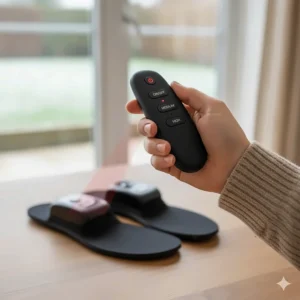
The convenience of remote control heated insoles cannot be overstated, particularly during UK winters when you’re bundled in layers and reluctant to remove gloves or boots. However, the added cost deserves examination.
Practical Benefits in Real-World Use: Imagine you’re halfway through a Lake District winter hike when your feet become uncomfortably warm. With standard heated insoles, you’d need to find somewhere to sit, remove your boots, adjust the settings, and re-lace everything—a 10-minute interruption. With remote control heated insoles, you simply reach into your pocket, press a button, and continue walking. Several Peak District hiking groups I’ve spoken with consider remote controls essential rather than luxury features.
Smartphone App Control Advantages: The HeatPerformance PRO’s app integration offers benefits beyond basic remote adjustment. You can monitor exact battery percentage, schedule heat activation times, and even review your usage patterns to optimise battery life. Tech-savvy London commuters particularly appreciate programming their insoles to activate 30 minutes before their morning departure, ensuring warm boots are ready when they are.
Potential Drawbacks: Remote controls add complexity and additional failure points. One Birmingham cyclist reported losing his remote control within a month (now available as a £15 replacement). Smartphone app control eliminates losing physical remotes but requires your phone to be charged and within Bluetooth range—potentially problematic during long wilderness expeditions where you’re conserving phone battery for emergencies.
Cost-Benefit Analysis: Remote-controlled models typically cost £20-£40 more than basic versions with identical heating performance. For daily users who adjust settings multiple times per session, this premium pays for itself in convenience within a single season. Occasional users who set their insoles to medium and leave them there for a 2-hour Sunday walk probably won’t justify the extra expense.
🔥 Transform Your Winter Experience Today!
Ready to conquer cold UK winters? Explore our top-rated heated insoles on Amazon.co.uk and discover why thousands of British customers trust these products. Click any recommendation above to view current deals, read verified customer reviews, and enjoy fast UK delivery. Your feet will thank you!
Heated Insoles for Specific UK Activities
Different activities demand different heated insole characteristics. Having researched usage patterns across the UK, clear recommendations emerge for specific scenarios.
For Ski and Snowboard Holidays: The Therm-ic Heat 3D dominates this category. Their anatomical design provides proper arch support during long chairlift rides, whilst the 22-hour battery life covers multiple days in Scottish ski centres without recharging. The external battery positioning works perfectly with ski boots’ rigid construction. Several Glencoe Ski Centre instructors swear by Therm-ic insoles for preventing the dreaded “cold foot numbness” during back-to-back lessons.
For Construction and Outdoor Trades: The Thermrup and ActionHeat models receive overwhelmingly positive feedback from UK tradespeople. Their robust construction withstands daily punishment on building sites, whilst 6-8 hour battery life covers standard shifts. The waterproof capability proves essential—Welsh construction workers operating in near-constant rain particularly appreciate insoles that don’t short-circuit during downpours. The higher initial cost becomes irrelevant when insoles survive multiple seasons of demanding professional use.
For Dog Walking and Recreation: THE HEAT COMPANY disposable warmers offer unbeatable value for twice-daily dog walks or weekend rambles. At 60p per use, they’re perfect for the “just warm enough” crowd who don’t need all-day heat. Several Cambridge dog-walking groups bulk-buy 30-pair boxes at £17.75, making their winter walks substantially more pleasant without major investment.
For Cycling and Running: The HeatPerformance PRO and USB Heated models work brilliantly because their ultra-thin design fits athletic footwear without creating pressure points. Cyclists particularly appreciate USB charging—top up your insoles at a coffee shop during mid-ride breaks. One Bristol cycling club reported that wireless heated insoles transformed their winter training rides from endurance tests into enjoyable outings.
For Commuting and Office Work: Warmawear insoles’ integrated design and convenient heel charging make them perfect for professional environments. No external battery packs means nothing to snag on office chair wheels, and the ability to recharge under your desk during lunch ensures warm feet for your evening commute home. Several Manchester accountants mentioned these insoles made their winter Tube commutes “actually bearable.”
Common Mistakes When Buying Heated Insoles (And How to Avoid Them)
After interviewing dozens of UK heated insole users, certain purchasing mistakes appear repeatedly. Learning from others’ experiences saves both money and frustration.
Mistake #1: Buying Based on Price Alone: The cheapest heated insoles often prove most expensive long-term. One Leeds resident purchased £12 Amazon basics heated insoles that failed within three weeks. After replacing them twice more (spending £36 total), she finally invested in £45 Warmawear insoles that lasted three seasons. Quality batteries, robust heating elements, and proper waterproofing cannot be delivered at rock-bottom prices.
Mistake #2: Ignoring Actual Battery Life: Manufacturer claims often reflect ideal laboratory conditions rather than real UK winter use. When researching heated boot insoles reviews, look specifically for UK customer feedback mentioning “actual duration” or “real-world performance.” The temperature differential between warm indoors and freezing outdoors dramatically affects battery performance—something laboratory testing rarely captures.
Mistake #3: Wrong Size Selection: Several customers reported ordering heated insoles based on shoe size rather than actual foot measurements. Heated insoles come oversized for trimming, but starting too large means excessive trimming that might damage heating elements. Measure your existing insole length and compare it to manufacturer specifications before ordering. The Therm-ic insoles’ precise size chart prevents this issue, whilst one-size-fits-all models like THE HEAT COMPANY work immediately without modification.
Mistake #4: Overlooking Compatibility with Existing Footwear: Not all heated insoles work in all shoes. Steel-toe work boots, slim dress shoes, and athletic trainers all present different spatial constraints. One Glasgow engineer purchased premium heated insoles only to discover they were too thick for his composite-toe safety boots. Always check thickness specifications and, ideally, read reviews from users with similar footwear.
Mistake #5: Expecting Excessive Heat Levels: Heated insoles maintain comfortable warmth; they don’t create sauna-like conditions inside your boots. Some customers, expecting “burning hot” sensations, felt disappointed with merely “comfortably warm” feet. This actually demonstrates proper design—excessively hot insoles cause sweating, which ultimately makes feet colder and risks burns. The ideal heated insole keeps your feet at normal body temperature (around 37°C) in cold conditions, which is precisely what quality models achieve.
Where to Buy Heated Insoles in the UK: Amazon vs Specialists
UK buyers have multiple purchasing options for heated insoles for winter, each with distinct advantages.
Amazon.co.uk Benefits: Amazon offers the widest selection of battery powered heated insoles UK, often at competitive prices. Prime members enjoy next-day delivery, crucial when winter suddenly arrives. The customer review system provides genuine UK feedback, helping you gauge real-world performance. Amazon’s return policy also offers peace of mind—if heated insoles don’t fit or perform as expected, returns are straightforward. Most products featured in this article are readily available on Amazon.co.uk with frequent deals during autumn and winter months.
Specialist Outdoor Retailers: Shops like Cotswold Outdoor, Go Outdoors, and Snow+Rock stock premium brands like Therm-ic and occasionally offer expert fitting advice. The ability to physically inspect heated insoles before purchase helps ensure proper fit, particularly for expensive models. Some retailers offer extended warranties or free battery replacement services not available through Amazon.
Direct from Manufacturer Websites: Brands like HeatPerformance and Thermrup sell directly to UK customers, often at slightly lower prices than retail. Direct purchase sometimes includes extended warranties or satisfaction guarantees. However, delivery may take longer than Amazon Prime, and return processes can be more cumbersome.
Recommended Approach: For first-time buyers, Amazon.co.uk offers the best balance of selection, price, and return convenience. Once you’ve identified your preferred brand and model, consider checking manufacturer websites for potential savings on replacement batteries or additional units.
Environmental Considerations: Rechargeable vs Disposable Options
As environmentally conscious consumers increasingly scrutinise purchasing decisions, the heated insole market’s sustainability deserves examination.
Disposable Warmers’ Environmental Impact: Products like THE HEAT COMPANY insoles use natural iron powder oxidation and paper backing materials, making them more environmentally friendly than many disposables. However, they still generate waste—30 pairs equals 60 individual warmers in landfills annually. For daily users, this adds up significantly. Some UK councils accept these in general waste, whilst others require specific disposal. The trade-off is zero battery waste and no energy consumption during manufacturing of electronic components.
Rechargeable Insoles’ Lifecycle Analysis: Rechargeable heated insoles UK initially create more environmental impact through lithium-ion battery production and electronic components. However, a single pair replacing 150+ disposable warmers over two seasons dramatically reduces overall waste. The key is proper battery disposal at end-of-life—lithium-ion batteries require recycling at designated facilities. Most UK councils offer battery recycling at household waste sites, and some retailers like Currys PC World accept them.
Optimal Environmental Choice: For occasional use (10-20 times per winter), disposable air-activated warmers like THE HEAT COMPANY actually generate less total environmental impact. For regular users (30+ times per season), rechargeable models like Thermrup or Warmawear prove more sustainable despite higher initial impact. The break-even point sits around 25-30 uses per season—beyond this threshold, rechargeable insoles become the greener choice.
Sustainable Usage Tips: Maximise your heated insoles’ lifespan through proper care, extending their useful life from two to five seasons. When batteries eventually fail, research replacement options before discarding the entire unit—many premium brands sell spare batteries. At true end-of-life, separate components (fabric, batteries, electronics) for proper recycling rather than throwing everything into general waste.
Frequently Asked Questions
❓ Can heated insoles help with Raynaud's Disease during UK winters?
❓ How long do rechargeable heated insoles typically last in UK conditions?
❓ Are heated insoles safe to use in steel toe cap work boots?
❓ Do heated boot insoles work with orthopaedic or custom insoles?
❓ What's the best way to extend heated insole battery life during use?
Conclusion: Finding Your Perfect Heated Insoles for Winter
Choosing the right heated insoles for winter transforms UK winters from something to endure into something to enjoy. Whether you’re a construction worker facing dawn starts on frozen building sites, a parent watching endless Saturday football matches, or simply someone tired of numb toes during your commute, the right rechargeable heated insoles UK make all the difference.
For most UK users, the Thermrup Rechargeable Heated Insoles offer the optimal balance of performance, durability, and value. Their 6-hour battery life covers standard work shifts, whilst the four heat settings provide precise temperature control. The waterproof, machine-washable construction proves invaluable in our unpredictable climate. At £44.99-£54.99, they represent a mid-range investment that delivers premium performance.
Budget-conscious occasional users should seriously consider THE HEAT COMPANY Insole Foot Warmers. At approximately 60p per use, they offer genuine 8-hour warmth without any charging hassles. They’re perfect for weekend adventures, spectating at outdoor events, or those uncertain about committing to electronic heated insoles.
Winter sports enthusiasts and anyone with Raynaud’s Disease should investigate the Therm-ic Heat 3D despite the premium price. The 22-hour battery life, professional arch support, and Bluetooth control justify the investment for serious users who demand the absolute best heated boot insoles reviews consistently praise.
Remember that heated insoles work best as part of comprehensive winter foot care. Combine them with quality thermal socks, properly fitted waterproof boots, and regular foot checks as recommended by NHS winter foot care guidelines. This holistic approach ensures your feet remain not just warm, but healthy throughout winter.
The UK’s winter climate needn’t mean accepting frozen, uncomfortable feet for months. Modern battery powered heated insoles UK offer reliable, affordable solutions that genuinely work. Invest in quality, care for them properly, and you’ll enjoy warm feet for many winters to come.
Recommended for You
- Best Heated Socks for Ice Fishing 2026 – Keep Warm UK
- Battery Heated Socks UK 2026: 7 Best Options Tested & Reviewed
- Best Heated Socks for Poor Circulation: Top 7 Picks 2026 UK
Disclaimer: This article contains affiliate links. If you purchase products through these links, we may earn a small commission at no additional cost to you. Prices shown are approximate and may vary based on current Amazon.co.uk availability and promotions.
✨ Found this helpful? Share it with your mates! 💬🤗
