
In This Article
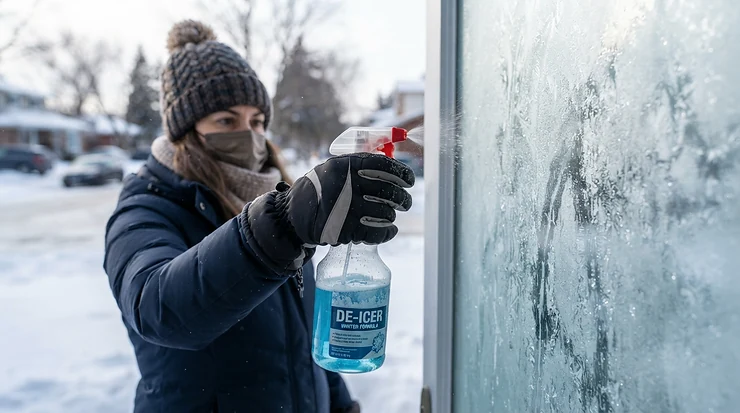
A windscreen de-icer for winter is a spray, aerosol or pre-treatment liquid that lowers the freezing point of water on your glass, so frost and ice loosen in seconds rather than minutes. It works chemically instead of by brute force. That means less scraping, fewer scratches and a clear view before you pull away.
Picture the scene. It’s 7:40am, the heater is wheezing, and your windscreen looks like a frosted pub window. Every minute you spend hacking at it with a bank card is a minute stolen from your breakfast. A decent windscreen de-icer for winter takes that minute back.
It’s also about more than comfort. Rule 229 of the Highway Code says you must be able to see, so all snow and ice has to come off your windows before you set off. Rule 228 even lists de-icer and an ice scraper in the recommended winter emergency kit. A frozen windscreen isn’t a quirk of British life you simply endure. It’s a legal and safety problem with a cheap fix.
This guide covers seven real products across sprays, aerosols, pre-icers and a heated electric option. We also dig into de-icer spray vs scraper, offer an electric windscreen de-icer review, and explain what makes fast-acting formulas fast. One transparency note: I haven’t tested these products myself. Everything here is built from published specifications, independent editorial tests and patterns in publicly available reviews. Prices are indicative ranges only, so check current price before buying.
Quick Comparison: Windscreen De-Icer for Winter at a Glance
| Product | Type | Quoted cold limit | Best For |
|---|---|---|---|
| Autoglym De-Icer | 500ml trigger bottle | Down to -50°C (brand claim) | Harsh climates and frozen door locks |
| Prestone Fast-Acting De-Icer 600ml | 600ml aerosol | Down to -40°C | Quick clears and anti re-freeze |
| Bluecol BLD600 De-Icer Aerosol | 600ml aerosol | -25°C | Streak-free finish on bright mornings |
| Carplan Demon Ice 2-in-1 De-Icer & Pre-Icer | Trigger bottle | Check pack | Planners who spray the night before |
| Carplan Pre-Icer Trigger Spray | Trigger bottle (pre-icer) | Around -25°C per Parkers | Budget overnight protection |
| Rain-X 2-in-1 De-Icer & Rain Repellent | 500ml bottle | Check label | Drivers who want rain-beading too |
| CCYKXA Heated Electric Ice Scraper | 12V heated scraper | Not applicable (electric) | Chemical-free clearing |
Looking at the table, Autoglym De-Icer and Prestone Fast-Acting De-Icer 600ml offer the most cold-weather headroom, which matters most if you park outdoors in exposed areas. For a typical lowland British winter, the -25°C rating of Bluecol BLD600 De-Icer Aerosol is already more than enough, so don’t pay extra for temperature bragging rights. The two Carplan products and the Rain-X 2-in-1 De-Icer & Rain Repellent are about workflow, not raw chemistry: they change when and how you deal with ice.
💬 Just one click — help others make better buying decisions too!😊
Top 7 Windscreen De-Icers for Winter: Expert Analysis
1. Autoglym De-Icer — built for brutal cold snaps
The headline here is protection quoted down to -50°C. That figure will never matter in Surrey, but it’s comforting in the Cairngorms. It comes in a 500ml plastic trigger bottle, which sounds mundane until you realise it spares your fingers the frozen-solid feeling aerosol cans deliver. Parkers’ reviewer specifically praised that, and noted the product is safe on all car surfaces and can also free frozen door locks.
Based on the spec comparison, this is the pick for drivers who want one bottle to handle windscreen, mirrors and locks. The catch is volume. At 500ml it will empty faster than a 600ml aerosol if you have two cars or heavy frost most mornings. Trigger application also spreads more evenly than an aerosol jet, so you waste less spray.
On reviews, the evidence I could verify is editorial rather than crowd-sourced. Parkers’ tester found it effective in late-February frost, though they hadn’t faced a hard freeze. I couldn’t find enough verifiable customer reviews to summarise honestly, so treat the editorial testing as your signal.
Pros:
- ✅ Huge temperature headroom for severe cold snaps
- ✅ Trigger bottle keeps your hands warmer
- ✅ Doubles up on frozen door locks
Cons:
- ❌ 500ml disappears quickly across two cars
- ❌ Costs more than basic petrol-station cans
Indicative price: under £10 at the time of research, so check current price. Verdict: good value for a premium-feeling bottle, especially in colder regions.
2. Prestone Fast-Acting De-Icer 600ml — fast aerosol with anti re-freeze
This is the fast-acting formulas poster child. The brand claims it works in seconds, melts ice at temperatures as low as -40°C, and helps stop dangerous re-freezing. The 600ml aerosol gives you the biggest can in this round-up. Because it sprays as a jet rather than a mist, you can blast one patch hard instead of coating the whole screen evenly.
Here’s what the spec sheet won’t shout about. A jet pattern uses more product, a drawback Parkers flagged. The can also carries a flammability warning, so keep it away from heat and never spray it near a naked flame. A UK petrol-price site also reports that reviewers of the brand’s Rapid De-Icer need less of the product than budget alternatives. If true, it softens the sting of the price.
On customer sentiment, a deal-tracking page at the time of research cited a 4.5 out of 5 average from just over a thousand Amazon reviews. I’d treat that as a rough signal, not gospel, because listing data changes constantly. Reviewers generally praise speed.
Pros:
- ✅ Quoted performance down to -40°C
- ✅ Designed to resist re-freezing after melting
- ✅ Large 600ml can for the money
Cons:
- ❌ Jet spray burns through the can quickly
- ❌ Aerosol can numbs bare hands and is flammable
Indicative price: under £6 for a single can at the time of research; check current price. Verdict: probably the best raw value here if speed is your priority.
3. Bluecol BLD600 De-Icer Aerosol — streak-free clarity
The standout feature is the clear finish. The brand promises no harsh chemicals, though that’s a marketing claim, not independent proof. The 600ml aerosol is rated to -25°C, which covers the vast majority of British winters. In other words, you’re not paying for an Arctic rating you’ll never use.
In Parkers’ testing, the reviewer found it defrosted windows quickly during a mid-to-late March cold snap and left a crystal-clear, streak-free surface. That matters more than it sounds. Low winter sun hitting a smeary screen is genuinely dangerous, and a streak-free finish keeps glare down. The downsides they noted were practical: a cold can on bare hands, pricing close to two-in-one products, and a protective cap that cracked when refitted.
I couldn’t verify a meaningful pool of customer reviews, so I won’t invent a rating. If you commute into low sunrises, this is a sensible choice.
Pros:
- ✅ Quick defrosting in tested cold snaps
- ✅ Streak-free finish reduces low-sun glare
- ✅ Rated to -25°C, ample for UK winters
Cons:
- ❌ Aerosol can chills your hands
- ❌ Cap reportedly cracked during testing
Indicative price: under £8 at the time of research; check current price. Verdict: fair value, justified mostly by the clean finish.
4. Carplan Demon Ice 2-in-1 De-Icer & Pre-Icer — prevention and cure in one bottle
The clever idea is that this works two ways. Spray it on the evening before and it forms a protective coating that stops ice bonding to the glass. Forget to do that and you can use it as a normal de-icer in the morning. Think of it as a safety net for the slightly disorganised.
In Parkers’ test, the reviewer applied it the night before and found no ice had formed on the windscreen by morning. To be fair, that was during light frost near the end of winter, not a hard freeze. The editorial verdict was positive on speed and ease, with the honest caveat that you have to remember the evening step.
For commuters with on-street parking, the maths is simple. Thirty seconds of spraying at night can save several minutes in the morning. If your mornings are routinely chaotic, building that ritual into locking up the car is the real value here.
I couldn’t verify a meaningful customer review pool, so there are no star ratings here. Check the pack for the exact temperature rating before you rely on it in a deep freeze.
Pros:
- ✅ Works as both pre-icer and de-icer
- ✅ Saves morning scraping in light frost
- ✅ Quick and easy to apply
Cons:
- ❌ Needs an evening routine to shine
- ❌ Temperature limits need checking on the pack
Indicative price: under £8 at the time of research; check current price. Verdict: strong value if you’ll actually use the evening step.
5. Carplan Pre-Icer Trigger Spray — budget overnight protection
This one is about the night before. It’s a straightforward pre-icer designed to loosen the morning’s ice. Parkers rates it as good value and lists its working range as down to around -25°C. Its main rival drawback, per that review, is that other de-icers work at much lower temperatures.
Honest analysis time. A pre-icer is a different tool from a fast-acting spray. It won’t melt a thick sheet already formed. It tries to stop that sheet forming properly in the first place. So the decision is behavioural. If you reliably spray at night, you win. If you don’t, you’ll still be scraping.
Customer sentiment on a multipack listing I found was genuinely mixed. Some buyers called it very good for night-time use. Others complained the product was thick, awkward to aim and messy on the hands. One reported a frozen screen the morning after spraying at about -1°C. That spread of opinion is useful: results seem to depend heavily on application and conditions.
Pros:
- ✅ Cheap overnight protection
- ✅ Helps loosen morning ice
- ✅ Rated to around -25°C
Cons:
- ❌ Reviewers report thick, awkward spray
- ❌ Mixed results in some real-world conditions
Indicative price: under £10 per bottle on multipack listings at the time of research; check current price. Verdict: decent value if you combine it with a scraper as backup.
6. Rain-X 2-in-1 De-Icer & Rain Repellent — ice clearance plus water-beading finish
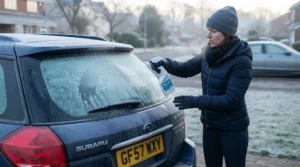
The twist is the rain repellent. Besides melting ice, it leaves a coating that helps rain, snow and hail bead off the glass. The brand’s own instructions say to start the engine, set the heater to defrost, spray top to bottom, wait about 30 seconds, then use the wipers.
That 30-second wait is the key practical detail. Most of us don’t wait, we spray and immediately wipe, which just smears half-dissolved slush. Parkers notes the repellent coating needs applying a couple of times for best protection, spread with wipers or a cloth. It also comes in 500ml only, which they say is easy to chew through.
Who benefits? Motorway commuters, mostly. If you spend your winter in spray from lorries, a repellent finish genuinely helps visibility. If you do short urban hops, you’ll probably see less benefit from the extra coating.
I couldn’t verify a robust customer review sample, so no star ratings. The editorial view is positive on both de-icing and repellence.
Pros:
- ✅ Combines de-icing with rain repellence
- ✅ Simple spray-wait-wipe routine
- ✅ Helps with snow and hail beading
Cons:
- ❌ 500ml size runs out quickly
- ❌ Coating needs repeat applications
Indicative price: under £10 at the time of research; check current price. Verdict: good value if you’d otherwise buy a separate rain repellent.
7. CCYKXA Heated Electric Ice Scraper — no chemicals, just a 12V socket
This is the electric option. It plugs into your car’s 12V socket and heats an aluminium heat pipe inside a lightweight ABS shell, with a foam-rubber handle for grip. The listing positions it for very cold areas and for removing ice without paint scratches.
Here’s the honest analysis. Heated scrapers soften the bond between ice and glass rather than melting an entire sheet instantly. AutoGuide’s heated-scraper roundup notes they work best with the engine running, so you don’t drain the battery. Similar heated tools carry warnings against prolonged contact with painted surfaces, so treat the heating element with respect.
On reviews, I couldn’t verify a trustworthy pool of customer feedback for this specific model. The category is also crowded with near-identical lookalikes, which is a good reason to buy cautiously and check seller ratings.
Pros:
- ✅ No chemicals or refills to buy
- ✅ Heat softens ice for easier scraping
- ✅ Reusable all winter
Cons:
- ❌ Needs a 12V socket and cable reach
- ❌ Best used with the engine running
Indicative price: roughly the £15-£30 range at the time of research; check current price. Verdict: reasonable value as a supplement to a spray, not a full replacement.
Top 7 Compared: Specs, Price Ranges and Review Signals
| Product | Format | Indicative price | Review signal | Best For |
|---|---|---|---|---|
| Autoglym De-Icer | 500ml trigger | Under £10 | Positive editorial test | Colder regions |
| Prestone Fast-Acting De-Icer 600ml | 600ml aerosol | Under £6 | 4.5/5 cited on a deal listing | Speed on a budget |
| Bluecol BLD600 De-Icer Aerosol | 600ml aerosol | Under £8 | Positive editorial test | Glare-free finish |
| Carplan Demon Ice 2-in-1 De-Icer & Pre-Icer | Trigger bottle | Under £8 | Positive editorial test | Evening planners |
| Carplan Pre-Icer Trigger Spray | Trigger bottle | Under £10 per bottle | Mixed buyer feedback | Budget pre-icing |
| Rain-X 2-in-1 De-Icer & Rain Repellent | 500ml bottle | Under £10 | Positive editorial test | Motorway drivers |
| CCYKXA Heated Electric Ice Scraper | 12V heated scraper | £15-£30 range | Not verified | Chemical-free users |
On pure value, Prestone Fast-Acting De-Icer 600ml is hard to beat, while Autoglym De-Icer justifies a small premium if you face severe cold or frozen locks. Carplan Demon Ice 2-in-1 De-Icer & Pre-Icer is the smart pick for people who’ll spray in the evening, and Rain-X 2-in-1 De-Icer & Rain Repellent earns its place for motorway miles. Treat the CCYKXA Heated Electric Ice Scraper as a helpful add-on rather than your only line of defence.
✨ Don’t Miss These Exclusive Deals!
🔍 Take your winter mornings to the next level with these carefully selected products. Click on any highlighted item to check current pricing and availability. These tools will help you create calm, clear-screen departures your whole family will love!
How to Clear a Frozen Windscreen Safely, Step by Step
Clearing a frozen windscreen well is a sequence, not a squirt. Get the order right and a stubborn morning becomes a two-minute job.
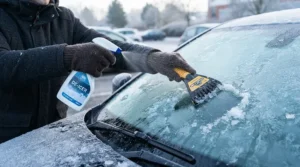
- Start the engine and demister. Warm glass helps every product work faster, and the Rain-X instructions specifically recommend setting the heater to defrost first.
- Spray from the top down. The product runs down the glass and does more work on the way, which saves product and stops you missing patches.
- Wait about 30 seconds. Most people skip this. The chemistry needs time to weaken the ice bond, and patience beats scraping hard.
- Free the wipers. Frozen blades can tear on startup. HG, a cleaning-products brand, recommends spraying and clearing the wipers before switching them on.
- Scrape gently. Let the product do the heavy lifting, then use a plastic scraper with light pressure.
- Clear everything. Side windows, mirrors, lights and the roof all count. Under Rule 229, number plates and lights must be visible too.
- Never use boiling water. Parkers warns it can damage the glass, and thermal shock is a real risk on a cold windscreen.
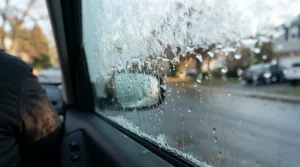
The most common first-month mistake is spraying too little, then scraping too early and dragging grit across the glass. Another is forgetting that the inside can fog or freeze too. Wipe the interior with a dry cloth and keep your demister running until the glass stays clear.
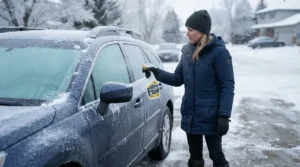
Real-World Scenarios: Matching a Windscreen De-Icer for Winter to Your Life
Specs only mean something when they meet your actual routine. Here are three hypothetical driver profiles, with the reasoning behind each pairing.
The on-street commuter with a tight budget. Imagine a driver parking outside a terrace in the Midlands, scraping daily from November to February. The best match is Prestone Fast-Acting De-Icer 600ml for the speed, plus a cheap plastic scraper for backup. If they remember to spray at night, Carplan Pre-Icer Trigger Spray can reduce the morning workload further. Annual outlay: modest, and well under the cost of a single parking fine.
The rural driver facing real cold. Picture someone on a Highland road with frequent hard frosts and the occasional frozen door lock. Autoglym De-Icer suits this profile because of its extreme-cold rating and lock-freeing ability, paired with a sturdy scraper. They’d also benefit from stocking two bottles, since 500ml goes quickly in a long freeze.
The motorway commuter with a long drive. Think of a driver doing 40 miles each way in wet, grey winters. Rain-X 2-in-1 De-Icer & Rain Repellent is a sensible choice here because the repellent coating helps in lorry spray and sleet, while still tackling ice. Adding a CCYKXA Heated Electric Ice Scraper can help on the really stubborn mornings.
The pattern across all three is the same. Frequency of frost, parking situation and journey type should decide your purchase, not marketing claims on the label.
How to Choose a Windscreen De-Icer for Winter
Choosing a windscreen de-icer for winter comes down to six questions. Answer them honestly and the right product usually becomes obvious.
- Check the temperature rating against your reality. Most UK winters stay well above -15°C in many areas, so a -25°C rating is generous. Pay for -50°C only if you live somewhere genuinely exposed.
- Decide between aerosol and trigger. Aerosols are fast and punchy but chill your hands and spray as a jet. Triggers spread more evenly and are kinder to fingers.
- Look at the volume. A 500ml bottle and a 600ml can differ more than they look when you’re de-icing two cars.
- Consider a pre-icer. If you can build an evening routine, a pre-icer or 2-in-1 saves time. If not, don’t pay for the feature.
- Think about extras. A rain-repellent finish or lock-freeing ability can justify a higher price, but only if you’ll use them.
- Plan for a backup. Even the best spray benefits from a decent scraper, and the Highway Code lists both in its recommended winter kit.
De-Icer Spray vs Scraper: Which Wins on a Frozen Windscreen?
The de-icer spray vs scraper debate is less of a duel than it appears. Parkers’ de-icer guide still champions the ice scraper for value and eco-friendliness, while accepting that spray wins when you’re in a hurry. Both views are right, because they solve different parts of the same problem.
| Method | Speed | Running cost | Main drawback | Best For |
|---|---|---|---|---|
| Spray de-icer such as Prestone Fast-Acting De-Icer 600ml | Fast | Ongoing (refills) | Chemicals, not eco-friendly | Hurried mornings |
| Plastic ice scraper | Moderate | Very low | Effort and cold hands | Light frost, budget drivers |
| CCYKXA Heated Electric Ice Scraper | Moderate | Low (electricity) | Needs 12V socket | Chemical-free users |
| Pre-icer such as Carplan Pre-Icer Trigger Spray | Fast (if done the night before) | Ongoing | Needs evening routine | Planners |
| Boiling water | Fast, but risky | Free | Can damage glass | Nobody |
Looking at the table, the most efficient setup combines a spray with a scraper: let the chemistry weaken the bond, then clear the loosened ice with minimal force. Scrapers on their own are cheap and green but slow on heavy ice. Sprays on their own are quick but leave you scraping leftovers. The heated option sits in the middle and suits drivers who dislike chemicals.
Electric Windscreen De-Icer Review: Are 12V Heated Scrapers Worth It?
This section works as a compact electric windscreen de-icer review of the category. An electric windscreen de-icer, in practice, usually means a 12V heated scraper rather than a spray replacement. Models like the CCYKXA Heated Electric Ice Scraper plug into your car’s socket and warm a blade or heat pipe so ice releases more easily.
What does that mean in practice? Heat softens the ice bond, so you apply less force and reduce the risk of scratching. Editorial guidance from AutoGuide notes that these tools soften ice rather than melt it outright, and that performance is best with the engine running. Some rechargeable battery versions also exist, though they trade cable freedom for battery life.
The downsides are practical. You need a working 12V socket, enough cable to reach the whole screen, and a bit of caution so the hot element doesn’t linger on paint. Reliable UK customer reviews for specific models are thin, so I’d treat any star rating with scepticism and read seller feedback carefully.
My honest read: a heated scraper is a useful supplement, especially if you dislike chemicals. It isn’t a replacement for a fast-acting spray on thick ice. If you want the quickest morning routine, pair one with a spray.
Fast-Acting Formulas: What Actually Makes a De-Icer Work Quickly
Fast-acting formulas rely on a simple principle called freezing-point depression, where dissolving a substance in water lowers the temperature at which it freezes. Parkers explains that most de-icers use ethylene glycol to do this, while magnesium chloride appears in formulas aimed at extreme cold.
So what separates fast from slow? Three things matter. First, concentration: a stronger solution lowers the freezing point further and works quicker. Second, application: an aerosol jet concentrates the product on one spot, while a trigger spreads it thinly. Third, patience: giving the formula around 30 seconds to work beats immediate scraping.
Brand claims like those on Prestone Fast-Acting De-Icer 600ml point to speed and anti re-freeze behaviour, which matters because meltwater can refreeze on a bitterly cold morning. Meanwhile, a product like Bluecol BLD600 De-Icer Aerosol pairs speed with a clean finish. Remember that these chemicals aren’t kind to the planet, as Parkers notes, so use only what you need.
Features That Actually Matter (And Those That Don’t)
Marketing loves a big number. Here’s how to separate useful features from decoration.
Features that matter:
- Realistic temperature rating. A rating of -25°C already covers most of Britain.
- Anti re-freeze behaviour. Particularly helpful on long, cold mornings.
- Application style. Triggers are kinder to hands, while aerosols are punchier.
- Surface safety. Autoglym De-Icer is reported safe on all car surfaces, including rubber.
- Bottle size. Bigger is better if you de-ice daily or run two cars.
Features that matter less:
- Extreme cold ratings you’ll never reach. Great for bragging, useless in Kent.
- Fancy packaging claims. A cap that cracks, as one tester noted with Bluecol BLD600 De-Icer Aerosol, tells you more than the label does.
- “Eco” wording without evidence. Treat green claims cautiously unless they’re backed up.
The point is to pay for what changes your morning, and ignore what merely decorates the label.
Common Mistakes When Buying a Windscreen De-Icer for Winter
Even sensible drivers trip over the same few pitfalls. Here are the ones worth avoiding.
Buying too little. A single 500ml bottle may not last a cold fortnight, especially with two cars. Stock up before the first frost, when shelves empty fast.
Chasing the lowest temperature rating. Paying extra for -50°C rarely makes sense outside the coldest regions.
Expecting miracles on thick ice. Spray softens the bond, but a sheet of ice still needs gentle scraping.
Skipping the wait. Spraying and immediately wiping just smears slush. Give it around 30 seconds.
Forgetting the wipers. Frozen blades can tear when you start them. Spray and clear them first.
Using boiling water. Parkers is clear that this can damage the glass.
Storing aerosols carelessly. Cans like Prestone Fast-Acting De-Icer 600ml carry a flammability warning, so keep them away from heat and read the label.
Long-Term Cost & Maintenance
Cost per use matters more than shelf price. A cheap can that empties in four mornings is a worse deal than a pricier bottle that lasts two weeks.
| Approach | Typical winter outlay | Value verdict | Best For |
|---|---|---|---|
| Scraper only | Very low | Cheapest, but slow and cold | Light-frost regions |
| Prestone Fast-Acting De-Icer 600ml plus scraper | Low | Strong all-rounder | Daily frost, tight budget |
| Carplan Demon Ice 2-in-1 De-Icer & Pre-Icer routine | Low to moderate | Saves time if used nightly | Organised commuters |
| Autoglym De-Icer plus scraper | Moderate | Premium reliability | Severe cold, frozen locks |
| CCYKXA Heated Electric Ice Scraper plus spray | Moderate | Good supplement | Chemical-averse drivers |
The cheapest long-term route is usually a spray plus a good scraper, because each covers the other’s weakness. A pre-icer routine pays back only if you’ll genuinely use it every cold evening. Premium bottles earn their cost in harsh climates, not mild ones.
On maintenance, keep scrapers clean, replace any with nicked blades (they can scratch glass), and swap tired wiper blades before winter. Store aerosols somewhere cool and check the label for guidance.
Safety, the Law and the Highway Code
Safety is the real reason this topic matters. The Highway Code states you must be able to see, which means clearing all snow and ice from your windows, and ensuring lights and number plates are visible. Rule 228 recommends carrying de-icer and an ice scraper as part of a winter emergency kit.
The consequences of ignoring this are real. Police figures quoted in the motoring press suggest a fixed penalty for driving with an obscured windscreen can include a £60 fine and three penalty points, and the consequences can be far worse if the obstruction contributes to a collision. Check current guidance before relying on any specific penalty figure.
On the product side, remember that de-icers are chemical products. Car magazine’s de-icer guide points out that physical clearing methods are still recommended and that de-icers aren’t kind to the environment. Use sensible amounts, read labels, and keep aerosols away from heat and flame.
Finally, never use a de-icer as a substitute for clearing everything properly. Roof snow that slides onto your screen at the first brake is a hazard in its own right.
FAQ
❓ Does windscreen de-icer for winter damage paint or wipers?
❓ How long should I wait after spraying a windscreen de-icer for winter?
❓ Can I put windscreen de-icer for winter into my washer reservoir?
❓ Does a windscreen de-icer for winter free frozen door locks?
❓ Is it safe to leave a de-icer aerosol in the car all winter?
Conclusion
Choosing the right windscreen de-icer for winter is really about matching a product to your habits. If you want speed on a budget, Prestone Fast-Acting De-Icer 600ml is the strongest all-rounder here. If you face severe cold or frozen locks, Autoglym De-Icer earns its premium. For a clean, glare-free finish, Bluecol BLD600 De-Icer Aerosol is a sensible pick, while Carplan Demon Ice 2-in-1 De-Icer & Pre-Icer and Carplan Pre-Icer Trigger Spray suit drivers willing to spray the night before. The Rain-X 2-in-1 De-Icer & Rain Repellent adds value on wet motorway miles, and the CCYKXA Heated Electric Ice Scraper is a decent chemical-free supplement.
Whatever you pick, pair it with a good scraper, give the product time to work, and clear every window, mirror and light before you set off. A frozen windscreen is a nuisance. It doesn’t have to be a daily battle.
Recommended for You
- Windscreen Cover For Overnight Parking: 7 Best Buys (2026)
- Heated Windscreen Covers: 7 Best Budget Picks For UK Cars (2026)
- Heated Windscreen Cover: 7 Best Picks To Beat Frost (2026)
Disclaimer: This article contains affiliate links. As an Amazon Associate, I earn from qualifying purchases. If you purchase products through these links, we may earn a small commission at no additional cost to you.
✨ Found this helpful? Share it with your friends! 💬🤗
