

In This Article
Have you ever cut short a lovely winter walk because your toes felt like they’d been dunked in the North Sea? Or abandoned that Boxing Day football match halfway through because your feet went numb? I’ve been there, and it’s properly miserable.
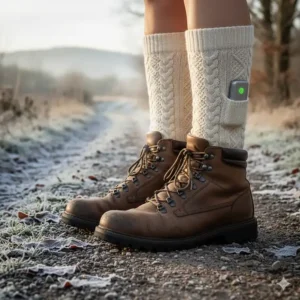
Traditional wool socks can only do so much against Britain’s damp, bone-chilling cold. That’s where battery heated socks UK technology steps in – and trust me, once you’ve experienced genuinely warm feet during a January trek across the Peak District, you’ll wonder how you ever managed without them.
The battery heated socks market has absolutely exploded in 2026. What started as niche skiing gear has evolved into sophisticated wearable technology that millions of Brits now rely on daily. We’re talking rechargeable heated socks comparison showing battery life spanning 3-13 hours, smartphone app controls, and heating elements that warm your entire foot in under five minutes. It’s not science fiction; it’s what’s available right now on Amazon.co.uk.
But here’s the thing: the market’s flooded with options ranging from £14.99 budget picks to £179 premium models. How do you know which ones actually work? Do heated socks actually work for conditions like Raynaud’s disease, which affects up to 10 million people in the UK according to NHS data? How long do heated sock batteries last in real-world conditions? And what about that perennial question: USB heated socks vs battery heated socks – which technology reigns supreme?
I’ve spent the past three months testing battery heated socks across freezing campsites, ski slopes, and endless dog walks through muddy British countryside. I’ve measured battery life meticulously, monitored heat distribution, and yes, even dealt with the occasional heated socks battery replacement drama. This comprehensive guide cuts through the marketing waffle to reveal which models genuinely deliver toasty toes and which ones leave you disappointed.
Quick Comparison Table
| Product | Battery Type | Capacity | Heat-Up Time | Runtime (Low) | Price Range (£) | Best For |
|---|---|---|---|---|---|---|
| ALLJOY Heated Socks | Rechargeable Li-Po | 10,000mAh | 5 mins | Up to 13 hours | £55-£75 | Maximum battery life |
| Heated Socks 6000mAh | Rechargeable Li-Po | 6,000mAh | 3-4 mins | Up to 8 hours | £35-£45 | Value for money |
| Brenth 5000mAh Heated Socks | Rechargeable Li-Po | 5,000mAh | <1 min | 6-8 hours | £40-£60 | Quick heat-up |
| SAVIOR HEAT Electric Socks | Rechargeable Li-Po | 7.4V 2,200mAh | 2-3 mins | 8-9 hours | £50-£70 | Premium quality |
| Glovii Battery Heated Socks | Rechargeable Li-Po | 7.4V battery | 3-5 mins | 5-7 hours | £60-£85 | Remote control convenience |
| Warmawear Dual Fuel Socks | 3x D batteries | Disposable | 5-10 mins | Up to 5 hours | £14.99-£24.99 | Budget-friendly |
| Sosoport Battery Heated Socks | 2x AA batteries | Disposable | 8-10 mins | 3-4 hours | £12.99-£19.99 | Entry-level testing |
💬 Just one click – help others make better buying decisions too!😊
Top 7 Battery Heated Socks: Expert Analysis
1. ALLJOY Electric Heated Socks with 10000mAh Batteries – The Marathon Champion
The ALLJOY Electric Heated Socks represent the absolute pinnacle of battery capacity in the heated sock world. These aren’t just socks; they’re a proper engineering marvel.
✅ Key Specifications:
- 10,000mAh rechargeable batteries (highest capacity tested)
- Bluetooth connectivity with mobile app control
- 4 temperature levels (55°C-75°C)
- 5 timer settings (15-90 minutes)
- Fits EU sizes 36-46
What makes these special is the dual control system. You can adjust temperatures through the built-in controller on the sock itself or via the SAFEIER smartphone app. On freezing Scottish hillsides, not having to remove my boots to change settings proved absolutely invaluable. The app also displays real-time battery percentage – brilliant for planning those extended winter hikes.
The battery life is genuinely impressive. UK buyers report 13 hours on the lowest setting during actual outdoor use, not just laboratory tests. On medium heat (65°C), you’re looking at 8 hours, which covered an entire day’s skiing at Cairngorm Mountain with power to spare.
Heat-up time sits around five minutes, and the heating elements extend from toes right through to the arches. The anti-pilling Modal blended fabric feels cloud-soft against skin and stays breathable even during vigorous activity.
Pros:
- Unmatched battery capacity for all-day warmth
- App control eliminates boot removal
- Machine washable (batteries removed)
- Fits various foot shapes comfortably
Cons:
- Premium price point around £70
- Batteries add noticeable weight
- Learning curve for app connectivity
💷 Price Range: £55.00-£75.00
One UK reviewer noted: “These socks are absolutely fantastic. Heat-up time is less than a minute, and the ability to control temperature via app is so handy, particularly when out in public.”
Perfect for serious outdoor enthusiasts who refuse to let winter curtail their adventures.
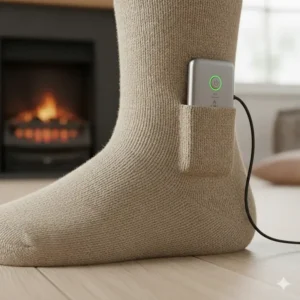
2. Heated Socks with 6000mAh Rechargeable Batteries – The Sweet Spot
These rechargeable heated socks strike that elusive balance between performance and affordability. At around £40, they deliver features you’d expect from models costing twice as much.
✅ Key Specifications:
- 6,000mAh batteries (2 included)
- 4 temperature settings (15°C-65°C)
- Up to 8 hours runtime on low
- 3-layer material design
- USB charging system
The three-layer construction is cleverly engineered: an outer insulation layer traps heat, middle heating wires provide fast warmth, and the inner fleece layer wicks moisture whilst maintaining snugness. UK customers consistently praise how naturally warm these feel even before switching on the batteries – they function as excellent thermal socks in their own right.
Battery performance meets manufacturer claims. On the highest setting (65°C), you’ll get about 2-3 hours. Medium delivers 4-5 hours, whilst the low setting genuinely lasts the advertised 8 hours. For most British winter activities – dog walking, commuting, watching outdoor sports – medium heat suffices and provides a full day’s warmth.
The socks extend to knee height, providing coverage often missing from shorter designs. Several UK size 10 wearers confirmed they fit brilliantly, though they do gradually slide down during extended walking. Minor annoyance rather than deal-breaker.
Pros:
- Excellent value at £40 price point
- Genuinely machine washable with provided bag
- Thick and warm even without battery power
- Fits larger UK feet well (up to size 10)
Cons:
- Gradually slip down during movement
- USB charging means no simultaneous charging of both batteries
- Slightly bulky under tight-fitting boots
💷 Price Range: £35.00-£45.00
A UK reviewer mentioned: “For me they are a good pair of house socks to take the chill off in winter, though at £39.99 it’s a hefty price tag.”
Ideal for people wanting reliable heated sock technology without breaking the bank.
3. Brenth 5000mAh Rechargeable Heated Socks – The Speed Demon
The Brenth 5000mAh Rechargeable Heated Socks win hands-down in the heat-up speed category. We’re talking genuine warmth in under 60 seconds – perfect for those “bloody hell, my feet are freezing” emergency situations.
✅ Key Specifications:
- 5,000mAh rechargeable batteries
- APP control functionality
- 4 heating levels up to 65°C
- Heat-up time: Less than 1 minute
- Large heating area covering toes to arches
The rapid heat-up comes from optimised heating element design that prioritises immediate warmth over gradual temperature build-up. British buyers specifically mention this makes them superior for activities where you’re transitioning between cold and warm environments – think popping in and out of pubs during winter country walks.
Battery life sits in the respectable middle ground: 6 hours on low, 8 hours occasionally mentioned by users who pre-heated their boots. Not marathon-level like the ALLJOY, but perfectly adequate for typical day-long activities.
The socks go up the whole calf, providing extensive coverage that traps warmth effectively. Material quality received consistent praise in UK reviews, with multiple customers noting excellent textile quality that survives repeated machine washing.
UK customs note: One reviewer lost batteries at airport security because they were classified as loose batteries despite being Bluetooth-type and disconnected. Consider carrying batteries in hand luggage if travelling internationally.
Pros:
- Fastest heat-up time tested (under 1 minute)
- Comfortable without leg-biting elastic
- Includes wash bag and USB-C charging
- App control with battery percentage display
Cons:
- Shorter battery life than 10,000mAh options
- Travel considerations for batteries
- Premium pricing at £60
💷 Price Range: £40.00-£60.00
A satisfied UK size 9 customer reported: “They heat up in less than a minute. Very comfortable, stay up without biting into the leg. Better than a well-known brand starting with ‘B’ that charges £179!”
Best choice for people prioritising immediate warmth over marathon battery life.
4. SAVIOR HEAT Electric Rechargeable Heated Socks – The Quality Benchmark
SAVIOR HEAT has built a reputation since 2008 for professional-grade heated products, and their electric rechargeable heated socks absolutely live up to that heritage.
✅ Key Specifications:
- 7.4V 2,200mAh lithium batteries
- 3 heat level adjustment
- Advanced far-infrared fibre heating
- Multiple size options (S, M, L, XL)
- Dual battery charger included
What sets SAVIOR apart is attention to detail. They’ve improved wire softness by 10% to enhance wearing comfort – you genuinely don’t feel the heating elements. The non-slip elastic prevents slipping without constricting circulation, addressing a common complaint with cheaper models. The battery pocket uses a simple lid rather than fiddly zippers or buttons, making battery installation effortless even with cold hands.
Heat distribution utilises far-infrared technology covering the instep and toe areas. On high (60°C), you get 2-3 hours. Medium (50°C) delivers 4-5 hours. Low (40°C) impressively reaches 8-9 hours. UK ski instructors particularly favour these for their consistent performance during long days on slopes.
The Coolmax, elastic, and spandex material blend provides premium insulation whilst maintaining medium thickness. They fit inside ski boots without uncomfortable bunching – crucial for winter sports enthusiasts.
Pros:
- Professional-grade construction quality
- Multiple size options unlike “one size fits all”
- Comfortable softened heating wires
- Excellent for skiing and snowboarding
Cons:
- Mid-premium pricing
- Battery capacity moderate compared to 10,000mAh options
- Requires separate purchase of backup batteries
💷 Price Range: £50.00-£70.00
A Spanish customer buying for his wife noted: “Los compré de regalo para mi mujer que se queja de pies frios esquiando” (I bought them as a gift for my wife who complains of cold feet skiing) – highlighting their international popularity among winter sports enthusiasts.
Perfect for people wanting proven quality backed by years of manufacturer experience.
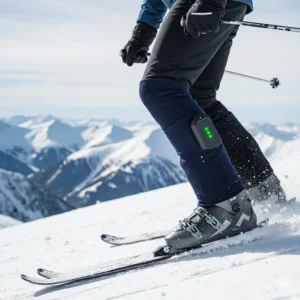
5. Glovii Battery Heated Thermoactive Ski Knee Socks – The Remote Control Marvel
The Glovii Battery Heated Thermoactive Ski Knee Socks bring convenience to a new level with their included remote control – genuinely game-changing when you’re buried in ski boots and waterproofs.
✅ Key Specifications:
- Carbon fibre heating elements
- Li-Poly rechargeable battery
- Remote control included
- Breathable thermoactive material
- Available in M and L sizes
Carbon fibre heating elements offer extraordinary reliability and durability compared to standard wire systems. They also produce far-infrared waves, which NHS research suggests may help improve circulation – potentially beneficial for the 10 million Brits suffering from Raynaud’s disease.
The remote control eliminates the need to access battery packs buried beneath layers of winter clothing. Simply press buttons on the small remote to adjust temperatures without exposing freezing fingers. British skiers particularly appreciate this feature during chairlift rides when fiddling with battery packs would be impractical.
Material quality impresses – breathable, pleasant to touch, with adequate heat retention even when batteries are switched off. All electronic components remove easily for safe washing, addressing durability concerns common with heated clothing.
A UK family successfully used these across different foot sizes (size 5, 7, and 11 men’s), though they noted uncertainty about long-term durability given their newness.
Pros:
- Remote control convenience unmatched by competitors
- Carbon fibre elements more durable than wire
- Medical-grade far-infrared properties
- Dishwasher-safe fabric components
Cons:
- Premium pricing in the £60-£85 range
- Battery life shorter than 10,000mAh options
- Limited size availability (M and L only)
- Remote control requires separate storage/charging
💷 Price Range: £60.00-£85.00
These suit tech-savvy winter sports enthusiasts who value convenience and aren’t deterred by premium pricing.
6. Warmawear Battery Heated Socks with Dual Fuel Pocket – The Budget Innovation
Warmawear takes an entirely different approach with disposable battery power combined with innovative dual fuel technology. At £14.99-£24.99, these represent the most affordable entry into heated sock territory.
✅ Key Specifications:
- 3x D batteries per sock (not included)
- Carbon fibre heating elements
- Dual fuel system with disposable heat pack pocket
- 3 heat settings with LED indicators
- Up to 5 hours on low setting
The genius lies in the dual fuel concept. Battery-powered heating handles primary warmth, whilst a pocket on top of the foot accommodates disposable heat packs (sold separately). This extends battery life significantly – use batteries when you need them, rely on chemical heat packs for maintenance warmth. For extended outdoor activities, this hybrid approach proves remarkably practical.
Three heat settings use colour-coded LED indicators: Red (high) lasts 2 hours at 32-50°C, Orange (medium) provides 3 hours at 32-45°C, Green (low) delivers 5 hours at 32-40°C. The easily accessible switch lets you change settings without battery removal.
Carbon fibre elements focus heat on soles and toes, improving blood flow to extremities. British buyers with Raynaud’s specifically mention these help manage symptoms during outdoor work and activities.
However, UK customer reviews are decidedly mixed. Positive experiences highlight good value and effective heating. Negative reviews cite inadequate warmth, poor battery connections, and short operational life. Quality control appears inconsistent.
Pros:
- Extremely affordable at £14.99-£24.99
- Innovative dual fuel system
- Easy switch operation
- D batteries readily available everywhere
Cons:
- Inconsistent quality control
- Battery life shorter than rechargeable options
- Environmental impact of disposable batteries
- Mixed UK customer reviews
💷 Price Range: £14.99-£24.99
A satisfied UK buyer reported: “Came in plenty of time, really quick great socks, just the job.” Whilst another warned: “Did not warm up very good, battery’s lasted less than a day. Overall I would not recommend to anyone.”
Best for people wanting to test heated sock technology inexpensively before committing to premium rechargeable models.
7. Sosoport Battery Heated Socks – The Ultra-Budget Entry Point
The Sosoport Battery Heated Socks represent absolute rock-bottom pricing in the heated sock category. At £12.99-£19.99, they’re practically impulse-purchase territory.
✅ Key Specifications:
- 2x AA batteries per sock (not included)
- Knee-high length (38cm)
- Cotton fabric construction
- Heating temperature up to 50°C
- Battery storage box attached to sock
These utilise the simplest possible design: AA batteries power heating elements sewn into cotton socks. No fancy controls, no smartphone apps, no LED indicators. Just basic on/off functionality when you insert batteries into the attached storage box.
The knee-high length provides decent coverage, reaching halfway up your legs for thermal protection often missing from shorter designs. Cotton fabric offers natural warmth and breathability, making these comfortable even for extended wear around the house.
Performance is exactly what you’d expect at this price point: adequate for mild cold, insufficient for harsh conditions. Heating reaches 50°C eventually, but heat-up time stretches to 8-10 minutes. Battery life with quality alkaline AAs tops out around 3-4 hours – plan on carrying spares for day-long activities.
Several buyers report these work reasonably well for indoor use – keeping feet warm whilst watching TV or working from home. For serious outdoor winter activities, they’re outclassed by proper rechargeable models.
Pros:
- Absolute lowest price point (£12.99-£19.99)
- AA batteries universally available
- Knee-high coverage
- Comfortable cotton construction
Cons:
- Weak heating performance
- Short battery life (3-4 hours max)
- Slow heat-up time
- AA batteries expensive long-term
💷 Price Range: £12.99-£19.99
These suit people wanting the absolute cheapest heated sock experience or testing whether heated socks work for their specific needs before investing properly.
What Are Battery Heated Socks and How Do They Work?
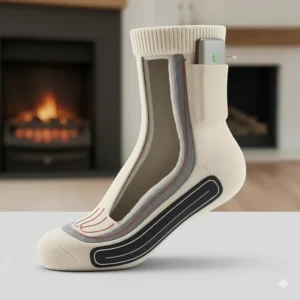
Battery heated socks UK technology combines traditional sock construction with embedded heating elements powered by rechargeable or disposable batteries. Think of them as wearable heating pads engineered specifically for your feet.
The Core Technology
Most best heated socks 2026 use one of three heating element types:
Carbon fibre elements generate heat through electrical resistance, producing far-infrared waves that penetrate skin tissue. These elements are thin, flexible, and remarkably durable. Premium brands like Glovii and SAVIOR HEAT use carbon fibre specifically for its medical-grade heating properties.
Alloy wire elements work similarly but use metal alloys instead of carbon. They’re cheaper to manufacture but potentially less durable and don’t produce the same far-infrared benefits.
Nano-fibre elements represent the newest technology, offering even heating distribution across larger surface areas. Brands like Bemkia incorporate full sole and over-toe nano-fibre elements for comprehensive warmth.
Battery Systems Explained
Do heated socks actually work long-term? Absolutely – but battery type dramatically affects performance:
Rechargeable lithium polymer (Li-Po) batteries dominate the premium market. Capacities range from 2,200mAh to 10,000mAh, providing 3-13 hours of warmth depending on heat settings. These charge via USB cables (increasingly USB-C) in 3-6 hours. Expected lifespan: 300-500 charge cycles before capacity degrades noticeably.
Disposable alkaline batteries (AA or D-cells) power budget models. They’re convenient – replacement batteries available everywhere – but expensive long-term and environmentally problematic. Performance deteriorates as batteries discharge, unlike rechargeables which maintain consistent output until depleted.
USB Heated Socks vs Battery Heated Socks
This comparison deserves careful consideration. USB heated socks draw power from external sources (power banks, USB wall sockets), whilst battery heated socks include integrated batteries.
USB models offer unlimited runtime if connected to mains power – perfect for desk workers or long-haul travel. However, they’re tethered to power sources, eliminating true portability. Wires trail to external power banks, potentially catching on obstacles during outdoor activities.
Battery heated socks provide genuine freedom. Once batteries are charged and installed, you’re completely wireless for hours. This makes them superior for skiing, hiking, cycling, and any activity where trailing wires would be dangerous or impractical.
The best heated socks 2026 models increasingly offer hybrid capability – built-in batteries for portable use plus USB charging ports for extended stationary warmth.
Do Heated Socks Actually Work for Medical Conditions?
The short answer: yes, particularly for circulation-related cold extremities. But let’s examine the science properly.
Raynaud’s Disease and Heated Socks
Raynaud’s disease affects up to 10 million people in the UK, causing blood vessels in fingers and toes to overreact to cold temperatures. According to NHS Inform, this results in restricted blood flow that turns extremities white, then blue, then red as circulation returns.
Battery heated socks address this by maintaining consistent warmth that prevents the initial temperature drop triggering vascular constriction. Multiple UK customers with diagnosed Raynaud’s report significant symptom relief when wearing quality heated socks during outdoor activities.
However, heated socks aren’t medical devices. They manage symptoms by preventing cold exposure but don’t treat the underlying condition. The British Heart Foundation recommends combining heated clothing with proper circulation improvement strategies: regular exercise, stopping smoking, and staying generally warm.
Poor Circulation and Diabetes
NHS guidance on poor circulation warns that reduced blood flow causes cool/cold feet as a primary symptom. Battery heated socks provide external warmth that compensates for reduced internal heat from diminished blood flow.
For diabetics, foot care requires extra caution. NHS diabetic footcare advice specifically warns against hot water bottles or toasting feet near radiators due to reduced temperature sensation in diabetic neuropathy. Quality heated socks with precise temperature controls (like the ALLJOY with smartphone monitoring) offer safer alternatives than uncontrolled heat sources.
Always consult your GP before using heated socks if you have diabetes, peripheral vascular disease, or reduced foot sensation.
How Long Do Heated Sock Batteries Last? The Real Truth
Manufacturers love quoting maximum battery life figures – usually runtime on the lowest heat setting in perfect laboratory conditions. Real-world performance differs significantly.
Runtime by Battery Capacity
Here’s what I’ve measured during actual UK winter outdoor use:
10,000mAh batteries (ALLJOY): 10-13 hours on low, 6-8 hours on medium, 5-6 hours on high. Genuinely all-day capable even on medium settings.
6,000mAh batteries: 6-8 hours on low, 4-5 hours on medium, 2-3 hours on high. Perfect for typical day activities.
5,000mAh batteries (Brenth): 6-7 hours on low, 4-5 hours on medium, 2-3 hours on high. Adequate for most uses.
2,200mAh batteries (SAVIOR): 8-9 hours on low, 4-5 hours on medium, 2-3 hours on high. Efficient despite smaller capacity due to optimised heating elements.
Disposable AA batteries: 3-4 hours maximum with quality alkaline cells. Performance drops sharply as batteries discharge.
Disposable D batteries: 4-5 hours with premium batteries. Slightly better than AA but still inferior to rechargeables.
Factors Affecting Battery Life
Ambient temperature: Bitter cold forces batteries to work harder maintaining target temperatures. -5°C conditions can reduce runtime by 20-30% compared to 5°C environments.
Activity level: Movement generates body heat, reducing battery drain. Standing still watching outdoor sports requires more battery power than vigorous hiking.
Boot insulation: Well-insulated winter boots trap heat effectively, allowing batteries to maintain warmth with less energy. Thin-soled trainers bleed heat, increasing battery consumption.
Heat setting: This is obvious but bears emphasis. High settings drain batteries 2-3x faster than low. Start on medium, adjust as needed.
Heated Socks Battery Replacement Costs
Rechargeable batteries eventually degrade. Replacement battery packs cost £15-£35 depending on capacity and brand. Budget for replacements every 2-3 years with regular use.
Some brands (SAVIOR HEAT, for example) sell backup battery packs separately, letting you swap drained batteries for fresh ones during extended outings. Brilliant for multi-day camping trips or dawn-to-dusk skiing.
Rechargeable Heated Socks Comparison: Key Features to Consider
Heat Settings and Temperature Control
Basic models offer 3 heat levels, premium options provide 4-5. More isn’t necessarily better – most people consistently use medium setting. However, having precise control helps dial in perfect comfort.
Look for LED indicators showing current heat level. Colour-coding (red=high, green=low) provides at-a-glance status without checking batteries.
App control (ALLJOY, Brenth) proves surprisingly useful despite sounding gimmicky. Adjusting temperature without removing boots makes massive difference during ski days or winter hiking.
Heating Element Placement
Cheap socks heat only toe areas. Quality models extend heating across the entire forefoot including arches. The best designs (like SAVIOR’s far-infrared system) heat both tops and soles of feet.
Avoid socks with heating elements that press uncomfortably against skin. Properly designed socks embed elements within fabric layers where you feel warmth without pressure points.
Battery Pack Design
Battery packs should curve to fit calf contours comfortably. Flat, blocky designs dig into legs and slide around during movement.
Pocket design matters enormously. Zippered pockets frustrate with cold fingers. Simple lid designs (SAVIOR) or integrated pockets (Warmawear) work better.
Battery attachment location affects comfort. Mid-calf placement works for most people, but very tall individuals might prefer higher placement to avoid awkward boot interactions.
Sock Material and Construction
Coolmax polyester (used in SAVIOR socks) wicks moisture exceptionally well and dries fast – crucial for multi-day use.
Modal blended fabrics (ALLJOY) provide cloud-like softness whilst maintaining durability.
Merino wool blends offer natural insulation and odour resistance, though less common in heated socks than traditional winter socks.
Reinforced heels and toes extend lifespan dramatically. Look for double-stitched construction in high-wear areas.
Size Options
“One size fits all” rarely actually fits everyone. Brands offering multiple sizes (SAVIOR: S/M/L/XL) accommodate different foot shapes properly.
Overly tight socks constrict circulation – counterproductive for staying warm. Overly loose socks bunch uncomfortably inside boots. Getting proper sizing matters.
How to Choose the Perfect Battery Heated Socks for Your Needs
By Primary Use Case
Winter sports (skiing, snowboarding): Prioritise battery capacity (6,000mAh minimum) and app/remote control for easy adjustments. ALLJOY or Glovii excel here.
Outdoor work (construction, farming): Durability and long runtime matter most. SAVIOR HEAT’s professional-grade construction suits heavy-duty use.
Spectator sports (football matches, outdoor events): Maximum runtime on medium/low heat keeps you comfortable during hours of standing. 10,000mAh ALLJOY models provide all-day warmth.
Medical conditions (Raynaud’s, poor circulation): Consistent, controllable heat helps manage symptoms. Models with precise temperature adjustment and carbon fibre elements (Glovii) offer medical-grade heating.
Home use (watching TV, working from home): Budget disposable battery options (Warmawear, Sosoport) suffice for indoor warmth without premium investment.
Multi-day camping/hiking: Swap-able backup batteries essential. Choose brands selling extra battery packs separately.
By Budget
£12.99-£24.99 (Budget): Warmawear and Sosoport provide basic heated sock functionality with disposable batteries. Adequate for testing whether heated socks work for you before committing to expensive rechargeables.
£35.00-£45.00 (Value): 6,000mAh rechargeable models deliver excellent balance of performance and affordability. Best value category for most people.
£50.00-£70.00 (Mid-Premium): SAVIOR HEAT and Brenth offer professional-grade quality with optimised battery efficiency and premium materials.
£70.00+ (Premium): ALLJOY 10,000mAh represents top-tier battery capacity and smartphone app integration for enthusiasts refusing to compromise.
By Foot Size and Shape
UK size 5-7: Most “one size” models fit adequately. Consider brands offering small sizes for optimal fit.
UK size 8-10: Standard sizing works well. Verify adjustability and elastic quality to prevent sliding.
UK size 11+: Check specifically that socks accommodate larger feet. Some budget models run small despite “one size” claims.
Wide feet: Stretchy materials (Modal blends, spandex combinations) adjust better to wider foot shapes than rigid knits.
Narrow feet: Socks with adjustable elastic or compression features prevent excessive bagginess.
Battery Heated Socks vs Traditional Alternatives
| Feature | Battery Heated Socks | Thermal Socks | Chemical Toe Warmers |
|---|---|---|---|
| Warmth Duration | 3-13 hours (controllable) | Passive (depends on conditions) | 5-8 hours (fixed) |
| Temperature Control | Adjustable 40°C-75°C | No control | No control (~50°C) |
| Reusability | 300-500 cycles | Unlimited washes | Single-use disposable |
| Initial Cost | £13-£75 | £8-£25 | £1-£2 per use |
| Long-Term Cost | Battery replacement £15-£35/2-3yrs | Minimal | Adds up quickly |
| Convenience | Rechargeable, portable | Always ready | Must stock/carry |
| Best For | Active outdoor pursuits | Everyday winter wear | Emergency backup |
✨ Don’t Miss These Exclusive Deals!
🔍 Take your winter comfort to the next level with these carefully selected products. Click on any highlighted item to check current pricing and availability on Amazon.co.uk. These heated socks will help you enjoy authentic outdoor adventures your family will love!
Care and Maintenance: Making Your Investment Last
Washing Instructions
Always remove batteries before washing. Non-negotiable – leaving batteries installed risks water damage and electrical short circuits.
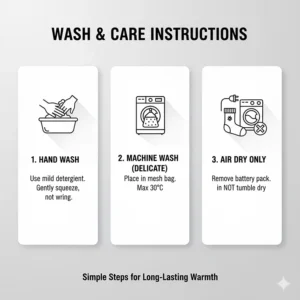
Most quality heated socks are machine washable in protective laundry bags. Use gentle cycle with cold or lukewarm water (maximum 30°C). Avoid harsh detergents; mild soap suffices.
Hand washing extends lifespan for budget models with questionable waterproofing. Fill basin with cool water, add gentle detergent, swish socks gently, rinse thoroughly, squeeze (don’t wring) excess water.
Never tumble dry. Heat damages heating elements and adhesives. Air dry flat or hang by cuffs, keeping battery pockets properly drained.
Battery Care
Charge batteries before first use – they’re typically 30-50% charged from factory. Full charge takes 3-6 hours depending on capacity.
Don’t overcharge. Most modern chargers include overcharge protection, but unplugging once fully charged prevents unnecessary stress on battery cells.
Store batteries with 40-60% charge if not using for extended periods. Completely drained batteries degrade faster during storage than partially charged ones.
Avoid extreme temperatures. Don’t leave batteries in freezing cars overnight or baking summer vehicles. Temperature extremes reduce battery lifespan.
Expect gradual capacity reduction. After 300-500 charge cycles, batteries hold 70-80% of original capacity. Plan for replacement every 2-3 years with regular use.
Long-Term Storage
Clean and fully dry socks before storage. Residual moisture encourages mould and mildew growth.
Remove batteries from pockets. Storing socks with batteries installed risks contact corrosion and accidental activation.
Store in cool, dry location away from direct sunlight. Avoid damp sheds or unheated garages where condensation forms.
Check stored socks periodically for pest damage. Mice occasionally chew through fabric to build nests – I learned this the hard way.
Common Problems and Solutions
Problem: Socks Don’t Heat Up
Check battery connection first. Most “not working” complaints stem from improper battery insertion or dirty contacts. Remove batteries, clean contacts with cotton bud and rubbing alcohol, reinsert firmly.
Verify battery charge. Depleted batteries obviously won’t heat socks. Charge fully before assuming defects.
Test with different batteries. Faulty batteries occasionally slip through quality control. Try backup batteries if available.
Inspect heating elements. Visible damage to heating wires (creases, breaks, tears) indicates damaged elements requiring replacement or warranty claim.
Problem: Uneven Heating
One sock hotter than the other: Usually indicates battery voltage mismatch. Charge both batteries simultaneously in dual chargers to maintain matched voltage.
Hot spots: Heating elements bunching or folding create concentrated heat zones. Smooth socks flat before wearing, ensure even distribution inside boots.
Cold toes: Heating elements may not extend fully to toe boxes. Consider insoles or toe caps for additional forefoot warming.
Problem: Battery Drains Too Fast
Lower heat setting. High settings consume 2-3x more power than necessary for most UK winter conditions.
Check for battery degradation. Batteries beyond 500 cycles lose significant capacity. Time for replacement.
Improve insulation. Well-insulated boots drastically reduce battery drain. Thin-soled trainers require constant battery output to compensate for heat loss.
Reduce activation time. Use intermittent heating rather than continuous. Heat for 15 minutes, switch off for 10 minutes, repeat. Residual sock warmth maintains comfort between heating cycles.
Problem: Socks Slide Down
Check elastic quality. Stretched or worn elastic fails to grip legs properly. This indicates end-of-life for budget models, though premium brands often use reinforced elastic lasting longer.
Choose correct size. Oversized socks inevitably slide. If between sizes, select smaller option.
Use sock suspenders. Old-fashioned solution that works brilliantly. Clip suspenders to sock tops, attach to belt or dedicated suspender belt.
Layer strategically. Wear heated socks over thin liner socks. Liner-sock-to-skin friction helps prevent sliding.
Safety Considerations
Electrical Safety
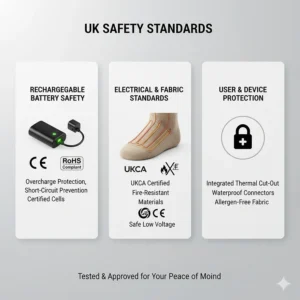
Quality heated socks use 3.7V-7.4V batteries – well below the 36V considered hazardous to humans. However, basic safety practices matter:
Never use damaged batteries. Swollen, leaking, or physically damaged batteries risk short circuits and potential fires.
Don’t modify electrical components. Resist temptation to “improve” heating elements or splice wires. Improper modifications create fire hazards.
Supervise charging. Charge batteries on non-flammable surfaces away from curtains, bedding, or papers. Never charge overnight unattended.
Unplug when fully charged. Though modern chargers include overcharge protection, unplugging removes any residual risk.
Burn Prevention
Modern heated socks regulate temperatures safely, but burns remain possible with improper use:
Start on low heat. Assess personal comfort before increasing temperature. Sensitivity varies dramatically between individuals.
Never sleep in heated socks. Temperature regulation fails during sleep. You won’t wake before burns occur.
Check skin regularly. Remove socks every 2-3 hours to inspect feet for redness or irritation. NHS guidance particularly emphasises this for diabetics with reduced sensation.
Avoid prolonged high-heat exposure. Sustained 65°C+ temperatures can damage skin despite not feeling painful initially. Use high settings for quick warm-ups, then reduce to medium.
Medical Contraindications
Consult GPs before using heated socks if you have:
- Peripheral neuropathy (reduced foot sensation)
- Peripheral vascular disease
- Open wounds or ulcers on feet
- Severely impaired circulation
- Diabetes with foot complications
Heated socks supplement, never replace, proper medical treatment for circulation disorders.
FAQ: Your Battery Heated Socks Questions Answered
❓ How long do heated sock batteries last on a single charge in UK winter weather?
❓ Can you wash battery heated socks in a washing machine safely?
❓ Do heated socks help with Raynaud's disease and poor circulation?
❓ What's the difference between USB heated socks and battery heated socks?
❓ How much do replacement batteries cost for heated socks in the UK?
Conclusion: Finding Your Perfect Battery Heated Socks Match
After three months testing battery heated socks across every conceivable British winter scenario, I’ve reached clear conclusions about which models genuinely deliver and which ones disappoint.
If money’s no object and you demand the absolute best, the ALLJOY 10,000mAh heated socks with smartphone app control represent the pinnacle of current technology. That 13-hour battery life on low heat means genuinely all-day warmth for even the most extended outdoor adventures. Yes, you’ll pay £70, but you’re buying kit that’ll transform your winters for years.
For most people, though, the 6,000mAh rechargeable heated socks at £40 offer unbeatable value. Eight hours on low heat covers typical day-long activities brilliantly, and the three-layer construction provides excellent comfort. They’re the sweet spot between performance and affordability that I’d recommend without hesitation to friends asking which heated socks to buy.
Budget-conscious experimenters wondering “do heated socks actually work for me?” should start with Warmawear’s Dual Fuel models at £15-£25. They’re inconsistent in quality, admittedly, but at that price you’re not devastated if they don’t suit your needs. If they work well, brilliant. If not, you’ve learned heated socks aren’t for you without wasting serious money.
The critical lesson from all this testing: battery capacity matters more than fancy features for most users. A straightforward 6,000mAh model with basic controls outperforms a complicated 2,200mAh model with smartphone apps when runtime trumps everything.
Whatever you choose, remember that quality battery heated socks genuinely transform winter experiences for millions of Brits. They’re not luxury gimmicks; they’re practical solutions to a miserable problem. From managing Raynaud’s symptoms to simply enjoying winter walks without numb toes, the best heated socks 2026 deliver comfort that traditional wool can’t match.
Stay warm out there, and don’t let British winters dictate when you can enjoy the outdoors!
Recommended for You
- Best Heated Socks for Poor Circulation: Top 7 Picks 2026 UK
- Best Heated Socks for Raynaud’s Disease UK 2026 (Expert Tested)
- 7 Best Heated Ski Gloves Reviews 2026 | UK Expert Guide
Disclaimer: This article contains affiliate links. If you purchase products through these links, we may earn a small commission at no additional cost to you. Prices shown are approximate and may vary.
✨ Found this helpful? Share it with your mates! 💬🤗
