

In This Article
There’s a very particular kind of misery reserved for British bikers: the one where your fingers have gone from “cold” to “stranger’s fingers” somewhere around junction 15 of the M6, and you’ve still got forty miles to go. A heated motorcycle vest exists to solve exactly that problem before it starts, by wrapping your core in carbon-fibre or micro-wire heating panels powered from your bike’s battery or a portable pack. Think of it as central heating for your torso, wired directly into your ride.
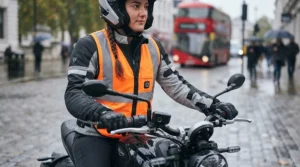
This guide pulls apart seven genuinely available heated motorcycle vest options – from sub-£40 budget gilets to premium app-controlled systems – based on real specifications, verified retailer data, and aggregated review sentiment rather than marketing fluff. Whether you’re chasing a heated motorcycle vest for layering under a touring jacket, hunting for a heated motorcycle vest with battery pack freedom, or just trying to survive a British winter commute, you’ll find a proper comparison here, not a rewritten product listing.
We’ll cover how these vests actually work, where the money is worth spending, which mistakes cost riders the most (usually cash, occasionally dignity), and how to build a heating system that keeps your core temperature stable from the school run to the Scottish Highlands. Let’s get into it.
What Is a Heated Motorcycle Vest?
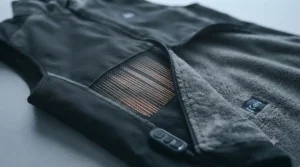
A heated motorcycle vest is a sleeveless mid-layer garment fitted with carbon-fibre or micro-wire heating elements across the chest and back, powered by a 12V bike connection or a rechargeable battery pack. It sits between your base layer and outer jacket, radiating adjustable warmth directly against your torso to combat wind chill and prevent core temperature drop on cold rides.
Unlike a simple thermal gilet, a proper heated vest is an electrical system as much as a garment. As MotorcycleNews explains in its heated kit buying guide, keeping your core warm helps spread that warmth to your extremities too – which is precisely why so many riders start their heated-gear journey with a vest rather than gloves or a full jacket.
The trade-off is complexity: batteries need charging, wiring harnesses need routing, and controllers need somewhere sensible to live on the bike. None of that is a dealbreaker, but it does mean the “best” vest depends heavily on how you ride, not just how warm the marketing copy sounds.
Quick Comparison Table
| Product | Power Type | Price Range | Best For |
|---|---|---|---|
| Keis V501 | Dual (bike or battery pack) | £150-190 range | All-round touring and daily riding |
| Alpinestars HT Heat Tech Vest | Dual (bike or included battery) | £250-300 range | Tech-focused riders wanting app control |
| Gerbing 12V Heated Vest Liner | Hardwired 12V only | £110-150 range | Long-distance riders on one bike |
| Milwaukee M12 Heated AXIS Vest | Battery pack (M12 ecosystem) | £90-140 range | Riders who already own M12 tools |
| Keis B601RP Bodywarmer | Dual (bike or battery pack) | £110-140 range | Lightweight layering under gear |
| ORORO Heated Softshell Vest | USB-C battery pack | £70-100 range | Off-bike and commuter versatility |
| Budget carbon-fibre heated gilet | USB battery pack | Under £40 | First-time buyers testing the waters |
Looking at the spread, there’s a clear split between hardwired systems built for one bike and battery-powered vests you can wear anywhere – a distinction that matters more than price alone when you’re choosing. The premium end (Keis V501, Alpinestars HT Heat Tech Vest) buys you dual power flexibility and finer heat control, while the budget end proves that even a £30 gilet can take the edge off a cold commute. Riders switching bikes often, or wanting off-bike use, should lean toward battery-first options like the ORORO Heated Softshell Vest rather than hardwired liners like the Gerbing 12V Heated Vest Liner.
💬 Just one click – help others make better buying decisions too!😊
Top 7 Heated Motorcycle Vests: Expert Analysis
Coverage here spans budget, mid-range, and premium price points, plus a mix of hardwired and battery-pack systems so you can match the vest to how you actually ride, not just how much you want to spend.
1. Keis V501 — dual-power hub for a full heated system
The standout here is versatility: the Keis V501 isn’t just a vest, it’s designed as the central hub of an entire heated riding system. Built from Micro Carbon Fibre panels across the chest and back, it draws a modest 1.5 amps at around 18 watts, which is low enough to run comfortably off most modern bike electrics without flattening your battery on short hops. It’s a dual-power garment, meaning you can wire it straight into your bike or run it from the optional Keis 5.2Ah battery pack when you’re off the bike entirely, and it includes extra sockets for daisy-chaining Keis heated gloves.
On paper this means one vest can become the backbone of chest, hand, and even trouser heating, which is exactly why long-distance and year-round commuters gravitate toward it. Independent testers at Bennetts BikeSocial reported the wiring and fittings held up well over extended use, with genuinely fast heat-up and reliable warmth even on the medium setting – the kind of durability claim that matters more than a spec sheet. Reviewers consistently flag that sizing runs snug due to the elasticated side panels, so most buyers are advised to order a size down from their usual jacket fit.
Pros:
- ✅ Dual power – runs off bike or portable battery pack
- ✅ Expandable hub for gloves, trousers and boot insoles
- ✅ Low current draw suits most stock bike electrics
Cons:
- ❌ Battery pack and controller sold separately
- ❌ Runs small – order a size down from usual fit
In the £150-190 range once you add a controller, this sits mid-premium, but the modular system design makes it genuinely good value if you plan to expand into gloves or trousers later rather than buying separate brands.

2. Alpinestars HT Heat Tech Vest — app-controlled graphene heating
What most buyers overlook about this model is that it’s less a heated vest and more a wearable climate system. The Alpinestars HT Heat Tech Vest uses graphene heating panels across four zones – chest, lower back, and the back of the neck – and pairs with Alpinestars’ Heat Tech smartphone app over Bluetooth, letting you set a precise target temperature rather than just picking “high, medium, low” and hoping for the best.
In practice, the automatic control system reads a built-in temperature sensor and self-regulates to hold your chosen setting, which removes the classic heated-gear problem of overshooting into a sweaty back at 70mph. It ships with a 12V lithium battery included, and can also be hardwired to the bike, so you’re not forced to buy extra components just to get started – a genuine point of difference from most rivals on this list. Graphene panels are also pitched as more breathable and durable over repeated flex cycles than older carbon-fibre designs, which should mean less performance drop-off after a couple of winters.
Pros:
- ✅ Bluetooth app sets precise target temperature
- ✅ Battery included in the box, no extra purchase needed
- ✅ Graphene panels built for long-term flex durability
Cons:
- ❌ Premium price puts it out of reach for casual riders
- ❌ App dependency adds a layer of tech to manage mid-ride
At around £250-300, the Alpinestars HT Heat Tech Vest is the priciest vest here, but for riders who hate faffing with manual dials at a petrol station, the app control genuinely earns its premium.
3. Gerbing 12V Heated Vest Liner — the veteran hardwired system
The standout feature is heritage: Gerbing has been building 12V motorcycle heating systems for over four decades, and the Gerbing 12V Heated Vest Liner is built on that pedigree. Five Microwire heating zones cover the collar, chest, and back, drawing 12V DC at 4.5 amps for a maximum heat output around 54 watts – noticeably punchier than the Keis vest above, which matters on genuinely sub-zero mornings.
Here’s what the spec sheet won’t spell out clearly: this is a liner, not a standalone product. You’ll need to separately buy a battery harness and a temperature controller before it does anything at all, which pushes the real cost of ownership well above the vest’s sticker price. Once wired in, though, testers who installed it themselves reported the process took roughly fifteen minutes and the harness felt genuinely robust, with colour-coded connectors that made adding gloves or trousers later straightforward. Because it runs exclusively off the bike’s electrical system, there’s no battery to charge and no runtime limit to watch – warmth lasts exactly as long as the ride, which suits riders who do serious mileage on one machine rather than swapping between bikes.
Pros:
- ✅ Strong 54W output for genuinely cold mornings
- ✅ No battery to charge – runs as long as the engine does
- ✅ Colour-coded harness simplifies adding more gear later
Cons:
- ❌ Controller and harness sold separately, adding real cost
- ❌ Tied to one bike unless you buy a second harness
Budget for the £110-150 range on the vest alone, then factor in another £40-70 for the harness and controller – the true all-in price lands closer to premium territory than the base listing suggests.
4. Milwaukee M12 Heated AXIS Vest — the workwear crossover pick
The standout advantage here is battery ecosystem crossover: if you or a family member already owns Milwaukee M12 power tools, the Milwaukee M12 Heated AXIS Vest runs on the exact same battery packs sitting in your garage. Built with Milwaukee’s Hexon Heat Technology and AXIS ripstop fabric, it offers two heat zones across the chest and back with high, medium and low settings, and a rated run-time of up to eight hours on low, four on medium, and two on high, depending on the battery fitted.
Based on the spec comparison with dedicated moto brands, this vest trades motorcycle-specific styling for genuine tradesman-grade toughness – it’s washer and dryer safe, which is rarer than you’d think in this category, and the hidden battery pass-through pocket lets you position the pack front or back for comfort under a jacket. It isn’t marketed as motorcycle gear at all, but plenty of riders have adopted it precisely because the M12 battery system is cheap, widely available, and already familiar from job sites. The obvious catch is that the vest ships without a battery or charger included, so first-time buyers need to budget for that separately unless they already have M12 kit.
Pros:
- ✅ Shares batteries with the huge M12 tool ecosystem
- ✅ Up to 8 hours of run-time on the low setting
- ✅ Fully washer and dryer safe construction
Cons:
- ❌ Battery and charger not included with vest-only listings
- ❌ Styling reads as workwear, not motorcycle-specific
Vest-only listings sit in the £90-140 range, making this one of the strongest value plays here if you’re already inside the Milwaukee ecosystem – and one of the pricier ones if you’re starting entirely from scratch.
5. Keis B601RP Bodywarmer — the lightweight Keis alternative
The standout feature is reduced bulk: where the V501 above is built for wind resistance on the bike, the Keis B601RP Bodywarmer uses Ultraflex material and a heated collar to prioritise comfort and flexibility, positioned by Keis itself as the lightweight, comfort-focused option next to the V501’s wind-resistant, on-bike design.
What this means in practice is a vest that layers more like a cosy gilet than a technical riding shell, making it a genuinely comfortable option for wearing both on and off the bike – useful if you commute by motorcycle but also want warmth walking around at your destination. Like the V501, it’s dual-powered and can run from either the bike or a Keis portable battery pack, and it slots into the same expandable ecosystem for gloves and trousers. The heated collar is a genuine point of difference for riders whose necks bear the brunt of wind chill, though reviewers note the trade-off is slightly less structured wind protection than the more technical V501 shell.
Pros:
- ✅ Heated collar targets a commonly overlooked cold spot
- ✅ Comfortable enough for genuine off-bike wear
- ✅ Compatible with the wider Keis heated ecosystem
Cons:
- ❌ Less wind-resistant shell than the V501
- ❌ Battery pack sold as a separate accessory
Pricing typically sits in the £110-140 range, making it a genuine mid-tier alternative to the V501 for riders who value comfort and a heated collar over outright wind protection.

6. ORORO Heated Softshell Vest — the battery-first budget-mid pick
The standout here is simplicity: the ORORO Heated Softshell Vest runs entirely from a USB-C rechargeable battery pack rather than requiring any bike wiring at all, making it the easiest vest on this list to try before committing to a full 12V install. Reviewers consistently note that the USB-C charging standard is a genuine convenience upgrade over older proprietary connectors, since most riders already carry a compatible charger for their phone.
Here’s what most buyers overlook: because it isn’t wired to the bike, this vest doubles as genuine everyday outdoor wear – dog walks, football touchline standing, DIY in a cold garage – which stretches its value well beyond motorcycling alone. The trade-off against hardwired systems like the Gerbing 12V Heated Vest Liner is a finite runtime per charge, typically several hours on a mid setting, so long-distance tourers may find themselves carrying a spare battery or a power bank for genuinely long days in the saddle. Build quality on the softshell fabric is aimed more at everyday warmth than technical motorcycle abrasion resistance, so it’s best treated as a base layer worn under proper riding kit rather than a standalone outer shell.
Pros:
- ✅ USB-C charging uses a battery type you likely already own
- ✅ Genuinely useful off the bike, not just on it
- ✅ No wiring or harness installation required
Cons:
- ❌ Finite runtime per charge versus hardwired systems
- ❌ Softshell fabric isn’t built for abrasion resistance
Sitting in the £70-100 range, this is the pick for riders who want heated gear without committing to a bike-specific electrical install, and who’ll genuinely wear the vest off the bike too.
7. Budget carbon-fibre heated gilet — the entry-level test run
The standout feature is accessibility: budget carbon-fibre heated gilets, widely available from several manufacturers on Amazon UK, typically pack nine carbon-fibre heating pads across the chest, back, and collar with three adjustable temperature levels, all for a fraction of the cost of the branded options above. This is honestly the smartest starting point if you’ve never owned heated gear and aren’t yet sure you’ll use it every winter.
Reviewers consistently report that these budget gilets heat up quickly and provide genuinely noticeable warmth on the low and medium settings, though the highest setting on some units drains the bundled battery pack faster than premium alternatives. Aggregated feedback on machine-washability is broadly positive, provided the battery pack is removed first, which suits riders who want gear they can throw in with a normal wash rather than hand-cleaning a delicate technical shell. Given the price point, expect a simpler, less technical outer fabric than the Keis or Alpinestars options, without the wind-resistant shell or motorcycle-specific cut – but as a base layer under a proper riding jacket, that’s rarely a dealbreaker.
Pros:
- ✅ Genuinely low-cost entry point into heated gear
- ✅ Machine washable once the battery pack is removed
- ✅ Nine heating pads cover chest, back and collar
Cons:
- ❌ Battery pack drains faster on the highest setting
- ❌ Fabric isn’t built to motorcycle-specific abrasion standards
Priced under £40, this is the vest to buy if you want to test whether heated riding gear suits you before spending three or four times as much on a technical brand.
Core Temperature and Base Layer Heating: The Science Bit
Base layer heating works by placing carbon-fibre or micro-wire elements directly against – or very close to – your skin, under your main riding jacket, so heat transfers efficiently rather than dissipating through thick outer insulation first. This is why Gerbing specifically recommends wearing its vest liner over a thin polyester base layer rather than a bulky jumper: too much material between the heating panel and your skin blunts the effect considerably.
The reason this matters comes down to thermoregulation – your body’s system for maintaining a stable internal temperature, which the hypothalamus manages by reading signals from cold receptors and triggering responses like blood vessel narrowing and shivering as cold stress increases. On a motorcycle, wind chill accelerates heat loss far faster than standing still in the same air temperature, which is precisely why riders lose dexterity in their hands and feel foggy-headed on long cold rides even when the ambient temperature isn’t extreme. A heated vest doesn’t fight the wind directly – it works by keeping your core warm enough that your body doesn’t need to divert blood flow away from your extremities to protect vital organs, which is the physiological reason a warm chest genuinely does help keep your hands and feet warmer too.
Practically, this means positioning matters more than raw wattage. A vest with heating panels concentrated on the chest and upper back, close to major blood vessels, will generally feel more effective at preserving core temperature than a jacket with the same total wattage spread thinly across sleeves and cuffs.
Heated Motorcycle Vest with Battery Pack vs Hardwired 12V Systems
| Factor | Battery Pack System | Hardwired 12V System |
|---|---|---|
| Setup | No wiring, ready to wear | Requires harness install (15-30 mins) |
| Off-bike use | Yes, fully portable | No, tethered to bike |
| Runtime | Limited by battery charge (hours) | Unlimited while engine runs |
| Multi-bike use | Easy – just swap vests | Needs a harness per bike |
| Best example | ORORO Heated Softshell Vest | Gerbing 12V Heated Vest Liner |
Choosing between these isn’t really about which system is “better” – it’s about matching the electrics to your riding pattern. A hardwired setup like the Gerbing 12V Heated Vest Liner makes far more sense for someone who owns one bike and rides it for hours at a stretch, since there’s no runtime ceiling to worry about. A battery-first vest such as the ORORO Heated Softshell Vest or the budget carbon-fibre gilet wins for anyone who swaps between bikes, walks the dog in it, or simply doesn’t want to touch a spanner to get warm. Dual-power options like the Keis V501 attempt to split the difference, which is exactly why they command a higher price.

Lightweight Heated Apparel for Everyday and Long-Distance Riders
Lightweight heated apparel earns its name through thinner heating elements and slimmer battery packs that don’t add noticeable bulk under a jacket – and for UK riders, that’s not a cosmetic nicety, it’s genuinely practical. Bulky heated gear fights with jacket armour, restricts shoulder movement when checking blind spots, and can make an already tight winter riding kit feel claustrophobic.
For everyday commuters doing short, stop-start city journeys, a lightweight option like the budget carbon-fibre gilet or the ORORO Heated Softshell Vest makes more sense than a heavier hardwired system, since the ride is rarely long enough to need hours of sustained heat. Long-distance and touring riders, by contrast, benefit more from the slightly heavier but higher-output panels in the Gerbing 12V Heated Vest Liner or Keis V501, where sustained warmth over several hours outweighs the marginal extra weight. The general rule worth following: the shorter and more frequent your rides, the more you should prioritise lightweight and portable; the longer and less frequent, the more raw heat output and reliable power delivery start to matter more than grams saved.
Heated Motorcycle Vest for Layering: Building a Winter System
Layering a heated vest properly is less about piling on clothes and more about sequencing them correctly. Get the order wrong and even the best vest on this list will underperform.
The commuter, 8 miles each way through the city: A rider doing a short, cold morning commute doesn’t need maximum wattage – they need fast heat-up and simplicity. A budget carbon-fibre gilet or the ORORO Heated Softshell Vest worn over a thin thermal base layer and under a mesh-lined jacket hits the sweet spot, since the ride is over before battery runtime becomes a concern.
The tourer, covering 200+ miles on a winter weekend away: Here, sustained output and reliability matter far more than portability. The Keis V501 or Gerbing 12V Heated Vest Liner, worn over a moisture-wicking base layer and under a properly insulated touring jacket, provides hours of consistent core warmth without draining a battery pack mid-ride.
The all-weather all-rounder, riding year-round regardless of forecast: This rider benefits most from a dual-power system like the Keis V501 or Alpinestars HT Heat Tech Vest, which flexes between bike power on long hauls and portable battery power for shorter trips or off-bike use, avoiding the need to own two separate heated systems.
Getting the Most from Your Heated Vest: Setup, Care & First 30 Days
Getting a heated vest properly bedded in during the first month prevents most of the common failures riders report later. Start by test-fitting the vest over your actual winter base layer before your first cold ride, not a t-shirt – sizing feels different with three layers involved, and most heated vests, including the Keis V501, run snug by design.
Route wiring carefully on hardwired systems: tuck excess cable away from moving parts and hinge points, and avoid tight bends right at the connector, which is where harnesses most commonly fail over time. For battery-powered vests like the ORORO Heated Softshell Vest, get into the habit of charging the battery fully before every ride rather than topping up sporadically, since lithium packs perform more predictably from a full charge. A common early mistake is leaving the vest on its highest setting throughout a ride out of habit – most riders find medium is genuinely sufficient once their body adjusts, and it dramatically extends both battery runtime and heating element lifespan. Finally, always remove battery packs before washing, and check manufacturer guidance on hand-washing versus machine-washing the outer shell, since heating elements and washing machines are not universally compatible.
Buyer’s Decision Framework: Which Heated Vest Should You Choose?
If you ride one bike almost exclusively and do long motorway miles, choose a hardwired option like the Gerbing 12V Heated Vest Liner, because unlimited runtime beats portability on long hauls. If you switch between bikes or want off-bike use, choose a battery-first vest like the ORORO Heated Softshell Vest, because you’re not tied to a single wiring install. If you want the best of both and don’t mind paying for it, choose a dual-power system like the Keis V501 or Alpinestars HT Heat Tech Vest, because flexibility justifies the premium for year-round riders. If you’re testing whether heated gear suits you at all, choose the budget carbon-fibre gilet, because a low-cost entry point removes the financial risk of committing to a brand you haven’t tried.
| Price Band | Example | Typical Buyer |
|---|---|---|
| Under £50 | Budget carbon-fibre gilet | First-time heated gear buyer |
| £70-150 | ORORO, Milwaukee M12, Keis B601RP | Regular commuters, value-focused riders |
| £150-300 | Keis V501, Alpinestars HT Heat Tech Vest | Touring riders, year-round commuters |
Reading across this framework, the sensible move for most riders is to start one price band lower than instinct suggests, then upgrade once you know exactly how often you’ll actually wear the thing through a full winter.
✨ Don’t Miss These Exclusive Deals!
🔍 Take your winter riding kit to the next level with these carefully selected heated vests. Click on any highlighted item to check current pricing and availability. Proper heated gear turns miserable commutes into genuinely comfortable rides.
How to Choose a Heated Motorcycle Vest: 7 Expert Criteria
- Power source fit – match battery or hardwired systems to how often you switch bikes or want off-bike use.
- Heating zone coverage – chest and back cover core temperature; a heated collar adds meaningful comfort in strong wind chill.
- Wattage and current draw – higher wattage means faster, stronger heat, but also faster battery drain or higher current demand on your bike.
- Sizing behaviour – many heated vests, including several on this list, run smaller than standard sizing due to elasticated panels.
- Expandability – hub-style systems like Keis let you add heated gloves or trousers later without buying a whole new brand.
- Washability – check whether the battery must be removed and whether the shell is machine or hand-wash only.
- Total cost of ownership – factor in separately-sold controllers, harnesses, and batteries, not just the vest’s headline price.
Common Mistakes When Buying a Heated Motorcycle Vest
The most common mistake is buying on headline price alone, then discovering the controller, harness, or battery pack are sold separately – as with the Gerbing 12V Heated Vest Liner, where the true all-in cost sits well above the vest’s listed price. A close second is ignoring sizing guidance: several premium vests, including the Keis V501, are cut for a snug fit over layers, and riders who order their usual jacket size often end up returning an uncomfortably tight vest.
Another frequent error is choosing a hardwired-only system without considering multi-bike use, then being stuck rewiring a harness every time they swap machines. On the flip side, some riders buy a battery-only vest for long-distance touring and are caught out by limited runtime on a genuinely long day in the saddle – a scenario better suited to the Keis V501 or Gerbing 12V Heated Vest Liner. Finally, plenty of buyers skip checking washing instructions entirely, then damage a heating element by machine-washing with the battery still connected.
Heated Motorcycle Vest vs Heated Jacket: Which Wins for UK Riders?
A heated vest covers the torso only, leaving the arms unheated, while a heated jacket extends heating panels into the sleeves for full-arm warmth – at a noticeably higher price and bulkier fit. For most UK riders, a vest wins on practicality: it layers more easily under existing outer jackets, costs meaningfully less, and covers the core, which does the heavy lifting for overall body warmth thanks to how blood flow and thermoregulation work.
A heated jacket earns its keep specifically for riders with poor circulation, Reynaud’s syndrome, or genuinely extreme cold-weather touring, where unheated arms and forearms become a real limiting factor rather than a minor discomfort. For the vast majority of commuters and weekend riders, though, pairing a vest like the Keis V501 with a well-insulated outer jacket sleeve delivers most of the benefit of a full heated jacket at a fraction of the outlay – which is exactly why vests remain the more popular starting point across the brands covered here.
What to Expect: Real-World Performance in UK Winter Conditions
On paper, wattage figures look abstract – but translated into real riding, the difference between an 18W vest and a 54W vest is the difference between “the chill is dulled” and “I’m not the passenger seat of a fridge.” Riders on the higher-output Gerbing 12V Heated Vest Liner report noticeably faster heat-up and stronger sustained warmth on genuinely sub-zero mornings, while lower-output options like the Keis V501 feel entirely adequate for typical UK winter temperatures, which rarely plunge as low as continental touring routes.
Expect a noticeable lag of roughly ten to thirty seconds between switching a vest on and feeling meaningful warmth, longer in genuinely freezing conditions before the panels reach full temperature. Battery-powered vests like the ORORO Heated Softshell Vest typically deliver their strongest performance in the first hour of a charge cycle, with warmth gradually tapering as the battery depletes – worth bearing in mind if you’re planning a multi-hour ride and relying on a single charge. Wind chill at speed also matters more than static air temperature: a vest that feels perfectly warm stationary in a car park can feel noticeably less effective at 70mph on an exposed motorway, which is where hardwired, higher-wattage systems tend to hold their advantage most clearly.
Safety, Regulations & Compliance for Heated Motorcycle Gear
Riding in genuinely cold conditions carries a real physiological risk beyond simple discomfort. Shivering is the body’s normal reaction to cold, and on its own it isn’t hypothermia – but prolonged cold exposure without adequate protection can progress toward more serious symptoms, particularly on long winter rides where riders may not notice gradual heat loss until dexterity and concentration are already affected. If you ever experience confusion, slurred speech, or a loss of fine motor control on a cold ride, treat it seriously and get off the road rather than pushing on. For further guidance, NHS inform’s hypothermia advice is a genuinely useful resource for understanding risk factors and early warning signs.
From an electrical safety standpoint, always use a fused harness when hardwiring any vest, including the Gerbing 12V Heated Vest Liner or Keis V501, to protect both the garment and your bike’s electrical system from a short circuit. Check that any hardwired connection draws current appropriate to your bike’s charging capacity – most modern bikes handle a single heated vest comfortably, but stacking multiple heated garments on an older or smaller-capacity charging system can strain it. There’s no UK-specific legal certification requirement for heated vests themselves, unlike, say, high-visibility gear, but buying from established brands with clear warranty terms remains the most reliable safeguard against faulty wiring or heating elements.

Frequently Asked Questions
❓ Can I wear a heated motorcycle vest in the rain?
❓ Do heated motorcycle vests drain your bike battery?
❓ How long does a heated vest battery pack last per charge?
❓ What size heated vest should I buy for layering?
❓ Are heated motorcycle vests worth it for UK winters?
Conclusion
Choosing between these seven heated motorcycle vests really comes down to answering one honest question: how do you actually ride? Long-distance, single-bike commuters get the most from hardwired systems like the Gerbing 12V Heated Vest Liner, while riders who swap bikes or want off-bike warmth should lean toward battery-first options like the ORORO Heated Softshell Vest or the budget carbon-fibre gilet. Riders who want the flexibility of both, and are willing to pay for it, will get the most rounded experience from the Keis V501 or the app-controlled Alpinestars HT Heat Tech Vest.
None of these is objectively “the best” in isolation – the right heated motorcycle vest is simply the one whose power system, wattage, and layering fit match your actual winter riding pattern. Start with a realistic assessment of your typical ride length and bike-swapping habits, check current pricing on your shortlist, and layer it correctly over a thin base layer for the best possible result. Whichever you choose, you’ll likely wonder how you ever tolerated a cold commute without one.
Recommended for You
- Heated Grips for Scooters: 7 Best Picks to Beat the Cold in 2026
- 7 Best Heated Grips for Touring Motorcycles in 2026
- Heated Motorcycle Grips UK: 7 Best Picks for Winter 2026
Disclaimer: This article contains affiliate links. As an Amazon Associate, I earn from qualifying purchases. If you purchase products through these links, we may earn a small commission at no additional cost to you.
✨ Found this helpful? Share it with your friends! 💬🤗
