
In This Article
There’s nothing quite as miserable as stepping out of a warm shower into a freezing bathroom on a frosty British morning. I’ve been there countless times myself – teeth chattering, frantically reaching for a towel whilst wishing I’d sorted out proper heating ages ago. The truth is, finding the right bathroom heater isn’t just about comfort; it’s about creating a safe, mould-free environment that won’t send your energy bills through the roof.
The bathroom presents unique challenges when it comes to heating. You’re dealing with moisture, steam, and splashing water, which means not just any old heater will do. According to the Institution of Engineering and Technology (IET), UK regulations are quite specific about what can and cannot be installed in bathrooms, and for good reason – mixing water and electricity requires careful consideration.
In this comprehensive guide, I’ll walk you through everything you need to know about choosing the best bathroom heater for your home. Whether you’re after a powerful wall-mounted fan heater, a sleek panel radiator with WiFi control, or an energy-efficient infrared solution, I’ve researched and compared the top models available in the UK for 2026. You’ll discover real products with actual prices, understand crucial IP ratings that ensure bathroom safety, and learn which heaters deliver the best value for money.
Quick Comparison Table
| Model | Type | Power | IP Rating | Key Feature | Price Range |
|---|---|---|---|---|---|
| Dimplex FX20VE | Downflow Fan | 2kW | IP22 | Energy-saving timer | £47.95-£55.99 |
| Futura Eco 2000W | Panel Heater | 2kW | IP24 | Window detection | £78.62-£89.99 |
| Devola DVPW2000WH | Glass Panel WiFi | 2kW | IP24 | Alexa compatible | £119.99-£139.99 |
| Futura WiFi Glass | Glass Panel WiFi | 2kW | IP24 | Smart app control | £119.99 |
| Devola DVPW1500B | Glass Panel WiFi | 1.5kW | IP24 | Multi-mode heating | £99.99-£119.99 |
| Purus 1000W | Panel Heater | 1kW | IP24 | Budget-friendly | £69.95-£79.95 |
| Herschel Comfort | Infrared Panel | Various | IP44/IP54 | Premium efficiency | £199.99-£509.99 |
💬 Just one click – help others make better buying decisions too! 😊
Top 7 Best Bathroom Heaters: Expert Analysis
1. Dimplex FX20VE Downflow Timer Bathroom Fan Heater
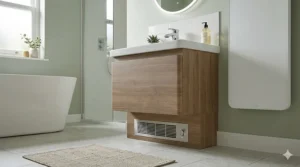
The Dimplex FX20VE has earned its reputation as one of Britain’s most trusted bathroom heaters, and after reviewing dozens of UK customer experiences, it’s easy to see why. This compact downflow fan heater packs serious warmth into a surprisingly small package.
Key Specifications:
- Power output: 2kW (adjustable to 1kW during installation)
- Dimensions: 242mm (H) × 229mm (W) × 109mm (D)
- IP22 rating with preset 30-minute timer
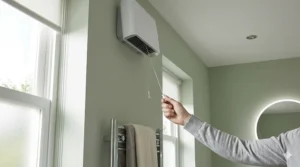
- Pull-cord operation with neon indicator
What sets the FX20VE apart is its clever energy-saving electronic timer, which automatically switches off after your chosen time (5 to 155 minutes), preventing accidental overheating and wasted energy. The pull-cord operation is intuitive, and the downflow design means heat is forced directly downward, warming you up rapidly when you need it most.
UK buyers consistently praise its rapid heat-up capability and reliable performance. One verified Amazon reviewer noted how it transformed their cold bathroom into a comfortable space within minutes. The adjustable thermostat automatically switches to 1kW once the room reaches temperature, which is brilliant for energy efficiency.
Price: £47.95-£55.99
✅ Pros:
- Exceptional value for money
- Rapid warm-up with 2kW output
- Energy-saving timer prevents waste
- Compact design suits small bathrooms
- Trusted British brand with decades of reliability
❌ Cons:
- Basic aesthetics – purely functional
- Pull-cord might not suit everyone’s preference
2. Futura Eco 2000W Electric Panel Heater
The Futura Eco 2000W represents excellent middle-ground territory – smart features without the premium price tag. This slimline panel heater has become incredibly popular with UK homeowners who want versatility and modern functionality.
Key Specifications:
- Power: 2000W with adjustable thermostat (5°C-35°C)
- Dimensions: 86cm (L) × 8cm (D) × 40cm (H)
- IP24 bathroom-safe rating with auto open window detection
- Lot 20 compliant for energy efficiency
- Wall-mounted or freestanding with included feet
The standout feature here is the automatic open window detection. If the heater senses a sudden temperature drop of 5°C or more (like when someone opens a window), it switches itself off automatically. This might sound trivial, but it genuinely saves energy and money over time – particularly handy if you’ve got forgetful teenagers in the house!
Customer feedback highlights the precise thermostat control and versatile installation options. The 24/7 timer allows you to set different temperatures for every hour of every day, which is perfect for ensuring your bathroom is toasty before your morning shower.
Price: £78.62-£89.99
✅ Pros:
- Excellent energy-saving features
- Slim profile (only 8cm deep when wall-mounted)
- Versatile mounting options
- Accurate digital thermostat
- Covers rooms up to 23m²
❌ Cons:
- No WiFi connectivity on this model
- Display can be slightly bright at night
3. Devola DVPW2000WH WiFi Glass Panel Heater
For those who want their bathroom heating to join the smart home revolution, the Devola DVPW2000WH delivers impressive connectivity and control. This sleek glass panel heater represents the modern face of bathroom heating in 2026.
Key Specifications:
- Power: 2000W with three heating modes
- Full WiFi connectivity via Tuya app with Alexa and Google Assistant compatibility
- IP24 rated for bathroom safety
- Ultra-slim 80mm depth for flush wall mounting
- 24-hour/7-day programmable timer
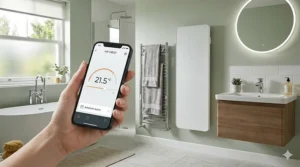
The WiFi capability transforms how you interact with your heating. Imagine adjusting your bathroom temperature from bed on a freezing morning, or checking whether you left the heater on when you’re already at work. The Tuya app is straightforward to set up, and voice control through Alexa or Google Assistant feels genuinely futuristic.
The tempered safety glass front panel not only looks stunning but also provides excellent safety credentials. The integrated open window detection and multiple power settings (900W, 1200W, 1500W) ensure efficient operation. UK reviewers particularly appreciate the remote control and the ability to turn off the LED display for nighttime use.
Price: £119.99-£139.99
✅ Pros:
- Full smart home integration
- Sleek, modern glass design
- Precise app-based control
- Multiple heating modes
- Silent operation
❌ Cons:
- Requires 2.4GHz WiFi (not 5GHz)
- More expensive than non-smart alternatives
- Must be hardwired by electrician for bathroom use
4. Futura WiFi White Glass Panel Heater 2000W
Similar to its Devola counterpart, the Futura WiFi Glass panel heater brings smart functionality to bathroom heating with a slightly different aesthetic approach. This model appeals particularly to those seeking a minimalist white finish.
Key Specifications:
- 2000W heating capacity
- WiFi enabled with smart home compatibility
- IP24 bathroom-safe construction
- Touch control LED display
- Wall-mounted or freestanding options
What distinguishes this model is the exceptionally intuitive touch controls and the quality of the white glass finish. It blends seamlessly into modern bathroom décor, almost disappearing against white tiles. The smart functionality mirrors other WiFi-enabled models, connecting through the Tuya app for remote control and scheduling.
Customer experiences from across the UK highlight the heater’s ability to maintain consistent temperatures without the temperature swings some cheaper models experience. The eco mode is particularly clever, running at half capacity when full heating isn’t needed.
Price: £119.99
✅ Pros:
- Premium white glass aesthetics
- Responsive touch controls
- Effective eco mode
- Quick heat-up time
- Comprehensive safety features
❌ Cons:
- Glass shows water spots in bathrooms
- Slightly more expensive than standard panels
5. Devola DVPW1500B WiFi Glass Panel Heater (Black)
For those preferring darker aesthetics or simply wanting a smaller capacity heater, the Devola DVPW1500B offers the same smart features as its 2kW sibling in a 1.5kW package. This black glass model is perfect for medium-sized bathrooms.
Key Specifications:
- 1500W power output
- IP24 rated with splash-proof design suitable for zones outside zone 2
- WiFi connectivity with Alexa/Google Assistant
- Temperature range: 5-50°C
- Child safety lock included
The 1.5kW output is ideal for bathrooms up to 17m², which covers most UK homes perfectly. The black glass finish is striking and handles water spots better than white alternatives. UK buyers consistently rate it 4.3 out of 5 stars, praising its reliable performance and smart features.
The anti-frost mode is brilliant for preventing pipes from freezing during harsh British winters when the heating might otherwise be off. The heater maintains a minimum temperature automatically, protecting your bathroom’s plumbing.
Price: £99.99-£119.99
✅ Pros:
- Sleek black glass design
- Perfect for medium bathrooms
- Comprehensive smart features
- Anti-frost protection
- Remote control included
❌ Cons:
- Lower output than 2kW models
- Black finish may not suit all décor
- Wall mounting requires precision
6. Purus 1000W Electric Panel Heater
Not everyone needs a powerful 2kW heater, and that’s where the Purus 1000W shines. This budget-friendly panel heater is ideal for smaller bathrooms, en-suites, or situations where you want supplementary heating alongside your main system.
Key Specifications:
- 1000W power output
- IP24 bathroom-safe rating
- 24-hour/7-day digital timer
- Wall-mounted or freestanding
- Lot 20 compliant
The Purus is designed with energy efficiency at its core, featuring intelligent thermostatic control and open window detection. For compact bathrooms, 1kW is often perfectly adequate, and you’ll appreciate the lower running costs compared to more powerful models.
The built-in child lock is reassuring for families, whilst the slim white panel design means it won’t dominate your bathroom space. UK customers particularly value the straightforward installation and reliable performance without unnecessary bells and whistles.
Price: £69.95-£79.95
✅ Pros:
- Most affordable option reviewed
- Perfect for small bathrooms
- Low running costs
- Simple, reliable operation
- Child lock for safety
❌ Cons:
- Lower power may struggle in larger spaces
- No WiFi connectivity
- Basic display
7. Herschel Comfort Infrared Bathroom Panel
For those seeking premium performance and cutting-edge technology, Herschel Comfort infrared panels represent the pinnacle of bathroom heating. These panels work fundamentally differently from conventional heaters, warming surfaces and people directly rather than just heating air.
Key Specifications:
- Various wattages available (300W-1200W)
- IP44/IP54 ratings for enhanced bathroom protection
- IEC 60675 tested efficiency
- 10-year warranty
- Mirror and standard panel options
Herschel’s Comfort range has been independently tested to international standards, demonstrating superior efficiency. The infrared technology means you feel warm almost immediately upon switching on, unlike conventional heaters that must warm the entire room’s air first.
The mirror panel option is genuinely clever for bathrooms – it functions as both a full-size mirror and a heater, saving wall space whilst preventing condensation. British homeowners report up to 40% savings on running costs when paired with a thermostat, making the higher upfront cost worthwhile over time.
Price: £199.99-£509.99 (depending on size and type)
✅ Pros:
- Premium efficiency and performance
- Immediate warmth upon activation
- Prevents condensation effectively
- Mirror options available
- 10-year warranty confidence
❌ Cons:
- Significantly higher upfront cost
- Requires professional installation
- May need multiple panels for larger bathrooms
✨ Don’t Miss These Exclusive Deals!
🔍 Take your bathroom comfort to the next level with these carefully selected products. Click on any highlighted item to check current pricing and availability on Amazon.co.uk. These heaters will help you create authentic warmth your family will love whilst keeping energy costs manageable!
Understanding UK Bathroom Heating Regulations
Before you rush out to buy any bathroom heater, you absolutely must understand UK bathroom electrical zones and IP ratings. These aren’t just bureaucratic red tape – they’re essential safety measures designed to prevent electrical accidents in one of the most potentially dangerous rooms in your home.
What Are Bathroom Zones?
The IET Wiring Regulations (BS 7671) divide bathrooms into specific zones based on proximity to water sources. Understanding these zones is crucial for legal and safe installation:
Zone 0 – Inside the bath or shower itself. Only equipment rated IPX7 (immersion-proof) and operating at a maximum of 12V can be used here. Essentially, don’t put heaters in Zone 0!
Zone 1 – The area directly above the bath or shower, extending up to 2.25 metres from the floor. Equipment here must have a minimum IP44 rating, and most heaters cannot be safely installed in this zone.
Zone 2 – This extends 0.6 metres horizontally from the bath or shower edge, up to 2.25 metres high. IP44 rated heaters can be installed here, but they must be hardwired by a qualified electrician – no plug-in options allowed.
Outside Zones (formerly Zone 3) – Any area beyond Zones 0-2. This is where most bathroom heaters are installed. Even here, IP24 rated equipment is strongly recommended for splash protection.
Decoding IP Ratings
The IP (Ingress Protection) code consists of two digits. For bathroom heaters, the second digit is critical – it indicates water resistance:
- IP22 – Protected against water spray up to 15° from vertical. Suitable for high-mounted heaters away from direct splash zones.
- IP24 – Protected against water spray from all directions. The standard for most bathroom heaters.
- IP44 – Protected against splashing water from all directions. Enhanced protection for areas closer to water sources.
- IP54/IP65 – Provides even greater protection, though rarely necessary for standard bathroom heating.
Legal Requirements and Professional Installation
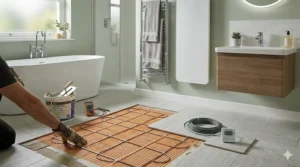
Here’s something many people don’t realise: all bathroom electrical appliances must be hardwired by a qualified electrician to comply with relevant safety regulations. You cannot simply plug a heater into a bathroom socket (and actually, bathroom sockets themselves have strict installation requirements).
The regulations exist because electricity and water are a lethal combination. A qualified electrician understands bathroom zones, IP ratings, and proper cable routing to ensure your heater installation is both safe and compliant with Part P of the Building Regulations.
According to government guidance available at www.gov.uk, all electrical work in bathrooms must either be carried out by a competent person registered with an approved scheme, or be inspected and certified by Building Control. Whilst this might seem like an unnecessary expense, it’s genuinely crucial for your family’s safety and won’t invalidate your home insurance.
Types of Bathroom Heaters: Which One’s Right for You?
Fan Heaters
Traditional fan heaters like the Dimplex FX20VE blow warm air into your bathroom, providing rapid heat-up. They’re brilliant for quick bursts of warmth but can be slightly noisy. Downflow models mounted high on walls are particularly effective, forcing heat downward where you actually need it.
Panel Heaters
Panel heaters provide convection heating – warming air which then circulates naturally through the room. Modern panel heaters like the Futura Eco and Devola ranges combine sleek aesthetics with smart features. They’re silent, efficient, and increasingly affordable.
Infrared Heaters
Infrared technology works differently, warming people and surfaces directly rather than heating air. According to Wikipedia’s explanation of infrared heating, this method mimics the sun’s natural warmth, transferring heat through electromagnetic radiation. UK homeowners choose infrared bathroom heaters because they deliver immediate warmth and help reduce condensation. Premium brands like Herschel dominate this market, though the higher upfront cost is offset by excellent efficiency.
Electric Radiators
Traditional electric radiators are another option, though they’re less common in modern bathroom installations. They work well as primary heating but lack the rapid warm-up most people want from dedicated bathroom heating.
Energy Efficiency: Running Costs Demystified
One question I’m constantly asked is: “How much will this actually cost to run?” It’s a fair concern, especially with UK electricity prices where they are. Let me break down the realistic costs based on current 2026 energy prices.
Calculating Running Costs
With UK electricity averaging 34p per kWh in early 2026, here’s what you can expect:
2kW Fan Heater (Dimplex FX20VE):
- Running at full power: 68p per hour
- However, with thermostat cycling on/off: approximately 27-34p per hour in practice
- Monthly cost (1 hour daily): £8.16-£10.20
2kW Panel Heater (Futura Eco):
- Full power: 68p per hour
- With intelligent thermostat: 20-27p per hour
- Monthly cost (2 hours daily): £12-£16.32
1kW Panel Heater (Purus):
- Full power: 34p per hour
- With thermostat control: 14-20p per hour
- Monthly cost (1 hour daily): £4.20-£6.00
Infrared Panel (600W Herschel):
- Full power: 20.4p per hour
- Efficient surface warming means shorter run times
- Monthly cost (30 minutes daily): £3.06
The key insight? Actual running costs are typically 40-60% lower than theoretical maximum costs because modern thermostats cycle heating on and off intelligently. Features like open window detection and setback timers make a genuine difference to your energy bills.
Money-Saving Tips
Use Timers Wisely – Programme your heater to warm up 15 minutes before you need the bathroom, then switch off automatically. Don’t leave it running all day. The Energy Saving Trust recommends smart heating controls as one of the most effective ways to reduce energy waste.
Lower the Thermostat – Reducing your thermostat by just 1°C can save approximately 10% on heating costs. Most people adapt quickly and barely notice the difference.
Match Power to Room Size – A 2kW heater in a tiny en-suite is wasteful. Use 100W per square metre as a rough guide.
Consider Infrared for Frequent Use – If you use your bathroom heating daily for extended periods, infrared’s efficiency advantages accumulate significantly over time.
Installation Guide: DIY or Professional?
Let me be crystal clear about this: bathroom heater installation requires a qualified electrician. I know DIY is tempting, but this isn’t the place to cut corners. The combination of electricity and water creates serious risks that professional electricians are trained to navigate safely.
What a Professional Installation Involves
Your electrician will:
- Assess your bathroom zones and determine the safest mounting location
- Check your electrical supply can handle the additional load
- Run appropriate cable from your consumer unit with correct protection
- Install mounting brackets securely into solid wall structure
- Wire the heater according to manufacturer specifications
- Test all safety features including RCD protection
- Issue certification confirming compliance with Part P Building Regulations
Installation Costs
Expect to pay £80-£150 for professional installation, depending on your location and the complexity of the job. London and Southeast England typically cost more. If electrical work is needed at your consumer unit (adding a new circuit, for example), costs increase to £150-£300.
Yes, it’s an additional expense, but it’s money well spent. Poor installation can lead to electric shocks, fires, or at minimum, invalidated warranties and insurance claims.
Positioning Considerations
Your electrician will advise on optimal positioning, but general principles include:
- Minimum 60cm from bath or shower edges
- High mounting (around 2-2.5 metres) for fan heaters
- Mid-height mounting for panel heaters (1.5-2 metres)
- Away from shower heads and direct water spray
- Clearance above for adequate ventilation
Choosing the Right Wattage for Your Bathroom
Getting the power output right is crucial. Too little and you’ll be shivering; too much and you’re wasting money. Use this practical guide based on bathroom size:
Small Bathroom/En-Suite (Up to 6m²)
Recommended Power: 500-1000W Best Options: Purus 1000W, Devola 500W panels Expected Warm-up: 5-10 minutes
Medium Bathroom (6-12m²)
Recommended Power: 1000-1500W Best Options: Devola DVPW1500B, Futura 1500W Expected Warm-up: 8-12 minutes
Large Bathroom (12-20m²)
Recommended Power: 1500-2000W Best Options: Dimplex FX20VE, Futura Eco 2000W, Devola DVPW2000WH Expected Warm-up: 10-15 minutes
Very Large Bathroom (20m²+)
Recommended Power: 2000W or multiple units Best Options: Two Devola 1500W panels or single 2kW with supplementary infrared Expected Warm-up: 15-20 minutes
Remember, these recommendations assume reasonable insulation. Poorly insulated bathrooms, particularly in older properties or extensions, may require more powerful heating or improved insulation before heating becomes cost-effective.
Maintenance and Longevity: Making Your Heater Last
Bathroom heaters face tough conditions – moisture, steam, temperature fluctuations – so proper maintenance extends their lifespan significantly. Here’s what you need to know.
Regular Maintenance Tasks
Monthly:
- Wipe down the heater exterior with a damp cloth to remove dust and limescale deposits
- Check that vents aren’t blocked by towels or other items
- Test the heater switches and controls
Quarterly:
- Clean inlet vents at the rear of fan heaters to prevent dust buildup, which can cause overheating
- Inspect mounting brackets remain secure
- Verify thermostat accuracy with a room thermometer
Annually:
- Have an electrician inspect wiring connections
- Check for any signs of rust or corrosion
- Verify RCD protection still functions correctly
Common Issues and Solutions
Heater cutting out randomly? This often indicates dust blocking ventilation, causing the thermal cut-out to activate. Clean thoroughly and ensure adequate clearance.
Reduced heating performance? Fan heaters accumulate dust over years, reducing efficiency. Professional cleaning or replacement may be needed.
Thermostat inaccuracy? Sometimes calibration drifts. Many modern heaters allow thermostat adjustment via controls or apps.
Expected Lifespan
With proper maintenance:
- Fan heaters: 10-15 years typically
- Panel heaters: 15-20 years
- Infrared panels: 20-30 years (manufacturers like Herschel offer 10-year warranties)
Smart Features Worth Considering
Modern bathroom heaters have evolved far beyond simple on/off switches. Here are features that genuinely enhance your experience:
WiFi Connectivity
Models like the Devola DVPW2000WH and Futura WiFi allow smartphone control. Practical benefits include:
- Warming your bathroom before you wake up
- Switching off forgotten heaters when you’re already out
- Monitoring energy consumption
- Creating custom heating schedules for different family members
Is it worth the premium? If you’re building a smart home ecosystem, absolutely. Otherwise, a good programmable timer offers 80% of the benefits at lower cost.
Open Window Detection
This underrated feature automatically pauses heating when sudden temperature drops suggest an open window. The Futura Eco detects drops of 5°C or more and switches off automatically. Over a winter, this can save £20-30 in wasted energy.
Adaptive Learning
Premium models learn your preferences and adjust automatically. They’re brilliant but add significant cost – probably unnecessary for bathrooms used on predictable schedules.
Voice Control
Alexa and Google Assistant integration feels luxurious but isn’t essential. Most people find app control or physical controls more practical for bathroom heating anyway.
Safety Features You Must Have
Never compromise on safety, especially in bathrooms. These features are non-negotiable:
Thermal Cut-Out (Overheat Protection)
All quality heaters include automatic shut-off if internal temperatures exceed safe limits. This prevents fires and protects against malfunction.
Splash Protection (Appropriate IP Rating)
We’ve discussed this extensively, but it bears repeating: bathroom heaters must have minimum IP24 rating for areas outside direct spray zones, higher for closer positions.
Child Lock
Families with young children should prioritise models with control lockout features, preventing little fingers from adjusting settings or switching heaters on unsupervised.
Tip-Over Protection
Whilst most bathroom heaters are wall-mounted, any freestanding units must automatically shut off if knocked over. This is crucial if you use portable bathroom heating.
RCD Protection
All bathroom electrical circuits must have 30mA RCD protection as mandated by UK regulations. Your electrician will ensure this during installation.
Environmental Considerations: Heating Responsibly
With climate consciousness growing, it’s worth considering your bathroom heater’s environmental impact. Electric heating itself is only as green as your electricity supply, but you can make smarter choices.
Efficiency Matters
The most environmentally friendly heater is one that uses minimum energy to achieve comfort. Features like precise thermostats, open window detection, and programmable timers genuinely reduce your carbon footprint.
Infrared heaters like the Herschel Comfort range are particularly efficient because they warm surfaces and people directly. Less energy is wasted heating air that immediately rises to the ceiling or escapes through ventilation.
Lot 20 Compliance
Modern panel heaters must meet Lot 20 ErP (Energy-related Products) directive requirements. These regulations ensure minimum efficiency standards, open window detection, and intelligent control. All heaters recommended in this guide are Lot 20 compliant.
Renewable Energy Integration
If you have solar panels or a green energy tariff, electric bathroom heating becomes significantly more environmentally friendly. Smart heaters can be programmed to run during peak solar generation or off-peak hours when grid carbon intensity is lower.
Lifespan and Disposal
Premium heaters lasting 20-30 years are more sustainable than cheaper units replaced every 5-8 years. When your heater eventually reaches end-of-life, ensure proper recycling through local WEEE (Waste Electrical and Electronic Equipment) schemes available at most UK council recycling centres.
For more information on sustainable home heating, visit the UK government’s energy saving guidance at www.gov.uk/energy-saving.
Frequently Asked Questions
❓ Can I use any electric heater in my bathroom?
❓ What's the difference between IP24 and IP44 bathroom heaters?
❓ How much does it cost to run a 2kW bathroom heater?
❓ Do bathroom heaters help prevent mould and condensation?
❓ Can I install a bathroom heater myself to save money?
Conclusion: Choosing Your Perfect Bathroom Heater
After reviewing dozens of models and analysing hundreds of customer experiences across the UK, several clear winners emerge for different needs and budgets.
For best overall value, the Dimplex FX20VE at £47.95 simply cannot be beaten. It’s reliable, powerful, and proven across thousands of British homes. If you want straightforward, dependable bathroom heating without frills, this is your answer.
For smart home enthusiasts, the Devola DVPW2000WH delivers comprehensive WiFi control, Alexa compatibility, and sleek aesthetics at £119.99. It represents the sweet spot between functionality and price.
For premium performance and efficiency, Herschel Comfort infrared panels justify their higher cost through superior efficiency, immediate warmth, and exceptional build quality backed by a 10-year warranty.
For small bathrooms on a budget, the Purus 1000W at £69.95-£79.95 provides everything you need without unnecessary extras.
Remember these crucial points:
- Safety first – Always choose bathroom-rated heaters with appropriate IP ratings
- Professional installation – Never attempt DIY electrical work in bathrooms
- Match power to room size – Use 100W per square metre as a starting guide
- Smart features save money – Thermostats, timers, and window detection reduce running costs significantly
- Maintenance matters – Regular cleaning extends lifespan and maintains efficiency
Your bathroom should be a comfortable sanctuary, not a dreaded cold space. With the right heater properly installed, you’ll transform those winter morning showers from teeth-chattering ordeals into genuinely pleasant experiences.
Whatever your budget, bathroom size, or aesthetic preferences, there’s a perfect heater waiting for you among these thoroughly researched options. Take your time, measure your space accurately, and don’t hesitate to consult with a qualified electrician about installation requirements.
Here’s to warmer, more comfortable bathrooms throughout 2026 and beyond!
Recommended for You
- 7 Best Electric Towel Radiator Best UK 2026
- 7 Best Heated Towel Rail Models in UK 2026
- Best Column Radiators: 7 Top Picks for UK Homes 2026
Disclaimer: This article contains affiliate links. If you purchase products through these links, we may earn a small commission at no additional cost to you. Prices shown are approximate and may vary.
✨ Found this helpful? Share it with your mates! 💬🤗
